Tag Archives: genre

Eastercon 2017 Review!

For those who don’t know, Eastercon is the annual British National Science Fiction Convention. Now in it’s 68th year, it draws together an eclectic mix of sci-fi, fantasy, comic book and horror fans, creators, writers, illustrators, artists, cosplayers, and booksellers, as well as a whole host of other interesting people. This year it took place in Birmingham, England, under the moniker of Innominate. Its logo  was a ( presumably) green alien head. I went along and took part. He’s what happened…


I had two events planned for Innominate. The first was a panel on comic book legend Jack Kirby. Most people know Kirby from his days with Marvel  in the Sixties. In fact, Jack “King” Kirby, or Jolly Jack Kirby (whichever you prefer) was an influential comics creator who co-created Thor, the X-Men, the Fantastic Four, Superman’s nemesis Darkseid and a whole host of other even wilder characters. This was a lot of fun, even though it took place less than an hour after I had arrived and before I’d even booked into my hotel.  But bringing my hastily-acquired knowledge of how Kirby actually invented modern superheroes was very enjoyable. My fellow panellists, Stephen Aryan, Ali Baker, Kin Ming-Looi and Adele Terrell all brought their considerable knowledge and talents to bear.

Panel over, it was time to get my bearings and have a breather from the 2 hour drive down a congested M6. There were almost a thousand people in attendance, with sci-fi legend Pat Cadigan, illustrator Judith Clute and art connoisseur Colin HArris all being the guests of honour.  I checked in with a few friends I hadn’t seen since… well, the last Eastercon, missed several interesting-looking panels. I then attended the “The Explosive Opening Ceremony”. Thanks to a scientists from the Royal Institute, it was indeed explosive, and I will never forget the impressive sight of a luminous courgette.

Missing panels is something of a hobby of mine at Eastercon. I missed a couple more that night, but managed to attend both the art show reception and a Gollancz launch party. Both were curiously low-key affairs, with guests simply milling about with little or no introduction. I got the impression these were for “people in the know” whoever they were, and felt a little excluded, but even so I managed to chat briefly to some intriguing folks.

I decided to skip the Regency ball (not being a fan of how people were actually treated in the Regency period) and the Blake’s 7 Wobblevision (which I’m sure was good fun) and tried to grab some actual sleep. Car parking was a bit steep in Birmingham. Fortunately, I left my car next to the A-Team’s van ( I never did find out who it belonged to) and saved some cash courtesy of a reduced parking ticket from the con hotel, which was great value for money!


Jack Kirby shows his trademark style!


Saturday was a busy day indeed. I lost some time trying to find my way around the NEC (not a good idea when there’s a 24-hour gaming convention on) and ended up driving to Coventry! Thankfully, and against all odds, I managed to arrive in time for my kaffeeklatsch. These were great ways to speak with several fascinating guests at the con, including author Adrian Tchaikovsky and lit agent John Jarrold. After that, I missed a few more panels chatting in the bar, before heading into the panel titled *punk. This was a very entertaining and informative talk on the various “punk” genres, including steampunk, cyberpunk, and even weirdpunk ( which I never knew was a thing) . The discussion was lively with issues of class inevitably being thrown up against steampunk. The panellists were all fantastic, and I left with the feeling that I knew more than when I entered. Which is always a good thing.

I am embarrassed to say that I attended very few other panels that day. Some of these were just fun (Towel-fu, Sofa Racing and Hungry Human Hippos) some were a bit too technical for me (Neurodiversity, 3D printing, and a workshop on a Dremel – something about which I am still unenlightened), and some of which conflicted with lunch. Although this last point sounds trite, when you’re on your feet for 18 hours a day, lunch becomes a necessity. Unfortunately, many of the panels conflicted with the street food that was on sale in the fan lounge, while the hotel food was exorbitantly priced. For someone with certain dietary needs, food became an increasing problem, resulting in nachos for breakfast. Suffice to say, I left the con never wanting to see another baked potato. May I suggest some salad, vegetables and pasta in the future?

But otherwise Saturday night was (as I remember) filled with good conversation around the bar, mainly involving 2000AD, and the world’s most insanely difficult sci-fi pub quiz. So afterwards I headed back to my hotel to get a well-earned 5 hours rest!

Sunday was another busy day. Beginning with a sci-fi criticism masterclass by Manchester University’s Geoff Ryman on Afrofuturism, it continued with a panel on writing scifi with and about disability. This was a terrific discussion which made me realise just how few positive portrayals of people with disability there are. Even heroic disabled characters have to either overcome their disability or are given some great super-power to compensate (I’m thinking of you, Georgie Laforge). A lively talk from Pat Cadigan topped the day off with a session entitled “Pat Cadigan Explains It All”. And she did, with a rather graphic demonstration that I feel I will never forget. The other panels were mostly sci-fi, and  I would have liked to see  a little more fantasy and horror in the programme. But I guess that’s why it’s called a Sci-Fi convention! Much of the rest of the evening was mainly preoccupied with dinner. Sadly, the Groan-Along showing of Ed Wood’s sci-fi fiasco”Plan 9 From Outer Space” was cancelled due to someone bringing the wrong DVD. The replacement, “Transformers” failed to find an audience. So instead I had a long and lively talk with many people who wandered in and out of the fan lounge until the wee hours, when I realised I still hadn’t decided (due to a variety of reasons) on what I was going to read for my author reading at 10am the following day!

Now, 2am is not a good time to decide what you are going to be reading in less than 8 hours. However, I think I pulled it off. Sadly, my reading conflicted with my friend Arthur Chapell’s fascinating talk on sci-fi pub signs, so I had to miss that, as I couldn’t very well be absent from my own reading! Myself and grimdark author Anna Smith-Spark expected a low-energy crowd, it being the fourth day of the convention at 10am! However, the opposite was true. Many faces that were far too fresh for my liking turned up (probably due to Ms Smith-Spark’s presence, I may add), and I realized I had better be on top of my game. Fortunately, my last-minute preparation prevailed, and the reading seemed to go very well, with a lively Q&A sessions afterwards that involved such diverse subjects such as Dungeons & Dragons and the poetry of William Blake.

The con ended on a high note with the closing ceremony, attended once against by the guests of honour, and the giving of the Doc Weir award. I spent the rest of the day catching up, saying goodbye and generally making a nuisance of myself before heading home up the M6 once more. Maybe it was just that the traffic was less congested, but I felt a new surge of energy and hopefulness. It seems to be a common thing at Eastercon. The experience of being around so many creative and passionate people renews you, and you go forth into the world once more, ready to apply pen to paper, confident that there are other people out there who feel just the same as you!

My thanks to the organisers for letting me participate, and my apologies to anyone I didn’t get to speak to. See you next year!

(P.S. Some of the above may be exaggerated… just a little).


The big reveal!

As promised, here is my big news for all of you who like horror and fantasy novels. If you’re looking for the latest horror, paranormal or dark fantasy fiction, you could do worse than choose to read THE AUTUMN MAN… by yours truly!


The plot is a carefully kept secret, but just between you and me I can tell you that this is a contemporary supernatural story with a twist. And what a twist! You’ll never see it coming…

I’m super proud of this book. It’s the product of a lot of sweat, blood, tears, and yet more blood. As you’ll find out for yourself when you read it! So if you like your Stephen King mixed with a little Clive Barker, a dash of Anne Rice, and a healthy dose of Guillermo del Toro, this is the book for you!

More details coming soon as to how you can get your hands on a copy of what I’m sure is going to be the hottest read of the summer, if I don’t say so myself! (Never let it be said that I hide my light under a bushel).

In the meantime thanks for stopping by, and don’t forget to keep coming back for more news on this exciting new title and some exclusive freebies!

The Autumn Man. He’s coming… soon!

Exciting horror news!

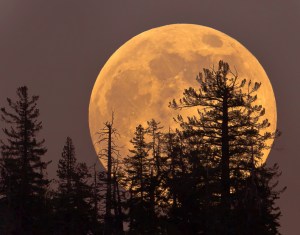
In case you haven’t been watching my Twitter feed or Facebook page (and shame on you if you haven’t!) I’ve had some rather exciting news recently. To celebrate, here is a full moon. Did you know that each month has its own full moon with its own name? The one below is the Hunter’s Moon from October. It’s particularly apropos, for reasons that will become apparent.

Further information will be revealed in the coming days. For now let’s just say that if you like horror fiction or stories about the paranormal or supernatural, this is most definitely for you.

Keep your eyes peeled for the big reveal coming soon!


The Hunter’s Moon photo courtesy scientificsonline.com

The Horror Masterworks series!

In this post, I thought it would be fun to create my own list of Horror Masterworks books containing the greatest horror novels and short stories of all time.

The idea struck me because a while ago Gollancz brought out a series of Science Fiction Masterworks. These contained seminal sci-fi novels considered some of the best sci-fi novels of all time, such as Arthur C Clarke’s Childhood’s End, Joe Haldeman’s The Forever War and Robert Silverberg’s The Book of Skulls as well as the obligatory PK Dick books. The series was an introduction to many authors readers might not be familiar with.

This was followed soon after by another series of Fantasy Masterworks with books such as Lord Dunsany’s The King of Elfland’s Daughter and George R R Martin’s Fevre Dream. However, due to less success this time around, plans for a Horror Masterworks series were apparently shelved. It might also have been due to the fact that some of the “fantasy” tiles were in fact horror, or even science-fiction as in Jack Finney’s Time and Again.


Another mislabelled "Science Fiction Masterwork".

Another mislabelled “Science Fiction Masterwork”.


There has been a huge reticence by major publishers and booksellers recently to acknowledge the horror field. Yet despite this, horror is booming. Horror films like The Conjuring and the Paranormal Activity series have accounted for some of the most profitable Hollywood films this century. Horror novels continue to appear regularly on Amazon’s Top Selling Books list.  The public, it seems, thirsts for horror, even if publishers don’t want to supply it.

In conclusion, it seems unfair that Sci-fi and Fantasy should get their own Masterworks series while Horror is left out. So without further ado, here are my recommendations for Gollancz’s non-existent  Horror Masterworks series!


THE HORROR MASTERWORKS COLLECTION THAT SHOULD HAVE BEEN…

  1. H P Lovecraft, The Call of Cthulhu & Others
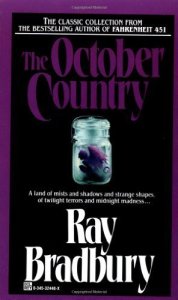
  2. Ray Bradbury, The October Country
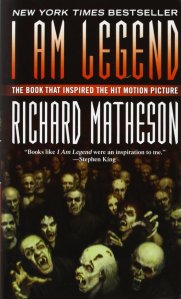
  3. Richard Matheson, I Am Legend
  4. Shirley Jackson, The Haunting of Hill House
  5. Mary Shelley, Frankenstein
  6. Bram Stoker, Dracula
  7. Robert Louis Stevenson, The Strange Case of Dr Jekyll & Mr Hyde
  8. Peter Straub, Ghost Story
  9. James Herbert, The Rats
  10. Stephen King, The Shining
  11. Anne Rice, Interview with the Vampire
  12. Charles L Grant, The Hour of the Oxrun Dead
  13. Clive Barker, Cabal
  14. Ramsey Campbell, The Doll Who Ate His Mother
  15. Arthur Machen, The Great God Pan
  16. Robert Bloch, Psycho
  17. William Hope Hodgson, The House on the Borderland
  18. Sheridan Le Fanu, Through A Glass Darkly
  19. Roald Dahl, Kiss Kiss
  20. M R James, Ghost Stories of an Antiquary
  21. Ira Levin, Rosemary’s Baby
  22. Oscar Wilde, The Picture of Dorian Grey
  23. Edgar Allen Poe, Tales of Mystery and Imagination
  24. Thomas Ligotti, Teatro Grottesco
  25. Laird Barron, Occultation
  26. Robert R McCammon, Boy’s Life
  27. Daphne Du Maurier, The Birds
  28. Brett Easton Ellis, American Psycho
  29. Henry James, The Turn of the Screw
  30. Ray Bradbury, Something Wicked This Way Comes
  31. William Peter Blatty, The Exorcist
  32. Algernon Blackwood, Ancient Sorceries & other Chilling Tales
  33. Charles Dickens, Ghost Stories
  34. Rudyard Kipling, The Mark of the Beast & Other Stories

As you can see, there is plenty for horror fans to sink their teeth into.

One word of warning: this is not a list of personal favourites (although many of them are) or a list of the most scariest books of all time. Instead, I’ve tried to balance true masters in the field with their most notable works, either because the book set a new bar in the genre, or because it is their most representative work. I’ve also tried to include some modern writers such as Thomas Ligotti and Laird Barron to show you that horror is not dead but is in fact alive and well and still growing, albeit a little more in the dark these days!

I hope you enjoy the list. Feel free to disagree, and be sure to let me know what you think about the list in the comments below!

Pleasant dreams!


How to Sell a Screenplay to Hollywood from the UK – Part One

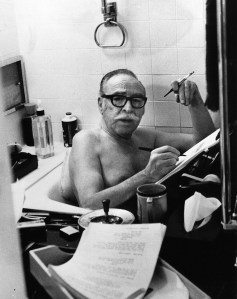
trumbo

The screenwriter’s dream: now you too can get to work in the bath.


Okay, here is the big one. How do you sell a screenplay to Hollywood while living in the UK? I suppose this is what this blog is supposed to be all about. So let me take you through the steps involved. Sounds simple, right?

First of all, about myself: I am a British screenwriter, but I’ve made spec sales and had options with companies in the UK, Europe and Los Angeles, USA.

Secondly, as William Goldman famously said: “Nobody knows anything”. He was talking about the movie business. So as you read this, please place your tongue firmly in your cheek and take all of this with that pinch of salt.

However, this being the confessions of an English screenwriter and all, I thought I should at least attempt to share with you what I have learned when trying to sell a script to Hollywood without having to go and live in L.A..

And what better way to start than with the secret “one easy step to success”?

The secret trick to success

First of all, here is the secret trick — the magic bullet, if you will — that all professional writers know about…

Ready?

There is no magic bullet!

Yes, that’s right. There is no secret trick to selling a screenplay. No magic bullet. No one way that ensures success. There is only hard work, practice, lots of practice, a lot of luck, and a lot of failure.

“What? I’m going to fail?”

Yes. You will fail. Sometimes spectacularly. Sometimes you will want to quit. But to quote from Benjamin Franklin “Energy and persistence conquer all things”. That is especially true of screenwriting.

Let me explain…

There is no one way to sell or option a script today. Elliott Grove in his excellent book “Randance Writer’s Lab” compares the movie industry to an enormous building full of doors. Behind those doors are the people who you can make deals with or who can further your career in some way: agents, industry executives, producers, etc.

Your job is to get in the doors. It doesn’t matter which one. Just keep trying.

Now all this sounds pretty wishy-washy, so let’s get down to brass tacks.

Step One – Write the screenplay

The first step to selling to Hollywood is: you must be able to write great screenplays. This is not as easy as it sounds. Many writers produce script after script which never sells. But as long as you are learning your craft, you are progressing.

“But how come so many bad movies get made? I just saw a terrible movie. I could write better than that!”

Yes. Bad movies do get made. For a variety of reasons. Sometimes a producer just desperately needs a screenplay because they have actors or locations available. Sometimes studios butcher screenplays because they’re trying to appeal to a broader audience than the material can support. Sometimes a “star” will insist that the script goes in a terrible direction to make them look good. Sometimes a hurricane will blow the set away. The list goes on. And don’t forget that making movies is hard. Really hard. Heck, if it was easy everybody would be doing it, right? Just because you can spot a bad movie doesn’t mean you can make a good one.

You must write, write, write. Devour all the screenwriting books you can find.

You must read screenplays. Actually read them.

Watch movies. A lot of movies. Deconstruct them on paper to see how they work.

This will require you to invest time in your craft and will also involve spending money. A lot of money.  In short, you must approach screenwriting like a job. Because that’s what you’re trying to achieve.

I can’t stress Step One enough. You will be up against UCLA college graduates who have done nothing but read and write screenplays for the past 3 years. Think you can measure up to them? Knowing your craft is the only part of the business you can control. So make sure you deliver a superb script. “Competent” is not enough. “Good” is not enough. Your screenplay must be “great” to stand out from the hundreds of thousands of screenplays circulating every year.

Got that? Good.

Once you’ve done all that, you may be ready for step two:

Step Two – Learn about the Business

Let’s go back to Elliot Grove’s comparison of the movie industry to a building full of doors. Behind those doors are the people you want to do business with. And this IS a business, make no mistake. It’s called “Showbusiness” for a reason. Yes, you can enjoy giving your creativity full reign when you come up with an amazing scene. But remember that you have to sell the script when it’s done. And like any salesman, you must know what people want.

One mistake writers often make is to try to predict trends. Every now and then a movie does phenomenal business at the box office. For up to a year afterwards, everybody wants something similar, be it “Memento” or “Saw” or “The Lord of the Rings”. You may be tempted to begin work on a similar project, hoping that people will go crazy for it. But by the time you have finished your script, which can take anywhere from a month to even years, the market will have moved on, and people will be clamoring for the next big thing.

What’s a writer to do?

Instead of thinking in terms of the hot movie genre, you should think more in terms of what is sellable. You will find that certain types of movies are always in demand, while others are pretty much dead. For instance, don’t bother writing that Western or Period Drama. Even if you see a major picture in those genres. The spec market for those films are almost impossible to break into. Most new films in those genres are initiated by the studio, who then hires a writer for the project.

(Caveat: remember how we said that nobody knows anything?)

My advice is, if you have a great idea for a new Queen Boadicea film, turn it into a novel. Then Hollywood can come to you when it sells a million copies. Wouldn’t that be nice?

Genres that are always in demand?

Cheap ones.

Block Comedies, low budget horror movies, found footage movies (a recent trend which probably will not continue as the justification behind them becomes more and more bizarre), movies without lots of SFX, low budget thrillers, “contained” movies with only a few locations or characters.

Did I mention cheap?

One of the biggest independent hits of all time, “Halloween”, which launched the careers of John Carpenter and Jamie Lee Curtis, was about a man in a William Shatner mask walking around homes with a knife. It was made for $325,000 and raked in $47 million at the box office alone.

There are several other things you must know about the movie industry before embarking on your odyssey to net that lucrative spec sale.

What is a spec sale?

A spec is a screenplay initiated by a writer who has not been hired to write a screenplay. That’s about it.

Sometimes studios mainly generate their own projects and put calls out to everyone they know (agents, managers, producers) that they are looking for writers for the project. The lucky writer than gets to “pitch” their take on the material to the studio. These jobs are called assignments.

The film industry is bigger than Hollywood.

Motion pictures are made all over the world these days. China is a huge upcoming market. My first option was to a company based in Germany. I’ve also written for companies in England and Canada as well as the USA. Plus, nowadays everyone can be a filmmaker. Just invest in a decent phone camera. Recent indie breakout hit “Tangerine” was filmed entirely on an iPhone. Now you too can be Cecil B DeMille! (note: if you don’t know who Cecil B DeMille is, stop reading this immediately and go watch a ton of old movies made before 1960. I’m serious).

Sales vs Options

More fun terms! In the movie industry, you don’t have to sell your screenplay until it’s produced. You can option it instead. The producer usually pays you less money than they would for a sale. They then have the option, within a specified period (say, 12 months) to get the money to make the picture. If they do, you should be then paid more money to sell the script to them. If not, you get the rights to the script back. It’s a win-win for a newbie screenwriter.

However, an option can also be a disappointment if the producer is not willing to pay a lot. I have seen (and signed) options for as little as $1. Are you being taken advantage of? Well, that depends on where you are in your career. A dollar option to someone with no credits whatsoever is a step up the ladder.

So, to recap: there is no one way to sell a script. You can sell screenplays around the world these days, thanks to the Internet. But you must work on your craft. Read as much as you can. Read screenwriting books, read online articles (there are many free ones), read the trades (by which I mean the trade magazines such as Variety or The Hollywood Reporter – all of which are online), subscribe to newsletters. The Scoggins Report can also give you invaluable guidance as to which companies are buying which type of script. These will all give you a feel for how the industry operates. You must become familiar with this, because these are the people you will be trying to sell your work to.

Hot tip: You will find that writing equates to about half of a screenwriter’s working life. The rest involves that dreaded word: marketing. You must become your own PR expert, agent, manager and marketing guru, because that is how you are going to sell your script. Enjoy!

In the next part we’ll look at what to do after you’ve written the script, and how to (hopefully) get it into the hands of Hollywood professionals!

It all sounds so easy, doesn’t it?

See you next time!

Eastercon: Mancunicon convention report 2016!

This year’s science-fiction/fantasy convention EASTERCON took place in Manchester, England. Mancunicon, as it was called, occupied four floors of the iconic Hilton Hotel, a slender glass-and-steel building shaped like the number “1”. The convention gathered together sci-fi and fantasy authors, fans, publishers, gamers and cosplayers. There were almost a thousand people in attendance, and one of them was yours truly.

The Hilton Tower... in the sun.

The Hilton Tower… in the sun.


Now, I’ve been to FantasyCon before and the odd sci-fi movie fan convention. But I’ve never been to Eastercon, so I was unsure what to expect. Fortunately, some friends of mine from the Manchester Speculative Fiction Group were also there, so there was always someone to chat (or moan) to.

The first thing we did was gather at the bar. This was (unsurprisingly) the focal point for the Con. However, the Hilton is a very tall, narrow building so sometimes the bar became very crowded. This never became a real problem, but it did make queuing for the two lifts difficult. The small meeting rooms also meant that several panels were oversubscribed. I was sorry to have missed the panel on rare sci-fi and fantasy TV shows of the 1950s -1970s. But on the whole things ran pretty smoothly.

The atmosphere was, for the most part, very friendly, with everyone united by a love of sci-fi and fantasy. Although some were more hard-core than others – there was a cosplay competition on Saturday for those dedicated enough. I am not the most gregarious person in the world. But even I found myself chatting to a diverse array of people over the weekend.

My writing group has an anthology called “REVOLUTIONS” out at the moment, so this was an ideal place to plug the book. We sneaked up a few posters and shifted quite a few copies. My only regret was that I didn’t manage to prepare any advertising material for my own novel. But then Easter always sneaks up on me.

The events programme was varied and jam-packed. This year’s guests of honour were authors Sarah Pinborough, David L Clements, Aliette de Bodard, and Ian MacDonald. But many more took part, and topics ranged from hard sci-fi to sewing. So there was something for everyone… even a cookery class!

So after catching up with my fellow attendees, I made my way to the first panel…

Welcome to Eastercon – Saturday

This was highly informative and useful. It soon became apparent that Eastercon has a culture all of its own. Some people had been going literally all their lives, while the oldest member was a mere 90 years old.

Afterwards, I browsed the dealers’ rooms. Against my better judgment I gave into temptation and walked away with an armful of beautiful 1970s paperback editions. But some deals are just too good to pass up!

Diversity in SF

The first panel I attended was about diversity in SF/F. This was a very intelligent and nuanced discussion about how difficult it is for authors who are not white and middle class to get published. The speakers made their points with eloquence and precision. Afterwards, I found myself with a far greater appreciation of issues of race and gender.

MSF Group’s “Crit Sandwich” – Saturday and Sunday

Next day, Manchester’s SpecFic group held the first of two long feedback sessions for budding authors. My fellow group members and I reviewed 3 pieces each day of up to 10,000 words per author. The sessions were very enjoyable, with some interesting, varied and (intentionally) amusing samples of work. All those who took part said they found it very useful. I take my hat off to them, as I’m not sure if I’d have had the courage to submit my work to complete strangers at my first Eastercon!

Jo Fletcher Books Launch – Sebastian de Castell

There were several book launches over the weekend. We ascended the lift to the Presidential Suite on the 22nd floor for a reading by the author. The view and the plentiful red wine made this a memorable occasion, and the publishers were open to questions from anyone who attended. Indeed, the wine flowed a little too freely on occasion, with several people complaining of feeling “under the weather” as the Con wore on!

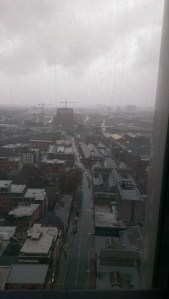
IMAG2824

..And the view from the 22nd storey in the rain.


The Fuzzy Set of Horror

That evening I attended a lively discussion on the boundaries of horror, given by three gothic/supernatural fantasy writers with helpful contributions from horror grandmaster Ramsey Campbell. There were some hotly debated questions about Waterstones’ policy of no longer segregating horror from fantasy and science-fiction as well as on the merits of zombie films.

Later, we sampled the gastronomic delights of Manchester (there are many) before returning to a packed bar and hobnobbing with anyone who would talk to us. But after over ten hours on my feet, I was exhausted. So I limped off to bed to grab four hours’ sleep before Day Three.

Trailblazing Comics of the 1980s – Sunday

Next morning – my head buzzing with a litre of coffee – I took part in my first ever panel. Thankfully, it was a subject I can ramble on about for hours – comic books. My fellow panellists Karen Brenchley and Tony Keen provided the focus of the debate. Together, we discussed which creators shaped the comics field in the 1980s and beyond.

Inevitably, “The Dark Knight Returns” and “Watchmen” were mentioned. But we also managed to include such diverse matters as 2000AD, John Byrne, and “Cerebus the Aardvark”! The attendees called us on our knowledge, so we had to be on our toes. But we all brought something different to the table and managed to give the audience a broad overview of both mainstream and indie comics in the decade. Afterwards, we got chatting to several interesting people. I enjoyed this a heck of a lot and would thoroughly recommend the experience.

Kaffeeklatsch with Sarah Pinborough

Guest of honour at this year’s Eastercon was horror/crime/YA novelist Sarah Pinborough. Fresh from Hollywood, Sarah shared tales of writing and more in this cosy setting. This was a nice change of pace from the panels and a chance to ask more detailed questions of the author. As for the content, I’m afraid I can’t tell you more because, as Sarah says, “What happens in Kaffeeklatsch stays in Kaffeeklatsch!”

Author Reading – open mic

This two-hour session gave authors a chance to read their own work. My nerves were set on edge by the announcement that it was to be a competition. When the “judges” were given sticks with numbers on, the whole thing took on the aspect of a David Lynch film. Authors read their works until a gong signalled they had run over the time limit, whereupon the judges gave the scores. Fortunately, the whole thing was just a bit of fun. The readings were diverse and entertaining, and the host excellent. Although I really felt for one poor chap who had only written his piece that morning.

SF Pub Quiz

Late on Sunday, we took part in the hardest pub quiz I have ever seen in my life. Categories ranged from “Name the scientific instrument” to “Name the TV theme tune… and composer”. Needless to say, our score was abysmal!

By this stage everyone was relaxed and the party mood was in full swing. It was with a heavy heart that I retired to bed in the early hours, knowing that there was only half a day to go.

The Deeper the Grief, the Closer to Life – Monday

By Monday a few people were looking the worse for wear. But a crowded audience still packed out the main room to listen to a panel about grief and loss. Despite the heavy subject matter, the talk proved to be worth waiting for. Authors Sarah Pinborough and Neil Williamson discussed writing about grief, as well as recounting real-life tales, both sad and funny. This was definitely one of the better talks, although I can’t really remember why!

Criminality in SF/F

The final panel of the day got a little raucous at times, as several authors discussed the representation of crime in sci-fi and fantasy novels. By this stage we were all just relaxing. Some great debates arose, though. One of which may have just given me an idea for my next story…

In Conclusion

Eastercon was something of an unknown quantity for me. At first I found the fan-based culture a little intimidating. But having it in Manchester helped my travel plans and allowed me to stay much longer.

Given the unique challenges of the Hilton tower, the organisers did their best to keep things running smoothly. Volunteers were always present to help, and being on a panel was tremendous fun.

If I had any suggestions it would be to offer more author readings and to include more horror. At the moment, Eastercon is quite “sci-fi heavy”.

So will I be going to another Eastercon? Hell, yeah. I’d recommend it to anyone and everyone who likes genre fiction.

Will I be more prepared next time? Definitely!


Top Horror Clichés The World Can Do Without!

Let’s get down and dirty in this post by exposing some of the worst horror movie clichés out there. Some of these – like the axe-murderer in the back seat – are so old I’m not even going to talk about them. Instead, here are some of the more insidious violators of the audience’s desire for something new. Most of these are lazy, cynical ways to make a movie. Don’t let them find their way into your screenplay!


Just because you know you're using a cliché doesn't mean it isn't a cliché.

Just because you know you’re using a cliché doesn’t mean it isn’t a cliché.


Girl trapped in the basement of a serial killer

We’ve all seen this one. A hot girl gets kidnapped by a serial killer and spends the next two hours screaming, trying to break out, breaking out, getting recaptured, and finally killing the serial killer. Yes, it’s zero budget. It’s also zero-entertainment. If there ever was a point to telling a story like this, it was done in “The Silence of the Lambs” over twenty years ago. Please, no more!

People in a bunker

In the 1960s shows like “The Twilight Zone” used this setup to tell thought-provoking stories of bigotry, prejudice and paranoia in a Cold War age. Today, it’s an excuse for a low-budget movie. If your movie isn’t a political allegory, avoid this cliché. In fact, even if it is avoid this cliché.

Group in a haunted hospital/abandoned building/old house etc. etc.

A group of unfeasibly hot scientists/investigators/college kids go snooping around in a big old building. Of course they can’t find their way out once they’re inside. It’s haunted, you fools! Cue ghosts, demons, a serial killer etc. If you’re going to tell this story, you better have one very cool monster. Oh, and those smart-alec kids/investigators? They’re really annoying.

Sexy vampire/werewolf/warlock/witch etc.

Must be incredibly hot, twenty-somethings and dressed to kill. Uh, not literally. No, because these beautiful creatures won’t be doing any killing. They’d sooner get it on with each other! In these stories – allegories for wealthy high schools and colleges – we usually sympathize more with the villain who is trying to bump off as many of his classmates as he can – until of course he starts spouting those cheesy lines of dialogue.


craft 51yh9pb+kQL._AA160_

Spot the difference? That’s right, the one on the left made more money!


Shoulder touch

Picture this: your girlfriend is wandering alone through a scary old house/asylum/abandoned hospital/hillbilly shack etc. You see her and decide to get her attention. How do you do it? Call her name? Cough loudly? No, you creep up to her silently and grab her shoulder. Watch how she screams! This ploy also works when you reverse the genders. Seriously, what’s the matter with you! Oh, it was an excuse for a cheap scare by the writers. Ah…

Medicine cabinet scare

Basically any scene where someone closes a mirrored door and sees a face behind them. Or closes the refrigerator and someone is standing there. How did they get there? Are they wearing cushioned slippers so they couldn’t be heard? Damn those psychos and their cushioned slippers. Oh, and this one works ever better if you have some “jump scare” music as well.

The double twist

So you’ve reached the end of your boring slasher movie. Now what? What this movie needs is… a double twist! So now the final girl gets killed, and it’s the not-so-final girl who survives! Or maybe the final girl has hallucinations that she’s being stalked by the killer even though she’s safely strapped to her psych ward bed. She’s a basket case. The horror! First popularized in Brian De Palma’s version of “Carrie” in the Seventies. Nowadays, it’s just another excuse for a cheap plot twist that robs the film of any emotional payoff it might have had.

Nothing can stop Milla Jovovich, not even plot tension.

Nothing can stop Milla Jovovich, not even plot tension.

The kick-ass heroine

“The Matrix” has a lot to answer for. Floor length PVC coats. Funky spectacles. Kung fu fight scenes. But one thing we can do without is the kick-ass heroine. Impossible to defeat, able to take out 250-pound gorillas despite looking like she never even hits the gym, this frail-looking hot girl can punch holes through solid steel and perform improbable back flips. Sometimes explained by SCIENCE. Sometimes not. Next time you see a hulking serial killer who has spent his life stalking and murdering humans taken out by a five-foot co-ed with a stick, you’ve met the kick-ass heroine.

The dumb jock

If you thought this was a stereotype, you’d be right. It’s a well-known fact that any male who does sports in high school is a sexist bully with a brain the size of a hen’s egg. You can usually spot this character by his natty baseball top and rippling muscles. Whatever the most sensible course of action is, he will oppose it. Even if he has just seen his friends get ripped apart by a murderous sasquatch, he will run into the woods and chase the monster down armed with nothing but a wet towel. But it’s the way he badmouths his girlfriend that seals this character’s doom, because he just insulted the movie’s target demographic!

Loss of cellphone reception

No matter how extensive your network coverage, you can bet that your cellphone will start to misbehave at a crucial moment. This is most likely to happen just after the first death occurs in your party. No matter how expensive your pricing plan, your movie phone is not going to save you now. You see how I just isolated the characters so the monster can pick them off one by one? Genius!

Any kind of hybrid monster, e.g. Sharkspider vs Mechacrocodile!

Most of the said monster will be rendered in appallingly bad 1990’s computer animation. Sharks are the favoured creature of choice, modified by a mixture of sabretooth tiger, giant snake, octopus, robot, crocodile, or whatever graphic the CGI animator has to hand. For bonus points, find a ridiculous way of getting your aquatic monster onto dry land. Ghost Shark, anyone?


A truly terrifying postmodern serial killer.

A truly terrifying postmodern serial killer.

OMG it’s just so postmodern!

If you’re too cool for regular horror tropes you might just want to go full postmodern. In this kind of movie, the teens know all the rules for serial killer movies. They endlessly reference plot points from horror films, thereby continually reminding the audience that what they’re watching is in fact only a movie. Used ad nauseum in the “Buffy The Vampire Slayer” TV Series and to varying effect in the “Scream” movies, this irritating glitch makes us want to punch our TV sets as hard as possible while yelling “Shut up talking about horror movies and show me a horror movie!” This type of movie is often coupled with the Double Twist. Because OMG, it’s just so postmodern!

There are plenty more bad clichés out there, clichés so ugly they should have been destroyed at birth. But these are the ones I keep seeing over and over again in modern horror movies. So before you rush out to make the latest girl-trapped-=in-a-basement-by-a-serial-killer movie, please check out this list.

As for a big budget tentpole horror movie set in a bunker by one of Hollywood’s top directors… that couldn’t happen nowadays, could it?


The Shannara Chronicles reviewed

THE SHANNARA CHRONICLES aired on 5 Star in the UK today and MTV in the USA. The beloved fantasy novel written by Terry Brooks was the sequel to his hit 1977 bestseller The Sword of Shannara, an epic fantasy in the vein of The Lord of the Rings but with one unusual twist – the stories are set in a post-apocalyptic future that only resembles the medieval world of fantasy.

The Elfstones of Shannara is a much darker affair and sees elves pitted against a demonic invasion. Only a young, half-elven boy and an elven maiden can stop it. The book captured the imagination of millions of readers. But how does the new TV series shape up?


The Shannara Chronicles airs on MTV and 5Star

The Shannara Chronicles airs on MTV and 5Star


The TV pilot opens with an action sequence not in the novel, as Amberle, an elven princess, competes in a difficult race to become one of the Chosen, a religious order sworn to protect the Ellcrys, a magical tree that protects the elves from demons sealed off from the world by The Forbidding. We are then introduced to several of the main characters, including Will Ohmsford, the young boy whose destiny is linked to the Ellcrys in some way.

The show boasts some excellent CGI visuals, especially the enormous backdrops of the Elven palace of Arborlon and several shots of old world superstructures, now crawling with vines and forgotten. It’s a handsome production, although sometimes the elven costumes and hairstyles resemble Arborlon 90210 rather than those of a medieval fantasy land.

Initial signs were encouraging.

The writing was for the most part serviceable. The first episode was more of an introduction to the characters, which worked fine on a story level. However, there were some cringeworthy moments. Series creators Alfred Gough and Miles Millar are known for Smallville, The Mummy: Tomb of the Dragon Emperor, and I Am Number Four.  And that kind of writing style lingered throughout. There were several moments of heavy-handed cliché: the kick-ass heroine, the dumb young male hero, the kick-ass female warrior, the kick-ass female thief, etc., etc. Also, several rather unfeasible physical stunts: a male elven warrior knocked out by a young girl with one blow of a sword hilt. But hey, maybe these elves all have glass jaws.

The writers also changed a lot, bringing in some characters earlier and adding more romance, which is forgivable when you’re trying to draw in new viewers. One strange plot hole was that none of the elves believed in the magic of the Ellcys, not even Amberle. Which was odd, because she’d just competed in a dangerous trial to become a member of a religious order dedicated to protecting that very magic. The king also had an advisor specifically dedicated to monitoring the tree’s health. Kind of makes you wonder why they bothered if the tree’s power was just a fairy story.

Also apparent was some groan-inducing dialogue. This was dialogue obviously added to appeal to modern teens: “I smell elf-boy hate” says one character, while an elven princess tells her friend “Thanks for the save”. I’m pretty sure people won’t be talking like that in 10 years, let alone thousands of years from now. That kind of writing made Arborlon feel more like an American High School than a place of high fantasy.

But what really got on my nerves was the directing – or more specifically, the editing. During the first 25 minutes I had to resist the urge to switch off, because I was getting dizzy. Director Jonathan Liebesman (known for Wrath of the Titans and the recent Teenage Mutant Ninja Turtles movie) seems to have a rule that the camera cannot stay on anything for more than 2 seconds. As the shot constantly changed, sometimes even mid-sentence, I felt like I was inside a nightclub at 2:30 in the morning. Even a dying woman’s last moments featured multiple shots because I guess that just wasn’t dramatic enough. When the camera finally lingered on a money shot of Arborlon for a whole 10 seconds, I felt real relief.

All of which was a shame, because I wanted to love The Shannara Chronicles. I’m a huge fan of the stories and of Terry Brooks’ writing in general – The Elfstones is one of the few novels I’ve read several times. And like many fans, I’m amazed that Hollywood has not seized upon the chance to adapt these into big budget movies. Because that’s what they really need.

Despite this, the series showed some promise. What was smart was the way the filmmakers used backdrops – the Seattle Space Needle now like a giant, fallen tree. The sense of wonder conveyed in the trailers really drew me in. The demons also look suitably weird and scary. And there are enough wonders in the book to provide many CGI  amusement in future episodes.

The acting too was pretty good. The leads certainly look the part, with Will Ohmsford and Amberle (played by relative newcomers Austin Butler and Poppy Drayton) both being particularly strong, if not outstanding. John Rhys-Davis (possibly the only man to play both a dwarf and an elf) adds his usual gravitas as the elven king. As for Manu Bennett as Allanon – he’s a bit of an unknown quantity at the moment. A man of monolithic stature, he looks the part. But does he possess the menacing mystique of Brooks’ creation, or will his character degenerate into a brute superhero?

I am going to watch future episodes, if only to see whether the editing style will calm down. I hope so. Because if the creators can steer away from the patronizing, market-driven approach of so many other forgettable TV shows, they could still create something great. Or at least something that gives people a flavour of Terry Brooks’ unique and moving vision of the world of Shannara. This series’ saving grace just might be the incredible plot of the original book. But at this point, after viewing the pilot, I need a little more convincing that the magic is there.


My top 20 horror novels of the past 70 years!

As it’s almost Christmas, here is a list of my own favourite horror books. These are books that either inspired, terrified me, or made my jaw drop at the sheer beauty of the writing. These are all personal choices, so feel free to disagree. But without further ado, here is the list, in no particular order…


rats

The Rats James Herbert

British writer James Herbert was strangely underrated during his lifetime, which is a shame, as he is one of the most frightening horror writers of the 20th century. “The Rats” burst on to the scene in the 1970s, and it still packs a punch today. The huge list of characters, the violence, and the incredible imagery make this a must-read!

Cabal Clive Barker

In the 1980s Clive Barker appeared as a breath of fresh air with his promise to show what other writers only hinted at. Not satisfying with having the monster carry off the maiden, Barker wanted to reveal what happened afterwards. Cabal is his most solid novel, a tale of a man who believes he is a psychopath and takes refuge in a hidden underground city of monsters. The result is a Grand Guignol of the surreal and unnerving. Filmed as the uneven but imaginative “Nightbreed” with David Cronenberg as the bad(der) guy!


king

The Stand Stephen King

My first Stephen King entry is the author’s dark take on the apocalypse. It begins with a whimper and ends with a bang.  Filmed twice with varying success, this is some of King’s finest writing. So depressingly realistic that at first I had to give up on it and came back when I was in a lighter mood!

IT Stephen King

The second Stephen King entry on my list is, I think, undeservedly ignored, thanks to a forgettable TV movie. But make no mistake, the novel is King at the peak of his powers. The characters are rich but archetypal, the town of Derry both nostalgic and terrible. And the monster, ah, the monster..!


The Doll Who Ate His Mother, Ramsey Campbell


A peculiarly British atmosphere pervades this book, set in the poor end of Liverpool. There is a particularly nasty antagonist, but what makes it so memorable is Campbell’s description of urban neglect. Wherever the characters go you feel the empty eyes of forgotten tenements glaring at them. A unique little tale.

bradbury

The October County Ray Bradbury

Few can deny that Ray Bradbury is the American master of the short story. But did you know that this anthology contains an early possible prototype of the Addams Family? These American Gothic fables contain such memorable tales as “The Jar” and “The Emissary”. Packed with gorgeous prose, this is both horror and literary… and funny to boot!

Domain James Herbert

The last entry in the “Rats” series sees survivors of a nuclear holocaust eking out an existence in London’s rubble. Until they find an army of mutated rats waiting for them! Superlative suspense fiction. Every chapter ends on a cliff-hanger. Surely a Hollywood blockbuster waiting to be made!

The Vampire Tapestry Suzy McKee Charnas

A unique take on the vampire genre sees Suzy Charnas’s ancient and wily vampire take on the challenges of the modern world. Never has a vampire been presented in such a detailed psychological light.

The Books of Blood Clive Barker

Yes, all of them! It’s hard to imagine how revolutionary Barker’s fiction was when it first surfaced. These short stories run the gamut from the epic (In the Hills, The Cities) to the eerie (Skins of the Fathers), the surreal  (The Body Politic), the funny (The Yatttring and Jack) and the downright weird (Son of Celluloid). Some have become movie fodder, such as the unforgettably bizarre video nasty “Rawhead Rex”. Others are allegedly in the pipeline. But nothing can prepare you for Barker’s very personal vision of a contemporary world that’s as dark and corrupted as Dante’s inferno!

Interview with The Vampire Anne Rice

The book that launched a publishing legend. I still remember getting lost in the luxuriant Gothic prose. Anne Rice creates a vivid fantasy fever dream that is both like and unlike the movie version. A true masterpiece of fiction.

triffid

Day of the Triffids John Wyndham

British writer John Wyndham’s most well-known book is an example of the “cosy catastrophe”. But that’s why I like it! It’s interesting to see stiff upper lips drop as British society falls apart under attack from some walking plants with the aid of a meteor shower!

Kiss Kiss Roald Dahl

Not just the writer of Charlie and the Chocolate Factory, Dahl’s short stories were laced with an acerbic wit and grisly imagination. A bit like fairy tales for adults, with added poisoning, brain surgery and insect/baby hybrids!

Ghost Story Peter Straub

Possibly THE great American ghost story. Peter Straub writes far too little horror these days. But this fantastic novel – described by Stephen King as “a tiger tank of a book” – contains virtually every twist on the ghost tale that you can imagine. Oozes atmosphere and quiet menace!

legend

I Am Legend Richard Matheson

With episodes of “The Twilight Zone” and numerous TV movies such as the unforgettable “Duel” and “The Night Stalker”, Richard Matheson inspired a generation of writers.  This is his probably his most famous work – filmed as the languid Vincent Price chiller “The Last Man On Earth”,  the action-packed and very Seventies “The Omega Man” with Charlton Heston, and lately as the CGI-heavy Will Smith popcorn flick, this tale of a man alone in a  world of vampires  has still never been done right. Which is a shame. It’s a fine novel.

The Haunting Shirley Jackson

One of the great ghost stories ever written, it’s amazing how the writer delivers so many effective scares without ever resorting to gore or shocks. Shirley Jackson’s story is a snowball rolling downhill, gathering chills as it goes. Also one very good and one very bad movie.

Teatro Grottesco Thomas Ligotti

Ligotti is one of the writers of the “new weird” – modern authors in the cosmic horror tradition of HP Lovecraft. This collection showcases his unique prose style – a style of flatness and repetition – that lends his words a peculiarly terrifying banality. “The Red Tower” was a particularly fine story. Have fun unpacking the symbolism!

Hour of the Oxrun Dead Charles L Grant

Overlooked by many, Charlie Grant’s Oxrun Station stories all take place in the same sleepy Connecticut town – that just happens to attract all manner of evil! Perhaps it was because these are classic supernatural stories that came out just as writers like King were modernizing old horror tropes. But these are creepy tales, laced with luscious prose. The old TOR versions had the best covers – each one a gorgeous Halloween-themed scene. Ideal for a creepy night in!

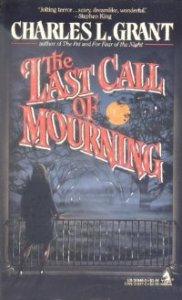
grant

Last Call of Mourning Charles L Grant

My favourite Charlie Grant story keeps you guessing all the way through. The plot sounds simple enough – the heroine returns to Oxrun Station to find her family ‘changed’. They don’t bleed, keep out of the sunlight, and have strange nocturnal habits. But the truth is something you’ll never guess. A masterful book that drips atmosphere and charm.

The Beautiful Thing That Awaits Us All Laird Barron

Barron has erupted onto the horror scene in recent years. This volume represents many of his Lovecraft-meets-Raymond-Chandler style of stories. But that is to do him an injustice. True, “Hand of Glory” is an effective pulp/horror mashup. But other stories show a genuine ability to expose our innermost fears. His eye-catching imagery cannot be easily forgotten.

The Vampire Lestat Anne Rice

Anne Rice second entry in my list is, I think, the most rich of her vampire stories. While I loved the epic scale and sheer ambition of “The Witching Hour”, “The Vampire Lestat” beats it because of the wonderful ironies the author employs. Here we learn who Lestat is, where he came from, his complicated (to say the least) relationship with his mother and his first meeting with Armand. We also learn more about Rice’s vampire mythology. This is both epic and deeply personal. Lestat feels like a living, breathing person. In all of horror, I can’t recall a more well-rounded, charismatic character!

Afterword

What’s missing from this list? Plenty. This is not my “Top 20”. Nor is it meant to be any kind of definitive list. These are just books I’ve loved. Pure examples of the horror genre that are original stories. I’ve not included anything by any “classic” author such as HP Lovecraft, Mary Shelley or Edgar Allen Poe, because everybody knows all about them anyway. Hopefully you feel the same or similar about some of these titles, or if not, I hope you seek them out and find them to your liking!

Enjoy!

Link

Today I have a pretty cool announcement to make.  The anthology REVOLUTIONS, which I edited along with Graeme Shimmin and Craig Pay (with honourable mentions to Luke Shelbourne and the rest of the Manchester Speculative Fiction Group), is now live to buy on Amazon! The anthology is an eclectic mix of science fiction, fantasy and horror, set in Manchester, England. Although perhaps it’s not quite the Manchester you know if you live there…

Revolutions. Available to buy now!

Revolutions. Available to buy now!

This is pretty exciting stuff for me. It’s my first time as an editor. It’s also a chance for me to be able to give back to the Manchester Spec Fic group, a bunch of writers who welcomed me with open arms several years ago. Since then, I’ve obtained invaluable feedback every meeting as they endured my stories (some good, some not so good) and made some great friends in the process.  So my thanks to Craig Pay for keeping the wheel on all this time and for being the very soul of diplomacy!

The idea came to me when I picked up a copy of an anthology in my local library that was brought out by a writers group in the West Midlands. I figured if they could do it, heck, we could do it better! And now I think we have.  But even that wasn’t enough for yours truly. We wanted our anthology to stand out, so we hit upon the idea of setting all the stories in Manchester England, a town that’s often unfairly ignored compared to, say, London, Monaco or any other of those exotic locales! So within these pages you will find various versions of Manchester, whether the present city, a Manchester  of tomorrow, or a Manchester that might never exist at all!

The anthology features stories by myself and other group members as well as Graeme Shimmin, author of the alternate-history spy thriller A Kill In The Morning, and Sarah Jasmon, author of the novel The Summer of Secrets. Both books are available to buy on Amazon. I have to say, Revolutions is a pretty good mix – it includes updated fairy tales, post apocalyptic fiction in a middle-class suburb, some very unique aliens, a musical war between Mancunians and Liverpudlians, and much much more.

So what are you waiting for? Get over to Amazon and grab yourself a copy!