Tag Archives: sci-fi

Notes from FantasyCon2014

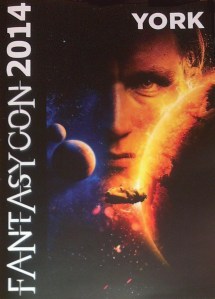
Great artwork for the brochure reproduced here by Larry Rostant

Great artwork for the brochure reproduced here by Larry Rostant

FantasyCon 2014, run by the British Fantasy Society, was held at the Royal York Hotel on Friday 5th – Sunday 7th September 2014.

This was my first time at Fantasycon, the annual gathering of the British Fantasy Society. So I didn’t know what to expect. I did know, however, that there were quite a few eminent guests, including Charlaine Harris, author of the phenomenally successful Sookie Stackhouse series, better known as TV vampire show “True Blood”. Other luminaries included horror author Ramsey Campbell and “Chocolat” writer Joanna Harris, as well as “Dr Who” scribe Toby Whithouse to name but a few.

The convention was held at the Royal York Hotel, adjacent to the train station and therefore a very convenient location. The hotel itself was a grand old affair. Sadly, the cost of staying there was prohibitively expensive. In fact, as I had only decided to go at the last minute, getting a hotel in York proved a difficult task, so I had to commute from Manchester on the two days I attended. However, this wasn’t too bad, thanks to a convenient rail link.

Prior to booking, the lack of information on the website was perplexing and gave the convention the feel of a “members only” club. However, this wasn’t the reality when I got there. Although many people came in groups, overall I found people to be very friendly and accommodating. But a better website, and even a forum, would have helped a lot. As it was, I threw caution to the wind and bought my ticket. But I can’t help but think how many other people were put off by the impersonal nature of the web page.

The first day was an introduction to the convention. Once I had acquired a map of the rather confusing (and sprawling) hotel layout, I grabbed myself some great free books for attendees (always a bonus!). There were also some fantastic discounts available in the dealer room from some sellers, while others remained reassuringly expensive.

I was very grateful for the introductory session which got me talking to several other attendees. The rest of the day passed in a blur. The crowd was an eclectic one, with attendees from as far as the USA. It was great to see people who were as enthusiastic about sci-fi, fantasy and horror as myself, if not more so. The staff too were friendly, and the convention rather relaxed. A little too relaxed, unfortunately. I missed several author signings despite being in the same bar! A bit of an announcement would have been nice.

Throughout the Con, there were book launches, author readings, even short film showings. Unfortunately I couldn’t stay to the bitter end to witness the delights of Karaoke on Friday, which apparently was a pity.

On Saturday, I got there early and bleary-eyed to attend a great panel discussion on whether there was a place for hope in horror. The panel consisted of Ramsey Campbell, Roz Kaveney, Guy Adams, Sara Jayne Townsend and Adam Neville. After a spirited debate, the panel ended with Roz Kaveney’s revelation that he once worked in the same restaurant as serial killer Dennis Nielsen! A very enlightening discussion that showed the versatility of the horror genre.

Charlaine Harris entertains at FantasyCon 2014.

Charlaine Harris entertains at FantasyCon 2014.

Later, Charlaine Harris gave us the lowdown on what it feel like to become an overnight sensation after thirty years of writing mystery novels, as well as the agony and ecstasy of selling your work to cable TV. Ms Harris was very entertaining, and was a regular fixture in the lobby, as were several other authors, giving the con an even more relaxed feel.

Later, I attended a panel on horror in TV. This featured “Dr Who” scribe Toby Whithouse, screenwriter author and editor Paul Kane, and Stephen Volk, writer of notorious BBC 1992 fake documentary “Ghostwatch”. Bizarrely, everyone on the panel agreed that CGI was not a good alternative for strong stories. Maybe there is hope for TV.

There were many other panels to attend, including an enthusiastic demonstration in swordfighting. Inevitably, I found that a lot of the most interesting panels conflicted. Yet there did seem to be a lull between 2-5pm.  But perhaps someone else with different interests would have told you the opposite.

Saturday ended with a mass signing. However, I sacrificed this in favour of hanging out in the bar. This is because for me the most rewarding aspect of FantasyCon was meeting other fans. As a writer, you tend to spend too much time in isolation. This means you lose touch with the people who matter most – the readers. I was amazed at their passion, their interest and their knowledge.  It really made me want to up my game.

On Saturday night, I headed home, my hunger for the speculative satiated for the moment, clutching my bagfuls of cheap books and signed copies. One of my aims had been to find new authors to broaden my reading, and I had certainly been given enough food for thought. I came away with a much greater knowledge of the blossoming sc-fi, horror and fantasy market, and with several new authors to sink my teeth into (figuratively).

A little light reading.

A little light reading.

Sunday proved a bridge too far for me. As there were only panels in the morning, I decided not to attend and save myself a hefty train fare. The afternoon was taken up with the British Fantasy Awards. But again, there was a curious lack of publicity about these on the net. The FantasyCon Twitter feed was also strangely silent throughout the weekend. The BFS produce some great publications, so it is odd that it doesn’t toot its own horn more.  Maybe the BFS could even televise the event on a Youtube channel!

In summary, this was a very worthwhile Con. I would recommend it to anyone who wants to meet likeminded people and who enjoy lively debates about everything in the world of speculative fiction and movies. I hope to go again next year and have an even better experience. However, a little more information would have been nice from the organisers for those who have not boldly gone to the Convention before. More Twitter updates would be a definite plus as well. But if you are a fan or creator of sci-fi/fantasy and horror in the UK, this is one convention you cannot afford to miss.

My  advice  is to book early and stay late, something I hope to do next time around!


Next year’s FantasyCon 2015 is to be held in Nottingham, UK.


“MEET MY MAIN CHARACTER” Blog Tour!

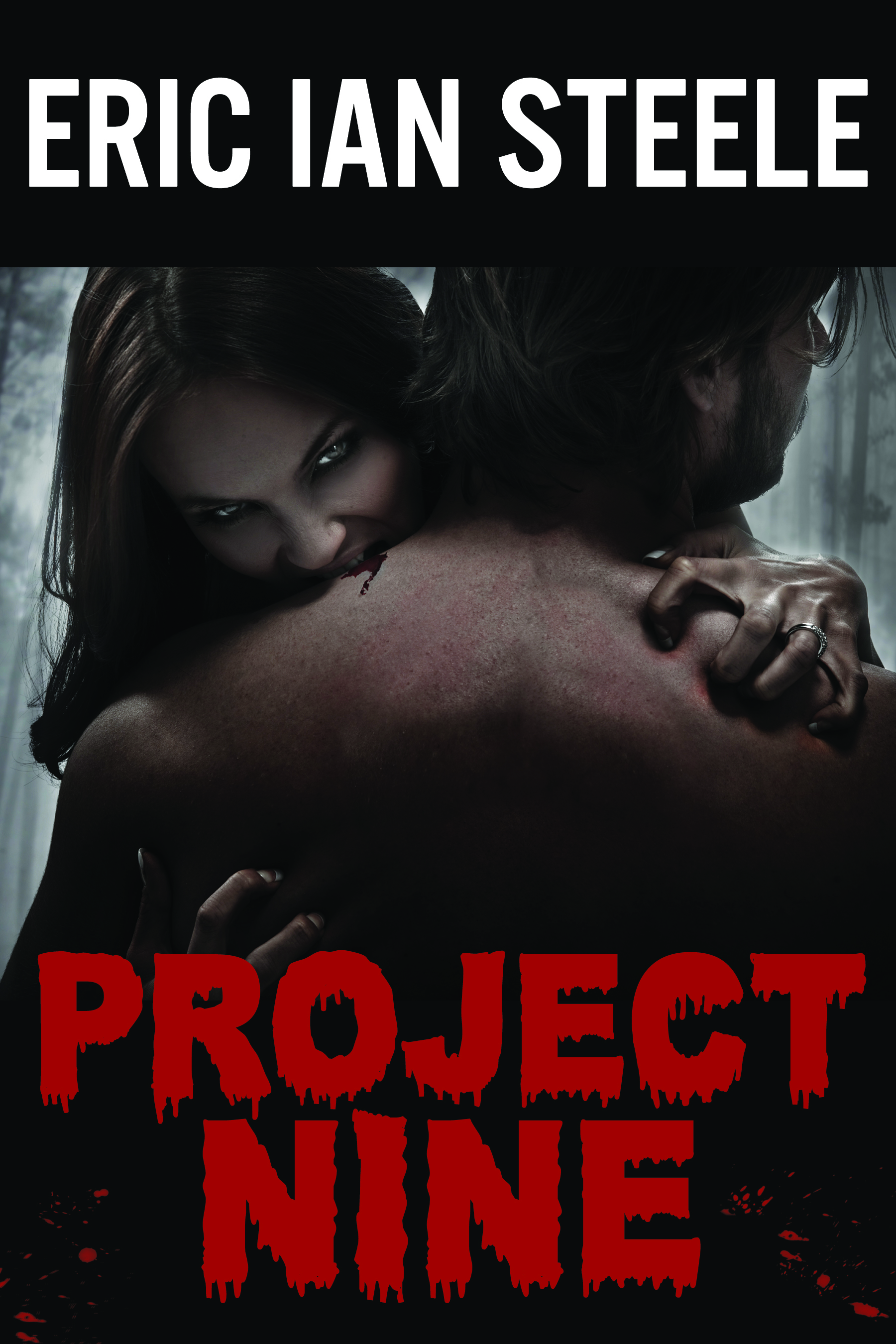
Today, I have been kindly nominated by science-fiction novelist writer Craig Pay to join the “Meet My Main Characters” blog tour and tell you a little about the protagonist of my forthcoming sci-fi horror vampire novel, PROJECT NINE!

FrontCover2

What is the name of your main character?

The main character is Luke. Shall we call him a hero? That would be a problem, seeing as he commits multiple murder throughout the novel and digests the blood of his victims. Admittedly he does so to stay alive, but I’m jumping ahead of myself…

When and where is the story set?

The present day. Mainly around Iowa and Kansas. There are also some scenes set during various historical periods throughout the last century, seen in flashback.

What should we know about Luke?

Actually, we know very little about Luke before the main story begins. We first meet him when he is burying his mother. We next see him when he’s getting very drunk. Then the action starts…

What is the main conflict? What messes up his/her life?

He falls in love, of course. What else? Unfortunately for Luke, the girl he falls in love with (Lynne) happens to have escaped from a secret government research facility that has created real vampires through gene therapy. Before he knows what’s happening, Lynne has infected him with the genetic virus that causes vampirism. But theirs is no romantic world of opera capes and Romanian castles. Luke’s new existence is a grubby one, where he must commit brutal murder every night and drink the blood of his victims in order to survive. Left with no other option, Luke joins Lynne and her three friends, fellow escapees from Project Nine. However, an obsessive Iowa detective learns the truth, and sets about pursuing them across three states. And the detective is not alone, because the government department responsible for infecting Lynne and her friends are determined to bury their mistakes, permanently.

What is the personal goal of the character?

Luke wants to spend eternity with the woman he loves. But he also wants to survive at any cost. And that desire is going to lead him down some very dark alleyways indeed…

When can we expect the book to be published?

“Project Nine” is going to be published very, very soon. “Like” my Facebook page to receive regular updates:  https://www.facebook.com/pages/Eric-Steele-Author-and-Screenwriter/522318187899385?ref=hl

You can also follow me on Twitter under: @EISteele for my “a horror movie a day” tweets and other goodies.

The next nominated writer in this blog tour is:

Kevin A Ransom created the movie film criticism site MovieCrypt.com in the late 1990s. He is a member of the Online Film Critics Society and channels the site’s host, Grim D. Reaper. Kevin has two book series: The Spooky Chronicles; and The Matriarch. He is also an active member of The Horror Society. His website is: http://thinkingskull.com/

In the meantime, pleasant dreams…

The Best Horror Movies of the Past 50 Years, Part 3! The Seventies! 1976-1979!

Hi, there, horror fans! Last time we looked at how Hollywood was unafraid to make more experimental horror features in the early 1970s. Although Spielberg’s “JAWS” would lead to studios forever chasing the summer blockbuster, the late Seventies were still an exciting time for horror movies. Foreign filmmakers like David Cronenberg and Dario Argento were developing cult followings. Meanwhile, low budget filmmaking was about to come into its own, as was a certain young horror writer from Maine, New England…

Let’s start our list of late seventies horror with…

The Omen 1976

No-one can doubt the influence of Richard Donner’s by-the-numbers horror movie. With more than just a passing nod to artsy horror masterpiece “The Exorcist”, this is a rip-roaring Hollywood-style horror flick. It boasts some bravura set-pieces, such as the decapitated photographer. With stalwart acting from heavyweights Gregory Peck, Lee Remick, Billy Whitelaw, and David Warner, the picture is very believable. But there’s no happy ending here as the Antichrist is born to a powerful American politician. This movie created a profitable and mostly well-made series of sequels that gave the world Sam Neil. It also became the bane of children named Damien everywhere.

Martin... a new kind of vampire.

Martin… a new kind of vampire.

Martin 1976

George A Romero, back from “Night of the Living Dead”, triumphed again with this underappreciated cinematic gem. It’s a genuinely original take on vampires. Is homicidal young loner Martin a vampire or not? Is he merely disturbed, or is there some truth in his bizarre flashbacks to another time? Terrific, glory, explicit, sensual, thought-provoking and beautifully filmed, this movie features an amazing performance by the underused John Amplas. Overlooked at its time, this has become a true cult classic.

Carrie 1976

The arrival of a young writer called Stephen King created a reign of terror that is still going today. Hollywood struck gold with King’s curiously brief tale of an alienated young girl with awesome telekinetic powers. Phenomenal directing by Brian De Palma (of “Sisters” fame) catapulted King into the popular consciousness. At one level this is a time-tested tale of an ugly duckling who gets her revenge. But DePalma used split screen and slow motion camera work to viscera effect for the final massacre that is actually too much to fit on one screen! What is mentioned less often is the great cast of actors including Sissy Spacek and Piper Laurie. This is one horror blockbuster that stands the test of time.

Suspiria 1977

Italian Filmmaker Dario Argento’s most well-known film is about a coven of witches posing as a ballet school in Italy. Some memorable set-pieces elevate this beyond its video-nasty style violence. Argento often treads a fine line between good and poor taste. Here, he manages to keep it on the straight and narrow. It also boasts a great score by the world’s foremost horror band… Goblin!

Dawn of the Dead 1978

Which brings us to George A Romero’s sequel to “Night of the Living Dead”. Where “Night” finished, “Dawn” goes a step further. Civilization is falling into chaos at the hands of the zombie invasion. We begin with some great scenes of things literally going to hell. Four survivors hitch a ride on a helicopter and hole up at an abandoned shopping mall. They soon learn that having everything does not make you happy. A social satire as well as a very frightening movie, the impact of “Dawn” may be diluted now due to dated make-up effects and the current trend for fast-running zombies. But the Romero’s innumerable hordes of shambling ghouls still make for claustrophobic viewing. This movie gave us memorable images like the Hari Krishna zombie, elevators full of undead shoppers, and an eerie kids’ TV theme tune. It also features some great acting from a cast who sadly never went on to stardom. “Dawn” has influenced virtually every horror movie since, including current TV sensation “The Walking Dead” and 2004’s delightful “zombie-rom-com” “Shaun of the Dead”. And come on, don’t you wish you were in that world, just a little bit?

The slasher genre... the most profitable genre in movies!

The slasher genre… the most profitable genre in movies!

Halloween 1978

John Carpenter’s film debut is actually not his film debut. That came with sci-fi black comedy “Dark Star” (1974). But he will forever be associated with this low-budget shocker about a psychopath that comes back to a leafy suburb to kill again on the titular eve. The movie made Jamie Lee Curtis a scream queen and cemented the “slasher movie” as a staple of cinema. The slasher movie’s key components of low cost, titillation, and violence was a wining combination, one that survives to this day. Arguably, this is the one sub-genre that has blackened the reputation of horror films, due to the many terrible or poor taste rip-offs branded “video nasties” in the 80s, such as the inept “Driller Killer”. But what makes “Halloween” a lot more intelligent than many of its successors is John Carpenter’s expert direction. He makes every shadow in your living room menacing, every closet or couch the potential hiding place of a madman. So that by the end of the movie your own house is no longer a safe place to hide. For a long time the most successful independent film ever made, “Halloween” is a true horror classic.

The Amityville Horror 1979

Hollywood must have been confused by the success of “Halloween”, if this return to the tried-and-tested haunted house formula is anything to go by. To be fair, it’s a very effective movie. The haunted house is given a twist by adding a bit of demonic possession, as well as copying the “true story” myth from “Texas Chainsaw Massacre” to give it added credence. But the worrying priest, bleeding walls etc are all things we’ve seen before. A well-made film that spawned innumerable sequels of decreasing quality and suffered the obligatory 21st century “reboot”. But that’s really the only reason it’s here.

It's enough to put you off eggs for life.

It’s enough to put you off eggs for life.

Alien 1979

Which brings us to the end of the 1970s. If Hollywood was running out of fresh ideas, it found one of its most enduring franchises in this unofficial adaptation of the B-movie shocker  “It! The Terror From Beyond Space” (1958). At the time, science-fiction mania was sweeping the world, thanks to the pop culture phenomenon of “Star Wars” (1977) and Spielberg’s “Close Encounters of the Third Kind” (1977). The time was ripe for a sci-fi/horrror hybrid. Cue Dan O’Bannon and Ronald Schussett’s script of a rather unpleasant alien that stows away on a space ship. A very simple movie, enhanced by amazing visuals and strong actors, this is essentially hide-and-seek on a space ship. The groundbreaking chestburster scene also gave audiences a scare they would never forget. Responsible for a slew of sequels, some better than others, the end of the Seventies showed that horror was still prepared to boldly go where no ghoul had gone before!

Next time… The Eighties arrives!

In which aliens get even nastier, vampires get even cooler, werewolves get even hairier, and a some teenagers have their sleep disturbed on Elm Street. Sweet dreams!


The Best Horror Movies of the Past 50 Years, Part 2! The Seventies! 1970-1975!

Last time we saw how horror movies changed in the 1960s, from classic Gothic horror like the Hammer films and Roger Corman’s Edger Allen Poe adaptations to pessimistic modern horror stories like “Rosemary’s Baby” or “Night of the Living Dead”. This time we turn out attention to the 1970s – possibly the most exciting time for horror since the Universal monster movies of the 1930s and 1940s.

During this decade, Hollywood proved it was willing to take risks with stories, to go places they had never gone before. Add to this a new tide of horror authors who wanted to update the Gothic horror staples of vampires and werewolves, including a certain Stephen King, and you have a decade of some of the greatest horror movies ever made. In fact, there are so many great horror movies of the Seventies that I’ve had to split this post up! So here are what I think are the most influential horror movies from 1970 to 1975!

blood

A Bay of Blood (1971)

One feature of early 1970s cinema is the debt it owes to cinema verite. Even Spielberg’s “Close Encounters of the Third Kind” owes a debt in places to this documentary-style of film-making. The trend suited low-budget movie-makers and would lead to the infamous slasher movie. The start of that craze can be found here. Part Italian giallo, part murder mystery, “Bay of Blood” was made by Mario Bava, a film-maker who deserves far more recognition than he has enjoyed. A number of potential heirs and heiresses to a fortune are invited to the titular Bay. They then try to kill each other off in various gory and brutal ways. Boasts some bravura set–pieces. The octopus is a great surprise also!

Deliverance 1972

You’ll never play the banjo again. Disturbing hi-jinks in America’s backwoods when some city slickers cross paths with the twisted locals. John Boorman’s gripping horror-thriller features a young Burt Reynolds. Copied many times, sometimes humorously, sometimes not.

Exorcist 1973

This is a movie which probably needs no introduction from me. A supernatural chiller directed by William Friedkin and based on the best-seller by William Peter Blatty, itself based on a supposedly real event. It broke all records when released and became notorious not just for fainting audiences, but for the treatment its stars were subjected to. Today, it’s been copied so many times that it may have lost its power to shock. It has directly influenced every exorcism movie since, as well as forming the basis for the dubious Leslie Nielsen comedy “Repossessed”. Still, as a meditation on the power and seductiveness of evil, it’s compelling.

Sisters 1973

Brian DePalma’s first movie. So demented it’s terrific. Margot Kidder stars as a pair of French-Canadian Siamese twins that were separated with horrific consequences. This is a movie that seeks to turn horror tropes and clichés on its head. Its twists keep going right to the end. It is also part of the illustrious mad-doctor movie that became popular with “Eyes Without A Face” and keeps on going today with movies like “Hostel” and the distasteful “Human Centipede” films.

The Wicker Man 1973

The world’s first horror musical! Fantastic British chiller starring Edward Woodward as a religious police officer who goes to investigate a disappearance on a remote Scottish island where paganism is rife. Although it was remade poorly, this really is a one-of-a-kind movie. Music by folk-rock band Pentangle serves as an atmospheric soundtrack  to what is probably the bleakest ending ever.

Black Christmas 1974

This expertly-made psycho-thriller started the old gag that the killer is making phone calls from inside the victim’s house.A killer is stalking a sorority sisterhood. Margot Kidder again resurfaces, this time as the victim.  A genuinely disturbing movie in some places and a forerunner of the teen slasher movie that was to come.

Texas chainsaw Massacre 1974

Another 70s shocker that has lost most of its power due to continually being copied. It’s hard to imagine the modern psycho-killer movie without TCM. This brutal film began the “endurance horror” craze and took the idea of murderous hillbillies one step further. You actually see very little gore in this movie. But audiences were convinced they saw more, such was the power of suggestion. Today, its ferocity is hard to understand, but on release this was one of the movies that changed the horror landscape and paved the way for the “video nasties” of the 1980s.

Deep Red 1975

Dario Argento’s best movie. This is a true giallo film — a type of Italian thriller that closely identifies with the killer and features elaborate set-pieces. David Hemmings is the American out of his depth who witnesses a murder in Rome. Or did he? A superb mystery with some excellent death scenes. Probably the finest giallo movie ever made.

Shivers 1975

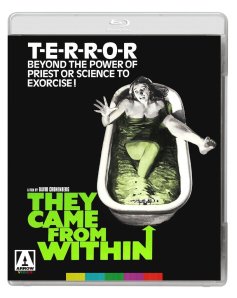
This unsettling sex horror (is that even a genre?) signalled the arrival of Canadian body horror maestro David Cronenberg. The residents of a luxury apartment building are attacked by repulsive turd-shaped parasites that drive the into a sexual frenzy. This is a movie that is bound to deeply disturb anyone remotely normal. Which of course, is great. The body-horror genre has its roots in the Atomic bomb era of the 1950s and the plethora of paranoid B-movies where the main character was mutated by radiation.  Cronenberg made that fantasy disturbing reality, which would lead to many other movies in that genre, such as Clive Barker’s “Hellraiser” and Cronenberg’s own “The Fly” in the 1980s, as well as direct homages such as 2006’s “Slither”.

You'll never get into the bathtub again... Cronenberg's "Shivers"!

You’ll never get into the bathtub again… Cronenberg’s “Shivers”!

Jaws 1975

The daddy of summer blockbusters. “Jaws” rewrote the Hollywood paradigm for making movies and still rules the waves. Okay, so the shark looks a bit rubber now. But thanks to a mechanical failure, Spielberg has given us one of the best (and most quotable) thrillers ever made. The movie’s success would lead to other popcorn movies like 1977’s “Star Wars”. As we know, these movies would influence the box-office for decades to come. Not for much longer would studios take a gamble on artistic and risky fare. Eventually, this would lead to the cut-and-paste plots of most big-budget movies today. In a way, “Jaws” sounded the death-knell of the kind of low-budget film-making that created so many different kinds of horror movie in the 1970s.

Next…

1975 – 1979!

Telepathic teenagers go on a rampage, zombies go for a morning stroll in a supermarket, a particularly unpleasant alien hitches a ride on a passing spacecraft, and a certain Michael Myers decides its time he went home…


Sneak preview of new horror novel “Project Nine”!

Today, I wanted to share with you something very special to me.

Here is the first look at the amazing cover for my new horror novel, “Project Nine”. The folks over at MyInkBooks have done a fantastic job putting this together. Suffice to say, a picture can say a thousand words!

But don’t be misled into thinking this is a straight-up horror yarn. I would never let you readers off the hook so easily! No, “Project Nine” is instead a horror/sci-fi/love story! Add a realistic police investigation and the evil machinations of a  ruthless politician… and you have a modern horror story with a distinctly classic feel.

The precise plot is under wraps for the moment, but I can say that if you like horror, this is the book for you! Even if the luscious young lady on the front cover doesn’t tempt you, how about this gushing review: “the narrative prose expounds a candor much in tune with all the greats in Literature”.

And as for how the novel got to be published, well that’s a story in itself!

But in case it sounds like I’m trying to sell you something… take a look below and see what you think.

FrontCover2


“Project Nine” is due to be published later this year.  I’ll be releasing more news as it arrives. Watch out for it!


Urban Fantasy anthology update!

NEWSFLASH!

My short story “Blood of an Englishman” features in Twisted Boulevard, the new urban fantasy anthology from Elektrik Milkbath Press. This eclectic blend of short stories promises to have something for everyone.

You can buy it from amazon.com, or amazon.co.uk if you’re a Brit. 

Hmm. Moody cover.


Monday blog tour!

My thanks this morning to fellow Mancunian speculative fiction writer and novelist Graeme Shimmin who nominated me to be the next person on the Monday Blog Tour. A pass-the-baton exercise bringing you blogs from different writers to start your week off on the right track!

What are you working on?

Between writing screenplays, I like to keep myself occupied by writing lengthy horror novels and short stories.

At the moment, I’m just waiting for my sci-fi/horror novel “Project Nine” to be published by myinkbooks.com. The good folks over there picked up my novel last year, and have been busily trying to convert my rather “eccentric” punctuation and spelling into something the public can actually make sense of.

What is it about?

Ah. The magic question.

“Project Nine” is about a young man who longs for immortality. He finds it in a beautiful woman who has escaped from a secret government research program that has created vampires through gene therapy.  He joins her and her friends who have also escaped in their endless trek across America’s backwoods, only to find himself hunted by a relentless detective and losing his own humanity in the process.

How does it differ from others in the genre?

If the Naughties have been so far filled with horror movies populated by twenty-something kids with six-packs and hair extensions, “Project Nine” is about as far from that kind of thing as you can possibly get.

It’s gritty, realistic, and psychologically believable. But it also has the large scale and operatic quality of classic horror stories. I aimed to balance the grim realism of modern fiction with the more emotionally-resonant horror of the 1970s and 1980s.

The vampires in this story are not cape-wearing cliches, nor are they gorgeously, seductive creatures. They are real people put in an extraordinary situation. They make good and bad choices. And they are capable of acts of kindness or unspeakable wickedness.

Why do you write what you write?

Why indeed. Who knows what evil lurks in the mind of Man? Not me, certainly. In my defence, I blame watching a steady diet of old Universal and Hammer horror movies when I was a kid. Rod Serling’s “Twilight Zone” stands out for me as being the best SF/Horror TV series ever made.

However, the first movie that really made my hair stand up on end was actually not a movie at all, but the truly frightening Made-For-TV, 2-part adaptation of Stephen King’s “‘Salems Lot” — the one with David Soul and James Mason. Man, that was scary.

Essential, late-night, family-friendly viewing!

Essential, late-night, family-friendly viewing!

I’ve also been an avid fan and collector of comics since I was knee high to an Inhuman. Marvel and 2000AD to be precise. People like Alan Moore have been a huge inspiration, especially “Watchmen”  and his run on DC’s “Swamp Thing”.

As far as “real” literature goes, HP Lovecraft remains for me the greatest master of the craft. I also devoured novels by Stephen King (although I especially like the short stories in his “Night Shift” collection) and the criminally underestimated British king of horror, James Herbert. Other influences include: Peter Straub, Frank Herbert, Terry Brooks, Anne Rice, Phillip K Dick, Harry Harrison and, of course, Ray Bradbury.

There. You asked for it.

Swamp Thing - the thinking man's horror comics.

Swamp Thing – the thinking man’s horror comic.

What is your writing process?

You mean I have a process?

Seriously, it all depends on whether I’m writing screenplays, novels, or short stories.

Screenplays tend to be very structured. I outline to a varying degree of depth before writing a first draft. Then I use a structured rewrite process. I recommend reading as many books as you can on the subject and then employing the rewrite proceess used by Paul Chitlik in his excellent book. Then repeat. Over and over again. And again. And again.

My novels are a different animal. My first novel started life as a comic script (now lost, sadly) and then grew into a full-length book. My second, unpublished work began life purely as a novel. I had a rough idea of what I wanted to say and what the theme would be, then I started writing. Now I’m in the process of getting peer feedback before rewriting and editing.

Short stories usually come out of the blue. I get a first line or an idea as I’m in the shower or walking down the street and then I run with it. The ones that pop into my head seem to be the most successful. The ones I agonize about and outline never see the light of day. Weird, eh?

How much do you write in a day?

Depends. I just wrote an entire screenplay in five days. When I was in what I like to call my James Joyce phase I could write ten pages of single-spaced prose on my typewriter (yes, I had one of those). That comes to about 350 words a page. So 3,500 words a day.  You nosey parker, you.

Previous Writer

I was asked to contribute to this project by Graeme Shimmin  as part of a chain of connections from writer to writer. Each writer answers the questions and then links to the next writer in the chain. Graeme writes mainly alternate history and some excellent short stories. I suggest you check out his intriguing, fact-filled blog.

Next on the Tour

Graeme Cole is a filmmaker extraordinaire and bon vivant who also writes absurdist fiction. He currently resides in Bosnia and runs L’Institute Zoom, which maintains a blog here.

Andrew Bellware is a sci-fi/fantasy/theatre director/writer/actor and all-round swell guy who works out of NYC. He and his producing partner run Pandora Machine Films, which maintains its eponymous blog (Rated “R” for some racy content — you have been warned). I recommend their marvellous movie Clone Hunter, written by some guy from England 😉

Clone Hunter - the greatest science-fiction ever made, apparently!

Clone Hunter – the greatest science-fiction ever made, apparently!

Intermission – how to calculate movie budgets

Before we carry on with our discussion of action lines, here is something I learned about movie budgets.

One of the most popular questions asked of screenwriters is “What is the budget of this movie”? Yet there are no websites I can see which offer guidance on this. So, to fill a gap I thought I would share my research with you, gentle reader…

It can be frustrating for a screenwriter trying to estimate his or her potential screenplay’s budget. How much do SFX cost? How much does it cost to shoot in a particular city or range of locations? Will those exotic wild animals bump up the cost?

The only way I’ve found any answers is to look at previous movie budgets. Now, inflation can be a vexing devil, so I’ve only gone back a few years in most cases.

Here’s a list of recent movies from a range of budgets, along with what it cost to make them (All numbers are taken from http://www.boxofficemojo.com):

BIG BUDGET
Man of Steel = $225 million
Iron Man 3 = $200 million
World War Z = $190 million
Fast & Furious 6 = $160 million
Gravity = $100 million

MEDIUM BUDGET
Crazy Stupid Love= $50 million
Zero Dark Thirty = $40 million
The Social Network = $40 million
The Rite = $37 million
Saving Mr Banks = $35 million
Looper = $30 million
Anchorman = $26 million
The Conjuring = $20 million
The Apparition = $17 million
Nebraska = $12 million

LOW BUDGET
Paranormal Activity 2 = $3 million
The Purge = $3 million
Last Exorcism = $1.8 million
Insidious = $1.5 million
The Devil Inside = $1 million

MICROBUDGET

Paranormal Activity = $15,000

What does this mean? Well, let’s break it down.

BIG BUDGET

At the top end, we have big budget tentpole studio movies crammed with SFX and bankable stars. If you can make one of these for under $100 million, good luck. This is a very small market. Studios may only make a handful of these a year. Most of them are adaptations. Competition is fierce, and writing jobs are usually assignments that are  given to writers with a proven track record for generating serious cash. Here you will find your Joss Wheedons, David S Goyers and Zack Snyders.

MEDIUM BUDGET

In the middle range we have movies that are between £10-$100 million. This is a big range, and may movies are made for this amount of money. Factors that can push your script into this bracket include SFX, a few bankable stars, or lots of animals and stunt scenes. So if you’re filming Tom Hanks, Anthony Hopkins, or Steve Carrell, or your script calls for a family of tigers, or a scene where someone jumps onto a moving semi-trailer (that’s a lorry for those of you who are English), or a wise-cracking CGI alien, this is likely to be your budget range. Again, there is tough competition here. Writers like Aaron Sorkin have made this budget range their own. But it may be possible to break into this market if you have a seriously strong concept and story that attracts star caliber talent or high-level investment. Note that many of these are dramas or dramedies. That’s because it’s tough to get a drama made unless you have a star, or an ex-star that wants to come back. Both of whom can push your low-budget piece up into this category.

LOW BUDGET

Next, we have the low budget world. This is the easiest spot to aim at. Most of these movies have either no SFX, a limited cast, are contained (i.e. they have limited locations, ideally less than 4), or are found footage. This is the world of the TV or family movie, However, it is also notably dominated by the horror genre. Horror has been the proving ground for many directors who went on to be A-listers (Steven Spielberg, Peter Jackson) and tends to feature actors who can carry a movie without having the ego or bank account of so-called “stars”. A good horror movie can break box-office records, and studios know this. For instance, Insidious (2011) cost only £1.3 million to make, yet grossed over $55 million. Compare that to infamous flop “John Carter” (2012), which cost $250 million yet has recouped only $75 so far.

MAICRO-BOUDGET!!!!

Finally, we have the weird and wonderful world of the microbudget movie. This can be the kind of thing that premieres on the horror channel (if anywhere), or the kind of megahit that makes an entire career. Again, horror tends to dominate. Paranormal Activity, The Blair Witch Project, and Halloween all became the most profitable independent films ever at one time. However other genres proliferate, such as 1980s sci-fi cult hits like Charles Band’s Trancers. However, it’s pretty safe to say these are flukes.

In reality, the low budget movie seems like a more sensible place to start. However, a word of warning: limiting your ideas to deliver a tiny budget movie may be a mistake. My own movie “Clone Hunter” was written as a big-budget space opera, yet managed to translate into a much lower budget movie. However, I’ve written microbudget movies by shoe-horning my ideas into confined locations without any SFX, and these failed to ignite any interest.

In my opinion, it doesn’t hurt to put your eggs in different baskets. You can always try for a big-budget payoff while honing that indie coming-of-age drama and rattling off that limited location found footage horor movie.

Like everything with writing, it seems there’s no single surefire quick access route to success. Sometimes it’s just a matter of writing what excites you and finding someone who is as passionate about your material as you are. If nobody else shares your vision, move on.


10 comic book superheroes who deserve their own movie…

Ahem…

(In ominous voice)

In this blog, dear reader, I tempt vilification by geekdom. Should I leave out a beloved favourite, I will no doubt suffer the wrath of comic book fanatics everywhere. And yet it would be remiss of me indeed not to at least attempt a short compendium of comic books which should have their own movie.

Some of the creations listed below may have already had their own movies, but these were either so bad they have been entirely forgotten, or so low budget as to demand a proper blockbuster version. You decide…

Marvel enters the 1970s with Heroes for Hire.

Marvel enters the 1970s with Heroes for Hire.

10. HEROES FOR HIRE

Created at the height of the Kung-Fu/Blaxploitation movie genre craze in the 1970s, the Heroes for Hire became major fixtures in the Marvel Universe. Comprising Iron Fist — a Westerner trained in mystical kung-fu arts by interdimensional monks — and Luke Cage aka Power Man — a street fighter given a second chance by an experiment that made him virtually indestructible, the Heroes for Hire were just that. Motivated by dollar bills rather than altruism, they usually managed to stay on the side of good. Actor Nicholas Cage was so taken with Power Man that he adopted the character’s second name as his own. Surely worth a movie?

9. POWER PACK

Invented by Marvel in the 1980s, this is the story of four ordinary children who receive super-powers from a dying alien, Power Pack faced the menace of the alien Snarks, who were hell bent on Earth’s destruction. Tasked with rescuing their inventor father from the Snark mothership, these kids behaved like real kids — squabbling, crying, and discovering their inner heroes. This one has Disney stamped all over it. A terrible TV pilot made in the 1990s is best forgotten.

8. HOURMAN

An unfairly maligned character, Hourman was a Golden Age superhero who appeared in All Star comics before being revamped in DC comics by supergenius comic book creator Gardner Fox (Flash, Green Lantern etc etc). Chemist Rex Tyler discovers a miracle pill (Miraclo) that gives him superpowers… but only for one hour.  The twist was that Miraclo was addictive, which gave this character a greater psychological realism than others of his era.

7. THE MAN CALLED NOVA

Richard Ryder was Marvel’s 1970s version of Peter Parker  — a weedy loser who was given incredible powers and became “the human rocket” when he was zapped by a spaceship and given the powers of a Centurian Nova Prime, guardian of the planet Xandar.  Ryder had a popular comic book, teaming up with other heroes such as Spider-Man, before finally relinquishing his powers. An awesome-looking new version of the superhero was launched for the Annihilation: Conquest storyline in the 2010s, proving that Nova can still attract the fans.

185px-Nova_1_(1976)[1]

Nova rockets into the 1970s!

6. SLAINE

Pat Mills’ extraordinary Celtic barbarian warrior first graced the pages of 2000AD at the turn of the 1980s. Since then his popularity has endured. A rather “earthy” hero, Slaine is accompanied on his journeys across time by the disgusting dwarf Ukko, and has faced off against both aliens and dinosaurs. But Slaine’s most unique feature is his “warping” power, in which he channels the energy of ley-lines to became a monstrous, Hulk-like behemoth!

5.DR. STRANGE

Created by Stan Lee in the 1960s, Stephen Strange was a gifted surgeon with a drink problem. After crashing his car, he was found by the Ancient One and schooled in the mystic arts to become Earth’s sorceror supreme. A classic, old-school superhero, Dr. Strange’s adventures took him to all manner of fantastic and bizarre dimensions thanks to legendary comics artist Steve Ditko. A TV movie was made in the early 1980s with John Mills that actually wasn’t all that bad. Time for another try, methinks.

4. THE SUB-MARINER

Originally a villainous foe of The Fantastic Four, Prince Namor of Atlantis grew to become much more than that. Namor’s supreme pride and arrogance makes him the perfect anti-hero. He’s had his own comic book on and off since the 1960s. But a movie? Well, it would be better than “Aquaman”. If only they could get rid of those nutty wings…

Prince Namor, cousin of Colonel Sanders.

Prince Namor, cousin of Colonel Sanders!

3. THE BALLAD OF HALO JONES

Before Watchmen, Alan Moore created a host of genius characters, many for British comic 2000AD. Halo Jones is an Everyman, or rather, an “Everygirl”. Born into an overpopulated Earth in the far future, she seeks escape and adventure beyond the stars, only to find abject misery, cruelty, and exploitation at every turn as both a scantily-dressed hostess and a battle-hardened warrior in a horrific future war. Gloriously pessimistic.

2. WONDER WOMAN

The archetypal female superhero — so why has she never had her own movie? Played by Linda Carter on TV in the 1970s in a series that was far too campy for its own good,and invented by psychologist William Moulton Marston, Wonder Woman exemplified the fighting spirit of America in WWII. This is a superhero with a  history as long as Batman and Superman. An attempt was made to revitalize the character recently but proved a misfire. But who could step into Wonder Woman’s boots and lasso?

1. SWAMP THING

When Alan Moore was lured to America by DC comics in the 1980s, he reimagined this floundering comic book property. From his humdrum origins as yet another product of a scientific experiment gone wrong, Swamp Thing was transformed into one of the finest comic books ever written. Moore’s magnificent “American Gothic” cycle sees Swamp Thing encounter all manner of staple horror monsters, all wonderfully reinvented to reflect modern America…. menstrual werewolves, water-dwelling vampires, radioactive zombies, haunted houses filled with the victims of gun crime. Swamp Thing journeys across the multiverse, from Heaven to a Hell that is the most completely imagined vision of the afterlife in the history of comics. During this we are also introduced to a British psychic called John Constantine. Swamp Thing was made into two attrociously bad movies in the 1980s as well as a TV series. None of them have (thankfully) anything to do with Moore’s work. This is a comic book that is ripe for the big screen (pun intended). Forget the other big green guy. Swamp Thing is where it’s at!