Tag Archives: genre

The Best Horror Movies of the Past 50 Years, Part 3! The Seventies! 1976-1979!

Hi, there, horror fans! Last time we looked at how Hollywood was unafraid to make more experimental horror features in the early 1970s. Although Spielberg’s “JAWS” would lead to studios forever chasing the summer blockbuster, the late Seventies were still an exciting time for horror movies. Foreign filmmakers like David Cronenberg and Dario Argento were developing cult followings. Meanwhile, low budget filmmaking was about to come into its own, as was a certain young horror writer from Maine, New England…

Let’s start our list of late seventies horror with…

The Omen 1976

No-one can doubt the influence of Richard Donner’s by-the-numbers horror movie. With more than just a passing nod to artsy horror masterpiece “The Exorcist”, this is a rip-roaring Hollywood-style horror flick. It boasts some bravura set-pieces, such as the decapitated photographer. With stalwart acting from heavyweights Gregory Peck, Lee Remick, Billy Whitelaw, and David Warner, the picture is very believable. But there’s no happy ending here as the Antichrist is born to a powerful American politician. This movie created a profitable and mostly well-made series of sequels that gave the world Sam Neil. It also became the bane of children named Damien everywhere.

Martin... a new kind of vampire.

Martin… a new kind of vampire.

Martin 1976

George A Romero, back from “Night of the Living Dead”, triumphed again with this underappreciated cinematic gem. It’s a genuinely original take on vampires. Is homicidal young loner Martin a vampire or not? Is he merely disturbed, or is there some truth in his bizarre flashbacks to another time? Terrific, glory, explicit, sensual, thought-provoking and beautifully filmed, this movie features an amazing performance by the underused John Amplas. Overlooked at its time, this has become a true cult classic.

Carrie 1976

The arrival of a young writer called Stephen King created a reign of terror that is still going today. Hollywood struck gold with King’s curiously brief tale of an alienated young girl with awesome telekinetic powers. Phenomenal directing by Brian De Palma (of “Sisters” fame) catapulted King into the popular consciousness. At one level this is a time-tested tale of an ugly duckling who gets her revenge. But DePalma used split screen and slow motion camera work to viscera effect for the final massacre that is actually too much to fit on one screen! What is mentioned less often is the great cast of actors including Sissy Spacek and Piper Laurie. This is one horror blockbuster that stands the test of time.

Suspiria 1977

Italian Filmmaker Dario Argento’s most well-known film is about a coven of witches posing as a ballet school in Italy. Some memorable set-pieces elevate this beyond its video-nasty style violence. Argento often treads a fine line between good and poor taste. Here, he manages to keep it on the straight and narrow. It also boasts a great score by the world’s foremost horror band… Goblin!

Dawn of the Dead 1978

Which brings us to George A Romero’s sequel to “Night of the Living Dead”. Where “Night” finished, “Dawn” goes a step further. Civilization is falling into chaos at the hands of the zombie invasion. We begin with some great scenes of things literally going to hell. Four survivors hitch a ride on a helicopter and hole up at an abandoned shopping mall. They soon learn that having everything does not make you happy. A social satire as well as a very frightening movie, the impact of “Dawn” may be diluted now due to dated make-up effects and the current trend for fast-running zombies. But the Romero’s innumerable hordes of shambling ghouls still make for claustrophobic viewing. This movie gave us memorable images like the Hari Krishna zombie, elevators full of undead shoppers, and an eerie kids’ TV theme tune. It also features some great acting from a cast who sadly never went on to stardom. “Dawn” has influenced virtually every horror movie since, including current TV sensation “The Walking Dead” and 2004’s delightful “zombie-rom-com” “Shaun of the Dead”. And come on, don’t you wish you were in that world, just a little bit?

The slasher genre... the most profitable genre in movies!

The slasher genre… the most profitable genre in movies!

Halloween 1978

John Carpenter’s film debut is actually not his film debut. That came with sci-fi black comedy “Dark Star” (1974). But he will forever be associated with this low-budget shocker about a psychopath that comes back to a leafy suburb to kill again on the titular eve. The movie made Jamie Lee Curtis a scream queen and cemented the “slasher movie” as a staple of cinema. The slasher movie’s key components of low cost, titillation, and violence was a wining combination, one that survives to this day. Arguably, this is the one sub-genre that has blackened the reputation of horror films, due to the many terrible or poor taste rip-offs branded “video nasties” in the 80s, such as the inept “Driller Killer”. But what makes “Halloween” a lot more intelligent than many of its successors is John Carpenter’s expert direction. He makes every shadow in your living room menacing, every closet or couch the potential hiding place of a madman. So that by the end of the movie your own house is no longer a safe place to hide. For a long time the most successful independent film ever made, “Halloween” is a true horror classic.

The Amityville Horror 1979

Hollywood must have been confused by the success of “Halloween”, if this return to the tried-and-tested haunted house formula is anything to go by. To be fair, it’s a very effective movie. The haunted house is given a twist by adding a bit of demonic possession, as well as copying the “true story” myth from “Texas Chainsaw Massacre” to give it added credence. But the worrying priest, bleeding walls etc are all things we’ve seen before. A well-made film that spawned innumerable sequels of decreasing quality and suffered the obligatory 21st century “reboot”. But that’s really the only reason it’s here.

It's enough to put you off eggs for life.

It’s enough to put you off eggs for life.

Alien 1979

Which brings us to the end of the 1970s. If Hollywood was running out of fresh ideas, it found one of its most enduring franchises in this unofficial adaptation of the B-movie shocker  “It! The Terror From Beyond Space” (1958). At the time, science-fiction mania was sweeping the world, thanks to the pop culture phenomenon of “Star Wars” (1977) and Spielberg’s “Close Encounters of the Third Kind” (1977). The time was ripe for a sci-fi/horrror hybrid. Cue Dan O’Bannon and Ronald Schussett’s script of a rather unpleasant alien that stows away on a space ship. A very simple movie, enhanced by amazing visuals and strong actors, this is essentially hide-and-seek on a space ship. The groundbreaking chestburster scene also gave audiences a scare they would never forget. Responsible for a slew of sequels, some better than others, the end of the Seventies showed that horror was still prepared to boldly go where no ghoul had gone before!

Next time… The Eighties arrives!

In which aliens get even nastier, vampires get even cooler, werewolves get even hairier, and a some teenagers have their sleep disturbed on Elm Street. Sweet dreams!



The Best Horror Movies of the Past 50 Years, Part 2! The Seventies! 1970-1975!

Last time we saw how horror movies changed in the 1960s, from classic Gothic horror like the Hammer films and Roger Corman’s Edger Allen Poe adaptations to pessimistic modern horror stories like “Rosemary’s Baby” or “Night of the Living Dead”. This time we turn out attention to the 1970s – possibly the most exciting time for horror since the Universal monster movies of the 1930s and 1940s.

During this decade, Hollywood proved it was willing to take risks with stories, to go places they had never gone before. Add to this a new tide of horror authors who wanted to update the Gothic horror staples of vampires and werewolves, including a certain Stephen King, and you have a decade of some of the greatest horror movies ever made. In fact, there are so many great horror movies of the Seventies that I’ve had to split this post up! So here are what I think are the most influential horror movies from 1970 to 1975!

blood

A Bay of Blood (1971)

One feature of early 1970s cinema is the debt it owes to cinema verite. Even Spielberg’s “Close Encounters of the Third Kind” owes a debt in places to this documentary-style of film-making. The trend suited low-budget movie-makers and would lead to the infamous slasher movie. The start of that craze can be found here. Part Italian giallo, part murder mystery, “Bay of Blood” was made by Mario Bava, a film-maker who deserves far more recognition than he has enjoyed. A number of potential heirs and heiresses to a fortune are invited to the titular Bay. They then try to kill each other off in various gory and brutal ways. Boasts some bravura set–pieces. The octopus is a great surprise also!

Deliverance 1972

You’ll never play the banjo again. Disturbing hi-jinks in America’s backwoods when some city slickers cross paths with the twisted locals. John Boorman’s gripping horror-thriller features a young Burt Reynolds. Copied many times, sometimes humorously, sometimes not.

Exorcist 1973

This is a movie which probably needs no introduction from me. A supernatural chiller directed by William Friedkin and based on the best-seller by William Peter Blatty, itself based on a supposedly real event. It broke all records when released and became notorious not just for fainting audiences, but for the treatment its stars were subjected to. Today, it’s been copied so many times that it may have lost its power to shock. It has directly influenced every exorcism movie since, as well as forming the basis for the dubious Leslie Nielsen comedy “Repossessed”. Still, as a meditation on the power and seductiveness of evil, it’s compelling.

Sisters 1973

Brian DePalma’s first movie. So demented it’s terrific. Margot Kidder stars as a pair of French-Canadian Siamese twins that were separated with horrific consequences. This is a movie that seeks to turn horror tropes and clichés on its head. Its twists keep going right to the end. It is also part of the illustrious mad-doctor movie that became popular with “Eyes Without A Face” and keeps on going today with movies like “Hostel” and the distasteful “Human Centipede” films.

The Wicker Man 1973

The world’s first horror musical! Fantastic British chiller starring Edward Woodward as a religious police officer who goes to investigate a disappearance on a remote Scottish island where paganism is rife. Although it was remade poorly, this really is a one-of-a-kind movie. Music by folk-rock band Pentangle serves as an atmospheric soundtrack  to what is probably the bleakest ending ever.

Black Christmas 1974

This expertly-made psycho-thriller started the old gag that the killer is making phone calls from inside the victim’s house.A killer is stalking a sorority sisterhood. Margot Kidder again resurfaces, this time as the victim.  A genuinely disturbing movie in some places and a forerunner of the teen slasher movie that was to come.

Texas chainsaw Massacre 1974

Another 70s shocker that has lost most of its power due to continually being copied. It’s hard to imagine the modern psycho-killer movie without TCM. This brutal film began the “endurance horror” craze and took the idea of murderous hillbillies one step further. You actually see very little gore in this movie. But audiences were convinced they saw more, such was the power of suggestion. Today, its ferocity is hard to understand, but on release this was one of the movies that changed the horror landscape and paved the way for the “video nasties” of the 1980s.

Deep Red 1975

Dario Argento’s best movie. This is a true giallo film — a type of Italian thriller that closely identifies with the killer and features elaborate set-pieces. David Hemmings is the American out of his depth who witnesses a murder in Rome. Or did he? A superb mystery with some excellent death scenes. Probably the finest giallo movie ever made.

Shivers 1975

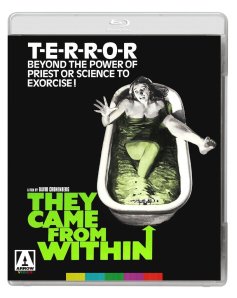
This unsettling sex horror (is that even a genre?) signalled the arrival of Canadian body horror maestro David Cronenberg. The residents of a luxury apartment building are attacked by repulsive turd-shaped parasites that drive the into a sexual frenzy. This is a movie that is bound to deeply disturb anyone remotely normal. Which of course, is great. The body-horror genre has its roots in the Atomic bomb era of the 1950s and the plethora of paranoid B-movies where the main character was mutated by radiation.  Cronenberg made that fantasy disturbing reality, which would lead to many other movies in that genre, such as Clive Barker’s “Hellraiser” and Cronenberg’s own “The Fly” in the 1980s, as well as direct homages such as 2006’s “Slither”.

You'll never get into the bathtub again... Cronenberg's "Shivers"!

You’ll never get into the bathtub again… Cronenberg’s “Shivers”!

Jaws 1975

The daddy of summer blockbusters. “Jaws” rewrote the Hollywood paradigm for making movies and still rules the waves. Okay, so the shark looks a bit rubber now. But thanks to a mechanical failure, Spielberg has given us one of the best (and most quotable) thrillers ever made. The movie’s success would lead to other popcorn movies like 1977’s “Star Wars”. As we know, these movies would influence the box-office for decades to come. Not for much longer would studios take a gamble on artistic and risky fare. Eventually, this would lead to the cut-and-paste plots of most big-budget movies today. In a way, “Jaws” sounded the death-knell of the kind of low-budget film-making that created so many different kinds of horror movie in the 1970s.

Next…

1975 – 1979!

Telepathic teenagers go on a rampage, zombies go for a morning stroll in a supermarket, a particularly unpleasant alien hitches a ride on a passing spacecraft, and a certain Michael Myers decides its time he went home…


How to Write Loglines – an actually useful guide

Want to know how to write effective loglines for movies and books? Read on!

INTRODUCTION

There has been so much written on the subject of writing loglines that I thought it was about time I added my tupppence (or two cents, depending on which side of the Atlantic you are on) to the debate.

Let’s start with the basics:

1. WHAT IS A “LOGLINE”?

A logline can apply to both novels and screenplays for movies. They are generally short, punchy descriptions of the plot (i.e. the thing your story is about). Editors, agents, producers and assorted other people often ask for a logline when they are deciding whether to buy or represent your work.

Interestingly, neither Robert McKee in his lauded book “Story” nor William Goldman in his seminal essay “Adventures in the Screen Trade” mention what a logline is. Yet I would argue that is one of the most essential tools the screenwriter or novelist has at his or her disposal. In fact, it is an essential skill to master.

One thing a logline is not is that thing you see on movie posters. This is in fact a “tagline”. Tagllines are very short (usually one sentence, or sometimes less!) statements used to entice someone into watching a movie.

An example of a tagline:

“In space, no-one can hear you scream” (Alien)

While this is a great tagline, note that it tells us nothing about what is going on (other than it’s in space, and you’re likely to scream).

A logline is more sophisticated and tells us more about the story.

For example:

“A psychopath escapes from an asylum and slashes his way through a quiet suburban neighbourhood until he is defeated by a bookish young woman” (Halloween).

Okay, so it’s not poetry. But you get the picture.


2. WHY THE HELL DO I NEED A LOGLINE ANYWAY?

But Eric, you say, why should I distil my 100,000 word novel or my 120 pages screenplay, work of genius that it is, into a single sentence?

The answer: a logline is a selling tool.

Loglines allow you to “pitch” (i.e. tell) someone about your story in a very short space of time. And when you’re dealing with producers, agents and executives who can only spare you less than a minute, this becomes important.

Of course, if you’re happy just writing and never selling anything, loglines probably won’t apply to you. Good luck on your chosen career path. Some of us have to eat.

A good logline can make someone sit up in their seat and pay attention. It can entertain, move and arouse curiosity in the listener. And it can delay that moment when they start yawning or hang up.


3.  OKAY, SMARTYPANTS. WHAT IS A GOOD LOGLINE MADE UP OF?

Opinions abound on this.

In his excellent guide “Raindance Writers Lab: Write and Sell the Hot Script”, Elliott Grove suggests that you first come up with a “basic premise”. This, to me, is a logline: a 25 words or less summary of the plot.

A rule of thumb is, the shorter the logline, the higher the concept.

High concept is what sells in Hollywood (although other types of film also sell). What is a high concept? Basically, something that’s real easy to sell.

In “Save the Cat” by Blake Snyder (a book no screenwriter should be without)  the author says that a killer logline should include the following:

– Irony

– A compelling mental picture

– An idea of audience and cost

– A killer title

Let’s investigate:

Irony

What is Irony? In the film “Borat” , Sascha Baron Cohen in his alter ego of the Khazakstanian ambassador to the USA, interviews a real-life professor of comedy. When the Professor tries to explain a joke to him, Borat deliberately gets the wrong end of the stick repeatedly. This goes on for some time until it becomes very funny. Everyone but the Professor of comedy, who is paid to understand humour, gets the joke. That is irony.

An example of irony in a logline would be: “A lawyer is forced to tell the truth for 24 hours after his son makes a birthday wish ” (Liar Liar).

The other elements are all important. A title is essential to help your movie stand out from the crowd. A sense of scale and budget will help others to decide whether to invest (is it “The Blair Witch Project” or “Avatar”?) .

However, there are basic elements I think this definition leaves out.

The easiest way to analyse what makes a good logline is to look at one.

Here are two examples:

“A police chief with a phobia of the sea must kill a giant shark but faces opposition from the local mayor who demands that the beaches stay open” (Jaws).

“A naive farmboy on a distant planet learns that he is actually the son of a legendary warrior and sets out to rescue a princess from an evil galactic empire”. (Star Wars).

Here we can see irony at work. The police chief is afraid of the water but must fight a shark. The farmboy is naive but must somehow defeat a whole army.

But there is more than just irony in a logline. Looking at our examples, here are some common elements:

A PROTAGONIST in an IRONIC SITUATION must overcome an OBSTACLE to achieve a GOAL in an ARENA.

Tackling “Jaws” first:

“A police chief [PROTAGONIST] with a phobia of the sea [IRONY] must kill a giant shark [GOAL ] but faces opposition from the local mayor [OBSTACLE ] who demands that the beaches stay open [ARENA]”.

The ARENA is the environment the story takes place in. This could be a location (a distant planet), a particular organisation (for example, the mafia), or even within the family unit (see “Ordinary People” for an example).

Sometimes the ARENA will be implicit. Other times you will have to spell it out. But the logline should give a sense of this.

Note that the OBSTACLE may be the same as the ANTAGONIST, or it may not. In “Jaws”, you may think the antagonist is the shark. But in fact it is the local mayor who opposes Brody’s shark safety measures. Killing the shark is the GOAL.

In “Star Wars” the antagonist is Darth Vader (or Grand Moff Tarkin to be precise). But in fact the whole Empire is what poses the problem.

The point is, the OBSTACLE is a fluid concept, depending upon how you craft your logline. But I believe there is an optimum balance to be achieved for maximum effect.

Here is another example that shows the flexibility of the logline concept:

“A young man and woman from different ends of the social spectrum fall in love aboard an ill-fated ocean liner.” (Titanic)

Breaking it down:

“A young man and woman [PROTAGONIST] from different ends of the social spectrum [OBSTACLE] fall in love [GOAL] aboard an ill-fated ocean liner [ARENA and IRONY].”

Note that it is the young woman who is the protagonist. More on that in another post. But the story is always about ONE PERSON’s journey. Unless it’s an ensemble film. Which just goes to show that William Goldman was right when he said “Nobody knows anything”!

One more for the road:

“A loyal Roman general is betrayed and his family murdered by an insane Emperor and returns to Rome as a gladiator to seek revenge” (Gladiator)

Here’s the breakdown:

“A loyal Roman general [PROTAGONIST] is betrayed [IRONY] and his family murdered by an insane Emperor and returns to Rome as a gladiator [OBSTACLE and ARENA (literally!)] to seek revenge [GOAL]”.

Note also that sometimes it is the Protagonist’s FLAW which provides the irony (such as the farmboy being naive in “Star Wars” or the police chief with a phobia off the sea in “Jaws”). Other times it is the entire situation which is ironic, such as the loyal Roman general who is enslaved and betrayed by his own Emperor. Again, it’s a flexible concept.

The important thing is not to get hung up on the details but to check all the boxes.

One last thing. It may be worth your while to develop the logline BEFORE you write the script, as this way you can build a story that has the strongest foundations possible.

IN SUMMARY

So there you have it:

PROTAGONIST + IRONIC SITUATION + OBSTACLE + GOAL + ARENA

Not necessarily that order!

Have fun with loglines. You will probably take quite a few goes to build the best logline for your story. But the rewards are worth it. A logline is the PRIMARY selling tool. Once you practice it, you will surprised at the results.


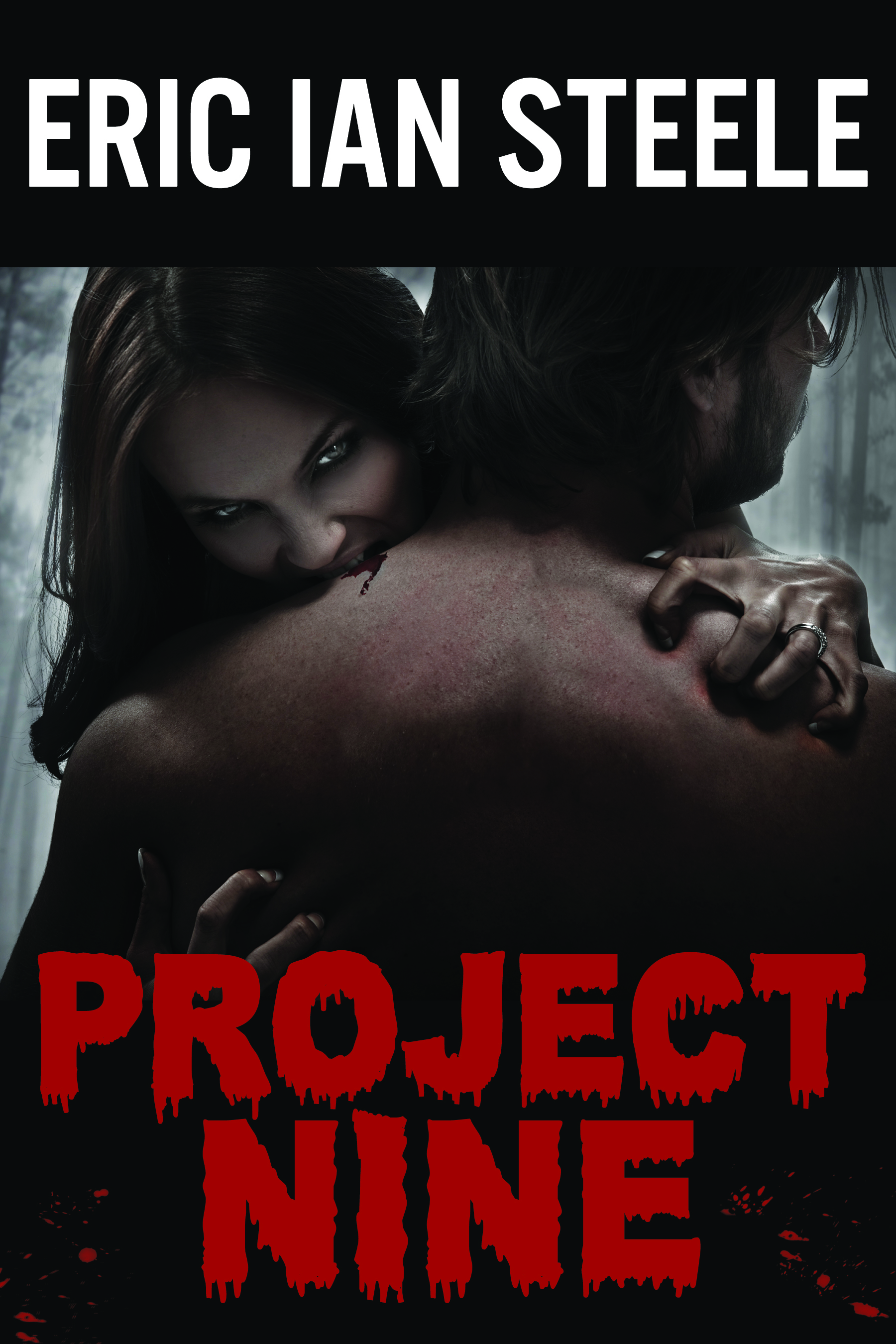
Sneak preview of new horror novel “Project Nine”!

Today, I wanted to share with you something very special to me.

Here is the first look at the amazing cover for my new horror novel, “Project Nine”. The folks over at MyInkBooks have done a fantastic job putting this together. Suffice to say, a picture can say a thousand words!

But don’t be misled into thinking this is a straight-up horror yarn. I would never let you readers off the hook so easily! No, “Project Nine” is instead a horror/sci-fi/love story! Add a realistic police investigation and the evil machinations of a  ruthless politician… and you have a modern horror story with a distinctly classic feel.

The precise plot is under wraps for the moment, but I can say that if you like horror, this is the book for you! Even if the luscious young lady on the front cover doesn’t tempt you, how about this gushing review: “the narrative prose expounds a candor much in tune with all the greats in Literature”.

And as for how the novel got to be published, well that’s a story in itself!

But in case it sounds like I’m trying to sell you something… take a look below and see what you think.

FrontCover2


“Project Nine” is due to be published later this year.  I’ll be releasing more news as it arrives. Watch out for it!


Screenwriting Contests. Are they worth it? What are the best ones?

There are tons of screenwriting contests out there. Many of them charge a hefty fee just for the privilege of considering your work. But are they worth it? And what are the best ones? Indeed, how do you tell what is “best” when entering a screenwriting contest?

The first contest I ever entered no longer exists. I studiously ignored the rules about formatting, had my script professionally bound at the local Staples, paid my $40, and waved goodbye to it in the mail.

Nowadays, I like to think that I know a little more than that.

For me, it’s all about a “risk to reward” ratio. Before you shell out your hard-earned $45+, I ask:

How big is the contest you are entering?

What are the prizes?

What will you achieve if you win or place?

The bigger the contest, the more competition. Do you enter a massive international contest like the PAGE Awards with thousands of other entrants, or do you target the latest niche contest for horror screenplays?

What are the prizes? Is it a $50 check and some software, or is it $10,000? Some contests like Trackingb.com don’t even offer a cash prize. The “prize” is that you get your script shopped to some very influential people. Is it worth it? Well, that’s up to you. Some contests even promise to make the winning script. In my book, that is priceless. But will it lead to anything? Again, like most things in showbiz, it’s uncertain.

“What will you achieve if you win” is for me the most important question to ask yourself. Many sources state that there are a few contests that Hollywood truly sits up and takes notice of. For instance, in his excellent book Breakfast with Sharks, Michael Lent states that the top screenwriting contests include:

The Nicholl Fellowships

The PAGE Awards

Austin Film Festival

Final Draft’s Big Break contest

Disney/ABC Writing Fellowship (sadly unavailable outside the USA)

The Sundance Institute (for USA writers only; however they do host an international screenwriters’ lab in Utah if you have a spare month or so and manage to be one of the 6-8 screenwriters they choose from the rest of the entire world!)

He also lists some others that no longer exist. I would add:

Trackingb.som

So, as the title of this blog is “The Hard Way to Hollywood”, let’s assume that, like me, you are British. That leaves five screenwriting contests that, according to Lent, appear to be some of the few contests that have truly sparked A-list careers. For example, Andrew W Marlowe (Air Force One, End of Days), Doug Atchinson (Akeelah and the Bee), and Allison Anders (Gas, Food, Lodging) all won Nicholls Fellowship Awards.

Sort of narrows it down, right?

Maybe not…

Did you notice all the qualifiers in those earlier sentences?

I would not discount the smaller contests. They may provide you with a nice, fat check (or cheque, as we say in England) that will keep you going for a while longer. Or they may open doors and work very hard for you and your script. There are plenty of success stories associated with other contests, such as Script Pipeline or Scriptapalooza. So the field is not perhaps quite as narrow as I have led you to believe. 

Another factor in your decision whether to enter a contest may be where you are right now in terms of skill and experience. Before the website was discontinued, I used to regularly place in WriteSafe.com’s monthly contest. No money. But it looked good on my fledgling CV (or resume, if you’re from the USA). Did it get me anywhere? Maybe, in small steps.

So I can’t tell you whether it’s worth entering in screenplay contests. Only you can do that.

There are, of course, many A-list screenwriters who never won a screenplay contest.

Also, depending upon where you are in your career, you may choose to go for a smaller contest with less competition, but which is going to net you valuable connections and where the organizers are going to work harder for your script.

One last thing: it pays to check out the genre of scripts that have previously won. There is little point sending your zombie slasher movie to the Nicholls unless it speaks to something new in the human condition. But then again, you never know!

To find a complete list of contests, check out the ever-reliable http://www.moviebytes.com.

Monday blog tour!

My thanks this morning to fellow Mancunian speculative fiction writer and novelist Graeme Shimmin who nominated me to be the next person on the Monday Blog Tour. A pass-the-baton exercise bringing you blogs from different writers to start your week off on the right track!

What are you working on?

Between writing screenplays, I like to keep myself occupied by writing lengthy horror novels and short stories.

At the moment, I’m just waiting for my sci-fi/horror novel “Project Nine” to be published by myinkbooks.com. The good folks over there picked up my novel last year, and have been busily trying to convert my rather “eccentric” punctuation and spelling into something the public can actually make sense of.

What is it about?

Ah. The magic question.

“Project Nine” is about a young man who longs for immortality. He finds it in a beautiful woman who has escaped from a secret government research program that has created vampires through gene therapy.  He joins her and her friends who have also escaped in their endless trek across America’s backwoods, only to find himself hunted by a relentless detective and losing his own humanity in the process.

How does it differ from others in the genre?

If the Naughties have been so far filled with horror movies populated by twenty-something kids with six-packs and hair extensions, “Project Nine” is about as far from that kind of thing as you can possibly get.

It’s gritty, realistic, and psychologically believable. But it also has the large scale and operatic quality of classic horror stories. I aimed to balance the grim realism of modern fiction with the more emotionally-resonant horror of the 1970s and 1980s.

The vampires in this story are not cape-wearing cliches, nor are they gorgeously, seductive creatures. They are real people put in an extraordinary situation. They make good and bad choices. And they are capable of acts of kindness or unspeakable wickedness.

Why do you write what you write?

Why indeed. Who knows what evil lurks in the mind of Man? Not me, certainly. In my defence, I blame watching a steady diet of old Universal and Hammer horror movies when I was a kid. Rod Serling’s “Twilight Zone” stands out for me as being the best SF/Horror TV series ever made.

However, the first movie that really made my hair stand up on end was actually not a movie at all, but the truly frightening Made-For-TV, 2-part adaptation of Stephen King’s “‘Salems Lot” — the one with David Soul and James Mason. Man, that was scary.

Essential, late-night, family-friendly viewing!

Essential, late-night, family-friendly viewing!

I’ve also been an avid fan and collector of comics since I was knee high to an Inhuman. Marvel and 2000AD to be precise. People like Alan Moore have been a huge inspiration, especially “Watchmen”  and his run on DC’s “Swamp Thing”.

As far as “real” literature goes, HP Lovecraft remains for me the greatest master of the craft. I also devoured novels by Stephen King (although I especially like the short stories in his “Night Shift” collection) and the criminally underestimated British king of horror, James Herbert. Other influences include: Peter Straub, Frank Herbert, Terry Brooks, Anne Rice, Phillip K Dick, Harry Harrison and, of course, Ray Bradbury.

There. You asked for it.

Swamp Thing - the thinking man's horror comics.

Swamp Thing – the thinking man’s horror comic.

What is your writing process?

You mean I have a process?

Seriously, it all depends on whether I’m writing screenplays, novels, or short stories.

Screenplays tend to be very structured. I outline to a varying degree of depth before writing a first draft. Then I use a structured rewrite process. I recommend reading as many books as you can on the subject and then employing the rewrite proceess used by Paul Chitlik in his excellent book. Then repeat. Over and over again. And again. And again.

My novels are a different animal. My first novel started life as a comic script (now lost, sadly) and then grew into a full-length book. My second, unpublished work began life purely as a novel. I had a rough idea of what I wanted to say and what the theme would be, then I started writing. Now I’m in the process of getting peer feedback before rewriting and editing.

Short stories usually come out of the blue. I get a first line or an idea as I’m in the shower or walking down the street and then I run with it. The ones that pop into my head seem to be the most successful. The ones I agonize about and outline never see the light of day. Weird, eh?

How much do you write in a day?

Depends. I just wrote an entire screenplay in five days. When I was in what I like to call my James Joyce phase I could write ten pages of single-spaced prose on my typewriter (yes, I had one of those). That comes to about 350 words a page. So 3,500 words a day.  You nosey parker, you.

Previous Writer

I was asked to contribute to this project by Graeme Shimmin  as part of a chain of connections from writer to writer. Each writer answers the questions and then links to the next writer in the chain. Graeme writes mainly alternate history and some excellent short stories. I suggest you check out his intriguing, fact-filled blog.

Next on the Tour

Graeme Cole is a filmmaker extraordinaire and bon vivant who also writes absurdist fiction. He currently resides in Bosnia and runs L’Institute Zoom, which maintains a blog here.

Andrew Bellware is a sci-fi/fantasy/theatre director/writer/actor and all-round swell guy who works out of NYC. He and his producing partner run Pandora Machine Films, which maintains its eponymous blog (Rated “R” for some racy content — you have been warned). I recommend their marvellous movie Clone Hunter, written by some guy from England 😉

Clone Hunter - the greatest science-fiction ever made, apparently!

Clone Hunter – the greatest science-fiction ever made, apparently!

Monsters in the House

Today I’m going to share some secrets with you about how to write in the movie genre called “Monster in the House”.

The late, great Blake Snyder can be credited with bringing this term into popular phraseology amongst screenwriters. Basically it is the kind of movie where there is a Monster… in a House. Geddit? Many horror movies use this genre, but so do many other kinds of film. For example, Blake says in his excellent books “Save the Cat” and “Save the Cat Goes to the Movies”  that the good ol’ Monster in the House includes such films as “Jaws”, “Independence Day”, “Scream”, “Single White Female”, and even “Fatal Attraction”.

So how does this go? Well, put simply, Blake says you must have a Monster, a House, and a Sin committed by one the chartacters that invites the Monster into the House. For example, in “Jaws” it is the Mayor’s refusal to close the beaches, out of fear that it will damage tourism on the island, that invites the great white shark to keep munching on the locals.


Birds Film

Alfred Hitchcock’s The Birds starring Tippi Hedren. Can you spot the “Monster” and the “House” in this movie? Extra marks if you can remember what the “Sin is, too!


Blake’s books include a whole host of other great observations about this genre and others and I encourage you to read them all. However I thought I would apply this to my own latest screenplay while I was working on it. The result was that I may have come up with a definitive “blueprint” for the Monster in the House genre.

This may or may may not make sense without reading Blake’s books. However, you can find some illuminating examples by visiting his wesbite http://www.blakesnyder.com/ and using the free dowloads there.

Anyway, here goes…


MONSTER IN THE HOUSE STRUCTURE BLUEPRINT

1. Setup

The House is introduced and described. The Hero’s weakness is also introduced. Don’t forget to Save the Cat!

2. Catalyst

The Sin is committed, ultimately (but not necessarily there and then) inviting the Monster into the House.

3. Debate

Resistance of whatever is the catalyst by the Hero.

4. Break into Act Two/Turning Point # 1

The main conflict with the Monster begins.

5. B Story

The Hero and another character interact.

6. Fun & Games

Hide and Seek with the Monster in the House.

7. Midpoint

Stakes are raised. The Fun is now over. A and B stories cross. Kiss at 60?

8. Bad Guys Close In

Turn, Turn, Turn as one by one the Monster kills off the Hero’s allies and generally makes things harder for them.

9. Rock Bottom

The Sin is finally exposed. The Whiff of Death occurs.

10. Dark Night of the Soul

Despair. Monster appears victorious.

11.Break Into Act Three

The solution!

12. Final Challenge

The Hero combines his weakness with what he has learned during the story to  defeat the Bad Guy (and optionally Save the Cat if not done before).

13. Resolution

Survival, basically.  Optionally you may show how the Hero has overcome his weakness.


So there it is. I’d be interested in knowing what anyone else thinks about this. But it seems general enough to apply to pretty much any Monster in the House script.  Next time I may even break down a popular movie into these component parts to see if it does work all the way through. Until then, keep writing!


What can we learn from “The Conjuring”?

THE CONJURING (2013)

Director James Wan, Writers Chad and Carey Hayes

Stars Patrick Wilson, Vera Farmiga, Lily Taylor


NOTE: I’VE TRIED NOT TO INCLUDE ANY SPOILERS, BUT READ ON AT YOUR OWN RISK IF YOU’VE NOT SEEN THE MOVIE.

The biggest hit of 2013 so far must be “The Conjuring”. Delivered on a budget of just $20 million, it has raked in over $120 million so far and is still in theatres.  It charts ahead of much bigger movies such as “Olympus Has Fallen”, “The Hangover Part 2”, “The Wolverine” and of course the infamous “Lone Ranger” movie. So why is it such a smash hit?

I went to see it, expecting it to be over-hyped, and was very pleasantly surprised. Not only is “The Conjuring” a well-made and well-acted movie, it is extremeley scary. This is no exaggeration. “The Conjuring” is definitely the best movie of 2013 so far.

The movie comes on the heels of Director James Wan’s 2010 opus “Insidious”, although you could be forgiven for thinking that 2012’s lookalike “Sinister” was related.

Looking back at “Insidious”, we had another strong performance from character actor/lead man Patrick Wilson (Nite Owl in “Watchmen”). But what was interesting about “Insidious” was the way the movie tried to push the envelope with the horror genre. There were a couple of standout eerie moments. However the picture lapsed into an action/fantasy movie toward the third act, which lessened the effect of the scares.

The plot is simple enough: two psychic detectives (Wilson and Farmiga) take on a haunting in an old house where Taylor and her family (her working joe husband and five young daughters) have just moved in and are experiencing some frightening ghostly goings-on. The uncover a sinister force driving the hauntings, which continue to grow in violence and, what’s worse, seem to react to the couple’s presence in the house.

To an extent, “The Conjuring” is a refinement of Wan’s previous movie. However  this movie opens with a bang (literally) instead of a slow burn. In fact, the movie delivers almost everything up front. From the creepy titles (an oft-ignored aspect of filmmaking) we are plunged into terror. The opening sequence which features a demonic doll is one of the scariest I’ve ever seen. Who knew that dolls could become creepy again after the debacle of “Child’s Play”?

As if that wasn’t enough, Wan and his creative team go on to deliver an expertly crafted series of scares. Each one just as terrifying as the last. The roller-coaster ride (or should that be ghost train?)  is helped by excellent performances, not just from Wilson, but from horror veteran Lilly Taylor, who really outdoes herself in this movie, as well as the ever-off-kilter Vera Farmiga as the other half of the ghostbusting duo.

But what really impresses about “The Conjuring” is the quality of the scares. Each one goes shows us something that has never been seen before. Yes, the ideas themselves have been copied from other stories (the evil doll, the ghostly bangings, demonic possession). There are also notable nods of the head to older classics, such as when Taylor’s husband wakes up to find the TV showing only static, an obvious reference to “Poltergeist”.

But “The Conjuring” goes further. this is not just an evil doll. This is a mightily pissed-off evil doll that sounds like a 300lb giant hammering on the door. The “ghost”, when it does appear, is exceptional. Especially in two memorable scenes, one involving a sleepwalker and a wardrobe, the other involving something as mundane as hanging up washing on a clothesline.

To say that “The Conjuring” copies other movies is like saying “Forbidden Planet” is ajust a copy of “The Tempest”. This is a bravura piece of horror filmmaking that is sure to establish Wan for years to come as a horror great.

The lesson? Go farther.

A good example of another ghost story which pushes the envelope is 2001’s Japanese movie “Pulse” (forget the remake) which goes from eerie hauntings involving the Internet to an apocalyptic third act.

It is true that the movie runs out of steam to an extent in the third act, where it changes pace and tone becoming more of an action movie spliced in with a demonic possession movie. As a result, the scares diminish. The character development is pretty sketchy also, but is just enough to add some depth to a very plot-driven movie. “The Conjuring” is definitely at its best for the other two thirds. But what a two thirds they are!

Audiences love to be surprised, and I was. The scares are not your everyday jump-out-and-scream variety. nor is there the reprehensible “torture-porn” of recent “hits”. Instead, “The Conjuring” is a creepy and frightening horror movie.

Go see it!

Quickie movie review time…

Today, I thought I would share a review of a film you may not have seen. There aren’t many people making great movies. But one man who’s made more than his fare share (and had more than his fair share of commercial failures) is David Lynch.

So without further ado here is my review of LOST HIGHWAY.

LOST HIGHWAY (1997)

A jazz saxophonist is (wrongly?) convicted of murdering his wife. He is imprisoned. He wakes up in the morning as a different person, a young mechanic. The authorities are baffled and release him. He becomes involved in an affair with another woman, the wife of a gangster who looks just like the first man’s wife…

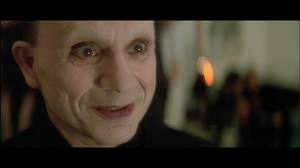
"We've met before, haven't we?" Robert Blake as the Mystery Man.

“We’ve met before, haven’t we?” Robert Blake as the Mystery Man.

What does it mean? Don’t look for straightforward answers. Although it looks like a Hollywood movie, ‘Lost Highway’ is anything but. This is cinema deconstructed. What is a story? What is art? Surface meanings are stripped away and what we are left with is…

Director David Lynch and his co-writer Barry Gifford again create a frustrating, mesmerizing, entertaining, visceral, daring Chinese puzzle of a movie. But the twist here is that the puzzle has no solution. More introverted than epic, it had critics and audiences confused upon its release. Searches for story will disappoint. This is a movie that knows it is a movie and toys with the viewer like a cat with a mouse.

“Lost Highway” also plays with genre, most notably the kind of noir 40s movies that eventaully spawned Hitchcock’s masterpiece “Vertigo”. But “Lost Highway” goes beyond them. The writers are not afraid to let go of plot, drawing attention to the artificiality of a narrative that both illuminates and conceals. This is a movie that pushes the boundaries of cinematic storytelling. Is it intended or not? Does it matter? Like the rest of the film, this only raises questions without answers.

Bill Pullman and Balthazar Getty are the two faces of the same man (or is he?). Patricia Arquette is dazzling as Renee/Alice. But arguably Robert Loggia steals the show with impeccable comic timing as a ridiculously vicious gangster. While Robert Blake gives his last performance as the memorably creepy mystery man with no eyebrows – a typically Lynchian obscure archetype.

I’m not usually a fan of postmodernism, but when it’s done this well I can’t help but like it. With sublime music and excellent performances, this is surely one of Lynch’s most provocative films to date. Well worth seeing.

To trend or not to trend… writing in the “hot” genre

What is “hot” in Hollywood? What kind of screenplay does Hollywood want?

Surely, the cynical starving writer thinks, if I find out what genre is hot and I write in that genre, Hollywood will want my screenplays? The simply law of supply and demand will do my marketing job for me. If “found footage” scripts are hot, simply write one and riches will await.

But hang on, says the artist (who doesn’t mind if he or she starves or not), isn’t that betraying your art? Isn’t it selling… out?

Well, I have no problem with someone writing for a living. Even Leonardo da Vinci had to eat. And although I could do without yet another “disaster mash-up” movie (SyFy channel, I’m looking at you), I remember one of my earliest instincts was to find out what Hollywood wants in a screenplay. After all, they are the buyers and I am the seller.

But there are several problems with trying to write in the “hot genre”. First of all, Hollywood is a long way away. Not just in space, but in time. Studios frequently undertake test screenings to gauge the popularity of a film before it is finished. People in Hollywood know what the outcome of these screening are. Hence in your newsletter you might get an inexplicable slew of requests for stories about “dogs verses aliens” from producers anxious to copy the newest surefire hit.

And therein lies the problem. Because by the time you write said screenplay, the trend will be over, and “Buster Saves the World” will be yesterday’s movie news. Writing for the latest hot trend is like trying to hit a constantly moving target. By the time you’ve nocked your arrow and written your screenplay, the movie world has moved on to the next “hot” project.

Having said that…

Certain types of script always stand more of a chance of getting made. They are generally as follows…

– Female driven

– Limited location

– Low budget

– Horror/thriller

– No SFX

These are the calls for screenplays you will encounter most frequently in newsletters and advertisements.

BUT.. and this is a big BUT!

I personally have found that I have less success trying to write in low budget genres. For some reason I naturally (and unfortunately) gravitate toward big action set pieces, usually sci-fi or horror. And yet I have more success selling these type of stories than when I write my one-location character-driven drama.

So if anything can be drawn from my limited experience, it’s this… write in the style and genre you love AND which you are best at. Whatever the budget. Whatever the genre. And THEN worry about rewriting it so it can get made. Maybe you can reduce the budget without losing that great scene with the giant ape climbing the Empire State Building.

This is a strange business. As Dan Ackroyd once said: “I write ’em big, and they keep making ’em.”

Here’s hoping you can write big too!