Tag Archives: books

The Best Screenwriting Books in the world… possibly.

I was recently asked what are my favourite screenwriting books. So here they are:

Save The Cat by Blake Snyder 

It’s impossible to ignore this one, even if you disagree with the formulaic approach. There are tons of terrific lessons here. But best saved for the more advanced screenwriter.

Story by Robert McKee

The guru of screenwriting, McKee’s book contains pretty much everything you need to know about storytelling.

The Writer’s Journey by Christopher Vogler 

Breaks down every mythic story and archetype. Very easy to read and full of great examples. It clarifies a lot of what other people say.

Screenplay by Syd Field 

The beginner’s guide to writing a script. Contains all the basics on structure and format. Goes into character creation a little too much for my liking, but then he was also an actor.

Raindance Writer’s Lab by Elliott Grove 

A great practical guide that touches upon the business as well. Essential reading.

Adventures in the Screen Trade by William Goldman 

Goldman wrote Butch Cassidy and the Sundance Kid and many, many more. This is a frank memoir about screenwriting in Hollywood.

Which Lie Did I Tell by William Goldman

More memories and advice from the veteran scriptwriter, with more attention to things like writing for budgets.

Writing Screenplays that Sell by Michael Hague 

The first book I ever read on screenwriting and one of the best. Hague gives you the basics in a way that’s simple to understand.

Save the Cat Strikes Back by Blake Snyder 

The sequel offers more fixes for common problems as well as a very useful section on Act Three.

Save the Cat Goes to the Movies 

Can’t recommend this highly enough. Some truly great insights into different movie genres and the rules they follow.

The Devil’s Guide to Screenwriting by Joe Eszterhas

The infamous scribe of Basic Instinct gives you a very funny look at the flipside of success in Hollywood. Read it to feel empowered as a writer. This is the stuff they didn’t want you to know.

How to Make a Good Script Great by Linda Seger 

A very good fix-it guide when your screenplay lacks that little something.

Tales From the Script by Various 

Frank and fascinating interviews with many major screenwriters. Learn from the people who are working in the trenches.

The Screenwriter’s Bible by Dave Trottier

Contains all the formatting instructions you need to avoid being seen as an amateur.

Breakfast With Sharks by Michael Lent 

Be warned. The swimming pool of Hollywood is not for the faint-hearted. Learn to recognize and avoid the sharks with this great guide. Contains some terrific practical advice on writing and negotiating your career (or lack of one). Wish I’d read this years ago.

500 Ways to Beat The Hollywood Script Reader by Jennifer Lerch 

Basically a list of common mistakes and how to avoid them.

Rewrite by Paul Chitlik

This is my go-to guide when I’m beginning, guess what, the rewrites! The best thing about this book is that it gives you a structure and a plan to approach your rewriting with. If, like me, you require structure to do anything, this is the book for you.

Bladerunners, Dear Hunters and Blowing the Bloody Doors Off by Michael Deeley 

Veteran British producer Michael Deeley gives you his rather candid insight into the business.

Screenplays 

Lots of them. Any you can find. Especially good ones. Especially produced ones. Notable ones for study are: The Empire Strikes Back, Return of the Jedi, Raiders of the Lost Ark, Basic Instinct, Speed, The Fisher King, Jaws, The Terminator, Aliens, Chinatown, Casablanca, Die Hard, Network,The Princess Bride, Butch Cassidy and the Sundance Kid, Alien, Living In Oblivion, Near Dark, The Hitcher, Reanimator, Deliverance, The Godfather Part II, Superman the Movie, Taxi Driver, The Dear Hunter, The Thing, Altered States, Ordinary People, Annie Hall, Groundhog Day, Back To The Future, The Apartment, Sunset Boulevard, and many, many more.

Once you dipped into some of these you’ll never look at Transformers 4 in the same way again.

There you go. I’m adding to my on library all the time, so I may well update this post at some stage. If I missed any, let me know. Maybe you have your own favourites or stumble across some gem while browsing around. But these are the books that have helped me the most.
Notes from FantasyCon2014

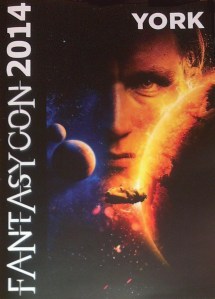
Great artwork for the brochure reproduced here by Larry Rostant

Great artwork for the brochure reproduced here by Larry Rostant

FantasyCon 2014, run by the British Fantasy Society, was held at the Royal York Hotel on Friday 5th – Sunday 7th September 2014.

This was my first time at Fantasycon, the annual gathering of the British Fantasy Society. So I didn’t know what to expect. I did know, however, that there were quite a few eminent guests, including Charlaine Harris, author of the phenomenally successful Sookie Stackhouse series, better known as TV vampire show “True Blood”. Other luminaries included horror author Ramsey Campbell and “Chocolat” writer Joanna Harris, as well as “Dr Who” scribe Toby Whithouse to name but a few.

The convention was held at the Royal York Hotel, adjacent to the train station and therefore a very convenient location. The hotel itself was a grand old affair. Sadly, the cost of staying there was prohibitively expensive. In fact, as I had only decided to go at the last minute, getting a hotel in York proved a difficult task, so I had to commute from Manchester on the two days I attended. However, this wasn’t too bad, thanks to a convenient rail link.

Prior to booking, the lack of information on the website was perplexing and gave the convention the feel of a “members only” club. However, this wasn’t the reality when I got there. Although many people came in groups, overall I found people to be very friendly and accommodating. But a better website, and even a forum, would have helped a lot. As it was, I threw caution to the wind and bought my ticket. But I can’t help but think how many other people were put off by the impersonal nature of the web page.

The first day was an introduction to the convention. Once I had acquired a map of the rather confusing (and sprawling) hotel layout, I grabbed myself some great free books for attendees (always a bonus!). There were also some fantastic discounts available in the dealer room from some sellers, while others remained reassuringly expensive.

I was very grateful for the introductory session which got me talking to several other attendees. The rest of the day passed in a blur. The crowd was an eclectic one, with attendees from as far as the USA. It was great to see people who were as enthusiastic about sci-fi, fantasy and horror as myself, if not more so. The staff too were friendly, and the convention rather relaxed. A little too relaxed, unfortunately. I missed several author signings despite being in the same bar! A bit of an announcement would have been nice.

Throughout the Con, there were book launches, author readings, even short film showings. Unfortunately I couldn’t stay to the bitter end to witness the delights of Karaoke on Friday, which apparently was a pity.

On Saturday, I got there early and bleary-eyed to attend a great panel discussion on whether there was a place for hope in horror. The panel consisted of Ramsey Campbell, Roz Kaveney, Guy Adams, Sara Jayne Townsend and Adam Neville. After a spirited debate, the panel ended with Roz Kaveney’s revelation that he once worked in the same restaurant as serial killer Dennis Nielsen! A very enlightening discussion that showed the versatility of the horror genre.

Charlaine Harris entertains at FantasyCon 2014.

Charlaine Harris entertains at FantasyCon 2014.

Later, Charlaine Harris gave us the lowdown on what it feel like to become an overnight sensation after thirty years of writing mystery novels, as well as the agony and ecstasy of selling your work to cable TV. Ms Harris was very entertaining, and was a regular fixture in the lobby, as were several other authors, giving the con an even more relaxed feel.

Later, I attended a panel on horror in TV. This featured “Dr Who” scribe Toby Whithouse, screenwriter author and editor Paul Kane, and Stephen Volk, writer of notorious BBC 1992 fake documentary “Ghostwatch”. Bizarrely, everyone on the panel agreed that CGI was not a good alternative for strong stories. Maybe there is hope for TV.

There were many other panels to attend, including an enthusiastic demonstration in swordfighting. Inevitably, I found that a lot of the most interesting panels conflicted. Yet there did seem to be a lull between 2-5pm.  But perhaps someone else with different interests would have told you the opposite.

Saturday ended with a mass signing. However, I sacrificed this in favour of hanging out in the bar. This is because for me the most rewarding aspect of FantasyCon was meeting other fans. As a writer, you tend to spend too much time in isolation. This means you lose touch with the people who matter most – the readers. I was amazed at their passion, their interest and their knowledge.  It really made me want to up my game.

On Saturday night, I headed home, my hunger for the speculative satiated for the moment, clutching my bagfuls of cheap books and signed copies. One of my aims had been to find new authors to broaden my reading, and I had certainly been given enough food for thought. I came away with a much greater knowledge of the blossoming sc-fi, horror and fantasy market, and with several new authors to sink my teeth into (figuratively).

A little light reading.

A little light reading.

Sunday proved a bridge too far for me. As there were only panels in the morning, I decided not to attend and save myself a hefty train fare. The afternoon was taken up with the British Fantasy Awards. But again, there was a curious lack of publicity about these on the net. The FantasyCon Twitter feed was also strangely silent throughout the weekend. The BFS produce some great publications, so it is odd that it doesn’t toot its own horn more.  Maybe the BFS could even televise the event on a Youtube channel!

In summary, this was a very worthwhile Con. I would recommend it to anyone who wants to meet likeminded people and who enjoy lively debates about everything in the world of speculative fiction and movies. I hope to go again next year and have an even better experience. However, a little more information would have been nice from the organisers for those who have not boldly gone to the Convention before. More Twitter updates would be a definite plus as well. But if you are a fan or creator of sci-fi/fantasy and horror in the UK, this is one convention you cannot afford to miss.

My  advice  is to book early and stay late, something I hope to do next time around!


Next year’s FantasyCon 2015 is to be held in Nottingham, UK.


“MEET MY MAIN CHARACTER” Blog Tour!

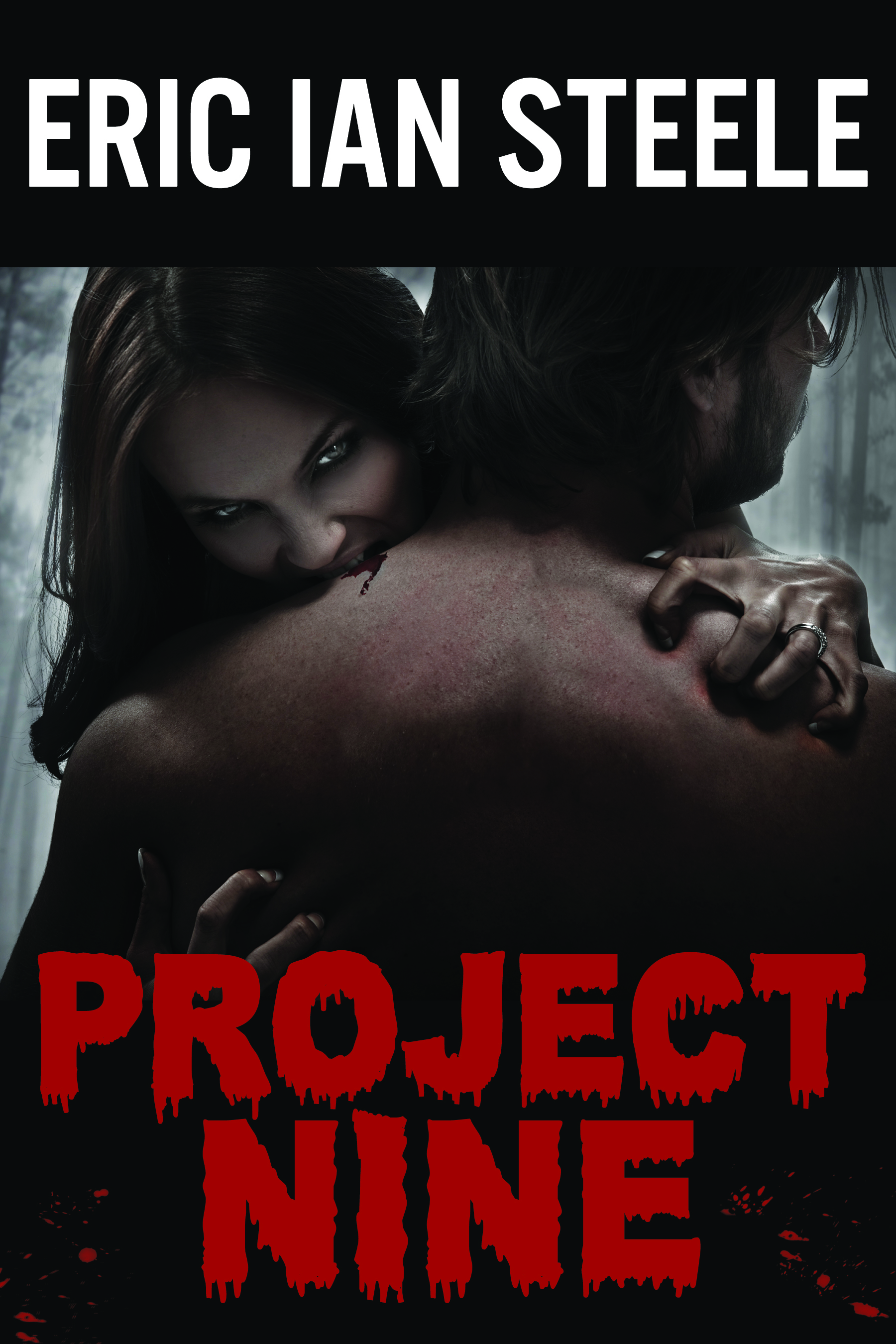
Today, I have been kindly nominated by science-fiction novelist writer Craig Pay to join the “Meet My Main Characters” blog tour and tell you a little about the protagonist of my forthcoming sci-fi horror vampire novel, PROJECT NINE!

FrontCover2

What is the name of your main character?

The main character is Luke. Shall we call him a hero? That would be a problem, seeing as he commits multiple murder throughout the novel and digests the blood of his victims. Admittedly he does so to stay alive, but I’m jumping ahead of myself…

When and where is the story set?

The present day. Mainly around Iowa and Kansas. There are also some scenes set during various historical periods throughout the last century, seen in flashback.

What should we know about Luke?

Actually, we know very little about Luke before the main story begins. We first meet him when he is burying his mother. We next see him when he’s getting very drunk. Then the action starts…

What is the main conflict? What messes up his/her life?

He falls in love, of course. What else? Unfortunately for Luke, the girl he falls in love with (Lynne) happens to have escaped from a secret government research facility that has created real vampires through gene therapy. Before he knows what’s happening, Lynne has infected him with the genetic virus that causes vampirism. But theirs is no romantic world of opera capes and Romanian castles. Luke’s new existence is a grubby one, where he must commit brutal murder every night and drink the blood of his victims in order to survive. Left with no other option, Luke joins Lynne and her three friends, fellow escapees from Project Nine. However, an obsessive Iowa detective learns the truth, and sets about pursuing them across three states. And the detective is not alone, because the government department responsible for infecting Lynne and her friends are determined to bury their mistakes, permanently.

What is the personal goal of the character?

Luke wants to spend eternity with the woman he loves. But he also wants to survive at any cost. And that desire is going to lead him down some very dark alleyways indeed…

When can we expect the book to be published?

“Project Nine” is going to be published very, very soon. “Like” my Facebook page to receive regular updates:  https://www.facebook.com/pages/Eric-Steele-Author-and-Screenwriter/522318187899385?ref=hl

You can also follow me on Twitter under: @EISteele for my “a horror movie a day” tweets and other goodies.

The next nominated writer in this blog tour is:

Kevin A Ransom created the movie film criticism site MovieCrypt.com in the late 1990s. He is a member of the Online Film Critics Society and channels the site’s host, Grim D. Reaper. Kevin has two book series: The Spooky Chronicles; and The Matriarch. He is also an active member of The Horror Society. His website is: http://thinkingskull.com/

In the meantime, pleasant dreams…

The Best Horror Movies of the Past 50 Years, Part 2! The Seventies! 1970-1975!

Last time we saw how horror movies changed in the 1960s, from classic Gothic horror like the Hammer films and Roger Corman’s Edger Allen Poe adaptations to pessimistic modern horror stories like “Rosemary’s Baby” or “Night of the Living Dead”. This time we turn out attention to the 1970s – possibly the most exciting time for horror since the Universal monster movies of the 1930s and 1940s.

During this decade, Hollywood proved it was willing to take risks with stories, to go places they had never gone before. Add to this a new tide of horror authors who wanted to update the Gothic horror staples of vampires and werewolves, including a certain Stephen King, and you have a decade of some of the greatest horror movies ever made. In fact, there are so many great horror movies of the Seventies that I’ve had to split this post up! So here are what I think are the most influential horror movies from 1970 to 1975!

blood

A Bay of Blood (1971)

One feature of early 1970s cinema is the debt it owes to cinema verite. Even Spielberg’s “Close Encounters of the Third Kind” owes a debt in places to this documentary-style of film-making. The trend suited low-budget movie-makers and would lead to the infamous slasher movie. The start of that craze can be found here. Part Italian giallo, part murder mystery, “Bay of Blood” was made by Mario Bava, a film-maker who deserves far more recognition than he has enjoyed. A number of potential heirs and heiresses to a fortune are invited to the titular Bay. They then try to kill each other off in various gory and brutal ways. Boasts some bravura set–pieces. The octopus is a great surprise also!

Deliverance 1972

You’ll never play the banjo again. Disturbing hi-jinks in America’s backwoods when some city slickers cross paths with the twisted locals. John Boorman’s gripping horror-thriller features a young Burt Reynolds. Copied many times, sometimes humorously, sometimes not.

Exorcist 1973

This is a movie which probably needs no introduction from me. A supernatural chiller directed by William Friedkin and based on the best-seller by William Peter Blatty, itself based on a supposedly real event. It broke all records when released and became notorious not just for fainting audiences, but for the treatment its stars were subjected to. Today, it’s been copied so many times that it may have lost its power to shock. It has directly influenced every exorcism movie since, as well as forming the basis for the dubious Leslie Nielsen comedy “Repossessed”. Still, as a meditation on the power and seductiveness of evil, it’s compelling.

Sisters 1973

Brian DePalma’s first movie. So demented it’s terrific. Margot Kidder stars as a pair of French-Canadian Siamese twins that were separated with horrific consequences. This is a movie that seeks to turn horror tropes and clichés on its head. Its twists keep going right to the end. It is also part of the illustrious mad-doctor movie that became popular with “Eyes Without A Face” and keeps on going today with movies like “Hostel” and the distasteful “Human Centipede” films.

The Wicker Man 1973

The world’s first horror musical! Fantastic British chiller starring Edward Woodward as a religious police officer who goes to investigate a disappearance on a remote Scottish island where paganism is rife. Although it was remade poorly, this really is a one-of-a-kind movie. Music by folk-rock band Pentangle serves as an atmospheric soundtrack  to what is probably the bleakest ending ever.

Black Christmas 1974

This expertly-made psycho-thriller started the old gag that the killer is making phone calls from inside the victim’s house.A killer is stalking a sorority sisterhood. Margot Kidder again resurfaces, this time as the victim.  A genuinely disturbing movie in some places and a forerunner of the teen slasher movie that was to come.

Texas chainsaw Massacre 1974

Another 70s shocker that has lost most of its power due to continually being copied. It’s hard to imagine the modern psycho-killer movie without TCM. This brutal film began the “endurance horror” craze and took the idea of murderous hillbillies one step further. You actually see very little gore in this movie. But audiences were convinced they saw more, such was the power of suggestion. Today, its ferocity is hard to understand, but on release this was one of the movies that changed the horror landscape and paved the way for the “video nasties” of the 1980s.

Deep Red 1975

Dario Argento’s best movie. This is a true giallo film — a type of Italian thriller that closely identifies with the killer and features elaborate set-pieces. David Hemmings is the American out of his depth who witnesses a murder in Rome. Or did he? A superb mystery with some excellent death scenes. Probably the finest giallo movie ever made.

Shivers 1975

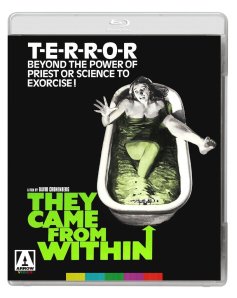
This unsettling sex horror (is that even a genre?) signalled the arrival of Canadian body horror maestro David Cronenberg. The residents of a luxury apartment building are attacked by repulsive turd-shaped parasites that drive the into a sexual frenzy. This is a movie that is bound to deeply disturb anyone remotely normal. Which of course, is great. The body-horror genre has its roots in the Atomic bomb era of the 1950s and the plethora of paranoid B-movies where the main character was mutated by radiation.  Cronenberg made that fantasy disturbing reality, which would lead to many other movies in that genre, such as Clive Barker’s “Hellraiser” and Cronenberg’s own “The Fly” in the 1980s, as well as direct homages such as 2006’s “Slither”.

You'll never get into the bathtub again... Cronenberg's "Shivers"!

You’ll never get into the bathtub again… Cronenberg’s “Shivers”!

Jaws 1975

The daddy of summer blockbusters. “Jaws” rewrote the Hollywood paradigm for making movies and still rules the waves. Okay, so the shark looks a bit rubber now. But thanks to a mechanical failure, Spielberg has given us one of the best (and most quotable) thrillers ever made. The movie’s success would lead to other popcorn movies like 1977’s “Star Wars”. As we know, these movies would influence the box-office for decades to come. Not for much longer would studios take a gamble on artistic and risky fare. Eventually, this would lead to the cut-and-paste plots of most big-budget movies today. In a way, “Jaws” sounded the death-knell of the kind of low-budget film-making that created so many different kinds of horror movie in the 1970s.

Next…

1975 – 1979!

Telepathic teenagers go on a rampage, zombies go for a morning stroll in a supermarket, a particularly unpleasant alien hitches a ride on a passing spacecraft, and a certain Michael Myers decides its time he went home…


How to Write Loglines – an actually useful guide

Want to know how to write effective loglines for movies and books? Read on!

INTRODUCTION

There has been so much written on the subject of writing loglines that I thought it was about time I added my tupppence (or two cents, depending on which side of the Atlantic you are on) to the debate.

Let’s start with the basics:

1. WHAT IS A “LOGLINE”?

A logline can apply to both novels and screenplays for movies. They are generally short, punchy descriptions of the plot (i.e. the thing your story is about). Editors, agents, producers and assorted other people often ask for a logline when they are deciding whether to buy or represent your work.

Interestingly, neither Robert McKee in his lauded book “Story” nor William Goldman in his seminal essay “Adventures in the Screen Trade” mention what a logline is. Yet I would argue that is one of the most essential tools the screenwriter or novelist has at his or her disposal. In fact, it is an essential skill to master.

One thing a logline is not is that thing you see on movie posters. This is in fact a “tagline”. Tagllines are very short (usually one sentence, or sometimes less!) statements used to entice someone into watching a movie.

An example of a tagline:

“In space, no-one can hear you scream” (Alien)

While this is a great tagline, note that it tells us nothing about what is going on (other than it’s in space, and you’re likely to scream).

A logline is more sophisticated and tells us more about the story.

For example:

“A psychopath escapes from an asylum and slashes his way through a quiet suburban neighbourhood until he is defeated by a bookish young woman” (Halloween).

Okay, so it’s not poetry. But you get the picture.


2. WHY THE HELL DO I NEED A LOGLINE ANYWAY?

But Eric, you say, why should I distil my 100,000 word novel or my 120 pages screenplay, work of genius that it is, into a single sentence?

The answer: a logline is a selling tool.

Loglines allow you to “pitch” (i.e. tell) someone about your story in a very short space of time. And when you’re dealing with producers, agents and executives who can only spare you less than a minute, this becomes important.

Of course, if you’re happy just writing and never selling anything, loglines probably won’t apply to you. Good luck on your chosen career path. Some of us have to eat.

A good logline can make someone sit up in their seat and pay attention. It can entertain, move and arouse curiosity in the listener. And it can delay that moment when they start yawning or hang up.


3.  OKAY, SMARTYPANTS. WHAT IS A GOOD LOGLINE MADE UP OF?

Opinions abound on this.

In his excellent guide “Raindance Writers Lab: Write and Sell the Hot Script”, Elliott Grove suggests that you first come up with a “basic premise”. This, to me, is a logline: a 25 words or less summary of the plot.

A rule of thumb is, the shorter the logline, the higher the concept.

High concept is what sells in Hollywood (although other types of film also sell). What is a high concept? Basically, something that’s real easy to sell.

In “Save the Cat” by Blake Snyder (a book no screenwriter should be without)  the author says that a killer logline should include the following:

– Irony

– A compelling mental picture

– An idea of audience and cost

– A killer title

Let’s investigate:

Irony

What is Irony? In the film “Borat” , Sascha Baron Cohen in his alter ego of the Khazakstanian ambassador to the USA, interviews a real-life professor of comedy. When the Professor tries to explain a joke to him, Borat deliberately gets the wrong end of the stick repeatedly. This goes on for some time until it becomes very funny. Everyone but the Professor of comedy, who is paid to understand humour, gets the joke. That is irony.

An example of irony in a logline would be: “A lawyer is forced to tell the truth for 24 hours after his son makes a birthday wish ” (Liar Liar).

The other elements are all important. A title is essential to help your movie stand out from the crowd. A sense of scale and budget will help others to decide whether to invest (is it “The Blair Witch Project” or “Avatar”?) .

However, there are basic elements I think this definition leaves out.

The easiest way to analyse what makes a good logline is to look at one.

Here are two examples:

“A police chief with a phobia of the sea must kill a giant shark but faces opposition from the local mayor who demands that the beaches stay open” (Jaws).

“A naive farmboy on a distant planet learns that he is actually the son of a legendary warrior and sets out to rescue a princess from an evil galactic empire”. (Star Wars).

Here we can see irony at work. The police chief is afraid of the water but must fight a shark. The farmboy is naive but must somehow defeat a whole army.

But there is more than just irony in a logline. Looking at our examples, here are some common elements:

A PROTAGONIST in an IRONIC SITUATION must overcome an OBSTACLE to achieve a GOAL in an ARENA.

Tackling “Jaws” first:

“A police chief [PROTAGONIST] with a phobia of the sea [IRONY] must kill a giant shark [GOAL ] but faces opposition from the local mayor [OBSTACLE ] who demands that the beaches stay open [ARENA]”.

The ARENA is the environment the story takes place in. This could be a location (a distant planet), a particular organisation (for example, the mafia), or even within the family unit (see “Ordinary People” for an example).

Sometimes the ARENA will be implicit. Other times you will have to spell it out. But the logline should give a sense of this.

Note that the OBSTACLE may be the same as the ANTAGONIST, or it may not. In “Jaws”, you may think the antagonist is the shark. But in fact it is the local mayor who opposes Brody’s shark safety measures. Killing the shark is the GOAL.

In “Star Wars” the antagonist is Darth Vader (or Grand Moff Tarkin to be precise). But in fact the whole Empire is what poses the problem.

The point is, the OBSTACLE is a fluid concept, depending upon how you craft your logline. But I believe there is an optimum balance to be achieved for maximum effect.

Here is another example that shows the flexibility of the logline concept:

“A young man and woman from different ends of the social spectrum fall in love aboard an ill-fated ocean liner.” (Titanic)

Breaking it down:

“A young man and woman [PROTAGONIST] from different ends of the social spectrum [OBSTACLE] fall in love [GOAL] aboard an ill-fated ocean liner [ARENA and IRONY].”

Note that it is the young woman who is the protagonist. More on that in another post. But the story is always about ONE PERSON’s journey. Unless it’s an ensemble film. Which just goes to show that William Goldman was right when he said “Nobody knows anything”!

One more for the road:

“A loyal Roman general is betrayed and his family murdered by an insane Emperor and returns to Rome as a gladiator to seek revenge” (Gladiator)

Here’s the breakdown:

“A loyal Roman general [PROTAGONIST] is betrayed [IRONY] and his family murdered by an insane Emperor and returns to Rome as a gladiator [OBSTACLE and ARENA (literally!)] to seek revenge [GOAL]”.

Note also that sometimes it is the Protagonist’s FLAW which provides the irony (such as the farmboy being naive in “Star Wars” or the police chief with a phobia off the sea in “Jaws”). Other times it is the entire situation which is ironic, such as the loyal Roman general who is enslaved and betrayed by his own Emperor. Again, it’s a flexible concept.

The important thing is not to get hung up on the details but to check all the boxes.

One last thing. It may be worth your while to develop the logline BEFORE you write the script, as this way you can build a story that has the strongest foundations possible.

IN SUMMARY

So there you have it:

PROTAGONIST + IRONIC SITUATION + OBSTACLE + GOAL + ARENA

Not necessarily that order!

Have fun with loglines. You will probably take quite a few goes to build the best logline for your story. But the rewards are worth it. A logline is the PRIMARY selling tool. Once you practice it, you will surprised at the results.


Sneak preview of new horror novel “Project Nine”!

Today, I wanted to share with you something very special to me.

Here is the first look at the amazing cover for my new horror novel, “Project Nine”. The folks over at MyInkBooks have done a fantastic job putting this together. Suffice to say, a picture can say a thousand words!

But don’t be misled into thinking this is a straight-up horror yarn. I would never let you readers off the hook so easily! No, “Project Nine” is instead a horror/sci-fi/love story! Add a realistic police investigation and the evil machinations of a  ruthless politician… and you have a modern horror story with a distinctly classic feel.

The precise plot is under wraps for the moment, but I can say that if you like horror, this is the book for you! Even if the luscious young lady on the front cover doesn’t tempt you, how about this gushing review: “the narrative prose expounds a candor much in tune with all the greats in Literature”.

And as for how the novel got to be published, well that’s a story in itself!

But in case it sounds like I’m trying to sell you something… take a look below and see what you think.

FrontCover2


“Project Nine” is due to be published later this year.  I’ll be releasing more news as it arrives. Watch out for it!


Urban Fantasy anthology update!

NEWSFLASH!

My short story “Blood of an Englishman” features in Twisted Boulevard, the new urban fantasy anthology from Elektrik Milkbath Press. This eclectic blend of short stories promises to have something for everyone.

You can buy it from amazon.com, or amazon.co.uk if you’re a Brit. 

Hmm. Moody cover.


A Lovecraftian TV show?

Today, I wanted to share with you  what I think is a great idea. The folks over at the Lovecraft E-zine have decided to go ahead and make a H.P. Lovecraft-inspired TV series called “Whispers from the Shadows”. They’re raising funds on kickstarter.com, and you can be a part of it.

The rewards are fantastic. And the series is being made with professional horror movie actors. You can even get an Associate Producer credit if you pledge enough.

In case you have been hiding in a cave since the 1980s and don’t know who H.P. Lovecraft is, he is considered the father of weird fiction. Lovecraft was unappreciated in his lifetime, yet he is probably the most influential horror writer of the 20th  century, inspiring everyone from Guillermo del Toro to Stephen King.

Here is a link to his Wikipedia entry: http://en.wikipedia.org/wiki/Lovecraft

These people need pledges, and the deadline is looming. So do yourself a favour and head over to Kickstarter and see for yourself how cool this is. The deadline is 2nd June.

Go check it out here:

https://www.kickstarter.com/projects/marxpyle/whispers-from-the-shadows-lovecraft-inspired-short/posts/853536?at=BAh7CDoMcG9zdF9pZGkDIAYNSSIIdWlkBjoGRVRpA2lwoUkiC2V4cGlyeQY7BlRJIhgyMDE0LTA2LTIzIDE3OjEyOjM0BjsGVA%3D%3D–b4dbaa7ac4a499fa5c7ce2ebe608b1c76870f0b5&ref=backer_project_update


13 Modern Horror Authors you must read ?

Horror has always been the unloved bastard lovechild of fiction. This is no more so than now. Horror books are often derided as puerile or unsavoury. Horror films are often accused of exploitation. Worse still, in recent years, horror fiction has often been diluted and warped into “dark fantasy”, thanks to TV shows like “Buffy the Vampire Slayer” and the innumerable “paranormal romance” novels that litter the bookshelves.

But for those who like their horror fiction a little more mature, a little stronger, a little darker, it’s time to share with you my personal love of the horror genre. So here is a compendium of what I think are 13 of the greatest contemporary horror authors.

(One side note: by contemporary, I mean since the 1970s. I struggled to compile a list of more recent authors who ranked alongside these greats. Feel free to agree or disagree.  But for argument’s sake, here are my thirteen, in no particular order…)


STEPHEN KING 

Okay, let’s get this one out of the way. Everybody knows King’s work, thanks to the hugely successful movies. However, the films do not capture the essence of King, which is his style. Often very detailed to the point of making you believe you are there, his collloquial storytelling manner immediately disarms you. Perhaps his most successful novels (in terms of evoking fear) are “The Stand” and “IT”. But for a real treat, check out his short stories in “Night Shift”.


JAMES HERBERT 

King once wrote that Herbert was not a great writer, but a great novelist. Whatever the truth of that, when you read a Herbert novel, you are soon unable to put it down. Pages turn with greater and greater rapidity toward an often brutal and apocalyptic conclusion. His novel “The Rats” still aches to be made into a decent film. But for sheer insane brilliance, try “Domain”. “The Fog” also sees Herbert at his catastrophic best. Sadly missed since passing on recently.


CLIVE BARKER

The enfant-terrible of horror. Barker has been at it since the 80s, when Stephen King declared him the future of the genre. Belonging more to the school of body-horror than classic scares, Barker’s novels create a fantastical nightmare world where anything is possible. Not satisfied with writing, Barker directed his own novella “Hellraiser” to enormous success. But for me, his novel “Cabal” , filmed as the underappreciated “Nightbreed”, is his best. With the Hollywood machine currently churning its way through his gigantic short story collection “The Books of Blood”, Barker  is sure to remain a popular name in the genre.


ANNE RICE

A totally different entity, Anne Rice has been quietly crafting brilliant, haunting gothic stories since the 1970s. Her Vampire Chronicles have spawned about ten sequels, as well as one good movie and one not very good one involving her most famous creation, the vampire Lestat. Her Mayfair Witches stories are just as good. No serious horror fan should miss her books.


RICHARD MATHESON 

Here’s where it gets interesting. Matheson was a prolific contributor to Rod Serling’s “The Twilight Zone” before penning “Duel”, a young Steven Spielberg’s first feature, as well as “I Am Legend”, a novel that has been made into two very different movies starring Will Smith and Charlton Heston. Capable of writing paranoid sci-fi/horror (“The Incredible Shrinking Man”) to tear-inducing romantic fantasy (“Somewhere In Time”, “What Dreams May Come”). Again, he passed away a few years back, but left us with a truly memorable body of work.


RAY BRADBURY 

The king of the short story, Bradbury penned the screenplay for “Moby Dick”, as well as the seminal sci-fi classics “It Came from Outer Space” and “The Beast from 50,0000 Fathoms”. His novel “Something Wicked This Way Comes” was once made into a Disney movie, of all things! Also a master of science-fiction, Bradbury wrote “The Martian Chronicles”. But his most eerie stories, almost mythic in tone, can be found in “The October Country”.


PETER STRAUB 

Straub’s work has never enjoyed the mainstream success of his sometime co-writer Stephen King. He also often chooses to write mystery novels. However, his titanic supernatural masterpiece “Ghost Story” is one of the best modern books in the genre (once made into a rather forgettable movie with Fred Astaire and Ray Milland). His other horror fiction, such as the feverish “Julia”  and “If You Could See Me Now” is rife with ghostly happenings that seem sso realistic, you could almost miss them. A very sophisticated writer who wields a pen as sharp as a scalpel.


CHARLES L GRANT 

Although not as well known as he should be, Grant was immensely prolific, writing under several different pseudonyms and in different genres. His major achievement in horror fiction was creating the town of Oxrun Station, introduced in “The Hour of the Oxrun Dead”. His dreamy, poetical style often starts with a slow burn and then reaches a terrific climax. Reminiscent of the “classic horror” movies of the 40s, Grant’s prose dwells less on gore and more on atmosphere and suspense. Another writer who sadly is no longer with us.


RAMSEY CAMPBELL

A writer of weird fiction, Campbell is perhaps the most successful horror novelist to come out of Britain besides Barker and Herbert. His fiction is characterised by the bizarre breaking through the mundane world. His short story collection “Demons by Daylight” and his novels “The Doll Who Ate His Mother” and “The Parasite” are all highly recommended.


ROALD DAHL

Yes, that Roald Dahl. The man who gave us “Charlie and the Chocolate Factory” and “James and the Giant Peach”. Come to think of it, wasn’t “Charlie and the Chocolate Factory” always rather frightening? Dahl also penned some deliciously twisted short stories with a classic twist in the tale in his collections “Kiss Kiss” and “Someone Like You”. In fact, they made a whole TV series out of them, appropriately called “Tales of the Unexpected”


RICHARD LAYMON 

Deserves inclusion on this list simply by virtue of being so prolific, if nothing else. Laymon’s novels are not for everyone. They tend to be as subtle as a brick wrapped in bloody innards. However, their breakneck speed drags you along until the last chapter. So high-concept, it makes you wonder why Hollywood hasn’t bothered with them. Check out the brilliant “Among the Missing” or the downright bizarre “Beast House”. Whether you like his work or not, Laymon’s huge output has helped keep the horror market afloat. Yet another writer who recently passed away.


There were more that I felt could have been included here: Graham Masterson, Fritz Lieber, Virginia Andrews, William Peter Blatty, TED Klein, Robert R McCammon, Whitley Streiber and Robert Bloch to name a few. However, although it surprises me, my thirteenth place goes to…


J.G. BALLARD

“Ballardian” has become a phrase to describe the bleakness of modern living. As well as providing fodder for Hollywood with the likes of “Empire of the Sun” (a horror story if ever there was one), Ballard wrote the auto-erotic (in a literal sense) “Crash”, filmed by David Cronenberg. His other works include a novel about a man marooned on a traffic island and a whole apartment complex of people who go insane. Fitting metaphors for the horror of “modern living”, where we can connect anywhere on the planet but still remain isolated. A rare example of a horror writer who was lauded by the literary establishment during his lifetime, Ballard passed away in 2008.


So there you have it, my top 13 horror authors. Each has a distinct voice, from the Gothic to the frighteningly modern. You may also notice that there is a substantial lack of new blood in the field (pun intended). Who will fill the void?

Will it be you? 


More praise for Horror Without Victims anthology!

Another review of my story Clouds in the Horror Without Victims anthology (an anthology of horror fiction without victims. Yes, honestly).  So good, it doesn’t even need quotation marks!

http://www.ligotti.net/showthread.php?p=93371#post93371

“This one generates quite a respectable degree of tension before being brought to a satisfying conclusion.”

This is one of the most original horror anthologies I’ve ever seen. If you haven’t checked the book out yet, it’s available on Amazon. So what are you waiting for?