Tag Archives: writing

Bonus post! How to write Hollywood action lines part 3!

Here is something that trips me up time and time again, and I’ve seen even the most seasoned screenwriters falls for it. So I thought I would include it in this bonus post about how to write Hollywood-style action lines in your screenplay.

This tip can be summed up in one word:

EDIT.

What I mean is, you should always be trying to REMOVE UNNECESSARY WORDS.

Do you have a screenwriting bible?

I do.

It contains everything I’ve ever leant about screenwriting in bullet point form. Only I can understand it, which is fine because it’s only for my use. But in it, I’ve written down the words I should try to avoid at all costs.

And now I’m sharing them with you.

So here they are:

“But”

“And”

“As”

“Is/Are/Am”

“Both”

“Then”

“Just”

“We See”

Please note: if you read a lot of produced screenplays written by professional screenwriters, you will probably see these words being used over and over again. The difference between them and you?

They got paid already.

Another point worth mentioning is: don’t go overboard. If you include one “but” in a 110 page script, chances are it won’t make any difference. Also, if you edit your action lines down too much, they may not make sense. Removing every “a” or “the” will confuse the reader. Sometimes you might even want to deliberately break the rules to make more of an impact on the reader.

So use common sense.

But before you start marketing your script, a simple search for these words will allow you to edit them out of existence and strengthen your action lines. And that might be enough to tip the scales in your favour.

Now if only I’d used this tip on my last script…

How to Write Hollywood-Style action lines Part 2!

Here is the second chapter of how to write action lines.

Now, I’m not professing to write like any of the people whose work I’m about to discuss. However, I have noticed certain things which we as writers can do to make our action lines more professional. And this isn’t just for screenwriters, either. I believe that everyone (myself included) would benefit from analysing the style of the masters.

That said, I’m going to begin with a non-screenwriter.

Stan Lee is a comic book legend. The man who invented Spider-Man, the Fantastic Four, and many many more. Comic book style is even terser than screenwriting. They only have one caption to get across a lot of information.

Here is a passage I read from the Amazing Spider-Man a while ago:

“You’ll see Spidey turning to a psychiatrist for help after he becomes convinced he may be going mad! And wait’ll you learn who the mysterious shrink himself turns out to be. Next, our hero has to a battle a seemingly indestructible robot, and if that isn’t enough, the deadly mechanical marauder is actually controlled by the sneering, leering, J. Jonah Jameson himself!”

Notice anything?

If you’ve ever heard Stan the Man talk, you can probably hear his intonation ringing in your head right now. But let’s boil it down to some simple rules.

Let’s take another look:

“You’ll see Spidey turning to a psychiatrist for help after he becomes convinced he may be going mad! And wait’ll you learn who the mysterious shrink himself turns out to be. Next, our hero has to a battle a seemingly indestructible robot, and if that isn’t enough, the deadly mechanical marauder is actually controlled by the sneering, leering, J. Jonah Jameson himself!”

Lee’s style is so bold that generations of comic writers have mimicked him. Here we see several of Stan’s tell-tale traits at work. And if that isn’t a clue, nothing is!

Notice the sentence structure contains adjectives before most of the nouns (except for the proper noun ‘Spidey’, which is really a name). You have a “mysterious shrink”, a “seemingly indestructible robot”, and a “deadly mechanical marauder”.

Which brings us to our next Stan Lee trait: alliteration (words that begin with the same letter for those without an English degree). Phrases like: “Mechanical marauder”, and of course J. Jonah Jameson himself. Many more Stan Lee heroes are alliterative, too. Like Peter Parker, Bruce Banner, and Matt Murdock. Lee once said he did that on purpose so he could remember the names, but whatever the reason, it makes the phrases have even more impact.

There you go, two simple ways to make your action lines stand out: alliteration and adjectives.

However…

Just remember that screenplays are also sparse. They are images. Easy to follow. Easy to read. Mainly written in high school English. So do don’t go jumping for your Thesaurus just yet.

Consider this passage:

“The front of the Opera House is open only to foot traffic these days. A bizarre place on a Friday night, hawkers and whores, the rabble, the poor and the curious mill around the crudely built platforms and brightly lit stands. Zhora, in just a translucent raincoat, is not out of place in this flea market atmosphere. Trying not to run, she slices through the mob as quickly as she can. Deckard is not far behind, dodging and side-stepping, trying to move against the tide of people scurrying for shelter

She comes to an intersection and turns out of the mall onto a less crowded street. She glances over her shoulder as she breaks into a run and runs right into a couple of pedestrians. All three go down.

Deckard comes out of the crowd in time to spot her getting to her feet. She sees him and runs. The two pedestrians are in his line of fire. He runs past them and drops to one knee, leveling his blaster

DECKARD

Stop or you’re dead!

She doesn’t.”


That’s an excerpt from the screenplay “Bladerunnner” by Hampton Fancher and David Peoples, based (very loosely) on the novel by Phillip K Dick.

Let’s take a closer look:

The first paragraph sets the scene with a beautiful description that is little more than implied. But there are those adjectives again: “crudely-built”, “translucent”. However, as the action builds momentum, the prose becomes sparser and leaner. The sentences grow short. Simple. Fast. The pace builds until the climax…

Here, the screenwriters use sentence structure to create a sense of energy and pace. The action-filled nature of the scene is also emphasized by the strong verbs and tenses. Zhora “slices through the mob” Notice, she “slices”. She doesn’t just run or walk through them. This creates a feeling that she is powerful and determined. Meanwhile Deckard dodges and side-steps. He has to get out of people’s way. He is her physical inferior.

As the pace quickens, the verbs become even leaner: Zhora turns, glances, runs,  until she collides with more pedestrians.

A useful rule is to try to get rid of any “is” verbs. Is running. Is walking. Is grabbing. Is talking. These are static words that slow the reader down. Better to say he or she runs, walks, grabs, talks.

Time for a third example:

The granddaddy of all powerful prose has to be Robert E Howard, with his Conan stories. You will see similar patterns to Stan Lee in his work, which is effortless to read. Here is an excerpt from Conan’s battle with a sorcerer in “Black Colossus”:

“He cast his staff and it fell at the feet of Conan, who recoiled with an involuntary cry. For as it fell it altered horribly; its outline melted and writhed, and a hooded cobra reared up hissing before the horrified Cimmerian. With a furious oath, Conan struck, and his sword sheared the horrid shape in half.”

Notice the adjectives (marked in italics). Also notice the strong verbs: “He cast”, Conan “recoiled”, it “fell”, his sword “sheared” it in half.

I’ve found that a simple sentence structure works best:

adjective +subject + verb + adjective + object.

However, as with everything to do with writing, feel free to be as creative as you like.

In pointing out these stylistic devices, I’ve tried not to be prescriptive. However, Howard’s prose is extraordinarily powerful, as is Stan Lee’s, with its jokey, friendly, informal tone. While other screenwriters like David Peoples carve out lean, action-packed sentences to speed up the action.

By far the best way to discover what works is to read screenplays. I cannot emphasize enough how important this is. Only then do you get a sense of what a Hollywood script looks like. And then, of course, you can find your own voice as a writer.

But that is a post for another time!



Monday blog tour!

My thanks this morning to fellow Mancunian speculative fiction writer and novelist Graeme Shimmin who nominated me to be the next person on the Monday Blog Tour. A pass-the-baton exercise bringing you blogs from different writers to start your week off on the right track!

What are you working on?

Between writing screenplays, I like to keep myself occupied by writing lengthy horror novels and short stories.

At the moment, I’m just waiting for my sci-fi/horror novel “Project Nine” to be published by myinkbooks.com. The good folks over there picked up my novel last year, and have been busily trying to convert my rather “eccentric” punctuation and spelling into something the public can actually make sense of.

What is it about?

Ah. The magic question.

“Project Nine” is about a young man who longs for immortality. He finds it in a beautiful woman who has escaped from a secret government research program that has created vampires through gene therapy.  He joins her and her friends who have also escaped in their endless trek across America’s backwoods, only to find himself hunted by a relentless detective and losing his own humanity in the process.

How does it differ from others in the genre?

If the Naughties have been so far filled with horror movies populated by twenty-something kids with six-packs and hair extensions, “Project Nine” is about as far from that kind of thing as you can possibly get.

It’s gritty, realistic, and psychologically believable. But it also has the large scale and operatic quality of classic horror stories. I aimed to balance the grim realism of modern fiction with the more emotionally-resonant horror of the 1970s and 1980s.

The vampires in this story are not cape-wearing cliches, nor are they gorgeously, seductive creatures. They are real people put in an extraordinary situation. They make good and bad choices. And they are capable of acts of kindness or unspeakable wickedness.

Why do you write what you write?

Why indeed. Who knows what evil lurks in the mind of Man? Not me, certainly. In my defence, I blame watching a steady diet of old Universal and Hammer horror movies when I was a kid. Rod Serling’s “Twilight Zone” stands out for me as being the best SF/Horror TV series ever made.

However, the first movie that really made my hair stand up on end was actually not a movie at all, but the truly frightening Made-For-TV, 2-part adaptation of Stephen King’s “‘Salems Lot” — the one with David Soul and James Mason. Man, that was scary.

Essential, late-night, family-friendly viewing!

Essential, late-night, family-friendly viewing!

I’ve also been an avid fan and collector of comics since I was knee high to an Inhuman. Marvel and 2000AD to be precise. People like Alan Moore have been a huge inspiration, especially “Watchmen”  and his run on DC’s “Swamp Thing”.

As far as “real” literature goes, HP Lovecraft remains for me the greatest master of the craft. I also devoured novels by Stephen King (although I especially like the short stories in his “Night Shift” collection) and the criminally underestimated British king of horror, James Herbert. Other influences include: Peter Straub, Frank Herbert, Terry Brooks, Anne Rice, Phillip K Dick, Harry Harrison and, of course, Ray Bradbury.

There. You asked for it.

Swamp Thing - the thinking man's horror comics.

Swamp Thing – the thinking man’s horror comic.

What is your writing process?

You mean I have a process?

Seriously, it all depends on whether I’m writing screenplays, novels, or short stories.

Screenplays tend to be very structured. I outline to a varying degree of depth before writing a first draft. Then I use a structured rewrite process. I recommend reading as many books as you can on the subject and then employing the rewrite proceess used by Paul Chitlik in his excellent book. Then repeat. Over and over again. And again. And again.

My novels are a different animal. My first novel started life as a comic script (now lost, sadly) and then grew into a full-length book. My second, unpublished work began life purely as a novel. I had a rough idea of what I wanted to say and what the theme would be, then I started writing. Now I’m in the process of getting peer feedback before rewriting and editing.

Short stories usually come out of the blue. I get a first line or an idea as I’m in the shower or walking down the street and then I run with it. The ones that pop into my head seem to be the most successful. The ones I agonize about and outline never see the light of day. Weird, eh?

How much do you write in a day?

Depends. I just wrote an entire screenplay in five days. When I was in what I like to call my James Joyce phase I could write ten pages of single-spaced prose on my typewriter (yes, I had one of those). That comes to about 350 words a page. So 3,500 words a day.  You nosey parker, you.

Previous Writer

I was asked to contribute to this project by Graeme Shimmin  as part of a chain of connections from writer to writer. Each writer answers the questions and then links to the next writer in the chain. Graeme writes mainly alternate history and some excellent short stories. I suggest you check out his intriguing, fact-filled blog.

Next on the Tour

Graeme Cole is a filmmaker extraordinaire and bon vivant who also writes absurdist fiction. He currently resides in Bosnia and runs L’Institute Zoom, which maintains a blog here.

Andrew Bellware is a sci-fi/fantasy/theatre director/writer/actor and all-round swell guy who works out of NYC. He and his producing partner run Pandora Machine Films, which maintains its eponymous blog (Rated “R” for some racy content — you have been warned). I recommend their marvellous movie Clone Hunter, written by some guy from England 😉

Clone Hunter - the greatest science-fiction ever made, apparently!

Clone Hunter – the greatest science-fiction ever made, apparently!

A Lovecraftian horror story by yours truly…

Just a quick note to say that the folks at the Lovecraft E-Zine have published my new Lovecraftian horror short story “The Groaner in the Glen”. It features monsters, Romans, and druids! You can check it out at the link below for free. Enjoy!

ezine

Issue #29 – February 2014

How to Write Hollywood-style action lines — part 1

Today, here are some tips on how to do the above – write action lines like the ones you see in Hollywood screenplays. Style can make or break a script, or turn a great story into a terrible script.

The main aim of all stylistic devices in a screenplay is… to get the reader to read yor script.

That’s it.

So how do you do that?

Create suspense.

Use short sentences.

Make it a vertical reading experience.

See?

 Here are some examples:

The “vertical” style was perhaps most famously used in “Alien”. Here is a sample taken from the revised script by Walther Hill and David Giler, based on the original script by Dan O’Bannon and Ronald Shusett:

“SOMETIME IN THE FUTURE:

INT. ENGINE ROOM

Empty, cavernous.

INT. ENGINE CUBICLE

Circular, jammed with instruments.
All of them idle.
Console chairs for two.
Empty.

INT. OILY CORRIDOR – “C” LEVEL

Long, dark.
Empty.
Turbos throbbing.
No other movement.

INT. CORRIDOR – “A” LEVEL

Long, empty.

INT. INFIRMARY – “A” LEVEL

Distressed ivory walls.
All instrumentation at rest.”

Pretty obvious why it’s called the “vertical” style, right? The aim is to make the reader’s eye naturally flow down the page thus causing him or her to TURN OVER and start reading the next page. Do that enough times and the reader will actually finish your screenplay.

But you don’t need to be so drastic. Back in 1978 that was fresh writing. Nowadays it’s more a throwback. Also, this tends to use up a lot of pages.

Here’s a slightly more modern example, from a draft of “Scream” written by Kevin Williamson:

“FADE IN

ON A RINGING TELEPHONE.

A hand reaches for it, bringing the receiver up to the face of
CASEY BECKER, a young girl, no more than sixteen.  A friendly face
with innocent eyes.

CASEY
Hello.

MAN’S VOICE
(from phone)
Hello.

Silence.

CASEY
Yes.

MAN
Who is this?

CASEY
Who are you trying to reach?

MAN
What number is this?

CASEY
What number are you trying to reach?

MAN
I don’t know.

CASEY
I think you have the wrong number.

MAN
Do I?

CASEY
It happens. Take it easy.

CLICK! She hangs up the phone.  The CAMERA PULLS BACK to reveal
Casey in a living room, alone.  She moves from the living room to
the kitchen.  It’s a nice house.  Affluent.

The phone RINGS again.

INT.  KITCHEN

Casey grabs the portable.

CASEY
Hello.

MAN
I’m sorry. I guess I dialed the wrong number.

CASEY
So why did you dial it again?

MAN
To apologize.

CASEY
You’re forgiven. Bye now.

MAN
Wait, wait, don’t hang up.

Casey stands in front of a sliding glass door.  It’s pitch black
outside.

CASEY
What?

MAN
I want to talk to you for a second.

CASEY
They’ve got 900 numbers for that. Seeya.

CLICK!  Casey hangs up.  A grin on her face.

EXT.  CASEY’S HOUSE – NIGHT – ESTABLISHING

A big country home with a huge sprawling lawn full of big oak
trees.  It sits alone with no neighbors in sight.

The phone RINGS again.”

This is a nice, flowing style that leads your eye down the page. Notice how the sentences are short. Clipped. And, in some cases, incomplete.

There is also far less detail than you think in these lines. The writers were adept at using minimal words to convey a setting. The reader’s mind fils in the blanks. In fact “Alien” uses only two words to describe a spaceship’s engine room.

So the next time you think about adding a ten-line paragraph to explain that this is a comfortable, well-furnished craftsman-style house that nestles on the edge of town surrounded by sycamore trees with a luxury car parked on the drive outside… think again.

Which brings me to my second tip .

Don’t overdo it.

Some sentences belong together. When you try to force them into a vertical pattern, you actually break the flow and make it more difficult to read down the page. For example, here’s a passage from the script of “The Bourne Identity” by Tony Gilroy, based on the novel by Robert Ludlum:    

INT. FISHING BOAT BUNK ROOM — DAWN — TIME CUTS

Transformed into a makeshift operating room.  A light swings
overhead.  THE MAN layed out across the table.  Sounds —
groans — words — snatches of them — all in different
languages.

GIANCARLO playing doctor in a greasy kitchen apron.  Cutting
away the clothes.  Turning THE MAN on his side.  Two bullet
wounds in the back.  Probing them, judging them.

Now — GIANCARLO with a flashlight in his teeth — TINK —
TINK — TINK — bullet fragments falling into a washed-out
olive jar.

Now — something catching GIANCARLO’S EYE — A SCAR ON THE
MAN’S HIP — another fragment — exacto knife cutting in —
tweezers extracting A SMALL PLASTIC TUBE, not a bullet at
all, and as it comes free —

THE MAN’S HAND SLAMS down onto GIANCARLO’S”…

This is still a pretty vertical read. However it would have been even more vertical to separate each sentence out onto separate lines, like so: 

“Transformed into a makeshift operating room.

A light swings overhead.

THE MAN layed out across the table.

Sounds — groans — words — snatches of them — all in different languages.

GIANCARLO playing doctor in a greasy kitchen apron.

Cutting away the clothes…”

And so on. But does this make it any better? No. Sometimes it’s worse to force the reader to look at a new line. The most important thing is to preserve the flow. I’ve read lots of amateaur screenplays where the writer thought they were doing the reader a favour by splitting lines up in this way. But  it actualy makes it harder to read them.

It’s a judgment call. And the best way to decide is to look at other scripts. There are plenty of them on the Internet these days. Break them down the way you would an Enlgiash Literature exercise.

And that’s exactly what we’ll be doing in Part 2.

See you then!

12 days of the greatest, not-so-obvious Christmas movies

Seeing as it’s the season to be jolly, I thought I would give you a rather offbeat holiday treat. Here are 12 movies, one for each day of the season, that may not be as closely associated with Christmas as others, but which deserve a look. So if you’re bored with endless reruns of “It’s a Wonderful Life”, check out these gems…

12. The Bishop’s Wife

Cary Grant and David Niven star in this entertanining fantasy comedy about an angel helping out us mortals that plays fast and loose with religion.

11. Rare Exports

Has to be seen to be believed. Finnish production where Santa is in fact a demonic being who punishes children. What’s more bizarre is that it’s a really good movie!

10. One Magic Christmas

Mary Steenbergen has a terrible, terrible Christmas, loses her faith, and is helped out by guardian angel Harry Dean Stanton. Undoubtedly features the coolest angel in the movies, ever.

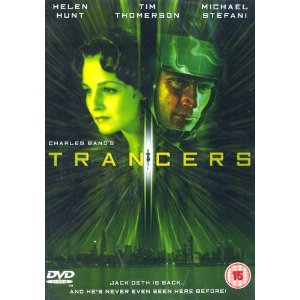
9. Trancers

Tongue-in-cheek sci-fi actioner that is most definitely set at Christmas in L.A. Tim Thomerson plays Jack Deth, a cop from the future intent on hunting down the murderous zombie slaves of his time-travelling opponent!

8. Lethal Weapon

The daddy of modern action films still packs a punch. Slick and fast-paced with enough laughs and thrills to keep anyone entertained at Christmas.

7. Black Christmas

Margo Kidder stars in this excellent and genuinely unsettling 70s slasher movie set in a girl’s sorority house. Somebody is making crank calls. The twist is that the calls are coming from inside the house!

6. An Affair to Remember

Cary Grant and Deborah Kerr are the star-crossed lovers who wait a little too long. Famously became the central plot idea in “Sleepless in Seattle”. Guaranteed to bring a tear to even the grumpiest grandparent’s eye.

5. Batman Returns

Tim Burton does Christmas in Gotham with Christopher Walken, evil clowns, and Michelle Pfeiffer in latex. What’s not to like?

gremlins

4. Gremlins

This was stupidly given a “15” rating in the UK, so a generation of kids never got to experience “Gremlin Mega-Madness” until it came out on VHS. The final shot of a snow-covered town is just gorgeous.

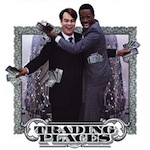
3. Trading Places

Superb comic caper starring Eddie Murphy and Dan Ackroyd at the peak of their talents. Co-starring Jamie Lee Curtis, in a rather memorable scene involving a curly wig and little else. How can you not like a movie that has not one, but two gorillas?

places

2. National Lampoon’s Christmas Vacation

I had to include this all-time funniest Christmas movie. Worth watching time after time just for the “squirrel attack” scene.

1. Stalag 17

Only Billy Wilder could pull off a comedy set in a German POW camp in WWII. William Holden is fantastic in a movie that never sacrifices realism for laughs, but still manages to be funny.

So there you have it, a few non-traditional Christmas movies to spend the season with. Happy Holidays!

Monsters in the House

Today I’m going to share some secrets with you about how to write in the movie genre called “Monster in the House”.

The late, great Blake Snyder can be credited with bringing this term into popular phraseology amongst screenwriters. Basically it is the kind of movie where there is a Monster… in a House. Geddit? Many horror movies use this genre, but so do many other kinds of film. For example, Blake says in his excellent books “Save the Cat” and “Save the Cat Goes to the Movies”  that the good ol’ Monster in the House includes such films as “Jaws”, “Independence Day”, “Scream”, “Single White Female”, and even “Fatal Attraction”.

So how does this go? Well, put simply, Blake says you must have a Monster, a House, and a Sin committed by one the chartacters that invites the Monster into the House. For example, in “Jaws” it is the Mayor’s refusal to close the beaches, out of fear that it will damage tourism on the island, that invites the great white shark to keep munching on the locals.


Birds Film

Alfred Hitchcock’s The Birds starring Tippi Hedren. Can you spot the “Monster” and the “House” in this movie? Extra marks if you can remember what the “Sin is, too!


Blake’s books include a whole host of other great observations about this genre and others and I encourage you to read them all. However I thought I would apply this to my own latest screenplay while I was working on it. The result was that I may have come up with a definitive “blueprint” for the Monster in the House genre.

This may or may may not make sense without reading Blake’s books. However, you can find some illuminating examples by visiting his wesbite http://www.blakesnyder.com/ and using the free dowloads there.

Anyway, here goes…


MONSTER IN THE HOUSE STRUCTURE BLUEPRINT

1. Setup

The House is introduced and described. The Hero’s weakness is also introduced. Don’t forget to Save the Cat!

2. Catalyst

The Sin is committed, ultimately (but not necessarily there and then) inviting the Monster into the House.

3. Debate

Resistance of whatever is the catalyst by the Hero.

4. Break into Act Two/Turning Point # 1

The main conflict with the Monster begins.

5. B Story

The Hero and another character interact.

6. Fun & Games

Hide and Seek with the Monster in the House.

7. Midpoint

Stakes are raised. The Fun is now over. A and B stories cross. Kiss at 60?

8. Bad Guys Close In

Turn, Turn, Turn as one by one the Monster kills off the Hero’s allies and generally makes things harder for them.

9. Rock Bottom

The Sin is finally exposed. The Whiff of Death occurs.

10. Dark Night of the Soul

Despair. Monster appears victorious.

11.Break Into Act Three

The solution!

12. Final Challenge

The Hero combines his weakness with what he has learned during the story to  defeat the Bad Guy (and optionally Save the Cat if not done before).

13. Resolution

Survival, basically.  Optionally you may show how the Hero has overcome his weakness.


So there it is. I’d be interested in knowing what anyone else thinks about this. But it seems general enough to apply to pretty much any Monster in the House script.  Next time I may even break down a popular movie into these component parts to see if it does work all the way through. Until then, keep writing!


10 comic book superheroes who deserve their own movie…

Ahem…

(In ominous voice)

In this blog, dear reader, I tempt vilification by geekdom. Should I leave out a beloved favourite, I will no doubt suffer the wrath of comic book fanatics everywhere. And yet it would be remiss of me indeed not to at least attempt a short compendium of comic books which should have their own movie.

Some of the creations listed below may have already had their own movies, but these were either so bad they have been entirely forgotten, or so low budget as to demand a proper blockbuster version. You decide…

Marvel enters the 1970s with Heroes for Hire.

Marvel enters the 1970s with Heroes for Hire.

10. HEROES FOR HIRE

Created at the height of the Kung-Fu/Blaxploitation movie genre craze in the 1970s, the Heroes for Hire became major fixtures in the Marvel Universe. Comprising Iron Fist — a Westerner trained in mystical kung-fu arts by interdimensional monks — and Luke Cage aka Power Man — a street fighter given a second chance by an experiment that made him virtually indestructible, the Heroes for Hire were just that. Motivated by dollar bills rather than altruism, they usually managed to stay on the side of good. Actor Nicholas Cage was so taken with Power Man that he adopted the character’s second name as his own. Surely worth a movie?

9. POWER PACK

Invented by Marvel in the 1980s, this is the story of four ordinary children who receive super-powers from a dying alien, Power Pack faced the menace of the alien Snarks, who were hell bent on Earth’s destruction. Tasked with rescuing their inventor father from the Snark mothership, these kids behaved like real kids — squabbling, crying, and discovering their inner heroes. This one has Disney stamped all over it. A terrible TV pilot made in the 1990s is best forgotten.

8. HOURMAN

An unfairly maligned character, Hourman was a Golden Age superhero who appeared in All Star comics before being revamped in DC comics by supergenius comic book creator Gardner Fox (Flash, Green Lantern etc etc). Chemist Rex Tyler discovers a miracle pill (Miraclo) that gives him superpowers… but only for one hour.  The twist was that Miraclo was addictive, which gave this character a greater psychological realism than others of his era.

7. THE MAN CALLED NOVA

Richard Ryder was Marvel’s 1970s version of Peter Parker  — a weedy loser who was given incredible powers and became “the human rocket” when he was zapped by a spaceship and given the powers of a Centurian Nova Prime, guardian of the planet Xandar.  Ryder had a popular comic book, teaming up with other heroes such as Spider-Man, before finally relinquishing his powers. An awesome-looking new version of the superhero was launched for the Annihilation: Conquest storyline in the 2010s, proving that Nova can still attract the fans.

185px-Nova_1_(1976)[1]

Nova rockets into the 1970s!

6. SLAINE

Pat Mills’ extraordinary Celtic barbarian warrior first graced the pages of 2000AD at the turn of the 1980s. Since then his popularity has endured. A rather “earthy” hero, Slaine is accompanied on his journeys across time by the disgusting dwarf Ukko, and has faced off against both aliens and dinosaurs. But Slaine’s most unique feature is his “warping” power, in which he channels the energy of ley-lines to became a monstrous, Hulk-like behemoth!

5.DR. STRANGE

Created by Stan Lee in the 1960s, Stephen Strange was a gifted surgeon with a drink problem. After crashing his car, he was found by the Ancient One and schooled in the mystic arts to become Earth’s sorceror supreme. A classic, old-school superhero, Dr. Strange’s adventures took him to all manner of fantastic and bizarre dimensions thanks to legendary comics artist Steve Ditko. A TV movie was made in the early 1980s with John Mills that actually wasn’t all that bad. Time for another try, methinks.

4. THE SUB-MARINER

Originally a villainous foe of The Fantastic Four, Prince Namor of Atlantis grew to become much more than that. Namor’s supreme pride and arrogance makes him the perfect anti-hero. He’s had his own comic book on and off since the 1960s. But a movie? Well, it would be better than “Aquaman”. If only they could get rid of those nutty wings…

Prince Namor, cousin of Colonel Sanders.

Prince Namor, cousin of Colonel Sanders!

3. THE BALLAD OF HALO JONES

Before Watchmen, Alan Moore created a host of genius characters, many for British comic 2000AD. Halo Jones is an Everyman, or rather, an “Everygirl”. Born into an overpopulated Earth in the far future, she seeks escape and adventure beyond the stars, only to find abject misery, cruelty, and exploitation at every turn as both a scantily-dressed hostess and a battle-hardened warrior in a horrific future war. Gloriously pessimistic.

2. WONDER WOMAN

The archetypal female superhero — so why has she never had her own movie? Played by Linda Carter on TV in the 1970s in a series that was far too campy for its own good,and invented by psychologist William Moulton Marston, Wonder Woman exemplified the fighting spirit of America in WWII. This is a superhero with a  history as long as Batman and Superman. An attempt was made to revitalize the character recently but proved a misfire. But who could step into Wonder Woman’s boots and lasso?

1. SWAMP THING

When Alan Moore was lured to America by DC comics in the 1980s, he reimagined this floundering comic book property. From his humdrum origins as yet another product of a scientific experiment gone wrong, Swamp Thing was transformed into one of the finest comic books ever written. Moore’s magnificent “American Gothic” cycle sees Swamp Thing encounter all manner of staple horror monsters, all wonderfully reinvented to reflect modern America…. menstrual werewolves, water-dwelling vampires, radioactive zombies, haunted houses filled with the victims of gun crime. Swamp Thing journeys across the multiverse, from Heaven to a Hell that is the most completely imagined vision of the afterlife in the history of comics. During this we are also introduced to a British psychic called John Constantine. Swamp Thing was made into two attrociously bad movies in the 1980s as well as a TV series. None of them have (thankfully) anything to do with Moore’s work. This is a comic book that is ripe for the big screen (pun intended). Forget the other big green guy. Swamp Thing is where it’s at!

Music is Your Friend…

Do you listen to music while you write?

Sounds like a banal question. But many writers are heavily influenced by music, while others say it helps them to concentrate and focus.

Alan Grant, comics writer of “Batman”, “Judge Dredd”, and many more, says he listens to music for an hour or so each morning before he starts to write. Evidently it gets his creative juices flowing.

Personally, I prefer something instrumental. I won’t bore you with a list of my favourites. Suffice to say, it includes plenty of heavy 1970s electronica and Baroque classical. Anything I can get my hands on that provides ambient background music. Hypnotic white noise helps me to zone in on the page.

Other writers have used music to do more than focus, however. Take Alan Moore. Almost every chapter of “Watchmen” has a musical lyric as its title – a conceit used to brilliant effect in the movie soundtrack. In fact, several of Moore’s stories seem to have been directly inspired by lyrics.

Music can capture your mood. Or it can provide you with tangible inspiration from its lyrics. Just don’t play that Eminem record at full volume on your iPod in the library, or I may have to hit you. Hard. With a book.

So find your muse, find your mood music, and write away…

Why was He-Man so crap?

he-man

Today I am tackling an issue that has been playing on my mind for many years. Several attempts were made in the 1970s and 1980s to fuse fantasy with science-fiction in movies. This is not a new trend, and is generally called “Science Fantasy”. For instance, Edgar Rice Burrough’s John Carter novels are science-fantasy. CS Lewis (of Narnia fame) even wrote a religious allegory sci-fi series known as the “Space” trilogy.  In movies we have 1983’s “Krull”, the notorious flop “John Carter”, and the lilttle-known but half-decent movie “Pathfinder”.

But what does these have in common? Well, they are crap.

That’s not to say we can’t love them. “Krull” has a particular place in my heart, not least for the amazing Freddie Jones and the use of actual British character actors. The CS Lewis novels are great flights of fancy (although totally scientifically incorrect).

But for some reason critical success has mostly eluded these works. There is something about the melding of high fantasy (magic, swords and sandals) with science-fiction (high tech, high concept) that creates works of daftness rather than genius.

Take He-Man.

He-Man has his roots firmly in Robert E Howard’s “Conan” stories. With a technological twist. His home planet Eternia contains magic but also machines and flying vehicles, cyborgs and laser-guns. You would think that such a world would provide great images and great storylines. Instead, it always manged to be childish and rather stupid. Like GI Joe on Magic Mushrooms.

Jitsu - one of Skeletor's less memorable henchmen.

Jitsu – one of Skeletor’s less memorable henchmen.

The animated series was designed to promote Mattell’s line of action figures, whish was apparently created to cash in 1982’s “Conan” movie, but which had to be redesigned when said Arnie movie featured so much nudity and gore that it was rated “R”. However this may be apocryphal.

For He-Man newbies, He-Man was in fact Prince Adam of Eternia. A fact that nobody could discern despite being identical and never wearing a mask. He rode a cowardly beast that transformed into a fiercer version whenever Adam became He-Man (nobody bothered to explain why in a planet where everybody could use flying vehicles Adam settled for riding on the back of his pet cat).

Nothing too unusual there. If we can buy Superman, why not Prince Adam? But unlike other cartoon characters, there was something udneniably dorky about He-Man. Possibly it was his very name. The far more successful cartoon TV show “Dungeons and Dragons” had some genuinely unsettling moments. But He-Man’s greatest foe was… Skeletor.

Ah, Skeletor. Far more likeable than He-Man with your silly plotting and villanous laugh. But the unfortunate bad guy only ever managed to surround himself with complete morons who alway fouled up his schemes. He may have had more success working with the Three Stooges than the likes of Beast-Man, Mer-Man and Lockjaw.

Skeletor - the villain everyone loves to hate... almost.

Skeletor – the villain everyone loves to hate… almost.

Which brings us to the 1987 live-action movie.

In fact, it’s not that bad when watched today through the tinted lenses of nostalgia. Meg Foster is eerie as Evil-Lyn, the plot (albeit a bit silly) is so perfectly “Eighties” that it’s watchable. Frank Langella provides a suitably grave Skeletor. However the plot suffers from two things – cliche and a lack of credible worldbuilding. Lines like “It’s too quiet” grate. Gone is the backdrop of Eternia (struck out for budgetary reasons). And the characters are all pretty stock and one-dimensional.

Perhaps part of the problem is the inherent silliness of the science-fantasy genre, a genre that exists only to draw attention to itself. Science-fantasy stories scream out, “Look how clever I am!”. But in fact they only use cliches from both genres, creating storylines with few surprises  but which also strain our credibility.

Consider “John Carter”. Not only are we supposed to believe  in aliens, life on Mars, teleportation, a second set of aliens, and magic… but a third set of competely different aliens as well. Phew!

So there you have it. He-Man’s crapness is inherent. It both endears us to him and repells us, as it does with many other high-bidget flops. On reflection, I think it’s because using two genres (some may say opposing genres) weakens the depth of storytelling. We are so concerned with the language and imagery of the story, that there is no room left for what audiences desire most… plot twists and great characters.

So my advice is.. avoid the science-fantasy genre altogether. Unless you want to produce a very expensive white elephant.

And I bet you thought I would never get any writing tips out of this post! 😉