Tag Archives: writing

The Best Horror Movies of the Past 50 years! Part 6! The Noughties! (2000s)

If the 1980s wore out horror conventions such as knife-wielding maniacs, wish-granting demons and comedic vampires, in the 1990s horror underwent another transformation. Clever films like The Sixth Sense had made money by generating atmosphere rather than gore. And the found footage phenomenon that (re)started with The Blair Witch Project showed Hollywood that horror was big money. In the 2000s alone there was: The Collingswood Story, Incident at Loch Ness, Welcome to the Jungle, The Poughkeepsie Tapes, Paranormal Activity, REC, Cloverfield, Diary of the Dead, Home Movie, Quaratine, REC 2. All found footage.

Unfortunately, the growth of independent horror did not stop studios rushing to release a slew of remakes and sequels. Probably, the major studios perceived that here was a generation of moviegoers who had probably never seen the original version of many profitable 1970s horror movies. Like a helpless slasher victim, these films became easy prey for money men.

The 2000s also saw the birth of three giant movie franchises. “Final Destination”, “Resident Evil”, and “Underworld”. The first feels like a lacklustre retread of “The Omen”. The second is based on a computer game. And the third features Kate Beckinsdale in PVC. All of these made enormous amounts of money from exactly the audiences they aspired to, and spawned numerous sequels and even a reboot in one case. But for those who prefer their horror with more more… well, horror, here we go…

(On a side note, M Night Shayamalan, whose “Sixth Sense” was such a hit in the 90s, went on to write and direct the enjoyable superhero romp “Unbreakable” as well as the rather unbelievable sf/horror “Signs” and the totally insane “Lady In The Water” before returning to horror with “The Happening”, a half-serious tale of killer plants that I actually found to be entertaining. Sorry, M Night, but you just miss out on this list.)

Ginger Snaps 2000

Our first movie is an off-beat gem, typical of those that were getting more prominence as the film market became truly global.  In this very original Canadian werewolf movie, lycanthropy is portrayed as a metaphor for a young woman’s sexual awakening. The result is a highly entertaining and funny movie with some genuinely emotional scenes, as Ginger’s gradual transformation (no lunar change this, but a full on, irreversible devolution) is seen through the eyes of her younger sister. A worthy addition to the genre, and a sign of things to come. Foreign horror films would become increasingly important in this decade.

Pitch Black 2000

Another example is this Australian sci-fi/horror feature starring a then-unknown Vin Diesel. A female spaceship captain and her crew, including one very dangerous prisoner, are stranded on a desolate alien world. But once the planet’s three suns go down, its nocturnal critters come out to play. And nasty critters they are too. A great concept that is carried out with suspense and great special effects.  It spawned two sequels, but these were essentially just star vehicles for Diesel and never added to the original story.

Shadow of the Vampire 2000

Another off-kilter story, this time a “re-imagining” of FW Murnau”s filming of the silent film “Nosferatu”. Willem DeFoe is superb as Max Shreck aka Count Orlock aka Dracula, who has a very specific reason for allowing the filmmakers to shoot their film in his castle. A great black comedy horror with some excellent performances. Again, the film shows how great horror movies were flying under the radar.

Jeepers Creepers 2001

Yet another off-beat tale. This well-crafted horror comedy has a post-modern twist in that it is a brother and sister who stumble across a demon while on a road trip, rather than the usual suspects of teen movies with the obligatory love interest. Thus it subverts the genre and keeps it fresh. The demon itself, “The Creeper” is intriguing, indestructible, and capable of surprising the audience on a few occasions. Very enjoyable, it was a great success and had an inevitable sequel that wasn’t half bad, though less original.

London + rush hour + zombies = not good.

London + rush hour + zombies = not good.

28 Days Later 2002

Just when we thought the zombie movie had been done to death (pun intended) along came Danny Boyle and Alex Garland, with a gritty tale of sort-of-zombies set in England. London and Manchester, to be precise. Giving the genre a modern twist, the film opens with environmental terrorists releasing a monkey from a biological warfare lab. Things rapidly go downhill from there. In a terrific scene, Cilian Murphy wakes up in hospital to find a London devoid of people. When we do meet the zombies, they are not the shambling undead of the Romero films, but sprinting, slavering contagious madmen. A nightmarish thrill-ride from start to finish, the movie carries on the glorious English post-apocalyptic tradition begun in “The Day of the Triffids”. It also set the stage for the zombie invasion that was about to come…

Naomi Watts is a good screamer.

Naomi Watts is a good screamer.

The Ring 2002

SPOILER ALERT!

Bringing Asian horror movies to the public consciousness (or “J-Horror” as it is sometimes imprecisely called), Gore Verbinski’s remake of a successful Japanese horror movie hit theatres in 2002. Naomi Watts is compelling enough as the ill-fated journalist who watches one VHS tape too many. But to audiences, it was the ghost who was the star, especially one sequence when the ghost appears on television, and then walks out of it. Others may find that the whole film is rather tame and relies upon creepy images which are actually not all that creepy. However, it was a huge success, and showed Hollywood that Japan was a rich, untapped well of source material (what is it with these puns?).

House of 1,000 corpses 2003

Performance artist and singer Rob Zombie’s first major feature. On the surface, a “Texas Chainsaw Masssacre” rip-off, it is actually much more than that. The film introduces a host of bizarre, demented and downright nasty characters who steal the show from the protagonists and would show up again in the even grittier sequel “The Devil’s Rejects” (2005). Zombie directs with assurance and a great deal of visual style. This movie boasts the most evil, seedy clown ever and what may be film’s most violent femme fatale!

Saw 2004

It is easy to see why audiences liked Saw upon its release. The film has a very slender plot – a madman compels people to outwit deathtraps to teach them life lessons. It also has many clever twists. However, the main (and supposedly the cleverest) twist is not so believable. More importantly, the film was cheap to make. The result was a rash of sequels and a ton of money. Hollywood was waking up again to horror.

Dawn of the Dead 2004

The logical conclusion based on the success of 28 Days Later was to remake George A Romero’s beloved classic from 1978, with modern special effects. Thankfully, somebody hired scribe James Gunn and director Zack Snyder to do the job. The result is an insanely entertaining film that is full of modern CGI tricks while staying respectful to the original. Some standout performances from Ving Rhames, Sarah Polley and Jake Weber help. A great addition to the canon that cemented the zombie in the popular consciousness and led to many, many more zombie movies.

Shaun of the Dead 2004

And with success, comes parody. Simon Pegg and Edgar Wright’s hilarious horror comedy tackled what would happen if a zombie apocalypse invaded suburban England. Hardly anyone notices. A watchable but less funny version is 2009’s Zombieland, although it’s hard to follow such a great double act as harried store-worker Shaun and his anti-social layabout friend Ed setting about a zombie in a pub to the tune of Queen’s “Don’t Stop Me Now”.

This is exactly what the zombie invasion would look like.

This is exactly what the zombie invasion would look like.


Let the Right One In 2008

Amid the plethora of Hollywood remakes, sequels and reboots, this obscure Swedish horror movie somehow managed to become a success in America as well as Europe. A simple tale of a young boy who meets a young-looking vampire and becomes friends with him/her, the movie has a genuine emotional core. There is a fair bit of gore, too. Hollywood soon cottoned onto this and did an English-language remake, as it would with almost every successful foreign horror film in the ‘Noughties.

House of the Devil 2009

What this list doesn’t show is the quite shocking amount of remakes and sequels that abounded. While independent moviemakers were becoming more well-known, studios chose to give us more of the same rather than take creative chances. The result was some less-than-memorable movies.

In the 2000s alone we had remakes of: Dracula, 13 Ghosts, Carrie, Dawn of the Dead, Assault on Precinct 13, House of Wax, The Amityville Horror, The Fog, The Omen, The Hitcher, The Hills Have Eyes, and The Wicker Man.

Add to that English language remakes of: Let the Right One In, The Grudge, The Ring, Phone, Eye, Dark Water, Into the Mirror and Pulse, plus an enormous number of sequels.

And yet for all that, a few horror movies still shine through as being really good examples of the genre. Some come from surprising places like 2003’s “Into the Mirror” or 2006’s “The Host”, both from the expanding market of Korea.

It seems poignant, then, to end with a low-budget movie that is an homage to the classic 1970s independent cinema shockers of John Carpenter and Wes Craven.

House of the Devil was written and directed by Ti West, one of the genre’s most promising newcomers. From the opening scene, it feels like we have stepped back in time to 1978 and all will be well again. The shaky camera, the 70s clothes, music and even the “final girl” all make for a very believable 1970s “feel”. Yet the film still manages to wrongfoot us and shock us with clever plot twists as a young college girl is lured to a remote mansion by some very odd Satanists.

House of the Devil deserves far more praise than it has been given. West has gone on to be one of the leading lights of independent horror.

Horror cinema itself became divided in the ‘Noughties. On the one hand there were the big-budget, SFX-driven remakes and blockbusters, and on the other independent filmmakers such as Rob Zombie and Ti West, whose love for horror reminds one of those heady days in the 1970s, when independent filmmakers seized the night, and a new breed of low-budget horror was born.

Next time…

The 2010s! Can the found footage genre prevent itself from being buried? What will happen to independent filmmakers in the wake of the Hollywood behemoths? Horror is saved by the haunted house movie (sort of)! We meet some rather unbelievable monsters, and some very unusual cannibals. Yum!


The Best Horror Movies of the Past 50 years! Part 5! The Nineties!

Ah, the 1990s… when the Eighties were a distant memory. The Nineties were mad for it. Grungier than its predecessor, we never thought there would someday be a price to pay for all those late nights spent clubbing it. Nowadays the whistles and glowsticks seems just as bad as those silly hats.

Horror movies had a hard time in the 90s. The 1980s had milked the slasher movie to death. Vampires and werewolves were old hat. Even the horror comedy was on its way out. In a way, many of these movies represent the dying breaths of horror’s staple bad guys. The horror genre was about get ugly…

Exorcist III 1990

The decade began with a shuddering return to form of William Peter Blatty’s faith-based possession franchise. The film doesn’t seem to know where it’s going. Maybe it simply had nothing new to say. But with some genuinely chilling moments involving a bone saw, this was a worthy sequel to the classic horror hit, if not a new beginning.

Jacob’s Ladder 1990

As a counterpoint to that kind of “old-school” horror, here we have the first of several psychological horror movies as Tim Robbins does a star turn as a man haunted by visions of demons. In true Nineties style, the story turns out to be a bit “meta”.

The children of the night may be beautiful, but they're not very scary.

The children of the night may be beautiful, but they’re not very scary.

Bram Stoker’s Dracula 1992

Francis Ford Coppola turns Bram Stoker’s classic bloodsucker into a kind of modern fairytale. Not scary in the least, and certainly not a definitive version, despite the claim to closely follow the novel (which it doesn’t), and full of wildly uneven performances, you have to admire its impressive, visual style, while Gary Oldman’s outing as Dracula would cement him as a great actor for years to come.

Army of Darkness 1992

Sam Raimi rounds off his “Evil Dead” trilogy with this rip-roaring slapstick live-action cartoon. Boasting some great comic one-liners and an even more OTT performance by B-movie legend Bruce Campbell, this Halloween treat contains skeleton warriors, flying books, and an extremely surreal scene in a windmill where Ash chases around little versions of himself. This is one of those films that’s so bizarre it stands in a category of its own. It is also so downright mad that it ended the series, albeit on a high note of laughter.

Interview with the Vampire 1994

Neil Jordan brought audiences the visually alluring but story-lite “Company of Wolves” in the 80s. Here, he tackles Anne Rice’s novel of a vampire telling the story of his 200 year-old existence. Starring Tom Cruise in  role nobody expected of this all-American action star (a bloodsucking ghoul), and a young Brad Pitt, as well as a 12 year-old Kirsen Dunst, this is a lavish tale worthy of those old Hammer classics of the Sixties. But the novel has a touch of 1990s despair about it. This vampire doesn’t know his place in the world and is constantly seeking something to believe in – a little like people in the 1990s. Once again, the vampire is a reflection of his times, which perhaps explains why it took so long for the book to reach the screen.

From Dusk Til Dawn 1996

Quentin Tarantino hit the big time in the 1990s with his multiple-storyline post-modern heist flick “Reservoir Dogs”. Here, he dips his wick in the horror genre, at least for the first half. Once the vampires cut loose, he turns directing over to Robert Rodriguez, who brings his over-the-top campy action style into play. Hard to take seriously today, this movie has its tongue surgically implanted in its cheek. It is also the movie that inspired a million tattoos thanks to George Clooney. A fun film at the time that is less fun with age, it had some strong actors but is ultimately a bit of a gimmick rather than a serious movie – the main draw being actors getting killed whom you expect to survive. Horror, it seemed, was running out of ideas.

Are you cool? I'm cool. Are we cool? Vampires are not... cool in this movie.

Are you cool? I’m cool. Are we cool? Vampires are not… cool in this movie.

Scream 1996

The last word in Slasher movies belongs to Wes Craven, who was ironically one of its creators. This film is postmodern in every sense. Teens stalked by a slasher discuss how slasher movies work in order to escape their killer, only to discover that the killer also watches slasher movies and knows as much about them as they do. The death knell of the slasher movie can be heard loud and clear in this horror/thriller. After this, there was simply nowhere for the subgenre to go.

Event Horizon 1997

An underappreciated film that makes little sense on first viewing. Imagine Star Trek crossed with a John Carpenter film and you get the picture. Horror icon Sam Neil (at this time a big draw thanks to Jurassic Park) takes a risk as a doomed character in this story of a space ship that returns from its journey into hyperspace without its crew, like a futuristic Marie Celeste. As scientists try to uncover what happened to the passengers, they learn that something nasty waits on the other side of the dimensional border. A Lovecraftian sci-fi, in a sense, this is one of the few truly original horror movies of the decade.

The Faculty 1998

Movie stars got younger and younger in the 1990s as studios targeted their “real” audience. Here, Robert Rodriguez is on form as he directs a tale of high schoolers taking on an alien invasion with the help of a pot-smoking rebel. This B-movie boasts some standout future stars like Elijah Wood and Josh Hartnettt. It is also much more enjoyable than it deserves to be, given the number of irritating jargon-speaking schoolkids. A very “nineties” updating of old 1950s B-movie tropes. Once again, however, the “alien invasion” horror movie had no real place to go.

The Sixth Sense 1999

This movie marked the debut of M Night Shyamalan, whose career would (for a while) be known for its outrageous plot-twists. The movie also resurrected the career of action star Bruce Willis as a psychiatrist treating a kid who “sees dead people”. Although people disagree as to whether the plot twist at the end was a surprise or obvious, the film packs some genuinely creepy moments, and lots of shocks along the way, as only the boy can see the dead folks, but they can see him.  Shyamalan’s tale proved hard to copy, but revived a lot of interest in the flagging horror genre for a new generation of filmgoers.

Like it or loathe it, this movie gave the genre a breathe of new life.

Like it or loathe it, this movie gave the genre a breath of new life.

The Blair Witch project 1999

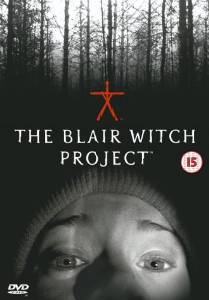
As if to underline audiences’ boredom with standard horror fare, the found footage genre re-emerged at the end of the century with the most profitable independent film in movie history, usurping John Carpenter’s “Halloween”. Three people get lost in a wood on videotape. It really is that simple. What follows divided audiences. Some loved it for its clever use of a very (nonexistant) limited budget and the way it raises your hackles by not showing you what is going on. Others hated it for precisely the same reason. The found footage genre proved an enormous hit, no doubt because it was very cheap to copy. But whether you love it or hate it, this subgenre gave the horror film a new direction, one that would create a whole new set of filmmakers in the ‘Noughties and beyond, and who would exploit rapidly-changing technology to give the studios a run for their money.

The Nineties suffered from the overdose of slasher movies that took place in the Eighties. For a while the genre was left reeling. But new technology and clever filmmaking resurrected the horror movie at the end of the decade. With audiences demanding new thrills, better special effects, and grimmer storylines to reflect the pessimism of the times, horror movies were about to go to a very dark place indeed.

Next time…

Zombies, zombies, zombies! The world goes mad for George A Romero’s creations. Horror goes viral, ghosts turn Japanese, and it seems that anyone can make a horror film as long as they have a mobile phone.


The Best Horror Movies of the past 50 years Part 4! The Eighties!

Part 4 of our series on the most influential horror films of the last 50 years!

The end of the Seventies created the slasher movie. The mixture of low-budget filmmaking with its teenage cinema-going audience proved a winning combination. Special effects were also coming into their own, courtesy of groundbreaking science-fiction movies like “Star Wars”, and SFX and Special Make-up pioneers like Rick Baker and Savini. The Eighties would see an explosion (sometimes literally) in gore and transformation special effects. This in turn would spark off a  reactionary backlash… the “Video Nasty”.

Just keep telling yourself, "It's not Halloween! It's not Halloween!"

Just keep telling yourself, “It’s not Halloween! It’s not Halloween!”

Friday the 13th 1980

Starring a young Kevin Bacon, this textbook slasher is actually quite effective. Hot on the heels of John Carpenter’s “Halloween”, Jason is Michael Myers on steroids. The film is pretty much a carbon copy of the earlier movie, except for more gore, a scary summer camp setting, and did we say more gore? A huge success, the film spawned a vast quantity of sequels. These are unusual in that the main bogeyman, Jason, becomes not only superhuman, but a parody of himself, until at last we finally get “Jason in Space”. Even today, Jason refuses to die, getting a recent unnecessary “reboot” in 2009. Director Sean S Cunningham had  worked on Wes Craven’s notorious nasty shocker “Last House on the Left”, and like Wes Craven’s monsters, Jason would soon become a  postmodern joke. But the first instalment tries, for the most part, to pay it straight.

The Shining 1980

Stanley Kubrick’s re-imagining of Stephen King’s masterful haunted house story is a rare thing – a horror movie and a work of art. Jack Nicholson descends into madness with a little help from the ghosts of the deserted Overlook Hotel, turning on his wife Shelley Duvall ( I challenge you to find a better screamer)  and his psychic young son. The hotel becomes part of the horror, its patterned carpets and maze-like structure twisting  the mind out of true. Nicholson’s performance is Oscar-worthy.  Kubrick’s direction flawless. Even the opening scene with its alien viewpoint becomes unsettling. Copied countless times, this is a true classic.

American Werewolf in London 1981

John Landis, better known perhaps for  comedies such as “The Blues Brothers” and “Coming to America” left an indelible impression on the horror genre with this tale of an American boy who gets bitten by a werewolf on the Yorkshire Moors. From then on, things get truly hairy. Landis plays with horror and comedy. The result is a very unsettling picture. But the star of this film is the magnificent werewolf transformation scene designed by Rick Baker. Excruciating in its agony and detail, we really believe we are seeing a man transform into a creature of the night. The uneven tone caught many critics by surprise, but this one stands the test of time, and has been copied by virtually every werewolf movie since.

The Howling 1981

It would be remiss not to mention “The Howling” as well. There is some controversy over which movie was in the works first. Landis maintains he had the idea for “American Werewolf” before production started on “The Howling. Both are werewolf movies, both feature excellent transformation scenes. Both have comedic elements. But “The Howling” for the most part is a serious story, as evidenced by the opening scene in which reporter Dee Wallace (the mom in “E.T.”) finds her interviewee in a seedy sex video store, only to be driven half insane when she sees him transform before her eyes. The scene is one of the most intense I’ve ever watched. Great acting fro the likes of Patrick McNee and John Carradine flesh out the cast, but again the real star is the special effects. Baker again had a hand in these, before leaving the production to work on “American Werewolf”.

The Thing 1982

Baker’s successor on “The Howling” was Rob Bottin. Bottin came into his own as designer of the many gut-wrenching and terrifying effects used in this John Carpenter masterpiece. The story is a simple one – scientists in a remote Antarctic base discover an  unfriendly alien life form that assimilates and takes over all other life forms, including man. The great cast makes the whole thing believable, while Carpenter is on top form, dishing out the scares.  But by now the “Video Nasty” craze was in full swing, especially in the UK, where various consumer groups battled to get such films banned.  That, and negative comparison to the “feel good” alien blockbuster “E.T.” released that year, prevented “The Thing” from being a box office success. Thirty years later, it has cult status.

A Nightmare on Elm Street 1984

Another Wes Craven creation, scarred undead child-murderer Freddy Kruger would go on to become one of the most recognizable monsters in horror. “Nightmare” is a genuinely frightening picture, with some very effective scares. It spawned an army of sequels and reboots of varying quality. But it too would suffer from the postmodern disease of become a self-parody,until finally we get “Jason vs Freddy”, a film that doesn’t even try to suspend disbelief.

Be afraid.. of the fly!

Be afraid.. of the fly!

The Fly 1986

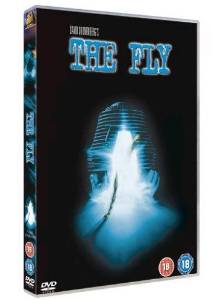
David Cronenberg had made several pictures after “Shivers”, notable the excellent “Scanners”. But he hit the big time with this remake of a Vincent Price shocker about a scientists who experiments with teleportation only to swap heads with a fly. It doesn’t sound like a recipe for success — a horribly disfigured Jeff Goldblum gradually transforming into a homicidal half-man/half-fly. But stalwart acting from Goldblum and Gena Davis, combined with a highly intelligent script, turned audiences on everywhere and the Fly became a bona fide hit. The tagline “Be Afraid. Be very afraid” has become a part of popular culture. One of the high points of horror in the 80s.

Evil Dead II 1987

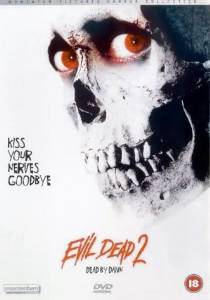
Sam Raimi had burst onto movie screens with the 1981 classic “The Evil Dead”. Raimi’s penchant for weird camera angles and cartoony special effects was an underground hit, attracting the attention of the anti-Video Nasty brigade due to one very unpleasant scene. In “Evil Dead II” he took this one step further, creating his own unique blend of comedy and slapstick, and making a star out of straight man Bruce Campbell. As horror lightened in tone after the mid-Eighties, Raimi’s style fitted the mood of the times perfectly. The film is a basic remake of the first movie, but ends on a hysterically crazed note. The violence is cartoon, the plot insane. Fanbooys loved it, and have been lapping it up ever since.

Nyuk, nyuk, nyuk!

Nyuk, nyuk, nyuk!

The Lost Boys 1987

All this seems to be part of a pattern. The serious, horrifying movies of the Seventies were transforming, as studios targeted their prime audience, and began churning out products that college kids out on a date could enjoy. Cynical marketing? Probably. This was the Eighties, after all. Whatever the reason, two movies came out in 1987 that reinvented the vampire genre. One was “Near Dark”, the other was “The Lost Boys”. This is where vampire chic has its roots. Kiefer Sutherland heads a posse of Eighties vampires, compete with rock star looks and clad in the latest fashions. They are everything vampires are (attractive, immortal, evil etc.) but updated. The movie is a very slick production, with some favourite child actors, some great comedy scenes, and a top-notch Eighties soft-rock soundtrack. “Lost Boys” was an instant hit. Since then, almost every “cool” vampire movie or TV show owes a debt to this movie, from “Buffy the Vampire Slayer” to “Twilight”.

Near Dark 1987

The other movie that redefined the vampire genre was the little-seen “Near Dark”. But whereas “The Lost Boys” drew in audiences, this film took 25 years to become a cult classic. A tour-de-force of filmmaking by Oscar–wining director Kathryn Bigelow, it includes  a dream cast, many of whom had appeared together in Bigelow’s then-husband James Cameron’s “Aliens”. “Near Dark” features grubby, streetwise vampires prowling the American MidWest. This is no Gothic romance, nor is it high fashion. Lane Henriksen’s performance is chilling and compelling, Bill Paxton is at his rebellious finest, and sadly underused actress Jenny Wright at her most beguiling. These vampires are down and dirty. In many ways this movie is the opposite of “The Lost Boys”.

Hellraiser 1987

At the end of the Eighties, a Liverpudlian horror author with a dodgy transatlantic accent came to prominence. He was also a film director. Clive Barker brought a new vision to horror. His was horror filled with spectacle, almost operatic. The plot revolves around a puzzle box that, when opened, summons a trio of leather-clad sado-masochistic demons. Like Cronenberg, Barker likes to explore the forbidden or taboo. In “Hellraiser” he gave the world the iconic and somewhat literally-named monster Pinhead. And lo, a franchise was born! The movie is  unsettling and takes itself very seriously. Barker would follow this up with a variety of cult classics, such as “Nightbreed” and “Lord of Illusions” – all of which were overlooked by mainstream audiences despite their originality and quality.

In conclusion…

The Eighties created some wonderful horror movies, and saw the rise of the horror-comedy as a way to reinvigorate the genre. The wild and wacky craze of the Video Nasties gave way to more mainstream hits. Horror became homogenized. Maverick directors like Cronenberg became accepted by the movie-going public, and by the end of the Eighties, horror movies were no longer a Video Nasty to be burned or kept on the top shelf of your local video store but instead became big business, and somewhat tamer as a result.  Sequels multiplied faster than zombies. It was the coming of a time of exploitation, not of stereotypes this time, but of wallets.

Next time…

Horror in the 1990s. In which the genre reaches a dead end (say it ain’t so!), we all see dead people, vampires get all mushy and camera angles become shakier! See you there!


Notes from FantasyCon2014

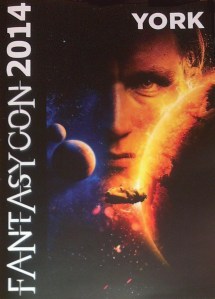
Great artwork for the brochure reproduced here by Larry Rostant

Great artwork for the brochure reproduced here by Larry Rostant

FantasyCon 2014, run by the British Fantasy Society, was held at the Royal York Hotel on Friday 5th – Sunday 7th September 2014.

This was my first time at Fantasycon, the annual gathering of the British Fantasy Society. So I didn’t know what to expect. I did know, however, that there were quite a few eminent guests, including Charlaine Harris, author of the phenomenally successful Sookie Stackhouse series, better known as TV vampire show “True Blood”. Other luminaries included horror author Ramsey Campbell and “Chocolat” writer Joanna Harris, as well as “Dr Who” scribe Toby Whithouse to name but a few.

The convention was held at the Royal York Hotel, adjacent to the train station and therefore a very convenient location. The hotel itself was a grand old affair. Sadly, the cost of staying there was prohibitively expensive. In fact, as I had only decided to go at the last minute, getting a hotel in York proved a difficult task, so I had to commute from Manchester on the two days I attended. However, this wasn’t too bad, thanks to a convenient rail link.

Prior to booking, the lack of information on the website was perplexing and gave the convention the feel of a “members only” club. However, this wasn’t the reality when I got there. Although many people came in groups, overall I found people to be very friendly and accommodating. But a better website, and even a forum, would have helped a lot. As it was, I threw caution to the wind and bought my ticket. But I can’t help but think how many other people were put off by the impersonal nature of the web page.

The first day was an introduction to the convention. Once I had acquired a map of the rather confusing (and sprawling) hotel layout, I grabbed myself some great free books for attendees (always a bonus!). There were also some fantastic discounts available in the dealer room from some sellers, while others remained reassuringly expensive.

I was very grateful for the introductory session which got me talking to several other attendees. The rest of the day passed in a blur. The crowd was an eclectic one, with attendees from as far as the USA. It was great to see people who were as enthusiastic about sci-fi, fantasy and horror as myself, if not more so. The staff too were friendly, and the convention rather relaxed. A little too relaxed, unfortunately. I missed several author signings despite being in the same bar! A bit of an announcement would have been nice.

Throughout the Con, there were book launches, author readings, even short film showings. Unfortunately I couldn’t stay to the bitter end to witness the delights of Karaoke on Friday, which apparently was a pity.

On Saturday, I got there early and bleary-eyed to attend a great panel discussion on whether there was a place for hope in horror. The panel consisted of Ramsey Campbell, Roz Kaveney, Guy Adams, Sara Jayne Townsend and Adam Neville. After a spirited debate, the panel ended with Roz Kaveney’s revelation that he once worked in the same restaurant as serial killer Dennis Nielsen! A very enlightening discussion that showed the versatility of the horror genre.

Charlaine Harris entertains at FantasyCon 2014.

Charlaine Harris entertains at FantasyCon 2014.

Later, Charlaine Harris gave us the lowdown on what it feel like to become an overnight sensation after thirty years of writing mystery novels, as well as the agony and ecstasy of selling your work to cable TV. Ms Harris was very entertaining, and was a regular fixture in the lobby, as were several other authors, giving the con an even more relaxed feel.

Later, I attended a panel on horror in TV. This featured “Dr Who” scribe Toby Whithouse, screenwriter author and editor Paul Kane, and Stephen Volk, writer of notorious BBC 1992 fake documentary “Ghostwatch”. Bizarrely, everyone on the panel agreed that CGI was not a good alternative for strong stories. Maybe there is hope for TV.

There were many other panels to attend, including an enthusiastic demonstration in swordfighting. Inevitably, I found that a lot of the most interesting panels conflicted. Yet there did seem to be a lull between 2-5pm.  But perhaps someone else with different interests would have told you the opposite.

Saturday ended with a mass signing. However, I sacrificed this in favour of hanging out in the bar. This is because for me the most rewarding aspect of FantasyCon was meeting other fans. As a writer, you tend to spend too much time in isolation. This means you lose touch with the people who matter most – the readers. I was amazed at their passion, their interest and their knowledge.  It really made me want to up my game.

On Saturday night, I headed home, my hunger for the speculative satiated for the moment, clutching my bagfuls of cheap books and signed copies. One of my aims had been to find new authors to broaden my reading, and I had certainly been given enough food for thought. I came away with a much greater knowledge of the blossoming sc-fi, horror and fantasy market, and with several new authors to sink my teeth into (figuratively).

A little light reading.

A little light reading.

Sunday proved a bridge too far for me. As there were only panels in the morning, I decided not to attend and save myself a hefty train fare. The afternoon was taken up with the British Fantasy Awards. But again, there was a curious lack of publicity about these on the net. The FantasyCon Twitter feed was also strangely silent throughout the weekend. The BFS produce some great publications, so it is odd that it doesn’t toot its own horn more.  Maybe the BFS could even televise the event on a Youtube channel!

In summary, this was a very worthwhile Con. I would recommend it to anyone who wants to meet likeminded people and who enjoy lively debates about everything in the world of speculative fiction and movies. I hope to go again next year and have an even better experience. However, a little more information would have been nice from the organisers for those who have not boldly gone to the Convention before. More Twitter updates would be a definite plus as well. But if you are a fan or creator of sci-fi/fantasy and horror in the UK, this is one convention you cannot afford to miss.

My  advice  is to book early and stay late, something I hope to do next time around!


Next year’s FantasyCon 2015 is to be held in Nottingham, UK.


How to Write Loglines – an actually useful guide

Want to know how to write effective loglines for movies and books? Read on!

INTRODUCTION

There has been so much written on the subject of writing loglines that I thought it was about time I added my tupppence (or two cents, depending on which side of the Atlantic you are on) to the debate.

Let’s start with the basics:

1. WHAT IS A “LOGLINE”?

A logline can apply to both novels and screenplays for movies. They are generally short, punchy descriptions of the plot (i.e. the thing your story is about). Editors, agents, producers and assorted other people often ask for a logline when they are deciding whether to buy or represent your work.

Interestingly, neither Robert McKee in his lauded book “Story” nor William Goldman in his seminal essay “Adventures in the Screen Trade” mention what a logline is. Yet I would argue that is one of the most essential tools the screenwriter or novelist has at his or her disposal. In fact, it is an essential skill to master.

One thing a logline is not is that thing you see on movie posters. This is in fact a “tagline”. Tagllines are very short (usually one sentence, or sometimes less!) statements used to entice someone into watching a movie.

An example of a tagline:

“In space, no-one can hear you scream” (Alien)

While this is a great tagline, note that it tells us nothing about what is going on (other than it’s in space, and you’re likely to scream).

A logline is more sophisticated and tells us more about the story.

For example:

“A psychopath escapes from an asylum and slashes his way through a quiet suburban neighbourhood until he is defeated by a bookish young woman” (Halloween).

Okay, so it’s not poetry. But you get the picture.


2. WHY THE HELL DO I NEED A LOGLINE ANYWAY?

But Eric, you say, why should I distil my 100,000 word novel or my 120 pages screenplay, work of genius that it is, into a single sentence?

The answer: a logline is a selling tool.

Loglines allow you to “pitch” (i.e. tell) someone about your story in a very short space of time. And when you’re dealing with producers, agents and executives who can only spare you less than a minute, this becomes important.

Of course, if you’re happy just writing and never selling anything, loglines probably won’t apply to you. Good luck on your chosen career path. Some of us have to eat.

A good logline can make someone sit up in their seat and pay attention. It can entertain, move and arouse curiosity in the listener. And it can delay that moment when they start yawning or hang up.


3.  OKAY, SMARTYPANTS. WHAT IS A GOOD LOGLINE MADE UP OF?

Opinions abound on this.

In his excellent guide “Raindance Writers Lab: Write and Sell the Hot Script”, Elliott Grove suggests that you first come up with a “basic premise”. This, to me, is a logline: a 25 words or less summary of the plot.

A rule of thumb is, the shorter the logline, the higher the concept.

High concept is what sells in Hollywood (although other types of film also sell). What is a high concept? Basically, something that’s real easy to sell.

In “Save the Cat” by Blake Snyder (a book no screenwriter should be without)  the author says that a killer logline should include the following:

– Irony

– A compelling mental picture

– An idea of audience and cost

– A killer title

Let’s investigate:

Irony

What is Irony? In the film “Borat” , Sascha Baron Cohen in his alter ego of the Khazakstanian ambassador to the USA, interviews a real-life professor of comedy. When the Professor tries to explain a joke to him, Borat deliberately gets the wrong end of the stick repeatedly. This goes on for some time until it becomes very funny. Everyone but the Professor of comedy, who is paid to understand humour, gets the joke. That is irony.

An example of irony in a logline would be: “A lawyer is forced to tell the truth for 24 hours after his son makes a birthday wish ” (Liar Liar).

The other elements are all important. A title is essential to help your movie stand out from the crowd. A sense of scale and budget will help others to decide whether to invest (is it “The Blair Witch Project” or “Avatar”?) .

However, there are basic elements I think this definition leaves out.

The easiest way to analyse what makes a good logline is to look at one.

Here are two examples:

“A police chief with a phobia of the sea must kill a giant shark but faces opposition from the local mayor who demands that the beaches stay open” (Jaws).

“A naive farmboy on a distant planet learns that he is actually the son of a legendary warrior and sets out to rescue a princess from an evil galactic empire”. (Star Wars).

Here we can see irony at work. The police chief is afraid of the water but must fight a shark. The farmboy is naive but must somehow defeat a whole army.

But there is more than just irony in a logline. Looking at our examples, here are some common elements:

A PROTAGONIST in an IRONIC SITUATION must overcome an OBSTACLE to achieve a GOAL in an ARENA.

Tackling “Jaws” first:

“A police chief [PROTAGONIST] with a phobia of the sea [IRONY] must kill a giant shark [GOAL ] but faces opposition from the local mayor [OBSTACLE ] who demands that the beaches stay open [ARENA]”.

The ARENA is the environment the story takes place in. This could be a location (a distant planet), a particular organisation (for example, the mafia), or even within the family unit (see “Ordinary People” for an example).

Sometimes the ARENA will be implicit. Other times you will have to spell it out. But the logline should give a sense of this.

Note that the OBSTACLE may be the same as the ANTAGONIST, or it may not. In “Jaws”, you may think the antagonist is the shark. But in fact it is the local mayor who opposes Brody’s shark safety measures. Killing the shark is the GOAL.

In “Star Wars” the antagonist is Darth Vader (or Grand Moff Tarkin to be precise). But in fact the whole Empire is what poses the problem.

The point is, the OBSTACLE is a fluid concept, depending upon how you craft your logline. But I believe there is an optimum balance to be achieved for maximum effect.

Here is another example that shows the flexibility of the logline concept:

“A young man and woman from different ends of the social spectrum fall in love aboard an ill-fated ocean liner.” (Titanic)

Breaking it down:

“A young man and woman [PROTAGONIST] from different ends of the social spectrum [OBSTACLE] fall in love [GOAL] aboard an ill-fated ocean liner [ARENA and IRONY].”

Note that it is the young woman who is the protagonist. More on that in another post. But the story is always about ONE PERSON’s journey. Unless it’s an ensemble film. Which just goes to show that William Goldman was right when he said “Nobody knows anything”!

One more for the road:

“A loyal Roman general is betrayed and his family murdered by an insane Emperor and returns to Rome as a gladiator to seek revenge” (Gladiator)

Here’s the breakdown:

“A loyal Roman general [PROTAGONIST] is betrayed [IRONY] and his family murdered by an insane Emperor and returns to Rome as a gladiator [OBSTACLE and ARENA (literally!)] to seek revenge [GOAL]”.

Note also that sometimes it is the Protagonist’s FLAW which provides the irony (such as the farmboy being naive in “Star Wars” or the police chief with a phobia off the sea in “Jaws”). Other times it is the entire situation which is ironic, such as the loyal Roman general who is enslaved and betrayed by his own Emperor. Again, it’s a flexible concept.

The important thing is not to get hung up on the details but to check all the boxes.

One last thing. It may be worth your while to develop the logline BEFORE you write the script, as this way you can build a story that has the strongest foundations possible.

IN SUMMARY

So there you have it:

PROTAGONIST + IRONIC SITUATION + OBSTACLE + GOAL + ARENA

Not necessarily that order!

Have fun with loglines. You will probably take quite a few goes to build the best logline for your story. But the rewards are worth it. A logline is the PRIMARY selling tool. Once you practice it, you will surprised at the results.


Sneak preview of new horror novel “Project Nine”!

Today, I wanted to share with you something very special to me.

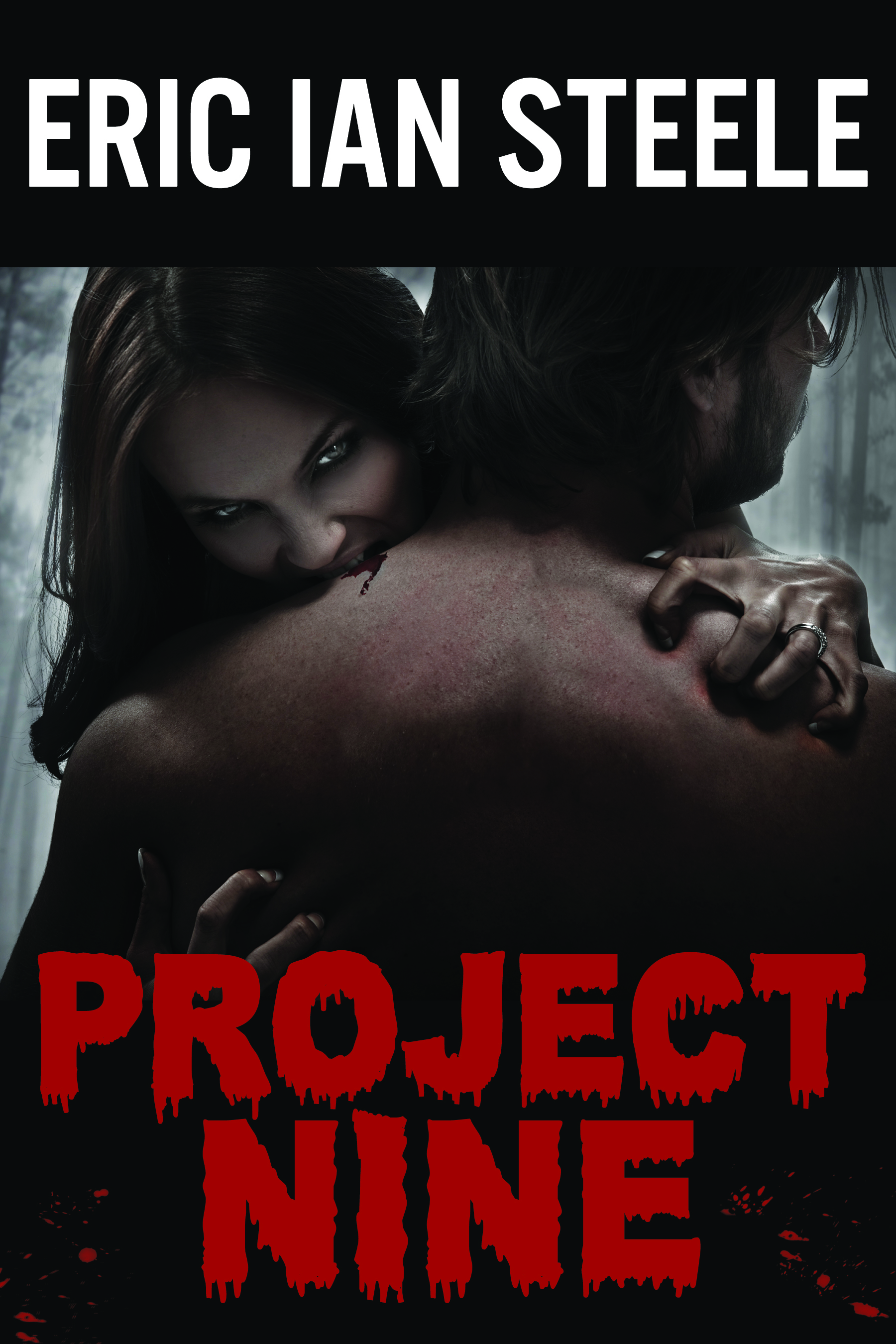
Here is the first look at the amazing cover for my new horror novel, “Project Nine”. The folks over at MyInkBooks have done a fantastic job putting this together. Suffice to say, a picture can say a thousand words!

But don’t be misled into thinking this is a straight-up horror yarn. I would never let you readers off the hook so easily! No, “Project Nine” is instead a horror/sci-fi/love story! Add a realistic police investigation and the evil machinations of a  ruthless politician… and you have a modern horror story with a distinctly classic feel.

The precise plot is under wraps for the moment, but I can say that if you like horror, this is the book for you! Even if the luscious young lady on the front cover doesn’t tempt you, how about this gushing review: “the narrative prose expounds a candor much in tune with all the greats in Literature”.

And as for how the novel got to be published, well that’s a story in itself!

But in case it sounds like I’m trying to sell you something… take a look below and see what you think.

FrontCover2


“Project Nine” is due to be published later this year.  I’ll be releasing more news as it arrives. Watch out for it!


Urban Fantasy anthology update!

NEWSFLASH!

My short story “Blood of an Englishman” features in Twisted Boulevard, the new urban fantasy anthology from Elektrik Milkbath Press. This eclectic blend of short stories promises to have something for everyone.

You can buy it from amazon.com, or amazon.co.uk if you’re a Brit. 

Hmm. Moody cover.


A Lovecraftian TV show?

Today, I wanted to share with you  what I think is a great idea. The folks over at the Lovecraft E-zine have decided to go ahead and make a H.P. Lovecraft-inspired TV series called “Whispers from the Shadows”. They’re raising funds on kickstarter.com, and you can be a part of it.

The rewards are fantastic. And the series is being made with professional horror movie actors. You can even get an Associate Producer credit if you pledge enough.

In case you have been hiding in a cave since the 1980s and don’t know who H.P. Lovecraft is, he is considered the father of weird fiction. Lovecraft was unappreciated in his lifetime, yet he is probably the most influential horror writer of the 20th  century, inspiring everyone from Guillermo del Toro to Stephen King.

Here is a link to his Wikipedia entry: http://en.wikipedia.org/wiki/Lovecraft

These people need pledges, and the deadline is looming. So do yourself a favour and head over to Kickstarter and see for yourself how cool this is. The deadline is 2nd June.

Go check it out here:

https://www.kickstarter.com/projects/marxpyle/whispers-from-the-shadows-lovecraft-inspired-short/posts/853536?at=BAh7CDoMcG9zdF9pZGkDIAYNSSIIdWlkBjoGRVRpA2lwoUkiC2V4cGlyeQY7BlRJIhgyMDE0LTA2LTIzIDE3OjEyOjM0BjsGVA%3D%3D–b4dbaa7ac4a499fa5c7ce2ebe608b1c76870f0b5&ref=backer_project_update


13 Modern Horror Authors you must read ?

Horror has always been the unloved bastard lovechild of fiction. This is no more so than now. Horror books are often derided as puerile or unsavoury. Horror films are often accused of exploitation. Worse still, in recent years, horror fiction has often been diluted and warped into “dark fantasy”, thanks to TV shows like “Buffy the Vampire Slayer” and the innumerable “paranormal romance” novels that litter the bookshelves.

But for those who like their horror fiction a little more mature, a little stronger, a little darker, it’s time to share with you my personal love of the horror genre. So here is a compendium of what I think are 13 of the greatest contemporary horror authors.

(One side note: by contemporary, I mean since the 1970s. I struggled to compile a list of more recent authors who ranked alongside these greats. Feel free to agree or disagree.  But for argument’s sake, here are my thirteen, in no particular order…)


STEPHEN KING 

Okay, let’s get this one out of the way. Everybody knows King’s work, thanks to the hugely successful movies. However, the films do not capture the essence of King, which is his style. Often very detailed to the point of making you believe you are there, his collloquial storytelling manner immediately disarms you. Perhaps his most successful novels (in terms of evoking fear) are “The Stand” and “IT”. But for a real treat, check out his short stories in “Night Shift”.


JAMES HERBERT 

King once wrote that Herbert was not a great writer, but a great novelist. Whatever the truth of that, when you read a Herbert novel, you are soon unable to put it down. Pages turn with greater and greater rapidity toward an often brutal and apocalyptic conclusion. His novel “The Rats” still aches to be made into a decent film. But for sheer insane brilliance, try “Domain”. “The Fog” also sees Herbert at his catastrophic best. Sadly missed since passing on recently.


CLIVE BARKER

The enfant-terrible of horror. Barker has been at it since the 80s, when Stephen King declared him the future of the genre. Belonging more to the school of body-horror than classic scares, Barker’s novels create a fantastical nightmare world where anything is possible. Not satisfied with writing, Barker directed his own novella “Hellraiser” to enormous success. But for me, his novel “Cabal” , filmed as the underappreciated “Nightbreed”, is his best. With the Hollywood machine currently churning its way through his gigantic short story collection “The Books of Blood”, Barker  is sure to remain a popular name in the genre.


ANNE RICE

A totally different entity, Anne Rice has been quietly crafting brilliant, haunting gothic stories since the 1970s. Her Vampire Chronicles have spawned about ten sequels, as well as one good movie and one not very good one involving her most famous creation, the vampire Lestat. Her Mayfair Witches stories are just as good. No serious horror fan should miss her books.


RICHARD MATHESON 

Here’s where it gets interesting. Matheson was a prolific contributor to Rod Serling’s “The Twilight Zone” before penning “Duel”, a young Steven Spielberg’s first feature, as well as “I Am Legend”, a novel that has been made into two very different movies starring Will Smith and Charlton Heston. Capable of writing paranoid sci-fi/horror (“The Incredible Shrinking Man”) to tear-inducing romantic fantasy (“Somewhere In Time”, “What Dreams May Come”). Again, he passed away a few years back, but left us with a truly memorable body of work.


RAY BRADBURY 

The king of the short story, Bradbury penned the screenplay for “Moby Dick”, as well as the seminal sci-fi classics “It Came from Outer Space” and “The Beast from 50,0000 Fathoms”. His novel “Something Wicked This Way Comes” was once made into a Disney movie, of all things! Also a master of science-fiction, Bradbury wrote “The Martian Chronicles”. But his most eerie stories, almost mythic in tone, can be found in “The October Country”.


PETER STRAUB 

Straub’s work has never enjoyed the mainstream success of his sometime co-writer Stephen King. He also often chooses to write mystery novels. However, his titanic supernatural masterpiece “Ghost Story” is one of the best modern books in the genre (once made into a rather forgettable movie with Fred Astaire and Ray Milland). His other horror fiction, such as the feverish “Julia”  and “If You Could See Me Now” is rife with ghostly happenings that seem sso realistic, you could almost miss them. A very sophisticated writer who wields a pen as sharp as a scalpel.


CHARLES L GRANT 

Although not as well known as he should be, Grant was immensely prolific, writing under several different pseudonyms and in different genres. His major achievement in horror fiction was creating the town of Oxrun Station, introduced in “The Hour of the Oxrun Dead”. His dreamy, poetical style often starts with a slow burn and then reaches a terrific climax. Reminiscent of the “classic horror” movies of the 40s, Grant’s prose dwells less on gore and more on atmosphere and suspense. Another writer who sadly is no longer with us.


RAMSEY CAMPBELL

A writer of weird fiction, Campbell is perhaps the most successful horror novelist to come out of Britain besides Barker and Herbert. His fiction is characterised by the bizarre breaking through the mundane world. His short story collection “Demons by Daylight” and his novels “The Doll Who Ate His Mother” and “The Parasite” are all highly recommended.


ROALD DAHL

Yes, that Roald Dahl. The man who gave us “Charlie and the Chocolate Factory” and “James and the Giant Peach”. Come to think of it, wasn’t “Charlie and the Chocolate Factory” always rather frightening? Dahl also penned some deliciously twisted short stories with a classic twist in the tale in his collections “Kiss Kiss” and “Someone Like You”. In fact, they made a whole TV series out of them, appropriately called “Tales of the Unexpected”


RICHARD LAYMON 

Deserves inclusion on this list simply by virtue of being so prolific, if nothing else. Laymon’s novels are not for everyone. They tend to be as subtle as a brick wrapped in bloody innards. However, their breakneck speed drags you along until the last chapter. So high-concept, it makes you wonder why Hollywood hasn’t bothered with them. Check out the brilliant “Among the Missing” or the downright bizarre “Beast House”. Whether you like his work or not, Laymon’s huge output has helped keep the horror market afloat. Yet another writer who recently passed away.


There were more that I felt could have been included here: Graham Masterson, Fritz Lieber, Virginia Andrews, William Peter Blatty, TED Klein, Robert R McCammon, Whitley Streiber and Robert Bloch to name a few. However, although it surprises me, my thirteenth place goes to…


J.G. BALLARD

“Ballardian” has become a phrase to describe the bleakness of modern living. As well as providing fodder for Hollywood with the likes of “Empire of the Sun” (a horror story if ever there was one), Ballard wrote the auto-erotic (in a literal sense) “Crash”, filmed by David Cronenberg. His other works include a novel about a man marooned on a traffic island and a whole apartment complex of people who go insane. Fitting metaphors for the horror of “modern living”, where we can connect anywhere on the planet but still remain isolated. A rare example of a horror writer who was lauded by the literary establishment during his lifetime, Ballard passed away in 2008.


So there you have it, my top 13 horror authors. Each has a distinct voice, from the Gothic to the frighteningly modern. You may also notice that there is a substantial lack of new blood in the field (pun intended). Who will fill the void?

Will it be you? 


More praise for Horror Without Victims anthology!

Another review of my story Clouds in the Horror Without Victims anthology (an anthology of horror fiction without victims. Yes, honestly).  So good, it doesn’t even need quotation marks!

http://www.ligotti.net/showthread.php?p=93371#post93371

“This one generates quite a respectable degree of tension before being brought to a satisfying conclusion.”

This is one of the most original horror anthologies I’ve ever seen. If you haven’t checked the book out yet, it’s available on Amazon. So what are you waiting for?