Tag Archives: story

Sneak preview of new horror novel “Project Nine”!

Today, I wanted to share with you something very special to me.

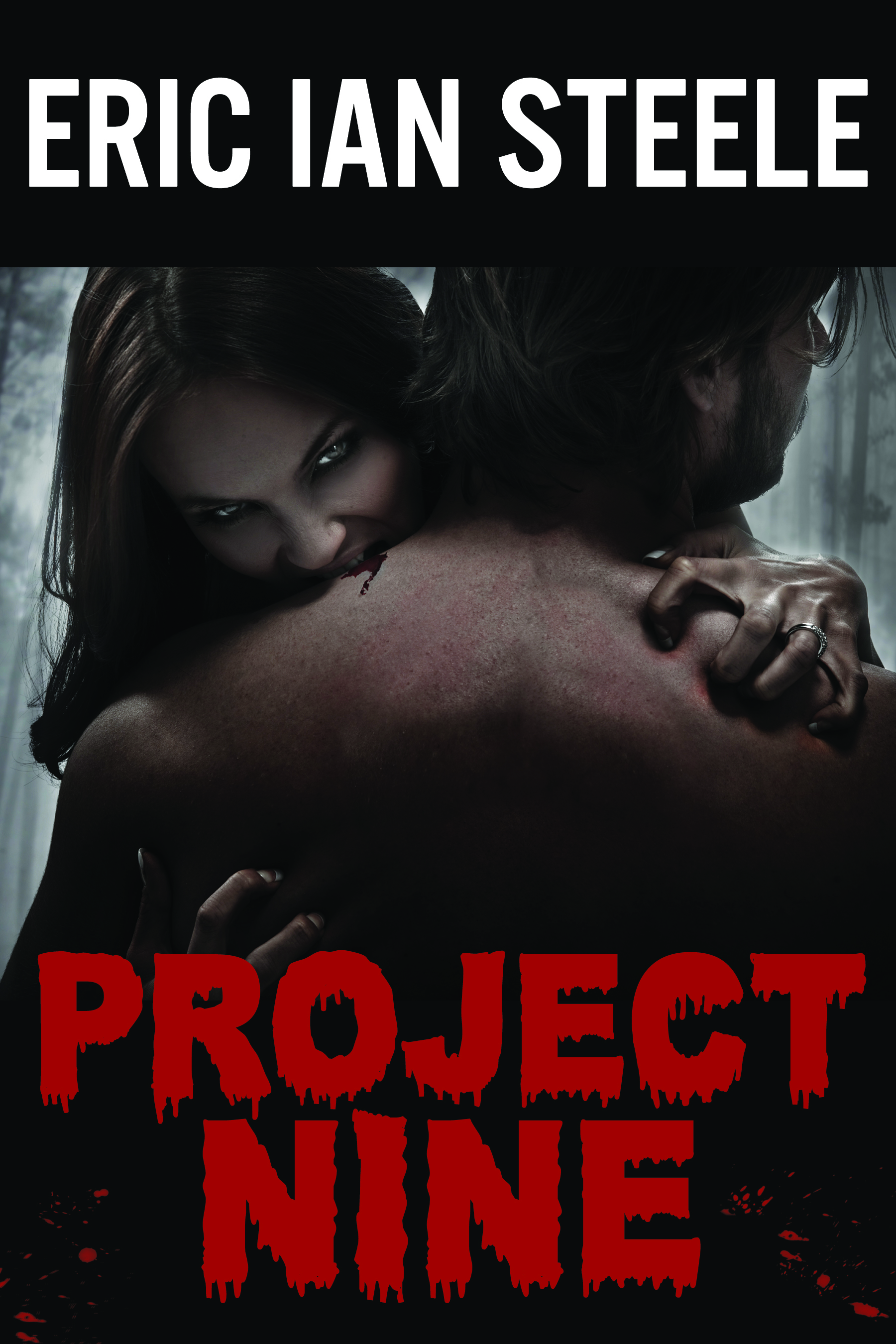
Here is the first look at the amazing cover for my new horror novel, “Project Nine”. The folks over at MyInkBooks have done a fantastic job putting this together. Suffice to say, a picture can say a thousand words!

But don’t be misled into thinking this is a straight-up horror yarn. I would never let you readers off the hook so easily! No, “Project Nine” is instead a horror/sci-fi/love story! Add a realistic police investigation and the evil machinations of a  ruthless politician… and you have a modern horror story with a distinctly classic feel.

The precise plot is under wraps for the moment, but I can say that if you like horror, this is the book for you! Even if the luscious young lady on the front cover doesn’t tempt you, how about this gushing review: “the narrative prose expounds a candor much in tune with all the greats in Literature”.

And as for how the novel got to be published, well that’s a story in itself!

But in case it sounds like I’m trying to sell you something… take a look below and see what you think.

FrontCover2


“Project Nine” is due to be published later this year.  I’ll be releasing more news as it arrives. Watch out for it!


Urban Fantasy anthology update!

NEWSFLASH!

My short story “Blood of an Englishman” features in Twisted Boulevard, the new urban fantasy anthology from Elektrik Milkbath Press. This eclectic blend of short stories promises to have something for everyone.

You can buy it from amazon.com, or amazon.co.uk if you’re a Brit. 

Hmm. Moody cover.


A Lovecraftian TV show?

Today, I wanted to share with you  what I think is a great idea. The folks over at the Lovecraft E-zine have decided to go ahead and make a H.P. Lovecraft-inspired TV series called “Whispers from the Shadows”. They’re raising funds on kickstarter.com, and you can be a part of it.

The rewards are fantastic. And the series is being made with professional horror movie actors. You can even get an Associate Producer credit if you pledge enough.

In case you have been hiding in a cave since the 1980s and don’t know who H.P. Lovecraft is, he is considered the father of weird fiction. Lovecraft was unappreciated in his lifetime, yet he is probably the most influential horror writer of the 20th  century, inspiring everyone from Guillermo del Toro to Stephen King.

Here is a link to his Wikipedia entry: http://en.wikipedia.org/wiki/Lovecraft

These people need pledges, and the deadline is looming. So do yourself a favour and head over to Kickstarter and see for yourself how cool this is. The deadline is 2nd June.

Go check it out here:

https://www.kickstarter.com/projects/marxpyle/whispers-from-the-shadows-lovecraft-inspired-short/posts/853536?at=BAh7CDoMcG9zdF9pZGkDIAYNSSIIdWlkBjoGRVRpA2lwoUkiC2V4cGlyeQY7BlRJIhgyMDE0LTA2LTIzIDE3OjEyOjM0BjsGVA%3D%3D–b4dbaa7ac4a499fa5c7ce2ebe608b1c76870f0b5&ref=backer_project_update


13 Modern Horror Authors you must read ?

Horror has always been the unloved bastard lovechild of fiction. This is no more so than now. Horror books are often derided as puerile or unsavoury. Horror films are often accused of exploitation. Worse still, in recent years, horror fiction has often been diluted and warped into “dark fantasy”, thanks to TV shows like “Buffy the Vampire Slayer” and the innumerable “paranormal romance” novels that litter the bookshelves.

But for those who like their horror fiction a little more mature, a little stronger, a little darker, it’s time to share with you my personal love of the horror genre. So here is a compendium of what I think are 13 of the greatest contemporary horror authors.

(One side note: by contemporary, I mean since the 1970s. I struggled to compile a list of more recent authors who ranked alongside these greats. Feel free to agree or disagree.  But for argument’s sake, here are my thirteen, in no particular order…)


STEPHEN KING 

Okay, let’s get this one out of the way. Everybody knows King’s work, thanks to the hugely successful movies. However, the films do not capture the essence of King, which is his style. Often very detailed to the point of making you believe you are there, his collloquial storytelling manner immediately disarms you. Perhaps his most successful novels (in terms of evoking fear) are “The Stand” and “IT”. But for a real treat, check out his short stories in “Night Shift”.


JAMES HERBERT 

King once wrote that Herbert was not a great writer, but a great novelist. Whatever the truth of that, when you read a Herbert novel, you are soon unable to put it down. Pages turn with greater and greater rapidity toward an often brutal and apocalyptic conclusion. His novel “The Rats” still aches to be made into a decent film. But for sheer insane brilliance, try “Domain”. “The Fog” also sees Herbert at his catastrophic best. Sadly missed since passing on recently.


CLIVE BARKER

The enfant-terrible of horror. Barker has been at it since the 80s, when Stephen King declared him the future of the genre. Belonging more to the school of body-horror than classic scares, Barker’s novels create a fantastical nightmare world where anything is possible. Not satisfied with writing, Barker directed his own novella “Hellraiser” to enormous success. But for me, his novel “Cabal” , filmed as the underappreciated “Nightbreed”, is his best. With the Hollywood machine currently churning its way through his gigantic short story collection “The Books of Blood”, Barker  is sure to remain a popular name in the genre.


ANNE RICE

A totally different entity, Anne Rice has been quietly crafting brilliant, haunting gothic stories since the 1970s. Her Vampire Chronicles have spawned about ten sequels, as well as one good movie and one not very good one involving her most famous creation, the vampire Lestat. Her Mayfair Witches stories are just as good. No serious horror fan should miss her books.


RICHARD MATHESON 

Here’s where it gets interesting. Matheson was a prolific contributor to Rod Serling’s “The Twilight Zone” before penning “Duel”, a young Steven Spielberg’s first feature, as well as “I Am Legend”, a novel that has been made into two very different movies starring Will Smith and Charlton Heston. Capable of writing paranoid sci-fi/horror (“The Incredible Shrinking Man”) to tear-inducing romantic fantasy (“Somewhere In Time”, “What Dreams May Come”). Again, he passed away a few years back, but left us with a truly memorable body of work.


RAY BRADBURY 

The king of the short story, Bradbury penned the screenplay for “Moby Dick”, as well as the seminal sci-fi classics “It Came from Outer Space” and “The Beast from 50,0000 Fathoms”. His novel “Something Wicked This Way Comes” was once made into a Disney movie, of all things! Also a master of science-fiction, Bradbury wrote “The Martian Chronicles”. But his most eerie stories, almost mythic in tone, can be found in “The October Country”.


PETER STRAUB 

Straub’s work has never enjoyed the mainstream success of his sometime co-writer Stephen King. He also often chooses to write mystery novels. However, his titanic supernatural masterpiece “Ghost Story” is one of the best modern books in the genre (once made into a rather forgettable movie with Fred Astaire and Ray Milland). His other horror fiction, such as the feverish “Julia”  and “If You Could See Me Now” is rife with ghostly happenings that seem sso realistic, you could almost miss them. A very sophisticated writer who wields a pen as sharp as a scalpel.


CHARLES L GRANT 

Although not as well known as he should be, Grant was immensely prolific, writing under several different pseudonyms and in different genres. His major achievement in horror fiction was creating the town of Oxrun Station, introduced in “The Hour of the Oxrun Dead”. His dreamy, poetical style often starts with a slow burn and then reaches a terrific climax. Reminiscent of the “classic horror” movies of the 40s, Grant’s prose dwells less on gore and more on atmosphere and suspense. Another writer who sadly is no longer with us.


RAMSEY CAMPBELL

A writer of weird fiction, Campbell is perhaps the most successful horror novelist to come out of Britain besides Barker and Herbert. His fiction is characterised by the bizarre breaking through the mundane world. His short story collection “Demons by Daylight” and his novels “The Doll Who Ate His Mother” and “The Parasite” are all highly recommended.


ROALD DAHL

Yes, that Roald Dahl. The man who gave us “Charlie and the Chocolate Factory” and “James and the Giant Peach”. Come to think of it, wasn’t “Charlie and the Chocolate Factory” always rather frightening? Dahl also penned some deliciously twisted short stories with a classic twist in the tale in his collections “Kiss Kiss” and “Someone Like You”. In fact, they made a whole TV series out of them, appropriately called “Tales of the Unexpected”


RICHARD LAYMON 

Deserves inclusion on this list simply by virtue of being so prolific, if nothing else. Laymon’s novels are not for everyone. They tend to be as subtle as a brick wrapped in bloody innards. However, their breakneck speed drags you along until the last chapter. So high-concept, it makes you wonder why Hollywood hasn’t bothered with them. Check out the brilliant “Among the Missing” or the downright bizarre “Beast House”. Whether you like his work or not, Laymon’s huge output has helped keep the horror market afloat. Yet another writer who recently passed away.


There were more that I felt could have been included here: Graham Masterson, Fritz Lieber, Virginia Andrews, William Peter Blatty, TED Klein, Robert R McCammon, Whitley Streiber and Robert Bloch to name a few. However, although it surprises me, my thirteenth place goes to…


J.G. BALLARD

“Ballardian” has become a phrase to describe the bleakness of modern living. As well as providing fodder for Hollywood with the likes of “Empire of the Sun” (a horror story if ever there was one), Ballard wrote the auto-erotic (in a literal sense) “Crash”, filmed by David Cronenberg. His other works include a novel about a man marooned on a traffic island and a whole apartment complex of people who go insane. Fitting metaphors for the horror of “modern living”, where we can connect anywhere on the planet but still remain isolated. A rare example of a horror writer who was lauded by the literary establishment during his lifetime, Ballard passed away in 2008.


So there you have it, my top 13 horror authors. Each has a distinct voice, from the Gothic to the frighteningly modern. You may also notice that there is a substantial lack of new blood in the field (pun intended). Who will fill the void?

Will it be you? 


More praise for Horror Without Victims anthology!

Another review of my story Clouds in the Horror Without Victims anthology (an anthology of horror fiction without victims. Yes, honestly).  So good, it doesn’t even need quotation marks!

http://www.ligotti.net/showthread.php?p=93371#post93371

“This one generates quite a respectable degree of tension before being brought to a satisfying conclusion.”

This is one of the most original horror anthologies I’ve ever seen. If you haven’t checked the book out yet, it’s available on Amazon. So what are you waiting for?


Bonus post! How to write Hollywood action lines part 3!

Here is something that trips me up time and time again, and I’ve seen even the most seasoned screenwriters falls for it. So I thought I would include it in this bonus post about how to write Hollywood-style action lines in your screenplay.

This tip can be summed up in one word:

EDIT.

What I mean is, you should always be trying to REMOVE UNNECESSARY WORDS.

Do you have a screenwriting bible?

I do.

It contains everything I’ve ever leant about screenwriting in bullet point form. Only I can understand it, which is fine because it’s only for my use. But in it, I’ve written down the words I should try to avoid at all costs.

And now I’m sharing them with you.

So here they are:

“But”

“And”

“As”

“Is/Are/Am”

“Both”

“Then”

“Just”

“We See”

Please note: if you read a lot of produced screenplays written by professional screenwriters, you will probably see these words being used over and over again. The difference between them and you?

They got paid already.

Another point worth mentioning is: don’t go overboard. If you include one “but” in a 110 page script, chances are it won’t make any difference. Also, if you edit your action lines down too much, they may not make sense. Removing every “a” or “the” will confuse the reader. Sometimes you might even want to deliberately break the rules to make more of an impact on the reader.

So use common sense.

But before you start marketing your script, a simple search for these words will allow you to edit them out of existence and strengthen your action lines. And that might be enough to tip the scales in your favour.

Now if only I’d used this tip on my last script…

A Lovecraftian horror story by yours truly…

Just a quick note to say that the folks at the Lovecraft E-Zine have published my new Lovecraftian horror short story “The Groaner in the Glen”. It features monsters, Romans, and druids! You can check it out at the link below for free. Enjoy!

ezine

Issue #29 – February 2014

Intermission – how to calculate movie budgets

Before we carry on with our discussion of action lines, here is something I learned about movie budgets.

One of the most popular questions asked of screenwriters is “What is the budget of this movie”? Yet there are no websites I can see which offer guidance on this. So, to fill a gap I thought I would share my research with you, gentle reader…

It can be frustrating for a screenwriter trying to estimate his or her potential screenplay’s budget. How much do SFX cost? How much does it cost to shoot in a particular city or range of locations? Will those exotic wild animals bump up the cost?

The only way I’ve found any answers is to look at previous movie budgets. Now, inflation can be a vexing devil, so I’ve only gone back a few years in most cases.

Here’s a list of recent movies from a range of budgets, along with what it cost to make them (All numbers are taken from http://www.boxofficemojo.com):

BIG BUDGET
Man of Steel = $225 million
Iron Man 3 = $200 million
World War Z = $190 million
Fast & Furious 6 = $160 million
Gravity = $100 million

MEDIUM BUDGET
Crazy Stupid Love= $50 million
Zero Dark Thirty = $40 million
The Social Network = $40 million
The Rite = $37 million
Saving Mr Banks = $35 million
Looper = $30 million
Anchorman = $26 million
The Conjuring = $20 million
The Apparition = $17 million
Nebraska = $12 million

LOW BUDGET
Paranormal Activity 2 = $3 million
The Purge = $3 million
Last Exorcism = $1.8 million
Insidious = $1.5 million
The Devil Inside = $1 million

MICROBUDGET

Paranormal Activity = $15,000

What does this mean? Well, let’s break it down.

BIG BUDGET

At the top end, we have big budget tentpole studio movies crammed with SFX and bankable stars. If you can make one of these for under $100 million, good luck. This is a very small market. Studios may only make a handful of these a year. Most of them are adaptations. Competition is fierce, and writing jobs are usually assignments that are  given to writers with a proven track record for generating serious cash. Here you will find your Joss Wheedons, David S Goyers and Zack Snyders.

MEDIUM BUDGET

In the middle range we have movies that are between £10-$100 million. This is a big range, and may movies are made for this amount of money. Factors that can push your script into this bracket include SFX, a few bankable stars, or lots of animals and stunt scenes. So if you’re filming Tom Hanks, Anthony Hopkins, or Steve Carrell, or your script calls for a family of tigers, or a scene where someone jumps onto a moving semi-trailer (that’s a lorry for those of you who are English), or a wise-cracking CGI alien, this is likely to be your budget range. Again, there is tough competition here. Writers like Aaron Sorkin have made this budget range their own. But it may be possible to break into this market if you have a seriously strong concept and story that attracts star caliber talent or high-level investment. Note that many of these are dramas or dramedies. That’s because it’s tough to get a drama made unless you have a star, or an ex-star that wants to come back. Both of whom can push your low-budget piece up into this category.

LOW BUDGET

Next, we have the low budget world. This is the easiest spot to aim at. Most of these movies have either no SFX, a limited cast, are contained (i.e. they have limited locations, ideally less than 4), or are found footage. This is the world of the TV or family movie, However, it is also notably dominated by the horror genre. Horror has been the proving ground for many directors who went on to be A-listers (Steven Spielberg, Peter Jackson) and tends to feature actors who can carry a movie without having the ego or bank account of so-called “stars”. A good horror movie can break box-office records, and studios know this. For instance, Insidious (2011) cost only £1.3 million to make, yet grossed over $55 million. Compare that to infamous flop “John Carter” (2012), which cost $250 million yet has recouped only $75 so far.

MAICRO-BOUDGET!!!!

Finally, we have the weird and wonderful world of the microbudget movie. This can be the kind of thing that premieres on the horror channel (if anywhere), or the kind of megahit that makes an entire career. Again, horror tends to dominate. Paranormal Activity, The Blair Witch Project, and Halloween all became the most profitable independent films ever at one time. However other genres proliferate, such as 1980s sci-fi cult hits like Charles Band’s Trancers. However, it’s pretty safe to say these are flukes.

In reality, the low budget movie seems like a more sensible place to start. However, a word of warning: limiting your ideas to deliver a tiny budget movie may be a mistake. My own movie “Clone Hunter” was written as a big-budget space opera, yet managed to translate into a much lower budget movie. However, I’ve written microbudget movies by shoe-horning my ideas into confined locations without any SFX, and these failed to ignite any interest.

In my opinion, it doesn’t hurt to put your eggs in different baskets. You can always try for a big-budget payoff while honing that indie coming-of-age drama and rattling off that limited location found footage horor movie.

Like everything with writing, it seems there’s no single surefire quick access route to success. Sometimes it’s just a matter of writing what excites you and finding someone who is as passionate about your material as you are. If nobody else shares your vision, move on.


The Hobbit: The Desolation of Smaug reviewed (or “Not more barrels”).

The Hobbit Part 2: or "how many characters can we fit in a barrel?"

The Hobbit Part 2: or “how many characters can we fit in a barrel?”

This week, here’s a review that shows the perils of big-budget filmmaking from a screenwriting perspective.

WARNING: SPOLIERS AHEAD

Now, I really loved “The Hobbit Part 1”. I mean, I really loved it. Others may have thought it lacked action scenes and spent too long with the unfunny dwarves. However, I loved exactly that. Music is a much-ignored part of filmmaking. But when done correctly, it can elevate a film to something fantastic. Consider Superman the Movie (the Christopher Reeve one, not the emo-Superman of recent years), Star Wars, Indiana Jones, and Close Encounters. All had great soundtracks. Coincidentally, all by John Williams. But other composers like John Barry or even Daft Punk have come up with equally good soundtracks. Anyway, I digress. The point is, the Lonely Mountain Song by Neil Finn was my favourite soundtrack piece of 2013.

I also liked the time spent setting up the dwarves. Film is not a video game. These are supposed to be STORIES about CHARACTERS. Not just an endless succession of CGI chase and fight sequences (which become outdated fast. Check out the Matrix Reloaded if you don’t believe me).

So, in short, I loved Part 1. Loved Rhadghast with his rabbit-drawn sled. Loved the goblin king. Great.

Now to “The Hobbit Part 2″…

It began well enough. Through the “magic” of 3D (it wasn’t available in anything else in my cinema), I was transported to, respectively: Bree, Beorn’s cottage (although this lasted slightly less longer than I had hoped), and the caves of Thranduil. Very nice stuff. Even liked Tauriel and Kili (although I’m not sure how a romance between an elf and a dwarf would work in practice).

Then we came to the barrels. And this is, for me, where it all went wrong.

Now, I understand that this is a adventure film. There has to be SOME action, right? So I was along for the ride. Until the laws of physics started to be routinely ignored. Not only that, but it seemed the laws of PLOT LOGIC were ignored as well.

During the barrel riding scene, elves became superhuman. Dwarves also became superhuman. The numbers of barrels magically fluctuated (maybe Gandalf put a spell on them). Dwarves leaped twenty feet out of moving barrels in a fast-flowing river to steal weapons from the hands of Orcs and throw them back with deadly pinpoint accuracy. And having done all this, they arrive at Laketown and complain they haven’t got any weapons… having just slain about two hundred Orcs!

Still, my growing sense of apprehension was only a feeling of dread akin to the knowledge that the Necromancer had returned. So I went along to Laketown, hoping things would improve.

And, for a while, things did. The Necromancer, and his link to the evil eye in LOTR, was a very nice touch. Not in the book, but it made perfect sense within the context of the movies.

Then came Laketown.

Peter Jackson’s LOTR is reknowned for its attention to detail. It is said that there is so much set detail in Rivendell that it can never be captured on camera.

So what went wrong in Laketown? All of a sudden, it felt like I was on a set. Maybe it was the heavy overuse of interiors. But everything looked a little bit fake. The politics of Laketown were also hard to grasp. Stephen Fry’s Mayor seemed to fluctuate between wanting to kill the dwarves and wanting to help them. Nor was it clear what Bard the Bowman’s  status was in Laketown. Anyway, it was here that the Hobbit and I parted company.

Cue, Smaug. Everybody loves a dragon. I am no exception; I’m a sucker for the mythical beasties, ever since seeing Disney’s rather frightening kids’ film “Dragonslayer”.  So when Smaug appeared, I wanted to like him.

Yet, while Bilbo raced for the Arkenstone (which has no magical properties, it appears, so why it was so valuable compared to a mountain of treasure the size of Wales escaped me), we were treated to the least enjoyable action sequence I have yet seen in the whole film series.

Instead of a brisk romp with a dragon, this sequence turned into a half-hour epic. Dwarves managed to survive fifty-foot drops. They leaped across thirty foot-wide gaps. Never again will I doubt dwarven architecture, as a waking dragon can cause an earthquake in Laketown but fail to bring down the roof of a chasm even when all the support beams are shattered.  The dwarves (ingenious creatures worthy of a job at Microsoft) are able to rig up a one-hundred foot molten gold statue in less than a minute.

When said statute suddenly (and inexplicably) explodes in a torrent of molten gold, it had me rolling my eyes and sinking into my seat.

Another example of plot nonsense occurs when Smaug returns to find Bilbo quivering, ready to be eaten and accepting his fate.

“I’ll show you,” says Smaug. “I’ll burn Laketown down, that’ll make you suffer!”

How about eating him? Wouldn’t that make him suffer? But no, Smaug decides to save Bilbo for later (after all, there’s another three hours to go), and burn down Laketown. Which he would do anyway.

Hmm.

Don’t even get me started on how Thorin manages to use a heat-conductive metal shield to float safely on a river of molten gold.

So in conclusion, “The Desolation of Smaug” is definitely a film of two halves. The nice character moments and humour of the first half is undone in the second half by an over-reliance on the same physics-defying and unconvincing CGI we have sene in films like “Indiana Jones 4” (Remember the fridge? That’s worthy of a trope in itself, much like “Jumping the Shark”. Maybe we should have “Riding the fridge”?)

Perhaps it’s the result of so many disciplines being involved in what used to be a proces involving only actors, a director, and a handful of crew. Maybe it’s even due in some way to the input (or lack of input) of Guillermo Del Toro, who apparently departed the production due to delays in filming. It’s anyone’s guess how having such a visionary director leave halfway through affected the outcome. But whatever the cause, it felt like the filmmakers had thrown in their towels after the barrel riding scene.

I don’t know if “The Hobbit” will take its place alongside the “Lord of the Rings” as modern classics. But it seems that in a world where anything can be conjured up using that magical CGI paintbrush, filmmakers need to exercise more restraint. Otherwise they risk suffering the fate of a certain cartoon mouse who also experimented with magic and came undone.

12 days of the greatest, not-so-obvious Christmas movies

Seeing as it’s the season to be jolly, I thought I would give you a rather offbeat holiday treat. Here are 12 movies, one for each day of the season, that may not be as closely associated with Christmas as others, but which deserve a look. So if you’re bored with endless reruns of “It’s a Wonderful Life”, check out these gems…

12. The Bishop’s Wife

Cary Grant and David Niven star in this entertanining fantasy comedy about an angel helping out us mortals that plays fast and loose with religion.

11. Rare Exports

Has to be seen to be believed. Finnish production where Santa is in fact a demonic being who punishes children. What’s more bizarre is that it’s a really good movie!

10. One Magic Christmas

Mary Steenbergen has a terrible, terrible Christmas, loses her faith, and is helped out by guardian angel Harry Dean Stanton. Undoubtedly features the coolest angel in the movies, ever.

9. Trancers

Tongue-in-cheek sci-fi actioner that is most definitely set at Christmas in L.A. Tim Thomerson plays Jack Deth, a cop from the future intent on hunting down the murderous zombie slaves of his time-travelling opponent!

8. Lethal Weapon

The daddy of modern action films still packs a punch. Slick and fast-paced with enough laughs and thrills to keep anyone entertained at Christmas.

7. Black Christmas

Margo Kidder stars in this excellent and genuinely unsettling 70s slasher movie set in a girl’s sorority house. Somebody is making crank calls. The twist is that the calls are coming from inside the house!

6. An Affair to Remember

Cary Grant and Deborah Kerr are the star-crossed lovers who wait a little too long. Famously became the central plot idea in “Sleepless in Seattle”. Guaranteed to bring a tear to even the grumpiest grandparent’s eye.

5. Batman Returns

Tim Burton does Christmas in Gotham with Christopher Walken, evil clowns, and Michelle Pfeiffer in latex. What’s not to like?

gremlins

4. Gremlins

This was stupidly given a “15” rating in the UK, so a generation of kids never got to experience “Gremlin Mega-Madness” until it came out on VHS. The final shot of a snow-covered town is just gorgeous.

3. Trading Places

Superb comic caper starring Eddie Murphy and Dan Ackroyd at the peak of their talents. Co-starring Jamie Lee Curtis, in a rather memorable scene involving a curly wig and little else. How can you not like a movie that has not one, but two gorillas?

places

2. National Lampoon’s Christmas Vacation

I had to include this all-time funniest Christmas movie. Worth watching time after time just for the “squirrel attack” scene.

1. Stalag 17

Only Billy Wilder could pull off a comedy set in a German POW camp in WWII. William Holden is fantastic in a movie that never sacrifices realism for laughs, but still manages to be funny.

So there you have it, a few non-traditional Christmas movies to spend the season with. Happy Holidays!