Tag Archives: science-fiction

More praise for Horror Without Victims anthology!

Another review of my story Clouds in the Horror Without Victims anthology (an anthology of horror fiction without victims. Yes, honestly).  So good, it doesn’t even need quotation marks!

http://www.ligotti.net/showthread.php?p=93371#post93371

“This one generates quite a respectable degree of tension before being brought to a satisfying conclusion.”

This is one of the most original horror anthologies I’ve ever seen. If you haven’t checked the book out yet, it’s available on Amazon. So what are you waiting for?


Monday blog tour!

My thanks this morning to fellow Mancunian speculative fiction writer and novelist Graeme Shimmin who nominated me to be the next person on the Monday Blog Tour. A pass-the-baton exercise bringing you blogs from different writers to start your week off on the right track!

What are you working on?

Between writing screenplays, I like to keep myself occupied by writing lengthy horror novels and short stories.

At the moment, I’m just waiting for my sci-fi/horror novel “Project Nine” to be published by myinkbooks.com. The good folks over there picked up my novel last year, and have been busily trying to convert my rather “eccentric” punctuation and spelling into something the public can actually make sense of.

What is it about?

Ah. The magic question.

“Project Nine” is about a young man who longs for immortality. He finds it in a beautiful woman who has escaped from a secret government research program that has created vampires through gene therapy.  He joins her and her friends who have also escaped in their endless trek across America’s backwoods, only to find himself hunted by a relentless detective and losing his own humanity in the process.

How does it differ from others in the genre?

If the Naughties have been so far filled with horror movies populated by twenty-something kids with six-packs and hair extensions, “Project Nine” is about as far from that kind of thing as you can possibly get.

It’s gritty, realistic, and psychologically believable. But it also has the large scale and operatic quality of classic horror stories. I aimed to balance the grim realism of modern fiction with the more emotionally-resonant horror of the 1970s and 1980s.

The vampires in this story are not cape-wearing cliches, nor are they gorgeously, seductive creatures. They are real people put in an extraordinary situation. They make good and bad choices. And they are capable of acts of kindness or unspeakable wickedness.

Why do you write what you write?

Why indeed. Who knows what evil lurks in the mind of Man? Not me, certainly. In my defence, I blame watching a steady diet of old Universal and Hammer horror movies when I was a kid. Rod Serling’s “Twilight Zone” stands out for me as being the best SF/Horror TV series ever made.

However, the first movie that really made my hair stand up on end was actually not a movie at all, but the truly frightening Made-For-TV, 2-part adaptation of Stephen King’s “‘Salems Lot” — the one with David Soul and James Mason. Man, that was scary.

Essential, late-night, family-friendly viewing!

Essential, late-night, family-friendly viewing!

I’ve also been an avid fan and collector of comics since I was knee high to an Inhuman. Marvel and 2000AD to be precise. People like Alan Moore have been a huge inspiration, especially “Watchmen”  and his run on DC’s “Swamp Thing”.

As far as “real” literature goes, HP Lovecraft remains for me the greatest master of the craft. I also devoured novels by Stephen King (although I especially like the short stories in his “Night Shift” collection) and the criminally underestimated British king of horror, James Herbert. Other influences include: Peter Straub, Frank Herbert, Terry Brooks, Anne Rice, Phillip K Dick, Harry Harrison and, of course, Ray Bradbury.

There. You asked for it.

Swamp Thing - the thinking man's horror comics.

Swamp Thing – the thinking man’s horror comic.

What is your writing process?

You mean I have a process?

Seriously, it all depends on whether I’m writing screenplays, novels, or short stories.

Screenplays tend to be very structured. I outline to a varying degree of depth before writing a first draft. Then I use a structured rewrite process. I recommend reading as many books as you can on the subject and then employing the rewrite proceess used by Paul Chitlik in his excellent book. Then repeat. Over and over again. And again. And again.

My novels are a different animal. My first novel started life as a comic script (now lost, sadly) and then grew into a full-length book. My second, unpublished work began life purely as a novel. I had a rough idea of what I wanted to say and what the theme would be, then I started writing. Now I’m in the process of getting peer feedback before rewriting and editing.

Short stories usually come out of the blue. I get a first line or an idea as I’m in the shower or walking down the street and then I run with it. The ones that pop into my head seem to be the most successful. The ones I agonize about and outline never see the light of day. Weird, eh?

How much do you write in a day?

Depends. I just wrote an entire screenplay in five days. When I was in what I like to call my James Joyce phase I could write ten pages of single-spaced prose on my typewriter (yes, I had one of those). That comes to about 350 words a page. So 3,500 words a day.  You nosey parker, you.

Previous Writer

I was asked to contribute to this project by Graeme Shimmin  as part of a chain of connections from writer to writer. Each writer answers the questions and then links to the next writer in the chain. Graeme writes mainly alternate history and some excellent short stories. I suggest you check out his intriguing, fact-filled blog.

Next on the Tour

Graeme Cole is a filmmaker extraordinaire and bon vivant who also writes absurdist fiction. He currently resides in Bosnia and runs L’Institute Zoom, which maintains a blog here.

Andrew Bellware is a sci-fi/fantasy/theatre director/writer/actor and all-round swell guy who works out of NYC. He and his producing partner run Pandora Machine Films, which maintains its eponymous blog (Rated “R” for some racy content — you have been warned). I recommend their marvellous movie Clone Hunter, written by some guy from England 😉

Clone Hunter - the greatest science-fiction ever made, apparently!

Clone Hunter – the greatest science-fiction ever made, apparently!

News about “Horror Without Victims” anthology

Happy New Year folks,

Hope you are getting back to the daily grind with a new sense of purpose, fueled by too much Christmas pudding and turkey, and inspired by a 72-hour marathon of non-stop TV movies.

Time to start things off on a positive note.

The kind reader at Hellforge has picked out “Horror Without Victims” as his favourite for 2013:
http://matthewfryer.com/2014/01/01/hellforge-horror-picks-of-2013/

If you haven’t done so already, you can pick up your own  copy of the anthology from Amazon. by clicking on the image below…

product_thumbnail[1]

12 days of the greatest, not-so-obvious Christmas movies

Seeing as it’s the season to be jolly, I thought I would give you a rather offbeat holiday treat. Here are 12 movies, one for each day of the season, that may not be as closely associated with Christmas as others, but which deserve a look. So if you’re bored with endless reruns of “It’s a Wonderful Life”, check out these gems…

12. The Bishop’s Wife

Cary Grant and David Niven star in this entertanining fantasy comedy about an angel helping out us mortals that plays fast and loose with religion.

11. Rare Exports

Has to be seen to be believed. Finnish production where Santa is in fact a demonic being who punishes children. What’s more bizarre is that it’s a really good movie!

10. One Magic Christmas

Mary Steenbergen has a terrible, terrible Christmas, loses her faith, and is helped out by guardian angel Harry Dean Stanton. Undoubtedly features the coolest angel in the movies, ever.

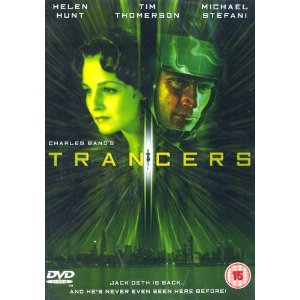
9. Trancers

Tongue-in-cheek sci-fi actioner that is most definitely set at Christmas in L.A. Tim Thomerson plays Jack Deth, a cop from the future intent on hunting down the murderous zombie slaves of his time-travelling opponent!

8. Lethal Weapon

The daddy of modern action films still packs a punch. Slick and fast-paced with enough laughs and thrills to keep anyone entertained at Christmas.

7. Black Christmas

Margo Kidder stars in this excellent and genuinely unsettling 70s slasher movie set in a girl’s sorority house. Somebody is making crank calls. The twist is that the calls are coming from inside the house!

6. An Affair to Remember

Cary Grant and Deborah Kerr are the star-crossed lovers who wait a little too long. Famously became the central plot idea in “Sleepless in Seattle”. Guaranteed to bring a tear to even the grumpiest grandparent’s eye.

5. Batman Returns

Tim Burton does Christmas in Gotham with Christopher Walken, evil clowns, and Michelle Pfeiffer in latex. What’s not to like?

gremlins

4. Gremlins

This was stupidly given a “15” rating in the UK, so a generation of kids never got to experience “Gremlin Mega-Madness” until it came out on VHS. The final shot of a snow-covered town is just gorgeous.

3. Trading Places

Superb comic caper starring Eddie Murphy and Dan Ackroyd at the peak of their talents. Co-starring Jamie Lee Curtis, in a rather memorable scene involving a curly wig and little else. How can you not like a movie that has not one, but two gorillas?

places

2. National Lampoon’s Christmas Vacation

I had to include this all-time funniest Christmas movie. Worth watching time after time just for the “squirrel attack” scene.

1. Stalag 17

Only Billy Wilder could pull off a comedy set in a German POW camp in WWII. William Holden is fantastic in a movie that never sacrifices realism for laughs, but still manages to be funny.

So there you have it, a few non-traditional Christmas movies to spend the season with. Happy Holidays!

Why was He-Man so crap?

he-man

Today I am tackling an issue that has been playing on my mind for many years. Several attempts were made in the 1970s and 1980s to fuse fantasy with science-fiction in movies. This is not a new trend, and is generally called “Science Fantasy”. For instance, Edgar Rice Burrough’s John Carter novels are science-fantasy. CS Lewis (of Narnia fame) even wrote a religious allegory sci-fi series known as the “Space” trilogy.  In movies we have 1983’s “Krull”, the notorious flop “John Carter”, and the lilttle-known but half-decent movie “Pathfinder”.

But what does these have in common? Well, they are crap.

That’s not to say we can’t love them. “Krull” has a particular place in my heart, not least for the amazing Freddie Jones and the use of actual British character actors. The CS Lewis novels are great flights of fancy (although totally scientifically incorrect).

But for some reason critical success has mostly eluded these works. There is something about the melding of high fantasy (magic, swords and sandals) with science-fiction (high tech, high concept) that creates works of daftness rather than genius.

Take He-Man.

He-Man has his roots firmly in Robert E Howard’s “Conan” stories. With a technological twist. His home planet Eternia contains magic but also machines and flying vehicles, cyborgs and laser-guns. You would think that such a world would provide great images and great storylines. Instead, it always manged to be childish and rather stupid. Like GI Joe on Magic Mushrooms.

Jitsu - one of Skeletor's less memorable henchmen.

Jitsu – one of Skeletor’s less memorable henchmen.

The animated series was designed to promote Mattell’s line of action figures, whish was apparently created to cash in 1982’s “Conan” movie, but which had to be redesigned when said Arnie movie featured so much nudity and gore that it was rated “R”. However this may be apocryphal.

For He-Man newbies, He-Man was in fact Prince Adam of Eternia. A fact that nobody could discern despite being identical and never wearing a mask. He rode a cowardly beast that transformed into a fiercer version whenever Adam became He-Man (nobody bothered to explain why in a planet where everybody could use flying vehicles Adam settled for riding on the back of his pet cat).

Nothing too unusual there. If we can buy Superman, why not Prince Adam? But unlike other cartoon characters, there was something udneniably dorky about He-Man. Possibly it was his very name. The far more successful cartoon TV show “Dungeons and Dragons” had some genuinely unsettling moments. But He-Man’s greatest foe was… Skeletor.

Ah, Skeletor. Far more likeable than He-Man with your silly plotting and villanous laugh. But the unfortunate bad guy only ever managed to surround himself with complete morons who alway fouled up his schemes. He may have had more success working with the Three Stooges than the likes of Beast-Man, Mer-Man and Lockjaw.

Skeletor - the villain everyone loves to hate... almost.

Skeletor – the villain everyone loves to hate… almost.

Which brings us to the 1987 live-action movie.

In fact, it’s not that bad when watched today through the tinted lenses of nostalgia. Meg Foster is eerie as Evil-Lyn, the plot (albeit a bit silly) is so perfectly “Eighties” that it’s watchable. Frank Langella provides a suitably grave Skeletor. However the plot suffers from two things – cliche and a lack of credible worldbuilding. Lines like “It’s too quiet” grate. Gone is the backdrop of Eternia (struck out for budgetary reasons). And the characters are all pretty stock and one-dimensional.

Perhaps part of the problem is the inherent silliness of the science-fantasy genre, a genre that exists only to draw attention to itself. Science-fantasy stories scream out, “Look how clever I am!”. But in fact they only use cliches from both genres, creating storylines with few surprises  but which also strain our credibility.

Consider “John Carter”. Not only are we supposed to believe  in aliens, life on Mars, teleportation, a second set of aliens, and magic… but a third set of competely different aliens as well. Phew!

So there you have it. He-Man’s crapness is inherent. It both endears us to him and repells us, as it does with many other high-bidget flops. On reflection, I think it’s because using two genres (some may say opposing genres) weakens the depth of storytelling. We are so concerned with the language and imagery of the story, that there is no room left for what audiences desire most… plot twists and great characters.

So my advice is.. avoid the science-fantasy genre altogether. Unless you want to produce a very expensive white elephant.

And I bet you thought I would never get any writing tips out of this post! 😉

Horror Without Victims review

Here is a very nice review of “Horror Without Victims”, an anthology which contains my short story “Clouds”. It’s only the second time I’ve been published in a British anthology. The first time was with my story “Charlie” in the British Fantasy Society’s anthology “Terror Tales”, alongside Neil Gaiman and Kim Newman.

http://paintthistownred.wordpress.com/

The reviewer calls it “psycho-geographic horror”, and although I didn’t plan it out that way, I’d have to agree!

If you haven’t got a copy yet, I’d recommend it (because my story is in it, of course – but also because it contains 24 other excellent, frightening, funny and awe-inspiring stories, all on the theme of horror without the gore).

product_thumbnail[1]

Horror Without Victims

Hey all,

Horror editor extraordinaire DF Lewis has published the anthology “Horror Without Victims”.  It’s an intriguing take on the horror genre because it is… without victims!

There’s an even better reason why you should instantly click to Amazon and buy this. It’s because it features a story by yours truly. Yes, my story “Clouds” is proudly published in these pristine pages for your perusal! (And if that’s not enough “p’s” in one sentence, I’ll give you your money back!)

So check it out today at amazon.com.

product_thumbnail[1]


The lost art of the television movie?

Today I thought I would focus on the much-maligned made-for-TV-movie. For years dominated by WomJeps (that’s women-in-jeopardy movies to you and me) the TV movie is a misunderstood animal. At its worst it’s characterised by melodramatic stories, below-par acting and shoddy production values.  But TV movies have also given us some classics. Here are some examples chosen to show you a broad cross-section and history of this overlooked art form.

No SFX required. Just great characters.

No SFX required. Just great characters.

REQUIEM FOR A HEAVEYWEIGHT (1962)

Jack Palance chews up the scenery as only he could in this Rod Serling teleplay about a washed-up boxer. Yes, he of the Twilight Zone. Before he became forever associated with breaking the fourth wall in creepy tales, Serling was a heavywight himself in the world of playwrights. This is arguably one of his greatest efforts.

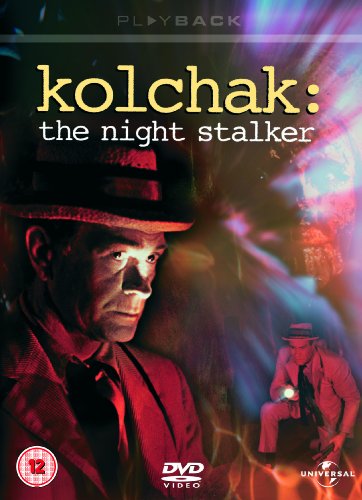
THE NIGHT STALKER (1972)

Darren McGaven shines as abrasive but likeable reporter Carl Kolchak in the first of the character’s outings. The second most popular telefilm of all time (the honour of being the first goes to The Love Boat), McGavin and his long-suffering editor track down a vampire in Las Vegas. Screenwriter Richard Matheson, one of the greatest fantasists of the 20th century, sets up many of the reworkings of the modern vampire story that have become staples of the genre today. The film was so successful it spawned a (pretty good) sequel, “The Night Strangler” and a television series that has special effects so poor it is best reserved for fans of McGavin . Features a particularly creepy ending.

kolchak

DUEL (1972)

Yes, it’s directed by THAT Stephen Spielberg. From a script by Richard Matheson (again) and featuring popular TV actor Dennis Weaver, this is 70s TV personified. A nameless truck driver hunts a hapless motorists along the desert for no good reason. SPOLIER ALERT! Features Spielberg’s characteristic” roaring shark” sound when the trucker gets his comeuppance at the end.

SOMETHING EVIL (1972)

Spielberg was on a roll in 1972. This curiosity features Darren McGaven again as a man whose family is targeted by an unholy presence when they purchase a farm with “something evil” in the barn. Genuinely creepy, especially the two glowing eyes. Has that great blend of realism and the supernatural that characterizes 1970s horror.

DON’T BE AFRAID OF THE DARK (1973)

One of the great things about TV movies was that nobody really cared too much about getting things right. Lacking the immense budgets of today’s productions, they were enticements to audiences to stay home rather than go to the movies. The results were some genuine oddities, such as this little horror gem.Recently remade by Guillermo Del Torro, who is obviously one of the movie’s legions of fans. A tip, don’t watch it in the house alone.

THE HORROR AT 37,000 FEET (1973)

A post-Star Trek Shatner stars alongside a cavalcade of 1970s TV royalty that includes Chuck Connors, Buddy Ebsen  and Paul Winfield. A spooky tale of a ghost on an airplane. ’70s television had such a strong lineup of character actors that they could fill out an entire movie. In this made-for-TV shocker, the actors sell the not-so-special effects.

KILLDOZER (1974)

From the strange to the downright crazy. A bulldozer (yes, you heard right) is taken over by an alien lifeform. Construction workers wisely wait for it to run out of gas. But wait, they’re on an island and there’s no cover! Wickedly entertaining hokum from a story by sci-fi legend Theodore Sturgeon.

SNOWBEAST (1977)

When Spielberg and Lucas created the summer blockbuster, TV producers were quick to emulate them. This TV horror movie, for instance, is actually Jaws with Bigfoot. And for that, it works incredibly well.  Just as we found out in Lucas’s reissue of The Empire Strikes Back “Special Edition”, seeing more is not always a good thing. It pays to hide your Bigfoot. During this fright-fest we barely glimpse more than a hairy arm or a snorting nostril, but the result is a growing atmospere of suspense and dread that’s hard to beat.

See the trailer here: http://www.youtube.com/watch?v=sxgPgQT155Y

BATTLESTAR GALACTICA (1978)

TV’s answer to Star Wars was also to create something similar. So here we have the Book of Mormon… in space! Managing to be both campy and portentous at the same time, this capitalized on the groundbreaking SFX that had made George Lucas an overnight success. Coupled with iconic costumes, ships, and sets, and some suitable gravitas from Lorne Greene, the movie paved the way for a TV series that has stood the test of time.

SIBYL (1976)

TV movies could also tread more psychological turf than movies, which were becoming increasingly gimmicky and SFX driven in the late 1970s. Here Sally Fields excells as a woman with multiple-personality disorder. The piece is not just a character study, it’s a study of many characters, and Fields shows off her acting chops in a varierty of personalities.

hulk

THE INCREDIBLE HULK (1978)

Another function of the TV movie was to test the waters for upcoming series. Shows such as Hawaii Five-O and the Six Million Dollar Man all had movie-length pilots. But few are so successful they go on to have a theatrical release. In 1978, the top TV show in the world was the Incredible Hulk. Bruce Banner was played with sensitivity and emotion by actor Bill Bixy, while his alter ego was played by bodybuilder Lou Ferrigno in green slippers.

THE DAY AFTER (1983)

Although not as gut-wrenchingly scary as the British 1984 TV movie “Threads” (see other post), this portrayal of nuclear armageddon is a contendor for one of the most watched TV movies ever. Told with realism, this grim tale gets ever grimmer as the true scale of a nuclear war is realized. People are either vaporized or survive to face all the horrors of radiation sickness and survival in the ruins of the old world. A good example of the kind of epic storytelling on a budget that TV can achieve.

The end of the world as we know it. But will you be feeling fine?

The end of the world as we know it. But will you be feeling fine?

THE HAUNTED (1991)

The TV movie fell out of vogue in the 1980s. TV itself lapsed into sitcoms, rather than try to compete with the ever-balooning budgets of blockbuster movies. But every so often a low-budget gem emerged. One of these is The Haunted, a very scary tale about a family who buy a haunted duplex. Like every sensible family, they move out at the first sign of ghostly phenomenon. But in a clever twist, the ghost follows them. Based on a true story, for added creepiness.

The 2000s

That would have been the end of our tale. An increasing number of TV channels did not equate to an increase in quality. In the 90s and 2000s, TV instead chose to churn out poorly-made, poorly-scripted and poorly-acted creature features using the ultimate tool for the lazy filmmaker, CGI. Soon our screens were filled with unconvincing CGI mammoths, sabretooths and giant crocodiles. Meanwhile the dramatic TV movie became the womjep we know and revile today.

Sabretooths and crocodils and sharks.. oh, dear!

Sabretooths and crocodiles and sharks.. oh, dear!

However in recent years TV has taken an upswing. Maybe it’s the lack of movies as studios adopt an all-or-nothing mentality to blockbuster films. Maybe it’s that older actors (who tend to be better) head into TV land in their golden years. Or maybe it’s that TV has replaced the movies, which are increasingly losing their connction with audiences due to massive ticket prices, lackluster SFX-driven spectacles and grosss-out comedies. Because the TV movie is making a comeback…

BEHIND THE CANDELABRA (2013)

Who would have though that in in this day and age a movie made by HBO would become a popular and critical success at the box office? Espeically when you consider the source material. But this Liberace biopic is doing just that. So maybe the TV movie isn’t dead. We’ve had the Renaissance of TV drama. Perhaps now it’s time to resurrect this forgotten art form as well.

Confessions of a British Screenwriter – Recycled

Today, I thought I would share a link to an embarassingly old and badly written article I did for Moviebytes.com when I had my first screenplay sale. So without further ado…

http://moviebytes.com/NewsStory.cfm?StoryID=3899

Guns, girls, and robots. What's not to like?

Guns, girls, and robots. What’s not to like?

My Name is ‘Err’: A Screenwriters Journey

By Eric Steele

It was a blisteringly hot day in Hollywood. My writing partner and I had been worn down by a punishing heatwave that pushed temperatures up to a hideous 120 degrees. As we both came from Manchester, England – a city renowned for precipitation in a country where summer just means that the rain gets warmer – for us this was the equivalent to walking on the planet Mercury. If Mercury had been filled with dangerous-looking winos and suicidal motorists.

We’d decided to visit an eatery in televisionland known as Roscoe’s Chicken and Waffles. The guide book assured us it was a good place to spot the stars. Taking our place in line, we sizzled on the sidewalk like a couple of English poached eggs. After an eternity of this torture, the Emcee asked us what our names were. “Err,” I began. But before I could use my best Hugh Grant impression, he disappeared back inside the tempting darkness of the doorway.

“Table for Mister Errrr…” he intoned.

Of course, I couldn’t correct him without opening up a whole new can of worms. I might as well have been speaking Portugese for all the good it did. Obviously a case of “You say tomayto, I say tomahto”.

We seated ourselves in a booth and soon learned why it was called “chicken and waffles.” As I dug into my plate of fried chicken at ten o’clock in the morning, I chose to reflect upon how much this reminded me of our whole screenwriting experience so far.

It seemed a far cry from how I had started out – tinkering away in my bedroom in Manchester, reading as many free articles as I could on a then-fledgling Internet, buying whatever books the local stores had in stock (not many), in my impossible quest to somehow get involved in this magical form of storytelling.

The trip to LA proved eye-opening in more ways than one. As we attended meetings without success, we both sank into a kind of delirious despair. Getting lost on foot in Downtown LA or being rear-ended by the daughter of a movie-star on Sunset Boulevard one Saturday night only added to the sense of unreality. Maybe we were just depressed from days spent foot-slogging through graveyards, staring at epitaphs of our long-departed screen idols.

Two years later, we had still to sell a script. Sure, there had been options, near misses. One producer kept us hanging on for over a year until we got an e-mail saying he had decided to work with Paris Hilton instead.

During this time my writing partner and I went our separate ways. He had a young family, and in the end, I guess he decided that “real life” was more important. I soldiered on, until one day I decided to throw caution to the winds, forget about the market, and write the kind of story I would like to see onscreen. The result was my first option with a big production company in LA.

Still nothing happened. I had listed the script with InkTip.com, and they helped me out with a press release. After a few months, I received a phone call from my soon-to-be agent, who had read several scripts and was sufficiently impressed to sign me up.

She told me she wanted to see more family-friendly stuff. I immediately scoured through what passed for my filing system until I found something that would fit the bill…

Among my various screenplays, I’d written a sci-fi television pilot called “Clonehunter”. On a whim, I’d entered it into Scriptapalooza. Although the script didn’t place, they were kind enough to provide me feedback. I scanned the feedback, read the script. Hmm, not exactly Orson Welles, but it was salvageable enough.

Over the next few months I rewrote the script, developing themes and characters, until I had an honest-to-goodness movie script. However, experience had taught me that what seems like Shakespeare to you can seem like Dr. Seuss to someone else, so I workshopped the script at zoetrope.com, where other writers could sling mud at it with impunity. Some of those reviews were gut-wrenching in their honesty, but the script came out a lot better for it. More importantly, it was free.

Some of the scenes I’d written would give James Cameron a headache. Pursuits on hoverbikes, floating casinos, talking gorillas – no sane individual would even think of tackling such a project without a studio budget. But it was just crazy enough to succeed. Besides, I loved the character – David Cain, an intergalactic bounty-hunter who would put Harrison Ford to shame. Not only was Cain’s work questionable, but the more we heard about him, the more we suspected that he might not be a very nice guy either. This was someone who had a history so long he kept secrets from everyone – including his attractive young cyborg partner. And he had an intelligent cat.

I wasn’t expecting anything, so I was truly surprised when I received an e-mail from director Andrew Bellware. He had seen my script on InkTip and wanted to shoot it, using his production company in New York. I was aghast – did he really think he could do it? Well, it might need a little tweaking. I would never see my floating casino (sob). However it would be an outright sale.

My agent hammered out the agreement and Drew then began the looooong process of filmmaking.

Drew kept me informed at every stage of the process. I was flattered that anyone would even care what I thought. Each week he would send me another video of the shoot. Nothing could have prepared me for the sensation of watching the script come alive onscreen. Sometimes I was surprised, sometimes I laughed out loud as an actor said a line in a way I had not expected and turned a boring piece of exposition into something dramatic or even comedic. Most of all, I was amazed that this was actually being pulled off. Even the hoverbike sequence was there! Eat your heart out, Lucas!

The whole experience reminded me that moviemaking is a team sport. Everybody has an input, no matter how small. I felt privileged to have given my contribution. Suddenly, all those years of slaving away over a hot keyboard in a cramped office seemed worthwhile, all those moments of self-doubt as I wondered whether I should be doing this at all dissipated.

Yet, afterwards, here I am again, sat in the same office typing away (admittedly I bought myself a new computer), churning out page after page and knowing that whatever I write will in no way by anything near as good as the movie unfolding in my head – the one nobody will ever see. In a way it’s like starting out all over again. And if it ever does get made, it will take a whole bunch of people to make it happen, not just the director and actors, but set decorators, editors, and everyone else down to whoever buys in the sandwiches.

So is it worth it? Of course. Because that’s the magic of motion pictures – that someone in a tiny suburb of Manchester, a couple of thousand miles away from New York and even further away from Los Angeles, could one day contribute to a movie. If I’ve learned one thing on my ragtag journey, it’s that you should try everything – every angle, every means at your disposal – to market your script. The Internet has revolutionized the world of media. Contests, feedback sites, listing sites – all of these are equally valid ways to get your script produced.

Who knows, we might be able to meet up one day for chicken and waffles!

To trend or not to trend… writing in the “hot” genre

What is “hot” in Hollywood? What kind of screenplay does Hollywood want?

Surely, the cynical starving writer thinks, if I find out what genre is hot and I write in that genre, Hollywood will want my screenplays? The simply law of supply and demand will do my marketing job for me. If “found footage” scripts are hot, simply write one and riches will await.

But hang on, says the artist (who doesn’t mind if he or she starves or not), isn’t that betraying your art? Isn’t it selling… out?

Well, I have no problem with someone writing for a living. Even Leonardo da Vinci had to eat. And although I could do without yet another “disaster mash-up” movie (SyFy channel, I’m looking at you), I remember one of my earliest instincts was to find out what Hollywood wants in a screenplay. After all, they are the buyers and I am the seller.

But there are several problems with trying to write in the “hot genre”. First of all, Hollywood is a long way away. Not just in space, but in time. Studios frequently undertake test screenings to gauge the popularity of a film before it is finished. People in Hollywood know what the outcome of these screening are. Hence in your newsletter you might get an inexplicable slew of requests for stories about “dogs verses aliens” from producers anxious to copy the newest surefire hit.

And therein lies the problem. Because by the time you write said screenplay, the trend will be over, and “Buster Saves the World” will be yesterday’s movie news. Writing for the latest hot trend is like trying to hit a constantly moving target. By the time you’ve nocked your arrow and written your screenplay, the movie world has moved on to the next “hot” project.

Having said that…

Certain types of script always stand more of a chance of getting made. They are generally as follows…

– Female driven

– Limited location

– Low budget

– Horror/thriller

– No SFX

These are the calls for screenplays you will encounter most frequently in newsletters and advertisements.

BUT.. and this is a big BUT!

I personally have found that I have less success trying to write in low budget genres. For some reason I naturally (and unfortunately) gravitate toward big action set pieces, usually sci-fi or horror. And yet I have more success selling these type of stories than when I write my one-location character-driven drama.

So if anything can be drawn from my limited experience, it’s this… write in the style and genre you love AND which you are best at. Whatever the budget. Whatever the genre. And THEN worry about rewriting it so it can get made. Maybe you can reduce the budget without losing that great scene with the giant ape climbing the Empire State Building.

This is a strange business. As Dan Ackroyd once said: “I write ’em big, and they keep making ’em.”

Here’s hoping you can write big too!