Tag Archives: horror story

The big reveal!

As promised, here is my big news for all of you who like horror and fantasy novels. If you’re looking for the latest horror, paranormal or dark fantasy fiction, you could do worse than choose to read THE AUTUMN MAN… by yours truly!


The plot is a carefully kept secret, but just between you and me I can tell you that this is a contemporary supernatural story with a twist. And what a twist! You’ll never see it coming…

I’m super proud of this book. It’s the product of a lot of sweat, blood, tears, and yet more blood. As you’ll find out for yourself when you read it! So if you like your Stephen King mixed with a little Clive Barker, a dash of Anne Rice, and a healthy dose of Guillermo del Toro, this is the book for you!

More details coming soon as to how you can get your hands on a copy of what I’m sure is going to be the hottest read of the summer, if I don’t say so myself! (Never let it be said that I hide my light under a bushel).

In the meantime thanks for stopping by, and don’t forget to keep coming back for more news on this exciting new title and some exclusive freebies!

The Autumn Man. He’s coming… soon!

The Horror Masterworks series!

In this post, I thought it would be fun to create my own list of Horror Masterworks books containing the greatest horror novels and short stories of all time.

The idea struck me because a while ago Gollancz brought out a series of Science Fiction Masterworks. These contained seminal sci-fi novels considered some of the best sci-fi novels of all time, such as Arthur C Clarke’s Childhood’s End, Joe Haldeman’s The Forever War and Robert Silverberg’s The Book of Skulls as well as the obligatory PK Dick books. The series was an introduction to many authors readers might not be familiar with.

This was followed soon after by another series of Fantasy Masterworks with books such as Lord Dunsany’s The King of Elfland’s Daughter and George R R Martin’s Fevre Dream. However, due to less success this time around, plans for a Horror Masterworks series were apparently shelved. It might also have been due to the fact that some of the “fantasy” tiles were in fact horror, or even science-fiction as in Jack Finney’s Time and Again.


Another mislabelled "Science Fiction Masterwork".

Another mislabelled “Science Fiction Masterwork”.


There has been a huge reticence by major publishers and booksellers recently to acknowledge the horror field. Yet despite this, horror is booming. Horror films like The Conjuring and the Paranormal Activity series have accounted for some of the most profitable Hollywood films this century. Horror novels continue to appear regularly on Amazon’s Top Selling Books list.  The public, it seems, thirsts for horror, even if publishers don’t want to supply it.

In conclusion, it seems unfair that Sci-fi and Fantasy should get their own Masterworks series while Horror is left out. So without further ado, here are my recommendations for Gollancz’s non-existent  Horror Masterworks series!


THE HORROR MASTERWORKS COLLECTION THAT SHOULD HAVE BEEN…

  1. H P Lovecraft, The Call of Cthulhu & Others
  2. Ray Bradbury, The October Country
  3. Richard Matheson, I Am Legend
  4. Shirley Jackson, The Haunting of Hill House
  5. Mary Shelley, Frankenstein
  6. Bram Stoker, Dracula
  7. Robert Louis Stevenson, The Strange Case of Dr Jekyll & Mr Hyde
  8. Peter Straub, Ghost Story
  9. James Herbert, The Rats
  10. Stephen King, The Shining
  11. Anne Rice, Interview with the Vampire
  12. Charles L Grant, The Hour of the Oxrun Dead
  13. Clive Barker, Cabal
  14. Ramsey Campbell, The Doll Who Ate His Mother
  15. Arthur Machen, The Great God Pan
  16. Robert Bloch, Psycho
  17. William Hope Hodgson, The House on the Borderland
  18. Sheridan Le Fanu, Through A Glass Darkly
  19. Roald Dahl, Kiss Kiss
  20. M R James, Ghost Stories of an Antiquary
  21. Ira Levin, Rosemary’s Baby
  22. Oscar Wilde, The Picture of Dorian Grey
  23. Edgar Allen Poe, Tales of Mystery and Imagination
  24. Thomas Ligotti, Teatro Grottesco
  25. Laird Barron, Occultation
  26. Robert R McCammon, Boy’s Life
  27. Daphne Du Maurier, The Birds
  28. Brett Easton Ellis, American Psycho
  29. Henry James, The Turn of the Screw
  30. Ray Bradbury, Something Wicked This Way Comes
  31. William Peter Blatty, The Exorcist
  32. Algernon Blackwood, Ancient Sorceries & other Chilling Tales
  33. Charles Dickens, Ghost Stories
  34. Rudyard Kipling, The Mark of the Beast & Other Stories

As you can see, there is plenty for horror fans to sink their teeth into.

One word of warning: this is not a list of personal favourites (although many of them are) or a list of the most scariest books of all time. Instead, I’ve tried to balance true masters in the field with their most notable works, either because the book set a new bar in the genre, or because it is their most representative work. I’ve also tried to include some modern writers such as Thomas Ligotti and Laird Barron to show you that horror is not dead but is in fact alive and well and still growing, albeit a little more in the dark these days!

I hope you enjoy the list. Feel free to disagree, and be sure to let me know what you think about the list in the comments below!

Pleasant dreams!


Exciting news!

I am very happy to report that my latest novel “The Autumn Man” is going to be published in the very near future!

I’ll release more details when and as I can, but this is a horror novel that is very close to my heart.

You can read my fist novel, the sci-fi horror “Project Nine” here.

The story behind how  both “The Autum Man” and “Project  Nine” got published is an epic one and I will share it with you at some point in the future. But for now, I’m just excited  and looking forward to sharing more with you as this develops. Stay tuned for a sneak preview of the cover and for more screenwriting tips and secrets!


My top 20 horror novels of the past 70 years!

As it’s almost Christmas, here is a list of my own favourite horror books. These are books that either inspired, terrified me, or made my jaw drop at the sheer beauty of the writing. These are all personal choices, so feel free to disagree. But without further ado, here is the list, in no particular order…


rats

The Rats James Herbert

British writer James Herbert was strangely underrated during his lifetime, which is a shame, as he is one of the most frightening horror writers of the 20th century. “The Rats” burst on to the scene in the 1970s, and it still packs a punch today. The huge list of characters, the violence, and the incredible imagery make this a must-read!

Cabal Clive Barker

In the 1980s Clive Barker appeared as a breath of fresh air with his promise to show what other writers only hinted at. Not satisfying with having the monster carry off the maiden, Barker wanted to reveal what happened afterwards. Cabal is his most solid novel, a tale of a man who believes he is a psychopath and takes refuge in a hidden underground city of monsters. The result is a Grand Guignol of the surreal and unnerving. Filmed as the uneven but imaginative “Nightbreed” with David Cronenberg as the bad(der) guy!


king

The Stand Stephen King

My first Stephen King entry is the author’s dark take on the apocalypse. It begins with a whimper and ends with a bang.  Filmed twice with varying success, this is some of King’s finest writing. So depressingly realistic that at first I had to give up on it and came back when I was in a lighter mood!

IT Stephen King

The second Stephen King entry on my list is, I think, undeservedly ignored, thanks to a forgettable TV movie. But make no mistake, the novel is King at the peak of his powers. The characters are rich but archetypal, the town of Derry both nostalgic and terrible. And the monster, ah, the monster..!


The Doll Who Ate His Mother, Ramsey Campbell


A peculiarly British atmosphere pervades this book, set in the poor end of Liverpool. There is a particularly nasty antagonist, but what makes it so memorable is Campbell’s description of urban neglect. Wherever the characters go you feel the empty eyes of forgotten tenements glaring at them. A unique little tale.

bradbury

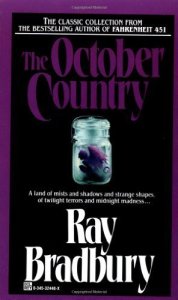
The October County Ray Bradbury

Few can deny that Ray Bradbury is the American master of the short story. But did you know that this anthology contains an early possible prototype of the Addams Family? These American Gothic fables contain such memorable tales as “The Jar” and “The Emissary”. Packed with gorgeous prose, this is both horror and literary… and funny to boot!

Domain James Herbert

The last entry in the “Rats” series sees survivors of a nuclear holocaust eking out an existence in London’s rubble. Until they find an army of mutated rats waiting for them! Superlative suspense fiction. Every chapter ends on a cliff-hanger. Surely a Hollywood blockbuster waiting to be made!

The Vampire Tapestry Suzy McKee Charnas

A unique take on the vampire genre sees Suzy Charnas’s ancient and wily vampire take on the challenges of the modern world. Never has a vampire been presented in such a detailed psychological light.

The Books of Blood Clive Barker

Yes, all of them! It’s hard to imagine how revolutionary Barker’s fiction was when it first surfaced. These short stories run the gamut from the epic (In the Hills, The Cities) to the eerie (Skins of the Fathers), the surreal  (The Body Politic), the funny (The Yatttring and Jack) and the downright weird (Son of Celluloid). Some have become movie fodder, such as the unforgettably bizarre video nasty “Rawhead Rex”. Others are allegedly in the pipeline. But nothing can prepare you for Barker’s very personal vision of a contemporary world that’s as dark and corrupted as Dante’s inferno!

Interview with The Vampire Anne Rice

The book that launched a publishing legend. I still remember getting lost in the luxuriant Gothic prose. Anne Rice creates a vivid fantasy fever dream that is both like and unlike the movie version. A true masterpiece of fiction.

triffid

Day of the Triffids John Wyndham

British writer John Wyndham’s most well-known book is an example of the “cosy catastrophe”. But that’s why I like it! It’s interesting to see stiff upper lips drop as British society falls apart under attack from some walking plants with the aid of a meteor shower!

Kiss Kiss Roald Dahl

Not just the writer of Charlie and the Chocolate Factory, Dahl’s short stories were laced with an acerbic wit and grisly imagination. A bit like fairy tales for adults, with added poisoning, brain surgery and insect/baby hybrids!

Ghost Story Peter Straub

Possibly THE great American ghost story. Peter Straub writes far too little horror these days. But this fantastic novel – described by Stephen King as “a tiger tank of a book” – contains virtually every twist on the ghost tale that you can imagine. Oozes atmosphere and quiet menace!

legend

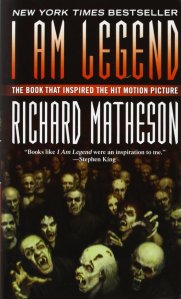
I Am Legend Richard Matheson

With episodes of “The Twilight Zone” and numerous TV movies such as the unforgettable “Duel” and “The Night Stalker”, Richard Matheson inspired a generation of writers.  This is his probably his most famous work – filmed as the languid Vincent Price chiller “The Last Man On Earth”,  the action-packed and very Seventies “The Omega Man” with Charlton Heston, and lately as the CGI-heavy Will Smith popcorn flick, this tale of a man alone in a  world of vampires  has still never been done right. Which is a shame. It’s a fine novel.

The Haunting Shirley Jackson

One of the great ghost stories ever written, it’s amazing how the writer delivers so many effective scares without ever resorting to gore or shocks. Shirley Jackson’s story is a snowball rolling downhill, gathering chills as it goes. Also one very good and one very bad movie.

Teatro Grottesco Thomas Ligotti

Ligotti is one of the writers of the “new weird” – modern authors in the cosmic horror tradition of HP Lovecraft. This collection showcases his unique prose style – a style of flatness and repetition – that lends his words a peculiarly terrifying banality. “The Red Tower” was a particularly fine story. Have fun unpacking the symbolism!

Hour of the Oxrun Dead Charles L Grant

Overlooked by many, Charlie Grant’s Oxrun Station stories all take place in the same sleepy Connecticut town – that just happens to attract all manner of evil! Perhaps it was because these are classic supernatural stories that came out just as writers like King were modernizing old horror tropes. But these are creepy tales, laced with luscious prose. The old TOR versions had the best covers – each one a gorgeous Halloween-themed scene. Ideal for a creepy night in!

grant

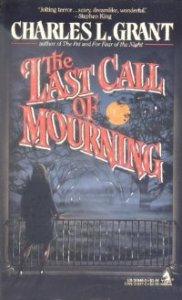
Last Call of Mourning Charles L Grant

My favourite Charlie Grant story keeps you guessing all the way through. The plot sounds simple enough – the heroine returns to Oxrun Station to find her family ‘changed’. They don’t bleed, keep out of the sunlight, and have strange nocturnal habits. But the truth is something you’ll never guess. A masterful book that drips atmosphere and charm.

The Beautiful Thing That Awaits Us All Laird Barron

Barron has erupted onto the horror scene in recent years. This volume represents many of his Lovecraft-meets-Raymond-Chandler style of stories. But that is to do him an injustice. True, “Hand of Glory” is an effective pulp/horror mashup. But other stories show a genuine ability to expose our innermost fears. His eye-catching imagery cannot be easily forgotten.

The Vampire Lestat Anne Rice

Anne Rice second entry in my list is, I think, the most rich of her vampire stories. While I loved the epic scale and sheer ambition of “The Witching Hour”, “The Vampire Lestat” beats it because of the wonderful ironies the author employs. Here we learn who Lestat is, where he came from, his complicated (to say the least) relationship with his mother and his first meeting with Armand. We also learn more about Rice’s vampire mythology. This is both epic and deeply personal. Lestat feels like a living, breathing person. In all of horror, I can’t recall a more well-rounded, charismatic character!

Afterword

What’s missing from this list? Plenty. This is not my “Top 20”. Nor is it meant to be any kind of definitive list. These are just books I’ve loved. Pure examples of the horror genre that are original stories. I’ve not included anything by any “classic” author such as HP Lovecraft, Mary Shelley or Edgar Allen Poe, because everybody knows all about them anyway. Hopefully you feel the same or similar about some of these titles, or if not, I hope you seek them out and find them to your liking!

Enjoy!

Link

Today I have a pretty cool announcement to make.  The anthology REVOLUTIONS, which I edited along with Graeme Shimmin and Craig Pay (with honourable mentions to Luke Shelbourne and the rest of the Manchester Speculative Fiction Group), is now live to buy on Amazon! The anthology is an eclectic mix of science fiction, fantasy and horror, set in Manchester, England. Although perhaps it’s not quite the Manchester you know if you live there…

Revolutions. Available to buy now!

Revolutions. Available to buy now!

This is pretty exciting stuff for me. It’s my first time as an editor. It’s also a chance for me to be able to give back to the Manchester Spec Fic group, a bunch of writers who welcomed me with open arms several years ago. Since then, I’ve obtained invaluable feedback every meeting as they endured my stories (some good, some not so good) and made some great friends in the process.  So my thanks to Craig Pay for keeping the wheel on all this time and for being the very soul of diplomacy!

The idea came to me when I picked up a copy of an anthology in my local library that was brought out by a writers group in the West Midlands. I figured if they could do it, heck, we could do it better! And now I think we have.  But even that wasn’t enough for yours truly. We wanted our anthology to stand out, so we hit upon the idea of setting all the stories in Manchester England, a town that’s often unfairly ignored compared to, say, London, Monaco or any other of those exotic locales! So within these pages you will find various versions of Manchester, whether the present city, a Manchester  of tomorrow, or a Manchester that might never exist at all!

The anthology features stories by myself and other group members as well as Graeme Shimmin, author of the alternate-history spy thriller A Kill In The Morning, and Sarah Jasmon, author of the novel The Summer of Secrets. Both books are available to buy on Amazon. I have to say, Revolutions is a pretty good mix – it includes updated fairy tales, post apocalyptic fiction in a middle-class suburb, some very unique aliens, a musical war between Mancunians and Liverpudlians, and much much more.

So what are you waiting for? Get over to Amazon and grab yourself a copy!


The Many Different Types of Horror Movie Scare!

What techniques do horror movie makers use to make a film scary? The answer is, many. Serious critics often vilify horror movies as cheap, vile “video nasties”.  But in reality, a horror movie is a complex machine. Some of the best ones operate on many levels. So today we’re going to examine just what makes a horror film scary.

I’m not talking about monsters or violence. Instead, I’m talking about the methods writers and directors use to make us jump out of our skins or hide behind the sofa (don’t tell me you’ve never done that) in our favourite scary films!

This is by no mean an exhaustive list of the types of scares to be found in horror movies. But here are the ones I’ve noticed a lot.
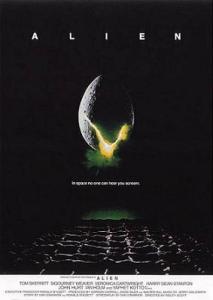
 

Cat Scares and Hidden Attacks abound in

Cat Scares and Hidden Attacks abound in “Alien”!

The Jump Scare

The laziest kind of scare. The hero or heroine is walking around the creepy old house when BOO! It’s the monster! Usually it leaps straight at the camera so we experience for the shock ourselves. This is the kind of scare that easily gets on your nerves. For a classic example, see the “head in the boat” scene in JAWS. Check out many modern movie trailers for more inept examples.


The Lewton Bus

Also known as the “Cat Scare” or “Faux Scare”.

Ever noticed how sometimes the hero or heroine will be walking through the dark old house/deserted spaceship looking for the monster, when suddenly BOO! out jumps the monster. Oh wait, it’s not the monster after all. It’s only the cat. Or maybe it’s the boyfriend that puts his hand on the heroine’s shoulder. You’ve just been played for a sucker.

The origin of this term is legendary film producer Val Lewton, who used this to great effect in the classic original THE CAT PEOPLE (1942). If you’ve never seen it, get yourself a copy. It’s been ripped off hundreds if not thousands of times since.

“Nested” Cat Scare

A modern twist on the Cat Scare is that right after the innocuous event the real monster DOES appear! This would be more interesting except that it’s also been done a thousand times. For a more interesting variety, check out AN AMERICAN WEREWOLF IN LONDON. Our hero has a terrifying dream involving a monster with a knife. He wakes up to find… his nurse leaning over him. She goes to the window, opens the curtains and…BOO! The monster jumps out from behind the curtains and stabs her in the chest. Our hero screams. Then he wakes up again. The nurse is there and she goes to the window. She draws the curtains again and… nothing happens. A very unsettling scene.


 Mirror Scares / Reveal Scare

How many times have you seen the hero or heroine go to the bathroom, open the mirrored bathroom cabinet (it always has a mirror, doesn’t it?), close it again and… BOO! There’s the refection of the monster right behind them in the mirror! Modern variants include refrigerator doors with monsters inexplicably appearing behind them. Once again, this has become a massive cliché. Still pretty scary, though.


Loud noises

A relative of the jump scare.  But instead of seeing something, we hear it. For a recent example check out the PARANORMAL ACTIVITY movies. Although here the scare is used quite effectively, as the loud noises build up over each night, making the audience dread each sundown more and more. And, of course, they are very inexpensive to create!


Hidden attack

Typically, this very effective scare hits us from another direction from that in which we were looking. Not to be confused with the Cat Scare, which is supposed to get us on the edge of our seat before the attack happens. This scare comes out of nowhere. It’s a bolt from the blue.

Done well, this is one of the best scares. A classic example is the infamous chestburster scene from ALIEN where the creature explodes out of John Hurt’s chest. But other examples can be found. John Carpenter’s underrated THE FOG contains several of these. There’s also a great one in EXORCIST III. The camera sits at the end of a long hall in a hospital. A nurse sits at the desk, doing paperwork. Other people come and go. The nurse goes to check the rooms. She walks up the corridor. Behind her, very subtly, the other people leave one by one. She locks the last door, turns to go into the room opposite and BOO! What is that behind her? The monster explodes out of the locked doorway with a very nasty set of surgical scissors in hand. You’ve just been caught out by the Hidden Attack!


Suspense

This technique has been described as what happens when the audience knows as much as the character on screen. We’ve all seen those films where the hero or heroine (more probably) approaches the door, knowing there’s a killer/monster on the other side. They open the door slowly and …. BOO!

Nowadays this is pretty clichéd. Modern viewers tend not to buy this setup. There’s no way anyone with half a mind would go towards the location of a dangerous lunatic or hungry monster. So filmmakers try to find increasingly bizarre ways of getting the character to go towards the fear instead of away from it. Personally, if I never saw a character go toward the monster again, I wouldn’t mind. Sometimes it’s best just to accept that certain things are no longer scary.

Hide and Seek

According to Alfred Hitchcock, one of the greatest ways to create suspense is to employ what’s called Dramatic Irony. This is where the audience is aware of a menace that’s creeping up on the unsuspecting hero or heroine. Classic examples of this scare include the original HALLOWEEN (1978). This has pretty much been done to death (no pun intended) by the Slasher genre. By now the audience has become so familiar with it, it’s almost like an in-joke for the crowd. See the SCREAM movies for pastiches on this technique.


Mystery POV

A cousin of “Hide and Seek” is the Mystery POV, also known as the Dark Intruder POV. Here, the camera becomes the eyes of the killer/monster. We see it approach the unsuspecting victim. Classic examples include JAWS, when we see the unsuspecting swimmers paddling in the sea from below. Suddenly the camera rushes up to those dangling legs and… CRUNCH!

It’s a strange technique in that it sometimes arouses sympathy with the killer! Italian cinema has often used this technique to jarring effect. The Giallo films of Dario Argento, such as DEEP RED, often show us the killer preparing to commit (and committing) increasingly bizarre murders. It’s a sort of comment on how, just as audiences like to be scared, they might also be enjoying the thrill of seeing the murders onscreen. Creepy.

Endurance horror

This is an interesting technique. Films such as the original THE EVIL DEAD (1981) were marketed as “endurance horrors”. The basic idea is that you throw so much at the audience that they can’t take any more. Eventually, the slightest thing sends them over the edge and leaves them a quivering bundle of nerves. THE TEXAS CHAINSAW MASSACRE (1974) is a great example of this. By the time we get to the crazy “feast” scene at the end of the movie, the heroine (and the audience) are emotional wrecks!

Birds Film

Claustrophobia and suspense in Alfred Hitchcock’s “The Birds”!


Repulsion

Another lazy technique. This just means making the audience want to gag. In the hands of a master, like body-horror maestro David Cronenberg (THE FLY, SHIVERS) it’s truly terrifying and will stay with you for life. In the hands of anyone else, it’s just yucky. Bad examples abound, I’m just not going to go there.


Surreal Scare

My favourite kind of scare. This happens when you see something that looks so startlingly out of the ordinary that it’s frightening. It’s a “Thing that should not be”. Classic examples include David Lynch’s ERASERHEAD… or practically anything by David Lynch.

My favourite example is the famous vampire boy from the TV movie SALEM’S LOT (1979). Here, a boy awakens one night to find another recently deceased boy floating outside his window, scratching to be let inside. He foolishly opens the window. The dead boy floats in. He’s pale, rotting maybe. He has yellow eyes, long teeth and he’s very, very hungry. An extremely scary scene indeed.

Fear of the Unknown 

Horror writer HP Lovecraft once said that the greatest fear of mankind is the fear of the unknown. Some horror movies play on our sense of dread at not knowing what lurks within the darkness. The Found Footage horror genre uses this one a lot (primarily because it involves not seeing anything and is therefore cheap). At crucial points all the lights will go out. Cue screams, banging and general terror. Examples include THE BLAIR WITCH PROJECT, which proves that sometimes it’s what you don’t see that’s more frightening.

Phobias

A close relative of the “Repulsion” technique, except that this involves repeatedly showing us images of something we find scary. Often this involves animals. Sharks, spiders, snakes, parasites, wolves, diseases, all these things are pretty scary. Or it could be a fear of flying, falling, the ocean, dismemberment, disfigurement or other types of grisly death. Examples include SNAKES ON A PLANE. However, you can forget the rather unscary ARACHNOPHOBIA.

Claustrophobia is another sub-type of this scare. The original DAWN OF THE DEAD (1978) uses this to excellent effect. The heroes are all trapped in a shopping mall with hundreds of zombies. The undead might be slow, but there are so many that escape is impossible. The classic shot from that film occurs when a character thinks himself safe in an elevator, only to be swamped by zombies when the door opens. This type of scare lingers long after the film ends.


Loss Of Identity

What’s more scary than dying? Losing your soul, of course. Horror movies recognize this. Many classic genre tropes like werewolves, vampires and zombies prey upon out fear of losing our sense of self, that thing which makes us who we are. The undead are not our real loved ones; they are unthinking, hungry shells out for our blood! Smart movies play with this type of scare. One of the best is THE INVASION OF THE BODYSNATCHERS (1956). We crawl with terror as people slowly lose their identity and are replaced with the hive-minded, unfeeling pod people. And when you are the only real human being left… well, that’s a truly frightening prospect!

The Chase

Chase sequences abound in horror movies. It’s a close cousin of the “suspense” scare. Both we and the character know there’s something right behind them, trying to catch up. THE TEXAS CHAINSAW MASSACRE employs the classic example of this as the chainsaw-wielding Leatherface pursues the hapless heroine through the woods.


Atmosphere

This is less common nowadays and has become a cliché. In the early days of horror cinema it consisted of an old dark house, scary inhabitants, flickering lanterns, lightning storms, etc. etc. The old Universal horror movies of FRANKENSTEIN (1931) and THE WOLF MAN (1941)  contain many examples. However, something of this still survives in so-called J—Horror, which subverts this type of scare.  Here, ghosts pop up in banal places, like modern Tokyo, Internet chat rooms, or tenement buildings. See the Japanese originals of THE GRUDGE, PULSE, and DARK WATER for examples.

So there you are, my main types of horror movie scares. Doubtless I’ve omitted a few, so feel free to correct me. Now go out there and scare the pants off people!
Update on Revolutions Anthology! (sort of)

?????????????????????????????????????????????????????????????????????????????????????????????????????


Been relatively busy recently so this will be a short-ish post. Over the past few weeks I’ve been editing The Manchester Speculative Fiction Group’s first ever anthology, “REVOLUTIONS”, together with my co-editors. This is a science-fiction/horror/fantasy compendium of short stories, all loosely connected to my home town of Manchester, England in some way. So I thought I would take a moment to share some insights into Manchester.

Manchester is a city that is close to my heart. Like a piece of shrapnel from a bullet wound that is lodged there. I don’t think I’m alone in having a love/hate relationship with the city. On the one hand, it has a proud industrial heritage, a lively student population, the BBC, world-class football, great shopping, and architecture so good they filmed part of “Captain America” here. On the other hand it suffered greatly from urban decay, has sprawling council estates, and the levels of high crime, poverty and homelessness associated with many inner cities. And did I mention the football?

In recent years Manchester has changed again, with the creation of the rather Bohemian Northern Quarter section, full of quirky cafes and bars. Manchester today is a city in flux.

If you want to know what Manchester is like, you can see a rather sanitized version of it here…

Manchester's lovely Town Hall.

Manchester’s lovely Town Hall.

or here…


A rather nice leafy suburb in Greater Manchester.

A rather nice leafy suburb in Greater Manchester.


…or here are some rather less flattering images:

Manchester town centre.

Manchester town centre.


Or here…

Brunswick council estate, Manchester.

Brunswick council estate, Manchester.

Or perhaps here…

Studentville, Manchester.

Studentville, Manchester.


Like it or loathe it, Manchester has always been fertile ground for poets, artists, writers and musicians. There’s something about the place that inspires escapism. Perhaps it’s all that industrial age architecture (while some of the new buildings in the city centre are straight out of a science-fiction novel) or the twisting back alleys that could hold unexpected tales of horror or fantasy. In any case, it has inspired some fascinating stories that hopefully we’ll be sharing with you in the coming months.

Until then, here are some of the famous (or notorious) people who have come from the city:

Anthony Burgess (A Clockwork Orange novelist), Professor Brian Cox (physicist and TV presenter), The Stone Roses, LS Lowry (artist), The Bee Gees, Robert Donat (actor), Oasis, The Hollies, Joy Division and New Order, Davy Jones (The Monkees), David Lloyd George (Prime Minister), Ian McShane (actor), Emmeline Pankhurst (Suffragette),Thomas De Quincey (novelist), The Happy Mondays, John Thaw (actor), 10cc, The Buzzcocks, Elkie Brooks (Singer), Elbow, Georgie Fame (Singer), George Formby (comedy actor), Manchester United Football Club, Freddie and the Dreamers, Herman’s Hermits, John Mayall and the Bluesbreakers, Morrissey and The Smiths, Sad Café, Lisa Stansfield, Simply Red, The Verve, Stephen Leather (novelist), Nicholas Royle (novelist), Bernard Hill (actor Titanic, Lord of the Rings), David Warner (actor Tron, The Omen), Jack Wild (child actor Oliver!), Harold Shipman (Britain’s biggest ever serial killer), Beryl Reid (actress), The Moors Murderers, Frances Hodgson Burnett (The Secret Garden novelist), Winston Churchill (Born in Oxfordshire but MP for Oldham and then MP for Manchester North-West).

Maybe we’ll see more names added to the list after the anthology!

How to get your short story published!

By way of an update about the Revolutions Anthology I am editing (along with my fellow members of the Manchester Speculative Fiction Group), I thought I would share some insights about how to submit a story to an editor.

The reason I’m doing this is that I have been surprised by how many people don’t know the best way to do this. So here are some tips about sending out your short stories if you’re a fledgling writer (or even if you’re not).

Submissions are closed now for the anthology, and myself and my fellow editors are busy reading through a small mountain of stories. But I have noticed some simple errors that will stop you from being published. 

?????????????????????????????????????????????????????????????????????????????????????????????????????


Except for a word limit of 6,000 words we only had two rules for the Revolutions Anthology. One, stories had to be speculative (science-fiction, fantasy, horror or slipstream). Two, they had to be connected in some way to Greater Manchester, England.

That was it.

First of all, here’s what NOT to do.

– Send things the publisher doesn’t publish. We would love to have published a novel, but that wasn’t what we set out to do. We wanted short stories. Period. So sending us anything else is just a waste of your (and our) time.

– Send us a long list of stories we might like and ask us to pick one. Sorry, but it’s up to you to decide which story to submit.

Here’s what you should really do:

– Be professional.

That’s it.

The general public often see writing as a strange profession, part shaman, part celebrity. You sit down and magically produce a novel or short story which a publisher then falls in love with. And lo, a legend is born!

Alas, not so.

Writers are just like anyone else. They have to work.

If you want to submit a short story you have already written to a publisher (for instance, an anthology or magazine editor) check first to see if it’s the kind of thing they would want. FOLLOW THE GUIDELINES!

This is so important, I’ll say it again: FOLLOW THE GUIDELINES!

Editors are busy. They set guidelines because it helps them save time. We all want to save time. So save yours and theirs by FOLLOWING THE GUIDELINES (there, I said it again).

So what should you send?

1) Your story, either attached or emebedded in the e-mail as per their GUIDELINES (!).

2) A short covering letter (short being the operative word). This should tell them the following:

– Who you are

– What you are submitting (How long it is. What genre it is. It’s title)

– If necessary, a short one paragraph biography detailing any relevant publishing credits you have, or any relevant experience you have. Note the word RELEVANT. If you’re a palaeontologist and your story is about fossils, that MIGHT be relevant. If you’re a divorce lawyer and your story is about a wertiger, it probably is going to be less relevant. Use common sense.


DO try to address the letter to the editor by name. It’s not always possible. Some are shy about putting their names on their wesbites. But “Dear Bob” always sounds better than “Dear editors” or “Dear Sir/Madam”.

DO NOT spell the editors names incorrectly.

DO NOT assume that anyone who uses their initials only is a man (or woman). A good tip for this is to address them by their initials, e.g. “Dear T.J.”

A good letter should also include a good-bye. Something simple like “I hope you enjoy the story and look forward to hearing from you in due course, Yours sincerely, Eric.” is enough.

That’s it.

After that, send your shiny e-mail off into the ether and wait. Wait again. Then wait a bit more.

DO NOT pester the editor with e-mails every few weeks asking if they’ve read your story. I  myself only ever chase up a submission if it’s something I’ve personally been asked to submit. It’s a sad fact that some publishers never reply to you. Take that as a rejection.

Once you’ve done all that, either:

a) REJOICE! Your submission was successful. You are now a published author!

or

b) REPEAT the above.

Nobody ever said being a writer would be easy! Writing requires persistence, patience, and above all, a thick skin. Not everyone will appreciate your genius right off the bat. Don’t let that deter you. Get back in their champ and keep swinging!

Following the above will not guarantee that your story will ever see the light of day. However, it will guarantee that the editor does not immediately burn your submission (hopefully). Doing these simple things will ensure that you come across as a professional rather than an amateur. And, sometimes, that makes all the difference.


The Best Horror Movies of the Past 50 years! Part 5! The Nineties!

Ah, the 1990s… when the Eighties were a distant memory. The Nineties were mad for it. Grungier than its predecessor, we never thought there would someday be a price to pay for all those late nights spent clubbing it. Nowadays the whistles and glowsticks seems just as bad as those silly hats.

Horror movies had a hard time in the 90s. The 1980s had milked the slasher movie to death. Vampires and werewolves were old hat. Even the horror comedy was on its way out. In a way, many of these movies represent the dying breaths of horror’s staple bad guys. The horror genre was about get ugly…

Exorcist III 1990

The decade began with a shuddering return to form of William Peter Blatty’s faith-based possession franchise. The film doesn’t seem to know where it’s going. Maybe it simply had nothing new to say. But with some genuinely chilling moments involving a bone saw, this was a worthy sequel to the classic horror hit, if not a new beginning.

Jacob’s Ladder 1990

As a counterpoint to that kind of “old-school” horror, here we have the first of several psychological horror movies as Tim Robbins does a star turn as a man haunted by visions of demons. In true Nineties style, the story turns out to be a bit “meta”.

The children of the night may be beautiful, but they're not very scary.

The children of the night may be beautiful, but they’re not very scary.

Bram Stoker’s Dracula 1992

Francis Ford Coppola turns Bram Stoker’s classic bloodsucker into a kind of modern fairytale. Not scary in the least, and certainly not a definitive version, despite the claim to closely follow the novel (which it doesn’t), and full of wildly uneven performances, you have to admire its impressive, visual style, while Gary Oldman’s outing as Dracula would cement him as a great actor for years to come.

Army of Darkness 1992

Sam Raimi rounds off his “Evil Dead” trilogy with this rip-roaring slapstick live-action cartoon. Boasting some great comic one-liners and an even more OTT performance by B-movie legend Bruce Campbell, this Halloween treat contains skeleton warriors, flying books, and an extremely surreal scene in a windmill where Ash chases around little versions of himself. This is one of those films that’s so bizarre it stands in a category of its own. It is also so downright mad that it ended the series, albeit on a high note of laughter.

Interview with the Vampire 1994

Neil Jordan brought audiences the visually alluring but story-lite “Company of Wolves” in the 80s. Here, he tackles Anne Rice’s novel of a vampire telling the story of his 200 year-old existence. Starring Tom Cruise in  role nobody expected of this all-American action star (a bloodsucking ghoul), and a young Brad Pitt, as well as a 12 year-old Kirsen Dunst, this is a lavish tale worthy of those old Hammer classics of the Sixties. But the novel has a touch of 1990s despair about it. This vampire doesn’t know his place in the world and is constantly seeking something to believe in – a little like people in the 1990s. Once again, the vampire is a reflection of his times, which perhaps explains why it took so long for the book to reach the screen.

From Dusk Til Dawn 1996

Quentin Tarantino hit the big time in the 1990s with his multiple-storyline post-modern heist flick “Reservoir Dogs”. Here, he dips his wick in the horror genre, at least for the first half. Once the vampires cut loose, he turns directing over to Robert Rodriguez, who brings his over-the-top campy action style into play. Hard to take seriously today, this movie has its tongue surgically implanted in its cheek. It is also the movie that inspired a million tattoos thanks to George Clooney. A fun film at the time that is less fun with age, it had some strong actors but is ultimately a bit of a gimmick rather than a serious movie – the main draw being actors getting killed whom you expect to survive. Horror, it seemed, was running out of ideas.

Are you cool? I'm cool. Are we cool? Vampires are not... cool in this movie.

Are you cool? I’m cool. Are we cool? Vampires are not… cool in this movie.

Scream 1996

The last word in Slasher movies belongs to Wes Craven, who was ironically one of its creators. This film is postmodern in every sense. Teens stalked by a slasher discuss how slasher movies work in order to escape their killer, only to discover that the killer also watches slasher movies and knows as much about them as they do. The death knell of the slasher movie can be heard loud and clear in this horror/thriller. After this, there was simply nowhere for the subgenre to go.

Event Horizon 1997

An underappreciated film that makes little sense on first viewing. Imagine Star Trek crossed with a John Carpenter film and you get the picture. Horror icon Sam Neil (at this time a big draw thanks to Jurassic Park) takes a risk as a doomed character in this story of a space ship that returns from its journey into hyperspace without its crew, like a futuristic Marie Celeste. As scientists try to uncover what happened to the passengers, they learn that something nasty waits on the other side of the dimensional border. A Lovecraftian sci-fi, in a sense, this is one of the few truly original horror movies of the decade.

The Faculty 1998

Movie stars got younger and younger in the 1990s as studios targeted their “real” audience. Here, Robert Rodriguez is on form as he directs a tale of high schoolers taking on an alien invasion with the help of a pot-smoking rebel. This B-movie boasts some standout future stars like Elijah Wood and Josh Hartnettt. It is also much more enjoyable than it deserves to be, given the number of irritating jargon-speaking schoolkids. A very “nineties” updating of old 1950s B-movie tropes. Once again, however, the “alien invasion” horror movie had no real place to go.

The Sixth Sense 1999

This movie marked the debut of M Night Shyamalan, whose career would (for a while) be known for its outrageous plot-twists. The movie also resurrected the career of action star Bruce Willis as a psychiatrist treating a kid who “sees dead people”. Although people disagree as to whether the plot twist at the end was a surprise or obvious, the film packs some genuinely creepy moments, and lots of shocks along the way, as only the boy can see the dead folks, but they can see him.  Shyamalan’s tale proved hard to copy, but revived a lot of interest in the flagging horror genre for a new generation of filmgoers.

Like it or loathe it, this movie gave the genre a breathe of new life.

Like it or loathe it, this movie gave the genre a breath of new life.

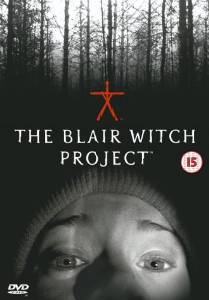
The Blair Witch project 1999

As if to underline audiences’ boredom with standard horror fare, the found footage genre re-emerged at the end of the century with the most profitable independent film in movie history, usurping John Carpenter’s “Halloween”. Three people get lost in a wood on videotape. It really is that simple. What follows divided audiences. Some loved it for its clever use of a very (nonexistant) limited budget and the way it raises your hackles by not showing you what is going on. Others hated it for precisely the same reason. The found footage genre proved an enormous hit, no doubt because it was very cheap to copy. But whether you love it or hate it, this subgenre gave the horror film a new direction, one that would create a whole new set of filmmakers in the ‘Noughties and beyond, and who would exploit rapidly-changing technology to give the studios a run for their money.

The Nineties suffered from the overdose of slasher movies that took place in the Eighties. For a while the genre was left reeling. But new technology and clever filmmaking resurrected the horror movie at the end of the decade. With audiences demanding new thrills, better special effects, and grimmer storylines to reflect the pessimism of the times, horror movies were about to go to a very dark place indeed.

Next time…

Zombies, zombies, zombies! The world goes mad for George A Romero’s creations. Horror goes viral, ghosts turn Japanese, and it seems that anyone can make a horror film as long as they have a mobile phone.


The Best Horror Movies of the Past 50 Years, Part 3! The Seventies! 1976-1979!

Hi, there, horror fans! Last time we looked at how Hollywood was unafraid to make more experimental horror features in the early 1970s. Although Spielberg’s “JAWS” would lead to studios forever chasing the summer blockbuster, the late Seventies were still an exciting time for horror movies. Foreign filmmakers like David Cronenberg and Dario Argento were developing cult followings. Meanwhile, low budget filmmaking was about to come into its own, as was a certain young horror writer from Maine, New England…

Let’s start our list of late seventies horror with…

The Omen 1976

No-one can doubt the influence of Richard Donner’s by-the-numbers horror movie. With more than just a passing nod to artsy horror masterpiece “The Exorcist”, this is a rip-roaring Hollywood-style horror flick. It boasts some bravura set-pieces, such as the decapitated photographer. With stalwart acting from heavyweights Gregory Peck, Lee Remick, Billy Whitelaw, and David Warner, the picture is very believable. But there’s no happy ending here as the Antichrist is born to a powerful American politician. This movie created a profitable and mostly well-made series of sequels that gave the world Sam Neil. It also became the bane of children named Damien everywhere.

Martin... a new kind of vampire.

Martin… a new kind of vampire.

Martin 1976

George A Romero, back from “Night of the Living Dead”, triumphed again with this underappreciated cinematic gem. It’s a genuinely original take on vampires. Is homicidal young loner Martin a vampire or not? Is he merely disturbed, or is there some truth in his bizarre flashbacks to another time? Terrific, glory, explicit, sensual, thought-provoking and beautifully filmed, this movie features an amazing performance by the underused John Amplas. Overlooked at its time, this has become a true cult classic.

Carrie 1976

The arrival of a young writer called Stephen King created a reign of terror that is still going today. Hollywood struck gold with King’s curiously brief tale of an alienated young girl with awesome telekinetic powers. Phenomenal directing by Brian De Palma (of “Sisters” fame) catapulted King into the popular consciousness. At one level this is a time-tested tale of an ugly duckling who gets her revenge. But DePalma used split screen and slow motion camera work to viscera effect for the final massacre that is actually too much to fit on one screen! What is mentioned less often is the great cast of actors including Sissy Spacek and Piper Laurie. This is one horror blockbuster that stands the test of time.

Suspiria 1977

Italian Filmmaker Dario Argento’s most well-known film is about a coven of witches posing as a ballet school in Italy. Some memorable set-pieces elevate this beyond its video-nasty style violence. Argento often treads a fine line between good and poor taste. Here, he manages to keep it on the straight and narrow. It also boasts a great score by the world’s foremost horror band… Goblin!

Dawn of the Dead 1978

Which brings us to George A Romero’s sequel to “Night of the Living Dead”. Where “Night” finished, “Dawn” goes a step further. Civilization is falling into chaos at the hands of the zombie invasion. We begin with some great scenes of things literally going to hell. Four survivors hitch a ride on a helicopter and hole up at an abandoned shopping mall. They soon learn that having everything does not make you happy. A social satire as well as a very frightening movie, the impact of “Dawn” may be diluted now due to dated make-up effects and the current trend for fast-running zombies. But the Romero’s innumerable hordes of shambling ghouls still make for claustrophobic viewing. This movie gave us memorable images like the Hari Krishna zombie, elevators full of undead shoppers, and an eerie kids’ TV theme tune. It also features some great acting from a cast who sadly never went on to stardom. “Dawn” has influenced virtually every horror movie since, including current TV sensation “The Walking Dead” and 2004’s delightful “zombie-rom-com” “Shaun of the Dead”. And come on, don’t you wish you were in that world, just a little bit?

The slasher genre... the most profitable genre in movies!

The slasher genre… the most profitable genre in movies!

Halloween 1978

John Carpenter’s film debut is actually not his film debut. That came with sci-fi black comedy “Dark Star” (1974). But he will forever be associated with this low-budget shocker about a psychopath that comes back to a leafy suburb to kill again on the titular eve. The movie made Jamie Lee Curtis a scream queen and cemented the “slasher movie” as a staple of cinema. The slasher movie’s key components of low cost, titillation, and violence was a wining combination, one that survives to this day. Arguably, this is the one sub-genre that has blackened the reputation of horror films, due to the many terrible or poor taste rip-offs branded “video nasties” in the 80s, such as the inept “Driller Killer”. But what makes “Halloween” a lot more intelligent than many of its successors is John Carpenter’s expert direction. He makes every shadow in your living room menacing, every closet or couch the potential hiding place of a madman. So that by the end of the movie your own house is no longer a safe place to hide. For a long time the most successful independent film ever made, “Halloween” is a true horror classic.

The Amityville Horror 1979

Hollywood must have been confused by the success of “Halloween”, if this return to the tried-and-tested haunted house formula is anything to go by. To be fair, it’s a very effective movie. The haunted house is given a twist by adding a bit of demonic possession, as well as copying the “true story” myth from “Texas Chainsaw Massacre” to give it added credence. But the worrying priest, bleeding walls etc are all things we’ve seen before. A well-made film that spawned innumerable sequels of decreasing quality and suffered the obligatory 21st century “reboot”. But that’s really the only reason it’s here.

It's enough to put you off eggs for life.

It’s enough to put you off eggs for life.

Alien 1979

Which brings us to the end of the 1970s. If Hollywood was running out of fresh ideas, it found one of its most enduring franchises in this unofficial adaptation of the B-movie shocker  “It! The Terror From Beyond Space” (1958). At the time, science-fiction mania was sweeping the world, thanks to the pop culture phenomenon of “Star Wars” (1977) and Spielberg’s “Close Encounters of the Third Kind” (1977). The time was ripe for a sci-fi/horrror hybrid. Cue Dan O’Bannon and Ronald Schussett’s script of a rather unpleasant alien that stows away on a space ship. A very simple movie, enhanced by amazing visuals and strong actors, this is essentially hide-and-seek on a space ship. The groundbreaking chestburster scene also gave audiences a scare they would never forget. Responsible for a slew of sequels, some better than others, the end of the Seventies showed that horror was still prepared to boldly go where no ghoul had gone before!

Next time… The Eighties arrives!

In which aliens get even nastier, vampires get even cooler, werewolves get even hairier, and a some teenagers have their sleep disturbed on Elm Street. Sweet dreams!