Tag Archives: genre

Revolutions Anthology


msf

Publication looms for the superlative Manchester Speculative Fiction Group anthology “Revolutions”, as the proof copies are being checked for last minute spelling and punctuation as we speak!

This promises to be an awesome collection of stories, folks. The Manchester Speculative Fiction group has been going for some years now, but this is our first anthology. It showcases not only work by group members, but by many talented writers across the world. The only criterion was that all the stories had to be set in Manchester, England. Whether this is the Manchester we all know and love (it’s currently pouring with rain as I’m typing), or a future, past or alternative Manchester was left to the writers. So expect the unexpected!

This is an exciting time for myself and the other editors. More details will follow nearer the launch date.  I just couldn’t wait to share these pics with you all!

Until next time…

Do you like Anthologies of Urban Fantasy Stories?

Okay, shameless plug time.

Not exactly hot off the presses but still relatively recent is TWISTED BOULEVARD, an anthology of surprising Urban Fantasy fiction by Elektrik Milk Bath Press (don’t ask).

tb

There are all manner of goodies inside, including a story by yours truly! BLOOD OF AN ENGLISHMAN is about an anything-but-typical day in London after something has gone terribly wrong with the universe! If you like Urban Fantasy, this could well be the anthology for you!

You can get yours here at Amazon.com

or here at Amazon.co.uk

Any reviews of this under-read collection of short stories would be most welcome. Pretty please with a cherry on top???


The Many Different Types of Horror Movie Scare!

What techniques do horror movie makers use to make a film scary? The answer is, many. Serious critics often vilify horror movies as cheap, vile “video nasties”.  But in reality, a horror movie is a complex machine. Some of the best ones operate on many levels. So today we’re going to examine just what makes a horror film scary.

I’m not talking about monsters or violence. Instead, I’m talking about the methods writers and directors use to make us jump out of our skins or hide behind the sofa (don’t tell me you’ve never done that) in our favourite scary films!

This is by no mean an exhaustive list of the types of scares to be found in horror movies. But here are the ones I’ve noticed a lot.
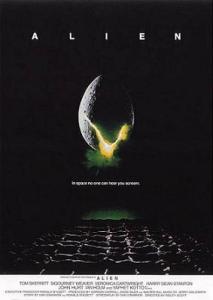
 

Cat Scares and Hidden Attacks abound in

Cat Scares and Hidden Attacks abound in “Alien”!

The Jump Scare

The laziest kind of scare. The hero or heroine is walking around the creepy old house when BOO! It’s the monster! Usually it leaps straight at the camera so we experience for the shock ourselves. This is the kind of scare that easily gets on your nerves. For a classic example, see the “head in the boat” scene in JAWS. Check out many modern movie trailers for more inept examples.


The Lewton Bus

Also known as the “Cat Scare” or “Faux Scare”.

Ever noticed how sometimes the hero or heroine will be walking through the dark old house/deserted spaceship looking for the monster, when suddenly BOO! out jumps the monster. Oh wait, it’s not the monster after all. It’s only the cat. Or maybe it’s the boyfriend that puts his hand on the heroine’s shoulder. You’ve just been played for a sucker.

The origin of this term is legendary film producer Val Lewton, who used this to great effect in the classic original THE CAT PEOPLE (1942). If you’ve never seen it, get yourself a copy. It’s been ripped off hundreds if not thousands of times since.

“Nested” Cat Scare

A modern twist on the Cat Scare is that right after the innocuous event the real monster DOES appear! This would be more interesting except that it’s also been done a thousand times. For a more interesting variety, check out AN AMERICAN WEREWOLF IN LONDON. Our hero has a terrifying dream involving a monster with a knife. He wakes up to find… his nurse leaning over him. She goes to the window, opens the curtains and…BOO! The monster jumps out from behind the curtains and stabs her in the chest. Our hero screams. Then he wakes up again. The nurse is there and she goes to the window. She draws the curtains again and… nothing happens. A very unsettling scene.


 Mirror Scares / Reveal Scare

How many times have you seen the hero or heroine go to the bathroom, open the mirrored bathroom cabinet (it always has a mirror, doesn’t it?), close it again and… BOO! There’s the refection of the monster right behind them in the mirror! Modern variants include refrigerator doors with monsters inexplicably appearing behind them. Once again, this has become a massive cliché. Still pretty scary, though.


Loud noises

A relative of the jump scare.  But instead of seeing something, we hear it. For a recent example check out the PARANORMAL ACTIVITY movies. Although here the scare is used quite effectively, as the loud noises build up over each night, making the audience dread each sundown more and more. And, of course, they are very inexpensive to create!


Hidden attack

Typically, this very effective scare hits us from another direction from that in which we were looking. Not to be confused with the Cat Scare, which is supposed to get us on the edge of our seat before the attack happens. This scare comes out of nowhere. It’s a bolt from the blue.

Done well, this is one of the best scares. A classic example is the infamous chestburster scene from ALIEN where the creature explodes out of John Hurt’s chest. But other examples can be found. John Carpenter’s underrated THE FOG contains several of these. There’s also a great one in EXORCIST III. The camera sits at the end of a long hall in a hospital. A nurse sits at the desk, doing paperwork. Other people come and go. The nurse goes to check the rooms. She walks up the corridor. Behind her, very subtly, the other people leave one by one. She locks the last door, turns to go into the room opposite and BOO! What is that behind her? The monster explodes out of the locked doorway with a very nasty set of surgical scissors in hand. You’ve just been caught out by the Hidden Attack!


Suspense

This technique has been described as what happens when the audience knows as much as the character on screen. We’ve all seen those films where the hero or heroine (more probably) approaches the door, knowing there’s a killer/monster on the other side. They open the door slowly and …. BOO!

Nowadays this is pretty clichéd. Modern viewers tend not to buy this setup. There’s no way anyone with half a mind would go towards the location of a dangerous lunatic or hungry monster. So filmmakers try to find increasingly bizarre ways of getting the character to go towards the fear instead of away from it. Personally, if I never saw a character go toward the monster again, I wouldn’t mind. Sometimes it’s best just to accept that certain things are no longer scary.

Hide and Seek

According to Alfred Hitchcock, one of the greatest ways to create suspense is to employ what’s called Dramatic Irony. This is where the audience is aware of a menace that’s creeping up on the unsuspecting hero or heroine. Classic examples of this scare include the original HALLOWEEN (1978). This has pretty much been done to death (no pun intended) by the Slasher genre. By now the audience has become so familiar with it, it’s almost like an in-joke for the crowd. See the SCREAM movies for pastiches on this technique.


Mystery POV

A cousin of “Hide and Seek” is the Mystery POV, also known as the Dark Intruder POV. Here, the camera becomes the eyes of the killer/monster. We see it approach the unsuspecting victim. Classic examples include JAWS, when we see the unsuspecting swimmers paddling in the sea from below. Suddenly the camera rushes up to those dangling legs and… CRUNCH!

It’s a strange technique in that it sometimes arouses sympathy with the killer! Italian cinema has often used this technique to jarring effect. The Giallo films of Dario Argento, such as DEEP RED, often show us the killer preparing to commit (and committing) increasingly bizarre murders. It’s a sort of comment on how, just as audiences like to be scared, they might also be enjoying the thrill of seeing the murders onscreen. Creepy.

Endurance horror

This is an interesting technique. Films such as the original THE EVIL DEAD (1981) were marketed as “endurance horrors”. The basic idea is that you throw so much at the audience that they can’t take any more. Eventually, the slightest thing sends them over the edge and leaves them a quivering bundle of nerves. THE TEXAS CHAINSAW MASSACRE (1974) is a great example of this. By the time we get to the crazy “feast” scene at the end of the movie, the heroine (and the audience) are emotional wrecks!

Birds Film

Claustrophobia and suspense in Alfred Hitchcock’s “The Birds”!


Repulsion

Another lazy technique. This just means making the audience want to gag. In the hands of a master, like body-horror maestro David Cronenberg (THE FLY, SHIVERS) it’s truly terrifying and will stay with you for life. In the hands of anyone else, it’s just yucky. Bad examples abound, I’m just not going to go there.


Surreal Scare

My favourite kind of scare. This happens when you see something that looks so startlingly out of the ordinary that it’s frightening. It’s a “Thing that should not be”. Classic examples include David Lynch’s ERASERHEAD… or practically anything by David Lynch.

My favourite example is the famous vampire boy from the TV movie SALEM’S LOT (1979). Here, a boy awakens one night to find another recently deceased boy floating outside his window, scratching to be let inside. He foolishly opens the window. The dead boy floats in. He’s pale, rotting maybe. He has yellow eyes, long teeth and he’s very, very hungry. An extremely scary scene indeed.

Fear of the Unknown 

Horror writer HP Lovecraft once said that the greatest fear of mankind is the fear of the unknown. Some horror movies play on our sense of dread at not knowing what lurks within the darkness. The Found Footage horror genre uses this one a lot (primarily because it involves not seeing anything and is therefore cheap). At crucial points all the lights will go out. Cue screams, banging and general terror. Examples include THE BLAIR WITCH PROJECT, which proves that sometimes it’s what you don’t see that’s more frightening.

Phobias

A close relative of the “Repulsion” technique, except that this involves repeatedly showing us images of something we find scary. Often this involves animals. Sharks, spiders, snakes, parasites, wolves, diseases, all these things are pretty scary. Or it could be a fear of flying, falling, the ocean, dismemberment, disfigurement or other types of grisly death. Examples include SNAKES ON A PLANE. However, you can forget the rather unscary ARACHNOPHOBIA.

Claustrophobia is another sub-type of this scare. The original DAWN OF THE DEAD (1978) uses this to excellent effect. The heroes are all trapped in a shopping mall with hundreds of zombies. The undead might be slow, but there are so many that escape is impossible. The classic shot from that film occurs when a character thinks himself safe in an elevator, only to be swamped by zombies when the door opens. This type of scare lingers long after the film ends.


Loss Of Identity

What’s more scary than dying? Losing your soul, of course. Horror movies recognize this. Many classic genre tropes like werewolves, vampires and zombies prey upon out fear of losing our sense of self, that thing which makes us who we are. The undead are not our real loved ones; they are unthinking, hungry shells out for our blood! Smart movies play with this type of scare. One of the best is THE INVASION OF THE BODYSNATCHERS (1956). We crawl with terror as people slowly lose their identity and are replaced with the hive-minded, unfeeling pod people. And when you are the only real human being left… well, that’s a truly frightening prospect!

The Chase

Chase sequences abound in horror movies. It’s a close cousin of the “suspense” scare. Both we and the character know there’s something right behind them, trying to catch up. THE TEXAS CHAINSAW MASSACRE employs the classic example of this as the chainsaw-wielding Leatherface pursues the hapless heroine through the woods.


Atmosphere

This is less common nowadays and has become a cliché. In the early days of horror cinema it consisted of an old dark house, scary inhabitants, flickering lanterns, lightning storms, etc. etc. The old Universal horror movies of FRANKENSTEIN (1931) and THE WOLF MAN (1941)  contain many examples. However, something of this still survives in so-called J—Horror, which subverts this type of scare.  Here, ghosts pop up in banal places, like modern Tokyo, Internet chat rooms, or tenement buildings. See the Japanese originals of THE GRUDGE, PULSE, and DARK WATER for examples.

So there you are, my main types of horror movie scares. Doubtless I’ve omitted a few, so feel free to correct me. Now go out there and scare the pants off people!
The only guide to writing a logline you’ll ever need – Part Two

This is the second in three posts on how to write a logline.

In the first post, we looked at what a logline is and, more importantly, what it is not.

We learned that a logline is a basic selling tool for your screenplay or novel. It is  a one or two sentence pitch that aims to tell the reader about your story in a succinct manner in order to save the reader TIME.

We also talked about the difference between a logline and a tagline, a teaser, and a movie cross.

Now comes the meaty part. This where we break down what goes into a good logline.

The NUMBER ONE MISTAKE writers make when pitching their story is that they do not invest time in their marketing materials. Incredible as it seems, they spend months or even years honing their script, then hammer out a logline in minutes and wonder why nobody wants to read it. However, a good logline can open doors, create working relationships, and get your project sold or made.

Sound good, right?

Then read on!


ELEMENTS OF A GOOD LOGLINE

A good logline gets a producer, agent, manager, executive, publisher etc. to continue their relationship with you. Ideally, it gets them to read the script. To this end, you have to ask yourself “What is a producer etc. looking for?”

ANSWER: something they can sell.

Okay. Not very helpful. But you should already have done your research on them to check if this is their kind of project. More on that another time. For now, let’s look at things from their point of view. How do they know if this project is the right thing for them? Bear in mind that they have many, many submissions to go through every single day?

ANSWER: by ensuring it contains the following:

A great TITLE.

The GENRE.

A HOOK.

Who is the HERO?

What is the CATALYST?

What is the nature of the CHALLENGE they must face?

And for added points:

The Hero’s JOURNEY.

The ARENA.

Who thought loglines could be so complex? Actually, it’s simpler than you might think. Most of these are intuitive anyway.

But let’s go through them one at a time, just to make sure you have them:


TITLE

It sounds obvious, but a movie should have a great title, something that sets it apart from everything else. Ideally, it should also inform the audience aboout the subject matter. I’ve noticed that many well-made but obscure movies don’t do as well as they could have because they have a generic title that says nothing about the subject or the plot.

For a recent example, how about “Edge of Tomorrow”? A title so generic they had to rename it for the DVD release. It doesn’t say anything about the plot or the characters.

Or how about: “John Carter”. This assumes that you already know who John Carter is. For my money they should have gone with: “John Carter: Warlord of Mars”. Now that would have piqued my interest.

One of the best movie titles is “Ghostbusters”. It’s funny and tells you the entire premise. It gives away not just the concept, but also the fact that this is an action-comedy movie.


GENRE

You can sometimes even give this away in the title, as with “Ghostbusters”. Otherwise, you want to indicate it in the logline.

To use my the example of my own script “Demophobia”, can you tell what genre this is:

A man with a phobia of people must search a crime-infested city for his missing girlfriend, only to come into conflict with a mysterious entity controlling the homeless population.

Clearly something speculative is going on. But is it a sci-fi? A fantasy? A horror? I would say the logline implies that this is a straight story, not a comedy. But to make it clearer what kind of genre we’re talking about, I added:

When his girlfriend goes missing following a clinical drugs trial, a man with a phobia of people must search a crime-infested city for his missing girlfriend, only to come into conflict with a mysterious entity controlling the homeless population.

There. That hints that this is a sci-fi thriller, which indeed it is. Maybe there’s a little horror thrown in there too. It’s okay to have more than one genre in your logline, BTW.

Okay, so  my own logline isn’t perfect yet. But there’s a way to go before we’re done. In any case, giving the GENRE away in the logline will allow your producer to see at once whether your script is right for him or her.


THE HOOK

This is one of the main stumbling blocks, and something that’s talked about  a lot when discussing a “high concept”.

QUESTION: What is a “hook”?

ANSWER: A hook is the kind of thing you use to catch a fish. It’s a shimmering, bright, dancing object that teases your target into wanting to know more, until they request the script and… ulp! They”re hooked!

So much for metaphors. Now let’s get more serious:

Sometimes the hook is a fantastic concept that’s never been done before. For instance, “An ocean liner capsizes in a storm. The survivors must fight their way out through the sinking, upside-down ship to survive.” (The Poseidon Adventure)

Sometimes it’s just a catchy idea. Something that’s both new and familiar at the same time: “A father loses the right to see his children, so he dresses up as a woman to become the ideal nanny.” (Mrs. Doubtfire)

One of the easiest ways to ensure you have a hook is to use IRONY.

Irony is defined in the dictionary as: “A situation that seems funny or strange because things happen in a way that seems the opposite if what was expected”.

In a logline, it could appear because the hero has a specific occupation, and get to see the opposite of what we expected to see happen to her unfold in the story.

Or, if the hero has a particular character FLAW, you can play on this by making the worst thing possible happen to them.

Some “high-concept” movies do both.

For instance: in “Liar Liar” an attorney is forced to tell the truth after his kid makes a wish that comes true.

This logline tells us a lot about the movie. It’s funny. So it’s probably a comedy with a hit of satire. It’s not necessarily going to cost a fortune to shoot, unless we get someone like Jim Carrey in the lead. And it’s IRONIC. An attorney (who, it is implied, lies for a living – it is a comedy, after all) is forced to tell the truth! It’s irony based on occupation and character flaw (he lies a lot). Classic high concept!


HERO

Movies are often mythic stories. Especially high -grossing ones. As a result, producers like to see a central hero.

Most of the above examples make it pretty clear who is the hero of this movie. However, what do you do if you have an ensemble cast? For instance, The Poseidon Adventure doesn’t have a central hero.

ANSWER: The easiest fix for this is to pick out one character and make them the hero.

“Ocean’s Eleven” is about a group of con artists who rob casinos. All of the eleven are part of the group. But who changes the most? Either that, or who is the central focus of attention? It’s got to be Danny Ocean himself. So a logline for this might read:

“An ambitious ex-con gathers together a team of experts to rob three Las Vegas casinos at the same time.”


So there you are. We’ve covered TITLES, GENRES, the HOOK, and the importance of a central HERO. But we’re not done yet…

There’s a lot to digest in this post. So next time we’ll take a look at the rest of our logline ingredients: the CATALYST, the CHALLENGE , the Hero’s JOURNEY, and the ARENA.

See you there!

The Best-Selling Authors of All Time!

Here’s an interesting collection of facts that might help you decide what kind of writer you want to be.

Today I found a breakdown of the best-selling authors of all time. The results are not what you might expect. Here are the top ten. Figures are estimations.

1. William Shakespeare  2-4 billion copies sold worldwide.

2. Agatha Christie  2-4 billion

3. Barbara Cartland  500 million – 1 billion

4. Danielle Steel (no relation, sadly) 500 million – 800 million

5. Harold Robbins  750 million

6. Georges Simenon 500-700 million

7. Corin Tellado  400 million

8. Sidney Sheldon  370-600 million

9. Dr. Seuss  100-500 million

10. Gilbert Patten 125-500 million

Now, if these figures are to be believed (and you can view the source here: http://en.wikipedia.org/wiki/List_of_best-selling_fiction_authors) you may be surprised at some of the names. Where is J K Rowling, the darling of YA fantasy lovers? And what about Stephen King, Anne Rice, Dan Brown or Tom Clancy? All best-selling authors.

So what connects these writers?

Agatha Christie wrote whodunnits. Cartland, Steel and Tellado are all romance writers. Harold Robbins  wrote steamy pulp novels (one of them being the blueprint for the Elvis Presley movie King Creole). Georges Simenon created the detective Maigret. Dr. Seuss writes for pre-schoolers, and Gilbert Patten wrote Boys’-Own style adventure stories.

They were all also prolific (including Shakespeare, who wrote 38 plays, 142 Sonnets and two long poems). Corin Tellado, for example, wrote over 4000 novels.

And, with the exception of Shakespeare, none of them are renowned for producing “high art”.

The moral of this tale might be to produce as much as possible. “Never mind the quality, feel the width”, as the saying goes. Quantity certainly seems to earn more money than quality in publishing terms.

However, if we look just below these names, the figures tell a different story. Shakespeare was living in the 16th century. The others are all 20th century writers. They have the advantage of a modern publishing industry, media and advertising.

How surprising, then, to find that Leo Tolstoy is the 12th name on the list. The writer of two famously long “heavy” novels, War and Peace and Anna Karenina, has also sold hundreds of millions of copies. CS Lewis, author of the Narnia stories, has also sold between 1-200 million books. And Russian playwright and poet Alexander Pushkin may have sold up to 357 million copies of his works.

So what does this tell us? Certainly, in a mass-market media, churning out books helps. However, the public also seem to appreciate quality writing. Foreign markets are also a huge source of sales. So before you pick up your pen, decide whether you’d rather write romance or sci-fi, crank out thousands of books or perhaps write only one, as Presidential Medal of Freedom-winning writer Harper Lee did (until recently).

And then forget about ALL of this and just try to write something good.

The best movies of the 2010s so far!

TheMaster_Aceshowbiz-300x199

So for some reason it’s time to take stock of the movies made in the 2010s so far. Well, it would be remiss of me not to have my own Top 10 movies of the decade. Here’s a big disclaimer, though: these are just the movies I’ve seen. Some very recent movies (including a couple of Academy Award winners) are not among them. Anyway, here goes…

10. Thor

Why: Because it made the surfer look cool again. And it also gave us Tom Hiddleston. Kenneth Branagh’s rip-roaring take on the thunder god was just what Marvel needed. A genuinely fun romp, brilliantly executed.

9. Inception

Why: It’s Chinese Puzzle of a plot proved that audiences are more intelligent than they are given credit for. Some jaw-dropping SFX helped too. But mainly it was Christopher Nolan’s refusal to spoon-feed the viewer with easy answers that won me over.

8. Tron Legacy 

Why: Because it made synthesizer music trendy again. A killer soundtrack and incredible SFX made this underrated blockbuster a must-see. As well as being faithful to the original movie, it included such breakthroughs as a 30-years-younger Jeff Bridges fighting with himself. Oh, and Olivia Wilde. A visually stunning and practically perfect action movie.

7. Guardians of the Galaxy

Why: It made “I Am Groot” part of popular culture. A very funny old-school action/comedy that just happens to be set in the Marvel universe. It also has some of the most memorable characters I’ve seen on screen for a long time – especially one psychopathic raccoon and a very literal-minded alien. Writer/director James Gunn never allows the excellent SFX to dictate the story and doesn’t fall into the trap of logically impossible action scenes.

6. The Conjuring

Why: A terrifying movie-going experience, right from the opening titles. This is horror on steroids. The plot is old-fashioned, but the movie is executed in one bravura set piece to the next. Classic horror.

5. Seven Psychopaths

Why: Postmodern, irreverent, full of grindhouse-style violence. But for me, Chis Walken and Sam Rockwell’s acting steals the show. The violence is played for laughs, but there’s also a real heart to the story that makes us question all that movie bloodshed we see so much of nowadays.

4. The Way Way Back

Why: A movie that perfectly captures adolescence. This is the kind of family comedy they made in the Eighties, but with a modern sensibility. Steve Carell is truly loathsome as the passive–aggressive antagonist. While Sam Rockwell turns in another masterful performance. Thirty years ago, Bill Murray would have done the same thing.

3. The Master

Why: The terrific acting holds together this rather quirky “institutionalized” drama. Joaquin Pheonix is a smouldering presence, inviting us to figure out what’s bugging him. It’s a pleasure to try to unravel the characters’ psyches while we watch them onscreen.

2. The King’s Speech

Why: A masterful talking-heads picture with some terrific low-key drama. There are no explosions or spaceships here, just stuffy drawing rooms and restrained performances. But it’s a movie that knows what it’s about and does it superbly, hitting all the right emotional notes.

1. The Artist

Why: What’s not to like about this movie? It’s a silent, black and white film made over 80 years after the first talking picture. But it’s not just a spoof or an homage. It uses silent film as a genre, almost as a metaphor. When sound does intrude upon the action, it’s a truly memorable moment. Some great performances with no dialogue underline this masterpiece of cinematic art. And it features one of the greatest dogs in movie history!

So there you have it. My top movies of the decade so far. These are, of course, based on my own personal tastes, although I’ve tried to include something for everyone. Feel free to tell me I don’t know what the heck I’m talking about. But for me, these were the real standouts.

Submissions call for new anthology – Revolutions!

We at The Manchester Speculative Fiction Group are publishing an anthology to showcase speculative fiction with a Mancuian theme. The anthology, titled “REVOLUTIONS” will contain a mix of science-fiction, fantasy, and horror fiction. Submissions are currently open, and anyone over 18 years of age can submit.  You don’t need to be a member of the group. We welcome submissions from anywhere and anyone (see rules below).


?????????????????????????????????????????????????????????????????????????????????????????????????????


The theme is Manchester. All stories must be linked in some way to the city of Manchester, England. In all honesty, we really haven’t worked out anything beyond that. We’re hoping that a clear link between all the stories chosen will reveal itself. You don’t have to live here, but each story should have a flavour of the real Manchester.

Manchester is more than just a name. Like it or loathe it (or both!), it’s a place – a very wet place – full of lots of different people. In the Nineteenth century it was one of the biggest, if not the biggest, cotton mill town in the world. The city is still criss-crossed by canals where barges used to tow cotton to the factories. Its damp climate was specifically chosen so that the cotton remained moist. Manchester was also the scene of several historical incidents such as the terrible Peterloo Massacre, plagues, and the invasions of both Bonnie Prince Charlie and William Wallace. Dig a little further, and you can find traces of the original Roman town. The city has changed a lot in recent years. Its fame as a city of football is worldwide. The British Broadcasting Corporation is based here. It’s also one of the most multicultural cities in the United Kingdom.

But why am I doing your job for you?

Dig deep into the inkwells of your imagination to provide us with stories of thrills, technological marvels, alternate realities and urban fantasies. Does some of this sound contradictory? Yes? Well, that’s the point! If in doubt, write it out.

Please read ALL of the guidelines BEFORE you submit:

1. Closing Date

Submissions window is from now until 1st May 2015.

2. Eligibility

Anyone over 18 can submit from anywhere in the world.

3. Theme

All submissions must be in a speculative genre (sf/f/h/df/uf/slipstream) and must have some link to the area that is Greater Manchester, England. The final decision about whether a story is to be included in the anthology will be the editors’ within their absolute discretion. Don’t think you can just change the place names in your old stories. We notice things like that!

4. What we give you

£10 payment per story accepted. Payment is by Paypal.

5. What we get

First Print Rights and Electronic Publishing Rights for 12 months. We reserve the right to archive your story online indefinitely. Please bear in mind that most publications will not publish pieces that have been published in print, eBook, or on the web, so for all intents and purposes after your work is published by us it can only be marketed as a reprint, which severely limits the number of markets that will accept it, and drastically reduces the pay rate it can receive. It is up to you, the author, to decide if this is what you want to do.

6. Word Count

Short stories of between 1,500 to 6,000 words. Please query for anything longer. Please do not send us your novels or poems. We only want short stories. Honest.

Please send only one story until you receive a response. You may then submit another story, and so on.

No poetry or non-fiction.

7. Distribution

The anthology will be made available in e-book format via Smashwords and print copies will be available as POD. Tentative publication date is the second half of 2015.

8. Format

Stories should be sent as Word attachments to msfantho [at] yahoo [dot] com. In the subject line please put: “SUBMISSION: [Story Title] by [Your Name]”. Submissions should follow Shunn formatting. If in doubt, click on the link!

Good luck!


The Best Horror Movies of the Past 50 years! Part 5! The Nineties!

Ah, the 1990s… when the Eighties were a distant memory. The Nineties were mad for it. Grungier than its predecessor, we never thought there would someday be a price to pay for all those late nights spent clubbing it. Nowadays the whistles and glowsticks seems just as bad as those silly hats.

Horror movies had a hard time in the 90s. The 1980s had milked the slasher movie to death. Vampires and werewolves were old hat. Even the horror comedy was on its way out. In a way, many of these movies represent the dying breaths of horror’s staple bad guys. The horror genre was about get ugly…

Exorcist III 1990

The decade began with a shuddering return to form of William Peter Blatty’s faith-based possession franchise. The film doesn’t seem to know where it’s going. Maybe it simply had nothing new to say. But with some genuinely chilling moments involving a bone saw, this was a worthy sequel to the classic horror hit, if not a new beginning.

Jacob’s Ladder 1990

As a counterpoint to that kind of “old-school” horror, here we have the first of several psychological horror movies as Tim Robbins does a star turn as a man haunted by visions of demons. In true Nineties style, the story turns out to be a bit “meta”.

The children of the night may be beautiful, but they're not very scary.

The children of the night may be beautiful, but they’re not very scary.

Bram Stoker’s Dracula 1992

Francis Ford Coppola turns Bram Stoker’s classic bloodsucker into a kind of modern fairytale. Not scary in the least, and certainly not a definitive version, despite the claim to closely follow the novel (which it doesn’t), and full of wildly uneven performances, you have to admire its impressive, visual style, while Gary Oldman’s outing as Dracula would cement him as a great actor for years to come.

Army of Darkness 1992

Sam Raimi rounds off his “Evil Dead” trilogy with this rip-roaring slapstick live-action cartoon. Boasting some great comic one-liners and an even more OTT performance by B-movie legend Bruce Campbell, this Halloween treat contains skeleton warriors, flying books, and an extremely surreal scene in a windmill where Ash chases around little versions of himself. This is one of those films that’s so bizarre it stands in a category of its own. It is also so downright mad that it ended the series, albeit on a high note of laughter.

Interview with the Vampire 1994

Neil Jordan brought audiences the visually alluring but story-lite “Company of Wolves” in the 80s. Here, he tackles Anne Rice’s novel of a vampire telling the story of his 200 year-old existence. Starring Tom Cruise in  role nobody expected of this all-American action star (a bloodsucking ghoul), and a young Brad Pitt, as well as a 12 year-old Kirsen Dunst, this is a lavish tale worthy of those old Hammer classics of the Sixties. But the novel has a touch of 1990s despair about it. This vampire doesn’t know his place in the world and is constantly seeking something to believe in – a little like people in the 1990s. Once again, the vampire is a reflection of his times, which perhaps explains why it took so long for the book to reach the screen.

From Dusk Til Dawn 1996

Quentin Tarantino hit the big time in the 1990s with his multiple-storyline post-modern heist flick “Reservoir Dogs”. Here, he dips his wick in the horror genre, at least for the first half. Once the vampires cut loose, he turns directing over to Robert Rodriguez, who brings his over-the-top campy action style into play. Hard to take seriously today, this movie has its tongue surgically implanted in its cheek. It is also the movie that inspired a million tattoos thanks to George Clooney. A fun film at the time that is less fun with age, it had some strong actors but is ultimately a bit of a gimmick rather than a serious movie – the main draw being actors getting killed whom you expect to survive. Horror, it seemed, was running out of ideas.

Are you cool? I'm cool. Are we cool? Vampires are not... cool in this movie.

Are you cool? I’m cool. Are we cool? Vampires are not… cool in this movie.

Scream 1996

The last word in Slasher movies belongs to Wes Craven, who was ironically one of its creators. This film is postmodern in every sense. Teens stalked by a slasher discuss how slasher movies work in order to escape their killer, only to discover that the killer also watches slasher movies and knows as much about them as they do. The death knell of the slasher movie can be heard loud and clear in this horror/thriller. After this, there was simply nowhere for the subgenre to go.

Event Horizon 1997

An underappreciated film that makes little sense on first viewing. Imagine Star Trek crossed with a John Carpenter film and you get the picture. Horror icon Sam Neil (at this time a big draw thanks to Jurassic Park) takes a risk as a doomed character in this story of a space ship that returns from its journey into hyperspace without its crew, like a futuristic Marie Celeste. As scientists try to uncover what happened to the passengers, they learn that something nasty waits on the other side of the dimensional border. A Lovecraftian sci-fi, in a sense, this is one of the few truly original horror movies of the decade.

The Faculty 1998

Movie stars got younger and younger in the 1990s as studios targeted their “real” audience. Here, Robert Rodriguez is on form as he directs a tale of high schoolers taking on an alien invasion with the help of a pot-smoking rebel. This B-movie boasts some standout future stars like Elijah Wood and Josh Hartnettt. It is also much more enjoyable than it deserves to be, given the number of irritating jargon-speaking schoolkids. A very “nineties” updating of old 1950s B-movie tropes. Once again, however, the “alien invasion” horror movie had no real place to go.

The Sixth Sense 1999

This movie marked the debut of M Night Shyamalan, whose career would (for a while) be known for its outrageous plot-twists. The movie also resurrected the career of action star Bruce Willis as a psychiatrist treating a kid who “sees dead people”. Although people disagree as to whether the plot twist at the end was a surprise or obvious, the film packs some genuinely creepy moments, and lots of shocks along the way, as only the boy can see the dead folks, but they can see him.  Shyamalan’s tale proved hard to copy, but revived a lot of interest in the flagging horror genre for a new generation of filmgoers.

Like it or loathe it, this movie gave the genre a breathe of new life.

Like it or loathe it, this movie gave the genre a breath of new life.

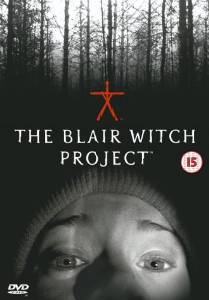
The Blair Witch project 1999

As if to underline audiences’ boredom with standard horror fare, the found footage genre re-emerged at the end of the century with the most profitable independent film in movie history, usurping John Carpenter’s “Halloween”. Three people get lost in a wood on videotape. It really is that simple. What follows divided audiences. Some loved it for its clever use of a very (nonexistant) limited budget and the way it raises your hackles by not showing you what is going on. Others hated it for precisely the same reason. The found footage genre proved an enormous hit, no doubt because it was very cheap to copy. But whether you love it or hate it, this subgenre gave the horror film a new direction, one that would create a whole new set of filmmakers in the ‘Noughties and beyond, and who would exploit rapidly-changing technology to give the studios a run for their money.

The Nineties suffered from the overdose of slasher movies that took place in the Eighties. For a while the genre was left reeling. But new technology and clever filmmaking resurrected the horror movie at the end of the decade. With audiences demanding new thrills, better special effects, and grimmer storylines to reflect the pessimism of the times, horror movies were about to go to a very dark place indeed.

Next time…

Zombies, zombies, zombies! The world goes mad for George A Romero’s creations. Horror goes viral, ghosts turn Japanese, and it seems that anyone can make a horror film as long as they have a mobile phone.


The Best Horror Movies of the past 50 years Part 4! The Eighties!

Part 4 of our series on the most influential horror films of the last 50 years!

The end of the Seventies created the slasher movie. The mixture of low-budget filmmaking with its teenage cinema-going audience proved a winning combination. Special effects were also coming into their own, courtesy of groundbreaking science-fiction movies like “Star Wars”, and SFX and Special Make-up pioneers like Rick Baker and Savini. The Eighties would see an explosion (sometimes literally) in gore and transformation special effects. This in turn would spark off a  reactionary backlash… the “Video Nasty”.

Just keep telling yourself, "It's not Halloween! It's not Halloween!"

Just keep telling yourself, “It’s not Halloween! It’s not Halloween!”

Friday the 13th 1980

Starring a young Kevin Bacon, this textbook slasher is actually quite effective. Hot on the heels of John Carpenter’s “Halloween”, Jason is Michael Myers on steroids. The film is pretty much a carbon copy of the earlier movie, except for more gore, a scary summer camp setting, and did we say more gore? A huge success, the film spawned a vast quantity of sequels. These are unusual in that the main bogeyman, Jason, becomes not only superhuman, but a parody of himself, until at last we finally get “Jason in Space”. Even today, Jason refuses to die, getting a recent unnecessary “reboot” in 2009. Director Sean S Cunningham had  worked on Wes Craven’s notorious nasty shocker “Last House on the Left”, and like Wes Craven’s monsters, Jason would soon become a  postmodern joke. But the first instalment tries, for the most part, to pay it straight.

The Shining 1980

Stanley Kubrick’s re-imagining of Stephen King’s masterful haunted house story is a rare thing – a horror movie and a work of art. Jack Nicholson descends into madness with a little help from the ghosts of the deserted Overlook Hotel, turning on his wife Shelley Duvall ( I challenge you to find a better screamer)  and his psychic young son. The hotel becomes part of the horror, its patterned carpets and maze-like structure twisting  the mind out of true. Nicholson’s performance is Oscar-worthy.  Kubrick’s direction flawless. Even the opening scene with its alien viewpoint becomes unsettling. Copied countless times, this is a true classic.

American Werewolf in London 1981

John Landis, better known perhaps for  comedies such as “The Blues Brothers” and “Coming to America” left an indelible impression on the horror genre with this tale of an American boy who gets bitten by a werewolf on the Yorkshire Moors. From then on, things get truly hairy. Landis plays with horror and comedy. The result is a very unsettling picture. But the star of this film is the magnificent werewolf transformation scene designed by Rick Baker. Excruciating in its agony and detail, we really believe we are seeing a man transform into a creature of the night. The uneven tone caught many critics by surprise, but this one stands the test of time, and has been copied by virtually every werewolf movie since.

The Howling 1981

It would be remiss not to mention “The Howling” as well. There is some controversy over which movie was in the works first. Landis maintains he had the idea for “American Werewolf” before production started on “The Howling. Both are werewolf movies, both feature excellent transformation scenes. Both have comedic elements. But “The Howling” for the most part is a serious story, as evidenced by the opening scene in which reporter Dee Wallace (the mom in “E.T.”) finds her interviewee in a seedy sex video store, only to be driven half insane when she sees him transform before her eyes. The scene is one of the most intense I’ve ever watched. Great acting fro the likes of Patrick McNee and John Carradine flesh out the cast, but again the real star is the special effects. Baker again had a hand in these, before leaving the production to work on “American Werewolf”.

The Thing 1982

Baker’s successor on “The Howling” was Rob Bottin. Bottin came into his own as designer of the many gut-wrenching and terrifying effects used in this John Carpenter masterpiece. The story is a simple one – scientists in a remote Antarctic base discover an  unfriendly alien life form that assimilates and takes over all other life forms, including man. The great cast makes the whole thing believable, while Carpenter is on top form, dishing out the scares.  But by now the “Video Nasty” craze was in full swing, especially in the UK, where various consumer groups battled to get such films banned.  That, and negative comparison to the “feel good” alien blockbuster “E.T.” released that year, prevented “The Thing” from being a box office success. Thirty years later, it has cult status.

A Nightmare on Elm Street 1984

Another Wes Craven creation, scarred undead child-murderer Freddy Kruger would go on to become one of the most recognizable monsters in horror. “Nightmare” is a genuinely frightening picture, with some very effective scares. It spawned an army of sequels and reboots of varying quality. But it too would suffer from the postmodern disease of become a self-parody,until finally we get “Jason vs Freddy”, a film that doesn’t even try to suspend disbelief.

Be afraid.. of the fly!

Be afraid.. of the fly!

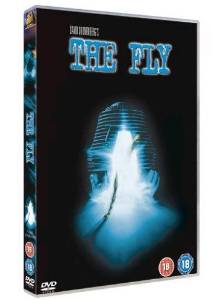
The Fly 1986

David Cronenberg had made several pictures after “Shivers”, notable the excellent “Scanners”. But he hit the big time with this remake of a Vincent Price shocker about a scientists who experiments with teleportation only to swap heads with a fly. It doesn’t sound like a recipe for success — a horribly disfigured Jeff Goldblum gradually transforming into a homicidal half-man/half-fly. But stalwart acting from Goldblum and Gena Davis, combined with a highly intelligent script, turned audiences on everywhere and the Fly became a bona fide hit. The tagline “Be Afraid. Be very afraid” has become a part of popular culture. One of the high points of horror in the 80s.

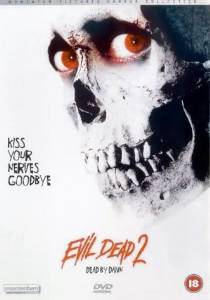
Evil Dead II 1987

Sam Raimi had burst onto movie screens with the 1981 classic “The Evil Dead”. Raimi’s penchant for weird camera angles and cartoony special effects was an underground hit, attracting the attention of the anti-Video Nasty brigade due to one very unpleasant scene. In “Evil Dead II” he took this one step further, creating his own unique blend of comedy and slapstick, and making a star out of straight man Bruce Campbell. As horror lightened in tone after the mid-Eighties, Raimi’s style fitted the mood of the times perfectly. The film is a basic remake of the first movie, but ends on a hysterically crazed note. The violence is cartoon, the plot insane. Fanbooys loved it, and have been lapping it up ever since.

Nyuk, nyuk, nyuk!

Nyuk, nyuk, nyuk!

The Lost Boys 1987

All this seems to be part of a pattern. The serious, horrifying movies of the Seventies were transforming, as studios targeted their prime audience, and began churning out products that college kids out on a date could enjoy. Cynical marketing? Probably. This was the Eighties, after all. Whatever the reason, two movies came out in 1987 that reinvented the vampire genre. One was “Near Dark”, the other was “The Lost Boys”. This is where vampire chic has its roots. Kiefer Sutherland heads a posse of Eighties vampires, compete with rock star looks and clad in the latest fashions. They are everything vampires are (attractive, immortal, evil etc.) but updated. The movie is a very slick production, with some favourite child actors, some great comedy scenes, and a top-notch Eighties soft-rock soundtrack. “Lost Boys” was an instant hit. Since then, almost every “cool” vampire movie or TV show owes a debt to this movie, from “Buffy the Vampire Slayer” to “Twilight”.

Near Dark 1987

The other movie that redefined the vampire genre was the little-seen “Near Dark”. But whereas “The Lost Boys” drew in audiences, this film took 25 years to become a cult classic. A tour-de-force of filmmaking by Oscar–wining director Kathryn Bigelow, it includes  a dream cast, many of whom had appeared together in Bigelow’s then-husband James Cameron’s “Aliens”. “Near Dark” features grubby, streetwise vampires prowling the American MidWest. This is no Gothic romance, nor is it high fashion. Lane Henriksen’s performance is chilling and compelling, Bill Paxton is at his rebellious finest, and sadly underused actress Jenny Wright at her most beguiling. These vampires are down and dirty. In many ways this movie is the opposite of “The Lost Boys”.

Hellraiser 1987

At the end of the Eighties, a Liverpudlian horror author with a dodgy transatlantic accent came to prominence. He was also a film director. Clive Barker brought a new vision to horror. His was horror filled with spectacle, almost operatic. The plot revolves around a puzzle box that, when opened, summons a trio of leather-clad sado-masochistic demons. Like Cronenberg, Barker likes to explore the forbidden or taboo. In “Hellraiser” he gave the world the iconic and somewhat literally-named monster Pinhead. And lo, a franchise was born! The movie is  unsettling and takes itself very seriously. Barker would follow this up with a variety of cult classics, such as “Nightbreed” and “Lord of Illusions” – all of which were overlooked by mainstream audiences despite their originality and quality.

In conclusion…

The Eighties created some wonderful horror movies, and saw the rise of the horror-comedy as a way to reinvigorate the genre. The wild and wacky craze of the Video Nasties gave way to more mainstream hits. Horror became homogenized. Maverick directors like Cronenberg became accepted by the movie-going public, and by the end of the Eighties, horror movies were no longer a Video Nasty to be burned or kept on the top shelf of your local video store but instead became big business, and somewhat tamer as a result.  Sequels multiplied faster than zombies. It was the coming of a time of exploitation, not of stereotypes this time, but of wallets.

Next time…

Horror in the 1990s. In which the genre reaches a dead end (say it ain’t so!), we all see dead people, vampires get all mushy and camera angles become shakier! See you there!


“MEET MY MAIN CHARACTER” Blog Tour!

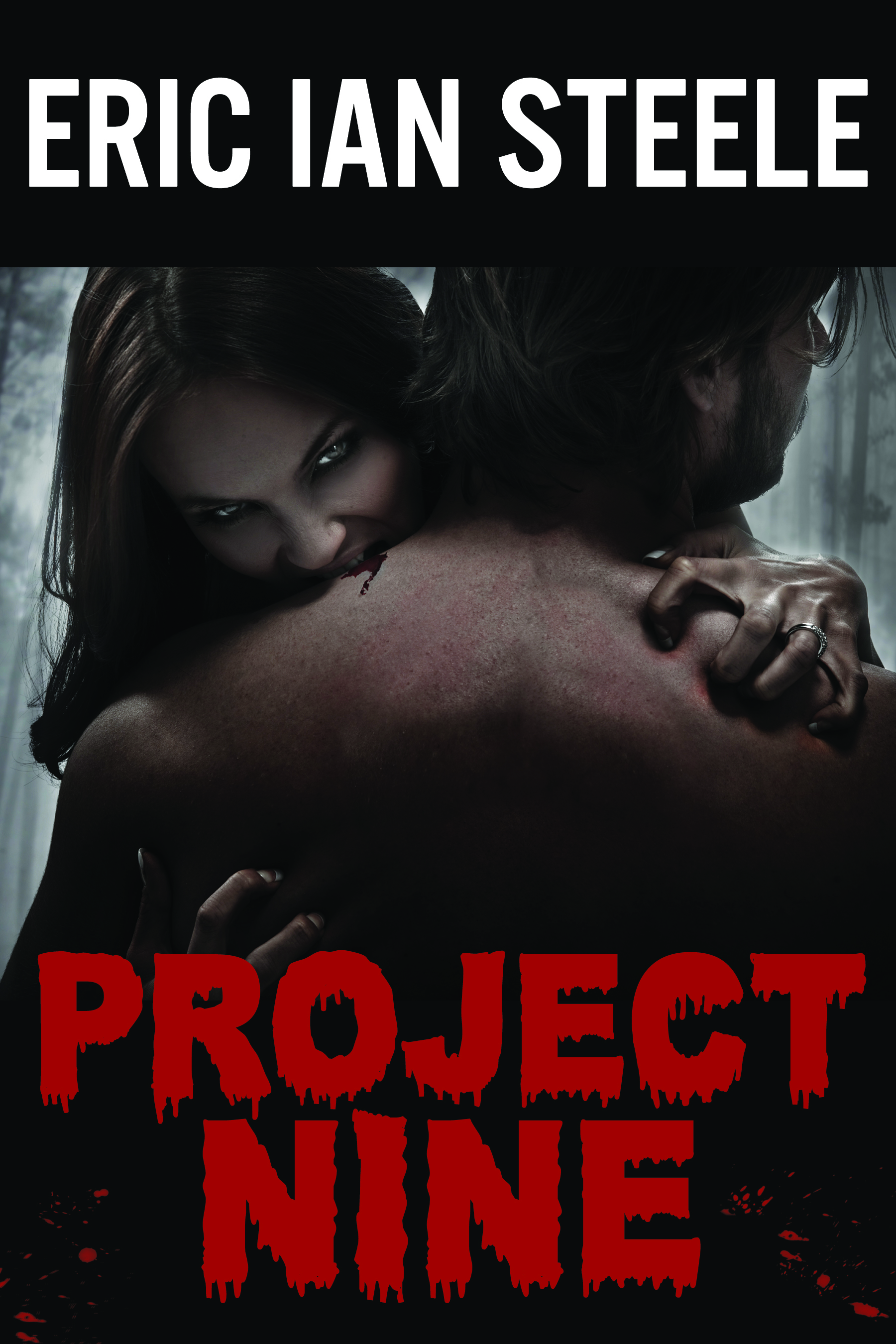
Today, I have been kindly nominated by science-fiction novelist writer Craig Pay to join the “Meet My Main Characters” blog tour and tell you a little about the protagonist of my forthcoming sci-fi horror vampire novel, PROJECT NINE!

FrontCover2

What is the name of your main character?

The main character is Luke. Shall we call him a hero? That would be a problem, seeing as he commits multiple murder throughout the novel and digests the blood of his victims. Admittedly he does so to stay alive, but I’m jumping ahead of myself…

When and where is the story set?

The present day. Mainly around Iowa and Kansas. There are also some scenes set during various historical periods throughout the last century, seen in flashback.

What should we know about Luke?

Actually, we know very little about Luke before the main story begins. We first meet him when he is burying his mother. We next see him when he’s getting very drunk. Then the action starts…

What is the main conflict? What messes up his/her life?

He falls in love, of course. What else? Unfortunately for Luke, the girl he falls in love with (Lynne) happens to have escaped from a secret government research facility that has created real vampires through gene therapy. Before he knows what’s happening, Lynne has infected him with the genetic virus that causes vampirism. But theirs is no romantic world of opera capes and Romanian castles. Luke’s new existence is a grubby one, where he must commit brutal murder every night and drink the blood of his victims in order to survive. Left with no other option, Luke joins Lynne and her three friends, fellow escapees from Project Nine. However, an obsessive Iowa detective learns the truth, and sets about pursuing them across three states. And the detective is not alone, because the government department responsible for infecting Lynne and her friends are determined to bury their mistakes, permanently.

What is the personal goal of the character?

Luke wants to spend eternity with the woman he loves. But he also wants to survive at any cost. And that desire is going to lead him down some very dark alleyways indeed…

When can we expect the book to be published?

“Project Nine” is going to be published very, very soon. “Like” my Facebook page to receive regular updates:  https://www.facebook.com/pages/Eric-Steele-Author-and-Screenwriter/522318187899385?ref=hl

You can also follow me on Twitter under: @EISteele for my “a horror movie a day” tweets and other goodies.

The next nominated writer in this blog tour is:

Kevin A Ransom created the movie film criticism site MovieCrypt.com in the late 1990s. He is a member of the Online Film Critics Society and channels the site’s host, Grim D. Reaper. Kevin has two book series: The Spooky Chronicles; and The Matriarch. He is also an active member of The Horror Society. His website is: http://thinkingskull.com/

In the meantime, pleasant dreams…