Tag Archives: fantasy

My top picks for the best horror movies to watch on Halloween!

It’s almost that time of year again, the time of year that for horror writers is like a combination of Christmas and… well, Halloween.

Of course I’m talking about Halloween. And what better way to celebrate than by watching a suitably scary movie. But what makes a great Halloween classic? My own recipe for a ghoulish treat involves some great scares, a sense of fun, a lot of comedy, some cheesy dialogue, and a good dose of escapism.  These may not be the world’s scariest movies, but they among the most fun to watch, especially on the spookiest night of the year!

So without further ado or aplomb, here are my own favourite Halloween movies…

Goes without saying rally.

Goes without saying, really.

Dance of the Vampires aka The Fearless Vampire Killers (1967)

Roman Polanski’s take of two bungling vampire hunters has enough scares and laughs for everyone.

Halloween 1978 

This has to be the most appropriate movie ever made for Halloween. Pumpkins and trick-or-treaters abound in John Carpenter’s superbly economical slasher movie. By the end, you’ll be afraid to turn out the lights!

Dawn of the Dead (1978)

The original zombie apocalyptic thrill ride!

The Fog (1980)

Some great scares in this John Carpenter classic about ghostly pirates. Johnny Depp is nowhere to be seen.

American Werewolf in London (1981)

John Landis pumps up the scares and the laughs in this outrageous werewolf story. Terrifying and laugh out loud funny at the same time!

Stephen King wants to tell you a bedtime story... or a few.

Stephen King wants to tell you a bedtime story… or a few.

Creepshow (1982)

Stephen King writes and acts! B-movie staples are given a fresh lease of life in this shot story compendium.

Night of the Comet (1984)

Note to self: if a particularly bright meteor shower promises a spectacular, once-in-a-lifetime light show, do not watch it! Post-apocalyptic teen v zombies hijinks ensue.

Vamp (1986)

Vampire strippers. Sound familiar? But add fashion icon Grace Jones and some cheesy Eighties teens you have a recipe for a fangtastic movie. Get it? Fang-tastic? Oh, forget it.

Fright Night (1985)

Another great Eighties vampire comedy. Only the original version is actually funny. Roddy McDowell lends humour and pathos to his role as a has-been TV vampire hunter who finds the real deal living in the suburbs.

Night of the Creeps (1986)

Nobody did teen comedy better than the Eighties. Jocks getting dismembered? Check. Cheerleaders attacked by aliens? Check. Mutant alien slugs infesting people? Check… wait, what…

House (1986)

An overlooked gem starring William Katt (Greatest American Hero) as a guest in a very unwelcoming home filled with rubberized ghosts and ghouls!

Critters (1986)

Aliens make contact, and they look like prickly care bears! Great home siege movie with some very silly monsters.

The Monster Squad 1987

Dracula, the Wolfman, the Mummy, and the Creature from the Black Lagoon descend upon a small American town. Who’s going to stop them? Frankenstein, that’s who!

Lost Boys (1987)

So obvious it’s barely worth a mention. But it does stand up well, even now. Coreys Haim and Feldman’s finest hour.

Evil Dead II (1987)

A retelling of the Evil Dead, but with added humour and slapstick. It’s like watching a live-action cartoon. You can almost forget this is a movie about cannibalistic, soul-stealing demons.

They're coming to get you... erm... Barbara.

They’re coming to get you… erm… Barbara.

Hocus Pocus (1993)

A light, family film but not without its share of thrills. Bette Midler and Sarah Jessica Parker (yes, that one) star as hopeless witches out to rule the world on Halloween!

Shaun of the Dead (2004)

Always good after a few beers. Most employed store staff can relate to Simon Pegg’s eponymous hero, who is distinctly unimpressed that his day is being ruined by a zombie invasion.

So there you have it, my tops picks for an entertaining night in front of the TV this Halloween. Let me know if you agree or if I missed anything. And happy screaming!

The Best Horror Movies of the past 50 years Part 4! The Eighties!

Part 4 of our series on the most influential horror films of the last 50 years!

The end of the Seventies created the slasher movie. The mixture of low-budget filmmaking with its teenage cinema-going audience proved a winning combination. Special effects were also coming into their own, courtesy of groundbreaking science-fiction movies like “Star Wars”, and SFX and Special Make-up pioneers like Rick Baker and Savini. The Eighties would see an explosion (sometimes literally) in gore and transformation special effects. This in turn would spark off a  reactionary backlash… the “Video Nasty”.

Just keep telling yourself, "It's not Halloween! It's not Halloween!"

Just keep telling yourself, “It’s not Halloween! It’s not Halloween!”

Friday the 13th 1980

Starring a young Kevin Bacon, this textbook slasher is actually quite effective. Hot on the heels of John Carpenter’s “Halloween”, Jason is Michael Myers on steroids. The film is pretty much a carbon copy of the earlier movie, except for more gore, a scary summer camp setting, and did we say more gore? A huge success, the film spawned a vast quantity of sequels. These are unusual in that the main bogeyman, Jason, becomes not only superhuman, but a parody of himself, until at last we finally get “Jason in Space”. Even today, Jason refuses to die, getting a recent unnecessary “reboot” in 2009. Director Sean S Cunningham had  worked on Wes Craven’s notorious nasty shocker “Last House on the Left”, and like Wes Craven’s monsters, Jason would soon become a  postmodern joke. But the first instalment tries, for the most part, to pay it straight.

The Shining 1980

Stanley Kubrick’s re-imagining of Stephen King’s masterful haunted house story is a rare thing – a horror movie and a work of art. Jack Nicholson descends into madness with a little help from the ghosts of the deserted Overlook Hotel, turning on his wife Shelley Duvall ( I challenge you to find a better screamer)  and his psychic young son. The hotel becomes part of the horror, its patterned carpets and maze-like structure twisting  the mind out of true. Nicholson’s performance is Oscar-worthy.  Kubrick’s direction flawless. Even the opening scene with its alien viewpoint becomes unsettling. Copied countless times, this is a true classic.

American Werewolf in London 1981

John Landis, better known perhaps for  comedies such as “The Blues Brothers” and “Coming to America” left an indelible impression on the horror genre with this tale of an American boy who gets bitten by a werewolf on the Yorkshire Moors. From then on, things get truly hairy. Landis plays with horror and comedy. The result is a very unsettling picture. But the star of this film is the magnificent werewolf transformation scene designed by Rick Baker. Excruciating in its agony and detail, we really believe we are seeing a man transform into a creature of the night. The uneven tone caught many critics by surprise, but this one stands the test of time, and has been copied by virtually every werewolf movie since.

The Howling 1981

It would be remiss not to mention “The Howling” as well. There is some controversy over which movie was in the works first. Landis maintains he had the idea for “American Werewolf” before production started on “The Howling. Both are werewolf movies, both feature excellent transformation scenes. Both have comedic elements. But “The Howling” for the most part is a serious story, as evidenced by the opening scene in which reporter Dee Wallace (the mom in “E.T.”) finds her interviewee in a seedy sex video store, only to be driven half insane when she sees him transform before her eyes. The scene is one of the most intense I’ve ever watched. Great acting fro the likes of Patrick McNee and John Carradine flesh out the cast, but again the real star is the special effects. Baker again had a hand in these, before leaving the production to work on “American Werewolf”.

The Thing 1982

Baker’s successor on “The Howling” was Rob Bottin. Bottin came into his own as designer of the many gut-wrenching and terrifying effects used in this John Carpenter masterpiece. The story is a simple one – scientists in a remote Antarctic base discover an  unfriendly alien life form that assimilates and takes over all other life forms, including man. The great cast makes the whole thing believable, while Carpenter is on top form, dishing out the scares.  But by now the “Video Nasty” craze was in full swing, especially in the UK, where various consumer groups battled to get such films banned.  That, and negative comparison to the “feel good” alien blockbuster “E.T.” released that year, prevented “The Thing” from being a box office success. Thirty years later, it has cult status.

A Nightmare on Elm Street 1984

Another Wes Craven creation, scarred undead child-murderer Freddy Kruger would go on to become one of the most recognizable monsters in horror. “Nightmare” is a genuinely frightening picture, with some very effective scares. It spawned an army of sequels and reboots of varying quality. But it too would suffer from the postmodern disease of become a self-parody,until finally we get “Jason vs Freddy”, a film that doesn’t even try to suspend disbelief.
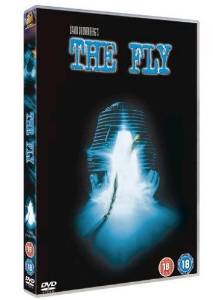
Be afraid.. of the fly!

Be afraid.. of the fly!

The Fly 1986

David Cronenberg had made several pictures after “Shivers”, notable the excellent “Scanners”. But he hit the big time with this remake of a Vincent Price shocker about a scientists who experiments with teleportation only to swap heads with a fly. It doesn’t sound like a recipe for success — a horribly disfigured Jeff Goldblum gradually transforming into a homicidal half-man/half-fly. But stalwart acting from Goldblum and Gena Davis, combined with a highly intelligent script, turned audiences on everywhere and the Fly became a bona fide hit. The tagline “Be Afraid. Be very afraid” has become a part of popular culture. One of the high points of horror in the 80s.

Evil Dead II 1987

Sam Raimi had burst onto movie screens with the 1981 classic “The Evil Dead”. Raimi’s penchant for weird camera angles and cartoony special effects was an underground hit, attracting the attention of the anti-Video Nasty brigade due to one very unpleasant scene. In “Evil Dead II” he took this one step further, creating his own unique blend of comedy and slapstick, and making a star out of straight man Bruce Campbell. As horror lightened in tone after the mid-Eighties, Raimi’s style fitted the mood of the times perfectly. The film is a basic remake of the first movie, but ends on a hysterically crazed note. The violence is cartoon, the plot insane. Fanbooys loved it, and have been lapping it up ever since.
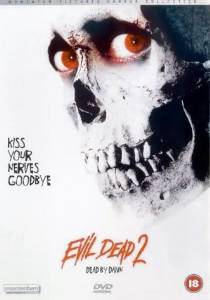
Nyuk, nyuk, nyuk!

Nyuk, nyuk, nyuk!

The Lost Boys 1987

All this seems to be part of a pattern. The serious, horrifying movies of the Seventies were transforming, as studios targeted their prime audience, and began churning out products that college kids out on a date could enjoy. Cynical marketing? Probably. This was the Eighties, after all. Whatever the reason, two movies came out in 1987 that reinvented the vampire genre. One was “Near Dark”, the other was “The Lost Boys”. This is where vampire chic has its roots. Kiefer Sutherland heads a posse of Eighties vampires, compete with rock star looks and clad in the latest fashions. They are everything vampires are (attractive, immortal, evil etc.) but updated. The movie is a very slick production, with some favourite child actors, some great comedy scenes, and a top-notch Eighties soft-rock soundtrack. “Lost Boys” was an instant hit. Since then, almost every “cool” vampire movie or TV show owes a debt to this movie, from “Buffy the Vampire Slayer” to “Twilight”.

Near Dark 1987

The other movie that redefined the vampire genre was the little-seen “Near Dark”. But whereas “The Lost Boys” drew in audiences, this film took 25 years to become a cult classic. A tour-de-force of filmmaking by Oscar–wining director Kathryn Bigelow, it includes  a dream cast, many of whom had appeared together in Bigelow’s then-husband James Cameron’s “Aliens”. “Near Dark” features grubby, streetwise vampires prowling the American MidWest. This is no Gothic romance, nor is it high fashion. Lane Henriksen’s performance is chilling and compelling, Bill Paxton is at his rebellious finest, and sadly underused actress Jenny Wright at her most beguiling. These vampires are down and dirty. In many ways this movie is the opposite of “The Lost Boys”.

Hellraiser 1987

At the end of the Eighties, a Liverpudlian horror author with a dodgy transatlantic accent came to prominence. He was also a film director. Clive Barker brought a new vision to horror. His was horror filled with spectacle, almost operatic. The plot revolves around a puzzle box that, when opened, summons a trio of leather-clad sado-masochistic demons. Like Cronenberg, Barker likes to explore the forbidden or taboo. In “Hellraiser” he gave the world the iconic and somewhat literally-named monster Pinhead. And lo, a franchise was born! The movie is  unsettling and takes itself very seriously. Barker would follow this up with a variety of cult classics, such as “Nightbreed” and “Lord of Illusions” – all of which were overlooked by mainstream audiences despite their originality and quality.

In conclusion…

The Eighties created some wonderful horror movies, and saw the rise of the horror-comedy as a way to reinvigorate the genre. The wild and wacky craze of the Video Nasties gave way to more mainstream hits. Horror became homogenized. Maverick directors like Cronenberg became accepted by the movie-going public, and by the end of the Eighties, horror movies were no longer a Video Nasty to be burned or kept on the top shelf of your local video store but instead became big business, and somewhat tamer as a result.  Sequels multiplied faster than zombies. It was the coming of a time of exploitation, not of stereotypes this time, but of wallets.

Next time…

Horror in the 1990s. In which the genre reaches a dead end (say it ain’t so!), we all see dead people, vampires get all mushy and camera angles become shakier! See you there!


Notes from FantasyCon2014

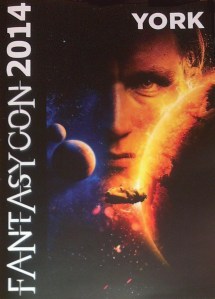
Great artwork for the brochure reproduced here by Larry Rostant

Great artwork for the brochure reproduced here by Larry Rostant

FantasyCon 2014, run by the British Fantasy Society, was held at the Royal York Hotel on Friday 5th – Sunday 7th September 2014.

This was my first time at Fantasycon, the annual gathering of the British Fantasy Society. So I didn’t know what to expect. I did know, however, that there were quite a few eminent guests, including Charlaine Harris, author of the phenomenally successful Sookie Stackhouse series, better known as TV vampire show “True Blood”. Other luminaries included horror author Ramsey Campbell and “Chocolat” writer Joanna Harris, as well as “Dr Who” scribe Toby Whithouse to name but a few.

The convention was held at the Royal York Hotel, adjacent to the train station and therefore a very convenient location. The hotel itself was a grand old affair. Sadly, the cost of staying there was prohibitively expensive. In fact, as I had only decided to go at the last minute, getting a hotel in York proved a difficult task, so I had to commute from Manchester on the two days I attended. However, this wasn’t too bad, thanks to a convenient rail link.

Prior to booking, the lack of information on the website was perplexing and gave the convention the feel of a “members only” club. However, this wasn’t the reality when I got there. Although many people came in groups, overall I found people to be very friendly and accommodating. But a better website, and even a forum, would have helped a lot. As it was, I threw caution to the wind and bought my ticket. But I can’t help but think how many other people were put off by the impersonal nature of the web page.

The first day was an introduction to the convention. Once I had acquired a map of the rather confusing (and sprawling) hotel layout, I grabbed myself some great free books for attendees (always a bonus!). There were also some fantastic discounts available in the dealer room from some sellers, while others remained reassuringly expensive.

I was very grateful for the introductory session which got me talking to several other attendees. The rest of the day passed in a blur. The crowd was an eclectic one, with attendees from as far as the USA. It was great to see people who were as enthusiastic about sci-fi, fantasy and horror as myself, if not more so. The staff too were friendly, and the convention rather relaxed. A little too relaxed, unfortunately. I missed several author signings despite being in the same bar! A bit of an announcement would have been nice.

Throughout the Con, there were book launches, author readings, even short film showings. Unfortunately I couldn’t stay to the bitter end to witness the delights of Karaoke on Friday, which apparently was a pity.

On Saturday, I got there early and bleary-eyed to attend a great panel discussion on whether there was a place for hope in horror. The panel consisted of Ramsey Campbell, Roz Kaveney, Guy Adams, Sara Jayne Townsend and Adam Neville. After a spirited debate, the panel ended with Roz Kaveney’s revelation that he once worked in the same restaurant as serial killer Dennis Nielsen! A very enlightening discussion that showed the versatility of the horror genre.

Charlaine Harris entertains at FantasyCon 2014.

Charlaine Harris entertains at FantasyCon 2014.

Later, Charlaine Harris gave us the lowdown on what it feel like to become an overnight sensation after thirty years of writing mystery novels, as well as the agony and ecstasy of selling your work to cable TV. Ms Harris was very entertaining, and was a regular fixture in the lobby, as were several other authors, giving the con an even more relaxed feel.

Later, I attended a panel on horror in TV. This featured “Dr Who” scribe Toby Whithouse, screenwriter author and editor Paul Kane, and Stephen Volk, writer of notorious BBC 1992 fake documentary “Ghostwatch”. Bizarrely, everyone on the panel agreed that CGI was not a good alternative for strong stories. Maybe there is hope for TV.

There were many other panels to attend, including an enthusiastic demonstration in swordfighting. Inevitably, I found that a lot of the most interesting panels conflicted. Yet there did seem to be a lull between 2-5pm.  But perhaps someone else with different interests would have told you the opposite.

Saturday ended with a mass signing. However, I sacrificed this in favour of hanging out in the bar. This is because for me the most rewarding aspect of FantasyCon was meeting other fans. As a writer, you tend to spend too much time in isolation. This means you lose touch with the people who matter most – the readers. I was amazed at their passion, their interest and their knowledge.  It really made me want to up my game.

On Saturday night, I headed home, my hunger for the speculative satiated for the moment, clutching my bagfuls of cheap books and signed copies. One of my aims had been to find new authors to broaden my reading, and I had certainly been given enough food for thought. I came away with a much greater knowledge of the blossoming sc-fi, horror and fantasy market, and with several new authors to sink my teeth into (figuratively).

A little light reading.

A little light reading.

Sunday proved a bridge too far for me. As there were only panels in the morning, I decided not to attend and save myself a hefty train fare. The afternoon was taken up with the British Fantasy Awards. But again, there was a curious lack of publicity about these on the net. The FantasyCon Twitter feed was also strangely silent throughout the weekend. The BFS produce some great publications, so it is odd that it doesn’t toot its own horn more.  Maybe the BFS could even televise the event on a Youtube channel!

In summary, this was a very worthwhile Con. I would recommend it to anyone who wants to meet likeminded people and who enjoy lively debates about everything in the world of speculative fiction and movies. I hope to go again next year and have an even better experience. However, a little more information would have been nice from the organisers for those who have not boldly gone to the Convention before. More Twitter updates would be a definite plus as well. But if you are a fan or creator of sci-fi/fantasy and horror in the UK, this is one convention you cannot afford to miss.

My  advice  is to book early and stay late, something I hope to do next time around!


Next year’s FantasyCon 2015 is to be held in Nottingham, UK.


Urban Fantasy anthology update!

NEWSFLASH!

My short story “Blood of an Englishman” features in Twisted Boulevard, the new urban fantasy anthology from Elektrik Milkbath Press. This eclectic blend of short stories promises to have something for everyone.

You can buy it from amazon.com, or amazon.co.uk if you’re a Brit. 

Hmm. Moody cover.


A Lovecraftian TV show?

Today, I wanted to share with you  what I think is a great idea. The folks over at the Lovecraft E-zine have decided to go ahead and make a H.P. Lovecraft-inspired TV series called “Whispers from the Shadows”. They’re raising funds on kickstarter.com, and you can be a part of it.

The rewards are fantastic. And the series is being made with professional horror movie actors. You can even get an Associate Producer credit if you pledge enough.

In case you have been hiding in a cave since the 1980s and don’t know who H.P. Lovecraft is, he is considered the father of weird fiction. Lovecraft was unappreciated in his lifetime, yet he is probably the most influential horror writer of the 20th  century, inspiring everyone from Guillermo del Toro to Stephen King.

Here is a link to his Wikipedia entry: http://en.wikipedia.org/wiki/Lovecraft

These people need pledges, and the deadline is looming. So do yourself a favour and head over to Kickstarter and see for yourself how cool this is. The deadline is 2nd June.

Go check it out here:

https://www.kickstarter.com/projects/marxpyle/whispers-from-the-shadows-lovecraft-inspired-short/posts/853536?at=BAh7CDoMcG9zdF9pZGkDIAYNSSIIdWlkBjoGRVRpA2lwoUkiC2V4cGlyeQY7BlRJIhgyMDE0LTA2LTIzIDE3OjEyOjM0BjsGVA%3D%3D–b4dbaa7ac4a499fa5c7ce2ebe608b1c76870f0b5&ref=backer_project_update


Monday blog tour!

My thanks this morning to fellow Mancunian speculative fiction writer and novelist Graeme Shimmin who nominated me to be the next person on the Monday Blog Tour. A pass-the-baton exercise bringing you blogs from different writers to start your week off on the right track!

What are you working on?

Between writing screenplays, I like to keep myself occupied by writing lengthy horror novels and short stories.

At the moment, I’m just waiting for my sci-fi/horror novel “Project Nine” to be published by myinkbooks.com. The good folks over there picked up my novel last year, and have been busily trying to convert my rather “eccentric” punctuation and spelling into something the public can actually make sense of.

What is it about?

Ah. The magic question.

“Project Nine” is about a young man who longs for immortality. He finds it in a beautiful woman who has escaped from a secret government research program that has created vampires through gene therapy.  He joins her and her friends who have also escaped in their endless trek across America’s backwoods, only to find himself hunted by a relentless detective and losing his own humanity in the process.

How does it differ from others in the genre?

If the Naughties have been so far filled with horror movies populated by twenty-something kids with six-packs and hair extensions, “Project Nine” is about as far from that kind of thing as you can possibly get.

It’s gritty, realistic, and psychologically believable. But it also has the large scale and operatic quality of classic horror stories. I aimed to balance the grim realism of modern fiction with the more emotionally-resonant horror of the 1970s and 1980s.

The vampires in this story are not cape-wearing cliches, nor are they gorgeously, seductive creatures. They are real people put in an extraordinary situation. They make good and bad choices. And they are capable of acts of kindness or unspeakable wickedness.

Why do you write what you write?

Why indeed. Who knows what evil lurks in the mind of Man? Not me, certainly. In my defence, I blame watching a steady diet of old Universal and Hammer horror movies when I was a kid. Rod Serling’s “Twilight Zone” stands out for me as being the best SF/Horror TV series ever made.

However, the first movie that really made my hair stand up on end was actually not a movie at all, but the truly frightening Made-For-TV, 2-part adaptation of Stephen King’s “‘Salems Lot” — the one with David Soul and James Mason. Man, that was scary.

Essential, late-night, family-friendly viewing!

Essential, late-night, family-friendly viewing!

I’ve also been an avid fan and collector of comics since I was knee high to an Inhuman. Marvel and 2000AD to be precise. People like Alan Moore have been a huge inspiration, especially “Watchmen”  and his run on DC’s “Swamp Thing”.

As far as “real” literature goes, HP Lovecraft remains for me the greatest master of the craft. I also devoured novels by Stephen King (although I especially like the short stories in his “Night Shift” collection) and the criminally underestimated British king of horror, James Herbert. Other influences include: Peter Straub, Frank Herbert, Terry Brooks, Anne Rice, Phillip K Dick, Harry Harrison and, of course, Ray Bradbury.

There. You asked for it.

Swamp Thing - the thinking man's horror comics.

Swamp Thing – the thinking man’s horror comic.

What is your writing process?

You mean I have a process?

Seriously, it all depends on whether I’m writing screenplays, novels, or short stories.

Screenplays tend to be very structured. I outline to a varying degree of depth before writing a first draft. Then I use a structured rewrite process. I recommend reading as many books as you can on the subject and then employing the rewrite proceess used by Paul Chitlik in his excellent book. Then repeat. Over and over again. And again. And again.

My novels are a different animal. My first novel started life as a comic script (now lost, sadly) and then grew into a full-length book. My second, unpublished work began life purely as a novel. I had a rough idea of what I wanted to say and what the theme would be, then I started writing. Now I’m in the process of getting peer feedback before rewriting and editing.

Short stories usually come out of the blue. I get a first line or an idea as I’m in the shower or walking down the street and then I run with it. The ones that pop into my head seem to be the most successful. The ones I agonize about and outline never see the light of day. Weird, eh?

How much do you write in a day?

Depends. I just wrote an entire screenplay in five days. When I was in what I like to call my James Joyce phase I could write ten pages of single-spaced prose on my typewriter (yes, I had one of those). That comes to about 350 words a page. So 3,500 words a day.  You nosey parker, you.

Previous Writer

I was asked to contribute to this project by Graeme Shimmin  as part of a chain of connections from writer to writer. Each writer answers the questions and then links to the next writer in the chain. Graeme writes mainly alternate history and some excellent short stories. I suggest you check out his intriguing, fact-filled blog.

Next on the Tour

Graeme Cole is a filmmaker extraordinaire and bon vivant who also writes absurdist fiction. He currently resides in Bosnia and runs L’Institute Zoom, which maintains a blog here.

Andrew Bellware is a sci-fi/fantasy/theatre director/writer/actor and all-round swell guy who works out of NYC. He and his producing partner run Pandora Machine Films, which maintains its eponymous blog (Rated “R” for some racy content — you have been warned). I recommend their marvellous movie Clone Hunter, written by some guy from England 😉

Clone Hunter - the greatest science-fiction ever made, apparently!

Clone Hunter – the greatest science-fiction ever made, apparently!

A Lovecraftian horror story by yours truly…

Just a quick note to say that the folks at the Lovecraft E-Zine have published my new Lovecraftian horror short story “The Groaner in the Glen”. It features monsters, Romans, and druids! You can check it out at the link below for free. Enjoy!

ezine

Issue #29 – February 2014

The Hobbit: The Desolation of Smaug reviewed (or “Not more barrels”).

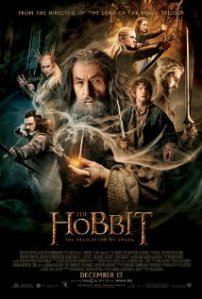
The Hobbit Part 2: or "how many characters can we fit in a barrel?"

The Hobbit Part 2: or “how many characters can we fit in a barrel?”

This week, here’s a review that shows the perils of big-budget filmmaking from a screenwriting perspective.

WARNING: SPOLIERS AHEAD

Now, I really loved “The Hobbit Part 1”. I mean, I really loved it. Others may have thought it lacked action scenes and spent too long with the unfunny dwarves. However, I loved exactly that. Music is a much-ignored part of filmmaking. But when done correctly, it can elevate a film to something fantastic. Consider Superman the Movie (the Christopher Reeve one, not the emo-Superman of recent years), Star Wars, Indiana Jones, and Close Encounters. All had great soundtracks. Coincidentally, all by John Williams. But other composers like John Barry or even Daft Punk have come up with equally good soundtracks. Anyway, I digress. The point is, the Lonely Mountain Song by Neil Finn was my favourite soundtrack piece of 2013.

I also liked the time spent setting up the dwarves. Film is not a video game. These are supposed to be STORIES about CHARACTERS. Not just an endless succession of CGI chase and fight sequences (which become outdated fast. Check out the Matrix Reloaded if you don’t believe me).

So, in short, I loved Part 1. Loved Rhadghast with his rabbit-drawn sled. Loved the goblin king. Great.

Now to “The Hobbit Part 2″…

It began well enough. Through the “magic” of 3D (it wasn’t available in anything else in my cinema), I was transported to, respectively: Bree, Beorn’s cottage (although this lasted slightly less longer than I had hoped), and the caves of Thranduil. Very nice stuff. Even liked Tauriel and Kili (although I’m not sure how a romance between an elf and a dwarf would work in practice).

Then we came to the barrels. And this is, for me, where it all went wrong.

Now, I understand that this is a adventure film. There has to be SOME action, right? So I was along for the ride. Until the laws of physics started to be routinely ignored. Not only that, but it seemed the laws of PLOT LOGIC were ignored as well.

During the barrel riding scene, elves became superhuman. Dwarves also became superhuman. The numbers of barrels magically fluctuated (maybe Gandalf put a spell on them). Dwarves leaped twenty feet out of moving barrels in a fast-flowing river to steal weapons from the hands of Orcs and throw them back with deadly pinpoint accuracy. And having done all this, they arrive at Laketown and complain they haven’t got any weapons… having just slain about two hundred Orcs!

Still, my growing sense of apprehension was only a feeling of dread akin to the knowledge that the Necromancer had returned. So I went along to Laketown, hoping things would improve.

And, for a while, things did. The Necromancer, and his link to the evil eye in LOTR, was a very nice touch. Not in the book, but it made perfect sense within the context of the movies.

Then came Laketown.

Peter Jackson’s LOTR is reknowned for its attention to detail. It is said that there is so much set detail in Rivendell that it can never be captured on camera.

So what went wrong in Laketown? All of a sudden, it felt like I was on a set. Maybe it was the heavy overuse of interiors. But everything looked a little bit fake. The politics of Laketown were also hard to grasp. Stephen Fry’s Mayor seemed to fluctuate between wanting to kill the dwarves and wanting to help them. Nor was it clear what Bard the Bowman’s  status was in Laketown. Anyway, it was here that the Hobbit and I parted company.

Cue, Smaug. Everybody loves a dragon. I am no exception; I’m a sucker for the mythical beasties, ever since seeing Disney’s rather frightening kids’ film “Dragonslayer”.  So when Smaug appeared, I wanted to like him.

Yet, while Bilbo raced for the Arkenstone (which has no magical properties, it appears, so why it was so valuable compared to a mountain of treasure the size of Wales escaped me), we were treated to the least enjoyable action sequence I have yet seen in the whole film series.

Instead of a brisk romp with a dragon, this sequence turned into a half-hour epic. Dwarves managed to survive fifty-foot drops. They leaped across thirty foot-wide gaps. Never again will I doubt dwarven architecture, as a waking dragon can cause an earthquake in Laketown but fail to bring down the roof of a chasm even when all the support beams are shattered.  The dwarves (ingenious creatures worthy of a job at Microsoft) are able to rig up a one-hundred foot molten gold statue in less than a minute.

When said statute suddenly (and inexplicably) explodes in a torrent of molten gold, it had me rolling my eyes and sinking into my seat.

Another example of plot nonsense occurs when Smaug returns to find Bilbo quivering, ready to be eaten and accepting his fate.

“I’ll show you,” says Smaug. “I’ll burn Laketown down, that’ll make you suffer!”

How about eating him? Wouldn’t that make him suffer? But no, Smaug decides to save Bilbo for later (after all, there’s another three hours to go), and burn down Laketown. Which he would do anyway.

Hmm.

Don’t even get me started on how Thorin manages to use a heat-conductive metal shield to float safely on a river of molten gold.

So in conclusion, “The Desolation of Smaug” is definitely a film of two halves. The nice character moments and humour of the first half is undone in the second half by an over-reliance on the same physics-defying and unconvincing CGI we have sene in films like “Indiana Jones 4” (Remember the fridge? That’s worthy of a trope in itself, much like “Jumping the Shark”. Maybe we should have “Riding the fridge”?)

Perhaps it’s the result of so many disciplines being involved in what used to be a proces involving only actors, a director, and a handful of crew. Maybe it’s even due in some way to the input (or lack of input) of Guillermo Del Toro, who apparently departed the production due to delays in filming. It’s anyone’s guess how having such a visionary director leave halfway through affected the outcome. But whatever the cause, it felt like the filmmakers had thrown in their towels after the barrel riding scene.

I don’t know if “The Hobbit” will take its place alongside the “Lord of the Rings” as modern classics. But it seems that in a world where anything can be conjured up using that magical CGI paintbrush, filmmakers need to exercise more restraint. Otherwise they risk suffering the fate of a certain cartoon mouse who also experimented with magic and came undone.

News about “Horror Without Victims” anthology

Happy New Year folks,

Hope you are getting back to the daily grind with a new sense of purpose, fueled by too much Christmas pudding and turkey, and inspired by a 72-hour marathon of non-stop TV movies.

Time to start things off on a positive note.

The kind reader at Hellforge has picked out “Horror Without Victims” as his favourite for 2013:
http://matthewfryer.com/2014/01/01/hellforge-horror-picks-of-2013/

If you haven’t done so already, you can pick up your own  copy of the anthology from Amazon. by clicking on the image below…

product_thumbnail[1]