Tag Archives: screenwriting

How to Write Hollywood-style action lines — part 1

Today, here are some tips on how to do the above – write action lines like the ones you see in Hollywood screenplays. Style can make or break a script, or turn a great story into a terrible script.

The main aim of all stylistic devices in a screenplay is… to get the reader to read yor script.

That’s it.

So how do you do that?

Create suspense.

Use short sentences.

Make it a vertical reading experience.

See?

 Here are some examples:

The “vertical” style was perhaps most famously used in “Alien”. Here is a sample taken from the revised script by Walther Hill and David Giler, based on the original script by Dan O’Bannon and Ronald Shusett:

“SOMETIME IN THE FUTURE:

INT. ENGINE ROOM

Empty, cavernous.

INT. ENGINE CUBICLE

Circular, jammed with instruments.
All of them idle.
Console chairs for two.
Empty.

INT. OILY CORRIDOR – “C” LEVEL

Long, dark.
Empty.
Turbos throbbing.
No other movement.

INT. CORRIDOR – “A” LEVEL

Long, empty.

INT. INFIRMARY – “A” LEVEL

Distressed ivory walls.
All instrumentation at rest.”

Pretty obvious why it’s called the “vertical” style, right? The aim is to make the reader’s eye naturally flow down the page thus causing him or her to TURN OVER and start reading the next page. Do that enough times and the reader will actually finish your screenplay.

But you don’t need to be so drastic. Back in 1978 that was fresh writing. Nowadays it’s more a throwback. Also, this tends to use up a lot of pages.

Here’s a slightly more modern example, from a draft of “Scream” written by Kevin Williamson:

“FADE IN

ON A RINGING TELEPHONE.

A hand reaches for it, bringing the receiver up to the face of
CASEY BECKER, a young girl, no more than sixteen.  A friendly face
with innocent eyes.

CASEY
Hello.

MAN’S VOICE
(from phone)
Hello.

Silence.

CASEY
Yes.

MAN
Who is this?

CASEY
Who are you trying to reach?

MAN
What number is this?

CASEY
What number are you trying to reach?

MAN
I don’t know.

CASEY
I think you have the wrong number.

MAN
Do I?

CASEY
It happens. Take it easy.

CLICK! She hangs up the phone.  The CAMERA PULLS BACK to reveal
Casey in a living room, alone.  She moves from the living room to
the kitchen.  It’s a nice house.  Affluent.

The phone RINGS again.

INT.  KITCHEN

Casey grabs the portable.

CASEY
Hello.

MAN
I’m sorry. I guess I dialed the wrong number.

CASEY
So why did you dial it again?

MAN
To apologize.

CASEY
You’re forgiven. Bye now.

MAN
Wait, wait, don’t hang up.

Casey stands in front of a sliding glass door.  It’s pitch black
outside.

CASEY
What?

MAN
I want to talk to you for a second.

CASEY
They’ve got 900 numbers for that. Seeya.

CLICK!  Casey hangs up.  A grin on her face.

EXT.  CASEY’S HOUSE – NIGHT – ESTABLISHING

A big country home with a huge sprawling lawn full of big oak
trees.  It sits alone with no neighbors in sight.

The phone RINGS again.”

This is a nice, flowing style that leads your eye down the page. Notice how the sentences are short. Clipped. And, in some cases, incomplete.

There is also far less detail than you think in these lines. The writers were adept at using minimal words to convey a setting. The reader’s mind fils in the blanks. In fact “Alien” uses only two words to describe a spaceship’s engine room.

So the next time you think about adding a ten-line paragraph to explain that this is a comfortable, well-furnished craftsman-style house that nestles on the edge of town surrounded by sycamore trees with a luxury car parked on the drive outside… think again.

Which brings me to my second tip .

Don’t overdo it.

Some sentences belong together. When you try to force them into a vertical pattern, you actually break the flow and make it more difficult to read down the page. For example, here’s a passage from the script of “The Bourne Identity” by Tony Gilroy, based on the novel by Robert Ludlum:    

INT. FISHING BOAT BUNK ROOM — DAWN — TIME CUTS

Transformed into a makeshift operating room.  A light swings
overhead.  THE MAN layed out across the table.  Sounds —
groans — words — snatches of them — all in different
languages.

GIANCARLO playing doctor in a greasy kitchen apron.  Cutting
away the clothes.  Turning THE MAN on his side.  Two bullet
wounds in the back.  Probing them, judging them.

Now — GIANCARLO with a flashlight in his teeth — TINK —
TINK — TINK — bullet fragments falling into a washed-out
olive jar.

Now — something catching GIANCARLO’S EYE — A SCAR ON THE
MAN’S HIP — another fragment — exacto knife cutting in —
tweezers extracting A SMALL PLASTIC TUBE, not a bullet at
all, and as it comes free —

THE MAN’S HAND SLAMS down onto GIANCARLO’S”…

This is still a pretty vertical read. However it would have been even more vertical to separate each sentence out onto separate lines, like so: 

“Transformed into a makeshift operating room.

A light swings overhead.

THE MAN layed out across the table.

Sounds — groans — words — snatches of them — all in different languages.

GIANCARLO playing doctor in a greasy kitchen apron.

Cutting away the clothes…”

And so on. But does this make it any better? No. Sometimes it’s worse to force the reader to look at a new line. The most important thing is to preserve the flow. I’ve read lots of amateaur screenplays where the writer thought they were doing the reader a favour by splitting lines up in this way. But  it actualy makes it harder to read them.

It’s a judgment call. And the best way to decide is to look at other scripts. There are plenty of them on the Internet these days. Break them down the way you would an Enlgiash Literature exercise.

And that’s exactly what we’ll be doing in Part 2.

See you then!
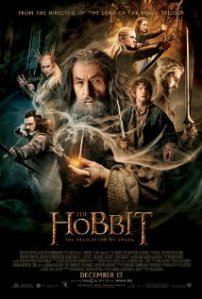
The Hobbit: The Desolation of Smaug reviewed (or “Not more barrels”).

The Hobbit Part 2: or "how many characters can we fit in a barrel?"

The Hobbit Part 2: or “how many characters can we fit in a barrel?”

This week, here’s a review that shows the perils of big-budget filmmaking from a screenwriting perspective.

WARNING: SPOLIERS AHEAD

Now, I really loved “The Hobbit Part 1”. I mean, I really loved it. Others may have thought it lacked action scenes and spent too long with the unfunny dwarves. However, I loved exactly that. Music is a much-ignored part of filmmaking. But when done correctly, it can elevate a film to something fantastic. Consider Superman the Movie (the Christopher Reeve one, not the emo-Superman of recent years), Star Wars, Indiana Jones, and Close Encounters. All had great soundtracks. Coincidentally, all by John Williams. But other composers like John Barry or even Daft Punk have come up with equally good soundtracks. Anyway, I digress. The point is, the Lonely Mountain Song by Neil Finn was my favourite soundtrack piece of 2013.

I also liked the time spent setting up the dwarves. Film is not a video game. These are supposed to be STORIES about CHARACTERS. Not just an endless succession of CGI chase and fight sequences (which become outdated fast. Check out the Matrix Reloaded if you don’t believe me).

So, in short, I loved Part 1. Loved Rhadghast with his rabbit-drawn sled. Loved the goblin king. Great.

Now to “The Hobbit Part 2″…

It began well enough. Through the “magic” of 3D (it wasn’t available in anything else in my cinema), I was transported to, respectively: Bree, Beorn’s cottage (although this lasted slightly less longer than I had hoped), and the caves of Thranduil. Very nice stuff. Even liked Tauriel and Kili (although I’m not sure how a romance between an elf and a dwarf would work in practice).

Then we came to the barrels. And this is, for me, where it all went wrong.

Now, I understand that this is a adventure film. There has to be SOME action, right? So I was along for the ride. Until the laws of physics started to be routinely ignored. Not only that, but it seemed the laws of PLOT LOGIC were ignored as well.

During the barrel riding scene, elves became superhuman. Dwarves also became superhuman. The numbers of barrels magically fluctuated (maybe Gandalf put a spell on them). Dwarves leaped twenty feet out of moving barrels in a fast-flowing river to steal weapons from the hands of Orcs and throw them back with deadly pinpoint accuracy. And having done all this, they arrive at Laketown and complain they haven’t got any weapons… having just slain about two hundred Orcs!

Still, my growing sense of apprehension was only a feeling of dread akin to the knowledge that the Necromancer had returned. So I went along to Laketown, hoping things would improve.

And, for a while, things did. The Necromancer, and his link to the evil eye in LOTR, was a very nice touch. Not in the book, but it made perfect sense within the context of the movies.

Then came Laketown.

Peter Jackson’s LOTR is reknowned for its attention to detail. It is said that there is so much set detail in Rivendell that it can never be captured on camera.

So what went wrong in Laketown? All of a sudden, it felt like I was on a set. Maybe it was the heavy overuse of interiors. But everything looked a little bit fake. The politics of Laketown were also hard to grasp. Stephen Fry’s Mayor seemed to fluctuate between wanting to kill the dwarves and wanting to help them. Nor was it clear what Bard the Bowman’s  status was in Laketown. Anyway, it was here that the Hobbit and I parted company.

Cue, Smaug. Everybody loves a dragon. I am no exception; I’m a sucker for the mythical beasties, ever since seeing Disney’s rather frightening kids’ film “Dragonslayer”.  So when Smaug appeared, I wanted to like him.

Yet, while Bilbo raced for the Arkenstone (which has no magical properties, it appears, so why it was so valuable compared to a mountain of treasure the size of Wales escaped me), we were treated to the least enjoyable action sequence I have yet seen in the whole film series.

Instead of a brisk romp with a dragon, this sequence turned into a half-hour epic. Dwarves managed to survive fifty-foot drops. They leaped across thirty foot-wide gaps. Never again will I doubt dwarven architecture, as a waking dragon can cause an earthquake in Laketown but fail to bring down the roof of a chasm even when all the support beams are shattered.  The dwarves (ingenious creatures worthy of a job at Microsoft) are able to rig up a one-hundred foot molten gold statue in less than a minute.

When said statute suddenly (and inexplicably) explodes in a torrent of molten gold, it had me rolling my eyes and sinking into my seat.

Another example of plot nonsense occurs when Smaug returns to find Bilbo quivering, ready to be eaten and accepting his fate.

“I’ll show you,” says Smaug. “I’ll burn Laketown down, that’ll make you suffer!”

How about eating him? Wouldn’t that make him suffer? But no, Smaug decides to save Bilbo for later (after all, there’s another three hours to go), and burn down Laketown. Which he would do anyway.

Hmm.

Don’t even get me started on how Thorin manages to use a heat-conductive metal shield to float safely on a river of molten gold.

So in conclusion, “The Desolation of Smaug” is definitely a film of two halves. The nice character moments and humour of the first half is undone in the second half by an over-reliance on the same physics-defying and unconvincing CGI we have sene in films like “Indiana Jones 4” (Remember the fridge? That’s worthy of a trope in itself, much like “Jumping the Shark”. Maybe we should have “Riding the fridge”?)

Perhaps it’s the result of so many disciplines being involved in what used to be a proces involving only actors, a director, and a handful of crew. Maybe it’s even due in some way to the input (or lack of input) of Guillermo Del Toro, who apparently departed the production due to delays in filming. It’s anyone’s guess how having such a visionary director leave halfway through affected the outcome. But whatever the cause, it felt like the filmmakers had thrown in their towels after the barrel riding scene.

I don’t know if “The Hobbit” will take its place alongside the “Lord of the Rings” as modern classics. But it seems that in a world where anything can be conjured up using that magical CGI paintbrush, filmmakers need to exercise more restraint. Otherwise they risk suffering the fate of a certain cartoon mouse who also experimented with magic and came undone.

What can we learn from “The Conjuring”?

THE CONJURING (2013)

Director James Wan, Writers Chad and Carey Hayes

Stars Patrick Wilson, Vera Farmiga, Lily Taylor


NOTE: I’VE TRIED NOT TO INCLUDE ANY SPOILERS, BUT READ ON AT YOUR OWN RISK IF YOU’VE NOT SEEN THE MOVIE.

The biggest hit of 2013 so far must be “The Conjuring”. Delivered on a budget of just $20 million, it has raked in over $120 million so far and is still in theatres.  It charts ahead of much bigger movies such as “Olympus Has Fallen”, “The Hangover Part 2”, “The Wolverine” and of course the infamous “Lone Ranger” movie. So why is it such a smash hit?

I went to see it, expecting it to be over-hyped, and was very pleasantly surprised. Not only is “The Conjuring” a well-made and well-acted movie, it is extremeley scary. This is no exaggeration. “The Conjuring” is definitely the best movie of 2013 so far.

The movie comes on the heels of Director James Wan’s 2010 opus “Insidious”, although you could be forgiven for thinking that 2012’s lookalike “Sinister” was related.

Looking back at “Insidious”, we had another strong performance from character actor/lead man Patrick Wilson (Nite Owl in “Watchmen”). But what was interesting about “Insidious” was the way the movie tried to push the envelope with the horror genre. There were a couple of standout eerie moments. However the picture lapsed into an action/fantasy movie toward the third act, which lessened the effect of the scares.

The plot is simple enough: two psychic detectives (Wilson and Farmiga) take on a haunting in an old house where Taylor and her family (her working joe husband and five young daughters) have just moved in and are experiencing some frightening ghostly goings-on. The uncover a sinister force driving the hauntings, which continue to grow in violence and, what’s worse, seem to react to the couple’s presence in the house.

To an extent, “The Conjuring” is a refinement of Wan’s previous movie. However  this movie opens with a bang (literally) instead of a slow burn. In fact, the movie delivers almost everything up front. From the creepy titles (an oft-ignored aspect of filmmaking) we are plunged into terror. The opening sequence which features a demonic doll is one of the scariest I’ve ever seen. Who knew that dolls could become creepy again after the debacle of “Child’s Play”?

As if that wasn’t enough, Wan and his creative team go on to deliver an expertly crafted series of scares. Each one just as terrifying as the last. The roller-coaster ride (or should that be ghost train?)  is helped by excellent performances, not just from Wilson, but from horror veteran Lilly Taylor, who really outdoes herself in this movie, as well as the ever-off-kilter Vera Farmiga as the other half of the ghostbusting duo.

But what really impresses about “The Conjuring” is the quality of the scares. Each one goes shows us something that has never been seen before. Yes, the ideas themselves have been copied from other stories (the evil doll, the ghostly bangings, demonic possession). There are also notable nods of the head to older classics, such as when Taylor’s husband wakes up to find the TV showing only static, an obvious reference to “Poltergeist”.

But “The Conjuring” goes further. this is not just an evil doll. This is a mightily pissed-off evil doll that sounds like a 300lb giant hammering on the door. The “ghost”, when it does appear, is exceptional. Especially in two memorable scenes, one involving a sleepwalker and a wardrobe, the other involving something as mundane as hanging up washing on a clothesline.

To say that “The Conjuring” copies other movies is like saying “Forbidden Planet” is ajust a copy of “The Tempest”. This is a bravura piece of horror filmmaking that is sure to establish Wan for years to come as a horror great.

The lesson? Go farther.

A good example of another ghost story which pushes the envelope is 2001’s Japanese movie “Pulse” (forget the remake) which goes from eerie hauntings involving the Internet to an apocalyptic third act.

It is true that the movie runs out of steam to an extent in the third act, where it changes pace and tone becoming more of an action movie spliced in with a demonic possession movie. As a result, the scares diminish. The character development is pretty sketchy also, but is just enough to add some depth to a very plot-driven movie. “The Conjuring” is definitely at its best for the other two thirds. But what a two thirds they are!

Audiences love to be surprised, and I was. The scares are not your everyday jump-out-and-scream variety. nor is there the reprehensible “torture-porn” of recent “hits”. Instead, “The Conjuring” is a creepy and frightening horror movie.

Go see it!

Horror Without Victims review

Here is a very nice review of “Horror Without Victims”, an anthology which contains my short story “Clouds”. It’s only the second time I’ve been published in a British anthology. The first time was with my story “Charlie” in the British Fantasy Society’s anthology “Terror Tales”, alongside Neil Gaiman and Kim Newman.

http://paintthistownred.wordpress.com/

The reviewer calls it “psycho-geographic horror”, and although I didn’t plan it out that way, I’d have to agree!

If you haven’t got a copy yet, I’d recommend it (because my story is in it, of course – but also because it contains 24 other excellent, frightening, funny and awe-inspiring stories, all on the theme of horror without the gore).

product_thumbnail[1]

Quickie movie review time…

Today, I thought I would share a review of a film you may not have seen. There aren’t many people making great movies. But one man who’s made more than his fare share (and had more than his fair share of commercial failures) is David Lynch.

So without further ado here is my review of LOST HIGHWAY.

LOST HIGHWAY (1997)

A jazz saxophonist is (wrongly?) convicted of murdering his wife. He is imprisoned. He wakes up in the morning as a different person, a young mechanic. The authorities are baffled and release him. He becomes involved in an affair with another woman, the wife of a gangster who looks just like the first man’s wife…

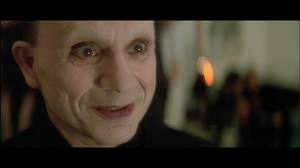
"We've met before, haven't we?" Robert Blake as the Mystery Man.

“We’ve met before, haven’t we?” Robert Blake as the Mystery Man.

What does it mean? Don’t look for straightforward answers. Although it looks like a Hollywood movie, ‘Lost Highway’ is anything but. This is cinema deconstructed. What is a story? What is art? Surface meanings are stripped away and what we are left with is…

Director David Lynch and his co-writer Barry Gifford again create a frustrating, mesmerizing, entertaining, visceral, daring Chinese puzzle of a movie. But the twist here is that the puzzle has no solution. More introverted than epic, it had critics and audiences confused upon its release. Searches for story will disappoint. This is a movie that knows it is a movie and toys with the viewer like a cat with a mouse.

“Lost Highway” also plays with genre, most notably the kind of noir 40s movies that eventaully spawned Hitchcock’s masterpiece “Vertigo”. But “Lost Highway” goes beyond them. The writers are not afraid to let go of plot, drawing attention to the artificiality of a narrative that both illuminates and conceals. This is a movie that pushes the boundaries of cinematic storytelling. Is it intended or not? Does it matter? Like the rest of the film, this only raises questions without answers.

Bill Pullman and Balthazar Getty are the two faces of the same man (or is he?). Patricia Arquette is dazzling as Renee/Alice. But arguably Robert Loggia steals the show with impeccable comic timing as a ridiculously vicious gangster. While Robert Blake gives his last performance as the memorably creepy mystery man with no eyebrows – a typically Lynchian obscure archetype.

I’m not usually a fan of postmodernism, but when it’s done this well I can’t help but like it. With sublime music and excellent performances, this is surely one of Lynch’s most provocative films to date. Well worth seeing.

The lost art of the television movie?

Today I thought I would focus on the much-maligned made-for-TV-movie. For years dominated by WomJeps (that’s women-in-jeopardy movies to you and me) the TV movie is a misunderstood animal. At its worst it’s characterised by melodramatic stories, below-par acting and shoddy production values.  But TV movies have also given us some classics. Here are some examples chosen to show you a broad cross-section and history of this overlooked art form.

No SFX required. Just great characters.

No SFX required. Just great characters.

REQUIEM FOR A HEAVEYWEIGHT (1962)

Jack Palance chews up the scenery as only he could in this Rod Serling teleplay about a washed-up boxer. Yes, he of the Twilight Zone. Before he became forever associated with breaking the fourth wall in creepy tales, Serling was a heavywight himself in the world of playwrights. This is arguably one of his greatest efforts.

THE NIGHT STALKER (1972)

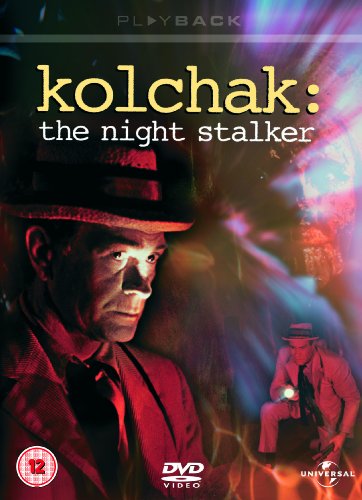
Darren McGaven shines as abrasive but likeable reporter Carl Kolchak in the first of the character’s outings. The second most popular telefilm of all time (the honour of being the first goes to The Love Boat), McGavin and his long-suffering editor track down a vampire in Las Vegas. Screenwriter Richard Matheson, one of the greatest fantasists of the 20th century, sets up many of the reworkings of the modern vampire story that have become staples of the genre today. The film was so successful it spawned a (pretty good) sequel, “The Night Strangler” and a television series that has special effects so poor it is best reserved for fans of McGavin . Features a particularly creepy ending.

kolchak

DUEL (1972)

Yes, it’s directed by THAT Stephen Spielberg. From a script by Richard Matheson (again) and featuring popular TV actor Dennis Weaver, this is 70s TV personified. A nameless truck driver hunts a hapless motorists along the desert for no good reason. SPOLIER ALERT! Features Spielberg’s characteristic” roaring shark” sound when the trucker gets his comeuppance at the end.

SOMETHING EVIL (1972)

Spielberg was on a roll in 1972. This curiosity features Darren McGaven again as a man whose family is targeted by an unholy presence when they purchase a farm with “something evil” in the barn. Genuinely creepy, especially the two glowing eyes. Has that great blend of realism and the supernatural that characterizes 1970s horror.

DON’T BE AFRAID OF THE DARK (1973)

One of the great things about TV movies was that nobody really cared too much about getting things right. Lacking the immense budgets of today’s productions, they were enticements to audiences to stay home rather than go to the movies. The results were some genuine oddities, such as this little horror gem.Recently remade by Guillermo Del Torro, who is obviously one of the movie’s legions of fans. A tip, don’t watch it in the house alone.

THE HORROR AT 37,000 FEET (1973)

A post-Star Trek Shatner stars alongside a cavalcade of 1970s TV royalty that includes Chuck Connors, Buddy Ebsen  and Paul Winfield. A spooky tale of a ghost on an airplane. ’70s television had such a strong lineup of character actors that they could fill out an entire movie. In this made-for-TV shocker, the actors sell the not-so-special effects.

KILLDOZER (1974)

From the strange to the downright crazy. A bulldozer (yes, you heard right) is taken over by an alien lifeform. Construction workers wisely wait for it to run out of gas. But wait, they’re on an island and there’s no cover! Wickedly entertaining hokum from a story by sci-fi legend Theodore Sturgeon.

SNOWBEAST (1977)

When Spielberg and Lucas created the summer blockbuster, TV producers were quick to emulate them. This TV horror movie, for instance, is actually Jaws with Bigfoot. And for that, it works incredibly well.  Just as we found out in Lucas’s reissue of The Empire Strikes Back “Special Edition”, seeing more is not always a good thing. It pays to hide your Bigfoot. During this fright-fest we barely glimpse more than a hairy arm or a snorting nostril, but the result is a growing atmospere of suspense and dread that’s hard to beat.

See the trailer here: http://www.youtube.com/watch?v=sxgPgQT155Y

BATTLESTAR GALACTICA (1978)

TV’s answer to Star Wars was also to create something similar. So here we have the Book of Mormon… in space! Managing to be both campy and portentous at the same time, this capitalized on the groundbreaking SFX that had made George Lucas an overnight success. Coupled with iconic costumes, ships, and sets, and some suitable gravitas from Lorne Greene, the movie paved the way for a TV series that has stood the test of time.

SIBYL (1976)

TV movies could also tread more psychological turf than movies, which were becoming increasingly gimmicky and SFX driven in the late 1970s. Here Sally Fields excells as a woman with multiple-personality disorder. The piece is not just a character study, it’s a study of many characters, and Fields shows off her acting chops in a varierty of personalities.

hulk

THE INCREDIBLE HULK (1978)

Another function of the TV movie was to test the waters for upcoming series. Shows such as Hawaii Five-O and the Six Million Dollar Man all had movie-length pilots. But few are so successful they go on to have a theatrical release. In 1978, the top TV show in the world was the Incredible Hulk. Bruce Banner was played with sensitivity and emotion by actor Bill Bixy, while his alter ego was played by bodybuilder Lou Ferrigno in green slippers.

THE DAY AFTER (1983)

Although not as gut-wrenchingly scary as the British 1984 TV movie “Threads” (see other post), this portrayal of nuclear armageddon is a contendor for one of the most watched TV movies ever. Told with realism, this grim tale gets ever grimmer as the true scale of a nuclear war is realized. People are either vaporized or survive to face all the horrors of radiation sickness and survival in the ruins of the old world. A good example of the kind of epic storytelling on a budget that TV can achieve.

The end of the world as we know it. But will you be feeling fine?

The end of the world as we know it. But will you be feeling fine?

THE HAUNTED (1991)

The TV movie fell out of vogue in the 1980s. TV itself lapsed into sitcoms, rather than try to compete with the ever-balooning budgets of blockbuster movies. But every so often a low-budget gem emerged. One of these is The Haunted, a very scary tale about a family who buy a haunted duplex. Like every sensible family, they move out at the first sign of ghostly phenomenon. But in a clever twist, the ghost follows them. Based on a true story, for added creepiness.

The 2000s

That would have been the end of our tale. An increasing number of TV channels did not equate to an increase in quality. In the 90s and 2000s, TV instead chose to churn out poorly-made, poorly-scripted and poorly-acted creature features using the ultimate tool for the lazy filmmaker, CGI. Soon our screens were filled with unconvincing CGI mammoths, sabretooths and giant crocodiles. Meanwhile the dramatic TV movie became the womjep we know and revile today.

Sabretooths and crocodils and sharks.. oh, dear!

Sabretooths and crocodiles and sharks.. oh, dear!

However in recent years TV has taken an upswing. Maybe it’s the lack of movies as studios adopt an all-or-nothing mentality to blockbuster films. Maybe it’s that older actors (who tend to be better) head into TV land in their golden years. Or maybe it’s that TV has replaced the movies, which are increasingly losing their connction with audiences due to massive ticket prices, lackluster SFX-driven spectacles and grosss-out comedies. Because the TV movie is making a comeback…

BEHIND THE CANDELABRA (2013)

Who would have though that in in this day and age a movie made by HBO would become a popular and critical success at the box office? Espeically when you consider the source material. But this Liberace biopic is doing just that. So maybe the TV movie isn’t dead. We’ve had the Renaissance of TV drama. Perhaps now it’s time to resurrect this forgotten art form as well.

The Importance of Being Persistent

You wouldn't want to be this guy. Unless you were a writer.

You wouldn’t want to be this guy. Unless you were a writer.

As you go through this journey to reach your writing goals, there is one thing I cannot stress enough.

You must persist.

Of all the people I know who have become writers, they all share one thing in common. They did not give up. And out of all the people I know who did not become writers, they too had one thing in common. At some point, they did.

It’s easy to give in to the voice inside your head that tells you you’re not good enough, that you never will be good enough, that you’re wasting your life, that becoming a professional writer is just an impossible dream…

But are you wasting your life following a dream?

I would argue that those who go through life without dreams are truly the ones wasting theirs.

It may be that you have financial pressures urging you to get a steady job. It may be you have a family, or one on the way. It may be you are surrounded with unsupportive people who laugh and sneer whenever you mention your latest project.

Eddie Murphy has said on the Actors’ Studio that he only surrounds himself with positive people, because negative people wear you down.

You will encounter a lot of jealousy in your quest to be a writer. People will laugh at your dreams. Some will give you harsh, unconstructive feedback. Others will simply ignore you.

You must learn to overcome this. Because this is a form of rejection, and rejection is the writer’s shadow. It follows him wherever he or she goes, threatening to obscure him or her from view.

One way to beat rejection is to reframe the statistics. If you only get one script request out of a hundred submissions, well then surely that means that every submission will get you closer to reaching one hundred and getting that script request!

Being positive is sometimes the hardest part of writing. But if you can master it, you will eventually succeed. Even if it happens in a way you never expected…

Confessions of a British Screenwriter – Recycled

Today, I thought I would share a link to an embarassingly old and badly written article I did for Moviebytes.com when I had my first screenplay sale. So without further ado…

http://moviebytes.com/NewsStory.cfm?StoryID=3899

Guns, girls, and robots. What's not to like?

Guns, girls, and robots. What’s not to like?

My Name is ‘Err’: A Screenwriters Journey

By Eric Steele

It was a blisteringly hot day in Hollywood. My writing partner and I had been worn down by a punishing heatwave that pushed temperatures up to a hideous 120 degrees. As we both came from Manchester, England – a city renowned for precipitation in a country where summer just means that the rain gets warmer – for us this was the equivalent to walking on the planet Mercury. If Mercury had been filled with dangerous-looking winos and suicidal motorists.

We’d decided to visit an eatery in televisionland known as Roscoe’s Chicken and Waffles. The guide book assured us it was a good place to spot the stars. Taking our place in line, we sizzled on the sidewalk like a couple of English poached eggs. After an eternity of this torture, the Emcee asked us what our names were. “Err,” I began. But before I could use my best Hugh Grant impression, he disappeared back inside the tempting darkness of the doorway.

“Table for Mister Errrr…” he intoned.

Of course, I couldn’t correct him without opening up a whole new can of worms. I might as well have been speaking Portugese for all the good it did. Obviously a case of “You say tomayto, I say tomahto”.

We seated ourselves in a booth and soon learned why it was called “chicken and waffles.” As I dug into my plate of fried chicken at ten o’clock in the morning, I chose to reflect upon how much this reminded me of our whole screenwriting experience so far.

It seemed a far cry from how I had started out – tinkering away in my bedroom in Manchester, reading as many free articles as I could on a then-fledgling Internet, buying whatever books the local stores had in stock (not many), in my impossible quest to somehow get involved in this magical form of storytelling.

The trip to LA proved eye-opening in more ways than one. As we attended meetings without success, we both sank into a kind of delirious despair. Getting lost on foot in Downtown LA or being rear-ended by the daughter of a movie-star on Sunset Boulevard one Saturday night only added to the sense of unreality. Maybe we were just depressed from days spent foot-slogging through graveyards, staring at epitaphs of our long-departed screen idols.

Two years later, we had still to sell a script. Sure, there had been options, near misses. One producer kept us hanging on for over a year until we got an e-mail saying he had decided to work with Paris Hilton instead.

During this time my writing partner and I went our separate ways. He had a young family, and in the end, I guess he decided that “real life” was more important. I soldiered on, until one day I decided to throw caution to the winds, forget about the market, and write the kind of story I would like to see onscreen. The result was my first option with a big production company in LA.

Still nothing happened. I had listed the script with InkTip.com, and they helped me out with a press release. After a few months, I received a phone call from my soon-to-be agent, who had read several scripts and was sufficiently impressed to sign me up.

She told me she wanted to see more family-friendly stuff. I immediately scoured through what passed for my filing system until I found something that would fit the bill…

Among my various screenplays, I’d written a sci-fi television pilot called “Clonehunter”. On a whim, I’d entered it into Scriptapalooza. Although the script didn’t place, they were kind enough to provide me feedback. I scanned the feedback, read the script. Hmm, not exactly Orson Welles, but it was salvageable enough.

Over the next few months I rewrote the script, developing themes and characters, until I had an honest-to-goodness movie script. However, experience had taught me that what seems like Shakespeare to you can seem like Dr. Seuss to someone else, so I workshopped the script at zoetrope.com, where other writers could sling mud at it with impunity. Some of those reviews were gut-wrenching in their honesty, but the script came out a lot better for it. More importantly, it was free.

Some of the scenes I’d written would give James Cameron a headache. Pursuits on hoverbikes, floating casinos, talking gorillas – no sane individual would even think of tackling such a project without a studio budget. But it was just crazy enough to succeed. Besides, I loved the character – David Cain, an intergalactic bounty-hunter who would put Harrison Ford to shame. Not only was Cain’s work questionable, but the more we heard about him, the more we suspected that he might not be a very nice guy either. This was someone who had a history so long he kept secrets from everyone – including his attractive young cyborg partner. And he had an intelligent cat.

I wasn’t expecting anything, so I was truly surprised when I received an e-mail from director Andrew Bellware. He had seen my script on InkTip and wanted to shoot it, using his production company in New York. I was aghast – did he really think he could do it? Well, it might need a little tweaking. I would never see my floating casino (sob). However it would be an outright sale.

My agent hammered out the agreement and Drew then began the looooong process of filmmaking.

Drew kept me informed at every stage of the process. I was flattered that anyone would even care what I thought. Each week he would send me another video of the shoot. Nothing could have prepared me for the sensation of watching the script come alive onscreen. Sometimes I was surprised, sometimes I laughed out loud as an actor said a line in a way I had not expected and turned a boring piece of exposition into something dramatic or even comedic. Most of all, I was amazed that this was actually being pulled off. Even the hoverbike sequence was there! Eat your heart out, Lucas!

The whole experience reminded me that moviemaking is a team sport. Everybody has an input, no matter how small. I felt privileged to have given my contribution. Suddenly, all those years of slaving away over a hot keyboard in a cramped office seemed worthwhile, all those moments of self-doubt as I wondered whether I should be doing this at all dissipated.

Yet, afterwards, here I am again, sat in the same office typing away (admittedly I bought myself a new computer), churning out page after page and knowing that whatever I write will in no way by anything near as good as the movie unfolding in my head – the one nobody will ever see. In a way it’s like starting out all over again. And if it ever does get made, it will take a whole bunch of people to make it happen, not just the director and actors, but set decorators, editors, and everyone else down to whoever buys in the sandwiches.

So is it worth it? Of course. Because that’s the magic of motion pictures – that someone in a tiny suburb of Manchester, a couple of thousand miles away from New York and even further away from Los Angeles, could one day contribute to a movie. If I’ve learned one thing on my ragtag journey, it’s that you should try everything – every angle, every means at your disposal – to market your script. The Internet has revolutionized the world of media. Contests, feedback sites, listing sites – all of these are equally valid ways to get your script produced.

Who knows, we might be able to meet up one day for chicken and waffles!

The dreaded telephone conversation

Why do I fall victim to this most horrific of plot devices every time I write a script?

Most screenwriting gurus say the same thing. For the sake of all that’s holy, DON’T include telephone conversations in your screenplay. Not only is the formatting a bitch, but it’s inherently undramatic to show two people talking in different places. For some reason, there’s something jarring about seeing onscreen what we all do on a daily basis.

But then, there are other things we do on a daily basis that I also wouldn’t want to see onscreen…

However if you’re like me and unable to write a single Act without that most unwelcome of characters making an appearance,  here are some formatting tips:

Voice-Over (V.O.) or Off-Screen (O.S.)?

I would say, if you must, V.O.

O.S. implies a character is in the same place but talking out of shot of the camera.

V.O. is when we hear the words spoken over the action.

Intercutting Scenes

The easiest way to avoid the above dilemma is to use “INTERCUT” in your sluglines.

For example:

INT. BOB’S HOUSE – DAY

Bob picks up the phone.

BOB

Hello?

INT. DAVE’S HOUSE – DAY

Dave on the other end of the phone.

DAVE

Hi, Bob. I hear you’re wrting a scene with a phone call.

INTERCUT. BOB’S HOUSE/DAVE’S HOUSE

Bob sighs.

BOB

Yeah, those things are a sonofa bitch.

DAVE

I hear ya.

Get the idea?

Remember to set your two locations up with a brief scene before you use “INTERCUT” as I have in the above example.

Another way of writing the last slugline would be:

“INTERCUT BETWEN BOB’S HOUSE AND DAVE’S HOUSE AS REQUIRED”

Don’t get hung up on this. Remember, correct format serves to convey meaning. Not the other way around.

However you should always include an action line immediately after EVERY slugline. The slugline is not a replacement for action but serves to inform us what location we are in.

AND

I’ll let you into a little secret. I find that if you have one character doing something that’s important, but which is hidden from the other character, this distracts the reader from the fact that you’ve ever used a phone call. For instance:

 INT. BOB’S HOUSE – DAY

Bob picks up the phone.

BOB

Dave? I hear you’re going to that High School reunion later.

INT. DAVE’S HOUSE – DAY

Dave on the other end of the phone.

DAVE

That’s right.

INTERCUT. BOB’S HOUSE/DAVE’S HOUSE

Bob laughs at a memory.

BOB

You remember that kid Brian who bullied you all year?

Dave loads a magazine into a gleaming 9mm Glock handgun.

DAVE

Oh, yeah.

Not Shakespeare. But you get the general idea.

So there you have it. You need never have nightmares about writing telephone conversations in a screenplay again.  Unless, like me, you can’t avoid writing them in the first place.

The Death of Cinema?

At Cinemacon recently, studio heads tried to wrap their minds around why theater ticket sales are declining. Various factors were blamed, from DVD sales to online channels and ticket prices. The answer? A new “delivery method”. A way to get movies streamed instantly into peole’s homes, via the Internet.

After all, the Internet will solve everything.

In my opinion, this view fails to understand the fundamental reason why ticket sales are declining. I can only speak for myself and the people I know. But when asked why they don’t go to the movies, they invariably say “because there’s nothing worth watching”.

I would submit that this is the fundamental issue. It’s a simple cost/reward ratio. People don’t want to shell out a hefty £8 or $8 to sit in a  theater and be bored for 2 hours by a mediocre movie.

The real culprit, folks, is “Tentpole fever”. This can be traced back to the 1970s and the rise of the summer blockbuster. Spielberg’s “Jaws”, “Close Encounters” and Lucas’s “Star Wars” were both phenomenal successes. Together the pair created another franchise: the Indiana Jones films. And Hollywood has been chasing that golden ticket ever since.

It’s no surprise that Disney studios (Remember when they used to make charming family animation films?) has announced they plan to release a new “Star Wars” movie every year.

“Star Wars” was released in 1977. Yes, it was a global cultural phenomenon. But that was then. Thirty-six years ago. Since then we’ve had two sequels and three pretty poor (and universally panned) prequels. Do we really need more?

Recently some huge tentpole movies have bombed.  “John Carter” and “Jack the Giant Slayer” for instance. Why?

Let’s contrast these movies to the far more successful, “Tron Legacy”.

“Tron Legacy” does a good job of updating the original which was Disney’s way of tapping into the home computer revolution of the early 1980s. The light cyces are cooler, the world bigger, the SFX more polished. The acting is solid in most places. And it has a great atmospheric score by Daft Punk. But it also has something else… soul. At its heart, this is a father/son story about estranged parent/offspring reuniting, bonding, and letting go.

However while “John Carter” may be a love story, there is no real sense of the romance between the two leads, and any sense of reality is blown away by the ever-escalating and frankly ridiculous plot devices (wait, it’s aliens, Martians, more aliens, different Martians AND magic?) which destroy our sense of disbelief early on.

The point to all this ?

These are STORY issues.

Yes, Hollwyood is still capable of making great movies. 2012’s “Avengers Assemble” and “The Hobbit” to name a few.

But by focusing on STORY and less on SFX, Hollywood could reach more people, deliver more satsfying stories, spend less cash per picture, and make more money.

Nowadays, studios make only about a dozen films a year tops themselves. Each one is stuffed with SFX. It’s an all-your-eggs-in-one-basket strategy. And if a film flops, the results can be disastrous. Disney lost $160 million on “John Carter” alone. But in the golden age of Hollywood, studios churned out hundreds of movies.

You do the math.

My take? The Internet will not solve the problem of why fewer people are watching films. I would argue that the demand is still there. People will always want an evening of magic, living vicariously through 40 foot high technicolor  images on a silver screen. The real question is one of supply.