Tag Archives: novel

The only guide to writing a logline you’ll ever need – Part Three!

Welcome to the third and final part of a series of posts about how to write a logline. Whether you’re writing a novel or a screenplay, a logline is an important marketing tool. But with a little practice, anyone can create the perfect logline

Let’s go over what we’ve learned so far (and if you haven’t yet, I’d encourage you to read parts One and Two of this guide):

What is a logline?

A logline is a one or two sentence pitch for your story. 

What is a logline not?

A logline is not a tagline or a teaser. It summarizes the essential elements of the story so that someone can see at a glance what the story is about and whether it is marketable.

What does a logline contain?

A good logline contains as many of the following as possible:

A great TITLE. The GENRE. A HOOK with IRONY. The HERO. The CATALYST. The CHALLENGE the Hero must face. The Hero’s JOURNEY. The ARENA.

Last time we covered what constitutes as great title, how to signpost your genre, what is a Hook, and the importance of a central Hero.

Now for the difficult part!

CATALYST

The next ingredient in our perfect logline recipe is the CATALYST.

In Blake Snyder’s SAVE THE CAT, the catalyst is referred to as the incident that sets the story in motion.

A story has a beginning, a middle, and an end. It’s not necessary to reveal all three, but the story must begin somewhere. This is the Catalyst. This moment usually occurs about 10 to 12 minutes into the film. For instance, the catalyst in “Star Wars”, the catalyst is Luke Skywalker discovering the secret tapes held by R2D2. It is this incident which sets the story in motion, as Luke then begins his journey to join the Rebellion. So the Catalyst is Luke joining the Rebellion.

Here is what I’ve noticed: most loglines fail because they are too VAGUE. Authors don’t want to give up the main plot points of their story. Tey want to generate enthusiasm and excitement by not giving the game away.

That is a mistake.

The excitement is in the writing. Not the logline. The logline is a selling tool.  Remember when I said it’s not a Teaser or a Trailer? People need a logline to see if the script is their kind of thing. You don’t have to generate the same amount of page-turning excitement that is in your script. Just focus on getting the essentials down.

For example, here’s my own unproduced “Demophobia” script logline again:

A man with a phobia of people must search a crime-infested city for his missing girlfriend, only to come into conflict with a mysterious entity controlling the homeless population.

Okay. We have a hero. We also have Irony. But what’s the catalyst? His girlfriend is missing. This may be the thing that kicks off the story. But it’s weak. She’s already missing when the story starts? A weak catalyst indicates a weak structure.

I revised this and came up with the following:

When his girlfriend goes missing following a clinical drugs trial, a man with a phobia of people searches for her in a crime-infested city, only to come into conflict with a mysterious entity that controls the homeless population.

It’s not quite “Liar Liar”, but it’s at least a little better. We know that the catalyst is when his girlfriend goes missing. We also get more of a sense of the genre. The drugs and the mysterious entity indicate this may be science-fiction or horror.

CHALLENGE

Again, most weak loglines omit this. You can’t afford to dance around this issue, as it is the main conflict in your screenplay. It is the struggle the hero faces.

For instance, in “The Poseidon Adventure” the challenge is that the ship is sinking.

Here’s a logline for the movie “Predator”:

“A team of commandos on a mission in the Central American jungle find themselves stalked by an invisible alien hunter.”

How’s that for a challenge?

If your logline doesn’t have a central conflict, chances are your story is weak. This may be because the hero doesn’t have a strong enough GOAL. A lot of scripts and novels have a hero who wanders around without taking charge and pushing the action forward.

So how’s my “Demophobia” logline shaping up?

When his girlfriend goes missing following a clinical drugs trial, a man with a phobia of people searches a crime-infested city for her, only to find that a mysterious entity controlling the homeless population is out to stop him.

Hmm. It has a challenge and conflict. It’s not terrible.  It also has something else going for it:

THE HERO’S JOURNEY.

A movie sets up a promise to the audience. Sometimes this is inherent in the GENRE. Sometimes it’s obvious in the hero’s FLAW.

Audiences are smart these days. They watch a lot of movies. If you set up a hero with a huge flaw (for instance, that he’s a compulsive liar) the audience expects that by the end of the movie he’s going to learn that lying is sometimes bad. You can imply a lot, so you don’t necessarily need to spell this one out.

Improve your logline by hinting at the hero’s TRANSFORMATION – the inner journey he goes on. Here’s where you can even use your logline top improve your script – you can tailor the challenges to suit the FLAW.

For instance, to use my own example of “Demophobia”, the hero has a phobia of people. But he’s forced to go out of his comfort zone into a city and come into conflict with the entire homeless population.  Chances are that by the end of this ordeal he’ll either be a basket case or he’ll have shaken off his phobia off people.

By now you may have realized that the Hero’s Journey stems from the Challenge which forces him to overcome his Flaw.

FLAW + CHALLENGE = HERO’S JOURNEY

For instance, at the end of “Liar Liar”, the challenges that lying attorney Jim Carrey will face are going to show him how he can win the day by being truthful. That is his Hero’s Journey.

ARENA

Sometimes a story can grab a producer’s attention if it involves a setting, group, society, place, or occupation we’ve never seen before. “Top Gun”, for instance, is set in the exciting world of the  USAF’s flight school.

You can also tweak the arena to better suit your story.

To use my “Demophobia” example again, the city is a place full of people – exactly the opposite of where someone with a phobia of crowds would want to hang out. I may have overdone it with having a “crime-infested” city. Sure, cities have crime.  But this seems a little irrelevant to the rest of the logline. But I’ll stick with it for now as it conveys the kind of  intense experience he’s going to face when he sets foot in there.

BONUS POINTS – ANTAGONIST

Sometimes you can add a little spice to your logline if you have an exceptionally cool villain. For instance, the invisible alien hunter in “Predator”. Or how about the great white shark in “Jaws”? A character is only as good as he opponent she is facing, so if you have an unkillable cyborg from the future, you may also want to mention it here. Remember, the aim of the logline is to SELL. If you have something UNIQUE in your story, whatever it is, don’t omit it.

So to wrap things up, here’s our all-singing, all-dancing logline formula:

HERO + IRONY + CATAYST + (FLAW + CHALLENGE = HERO’S JOURNEY) + ARENA (+ ANTAGONIST) = SALE!


NOW SIMPLIFY…

If your logline contains all these elements, chances are it’s still not ready for the world.

Why? Because it’s probably too complicated.

It can be very hard to distill 110 pages into one or two sentences, especially if you’re emotionally invested in the story. This is why I recommend doing nothing.

Nothing?

Yes.

Nothing.

Let it sit. Give yourself time to drift away from the story and forget about it. Come back with a fresh vision. Once you are objective, you are in a better place to examine whether or not the logline conveys everything you want it to convey.

For instance, in my logline, do we really need so many adjectives? Do we need the homeless people? Sure, they are a major part of the script. But we’re trying to boil the story down to its  bare essence.

Another thing to remember is that you can go too far in paring things down. You have to give the reader the bare concept, but with enough specifics so that it doesn’t become just another Tagline or Teaser.

This takes time. But the more time you put into your marketing materials the better your chances of success. Remember, you only have ONE CHANCE to make a good impression. That industry pro will not take a second look at the same logline. So make that first time count.

And finally…

Here’s the latest version of my own logline for “Demophobia”:

After his girlfriend goes missing following a clinical drugs trial, an artist with a phobia of people searches the city for her, only to find that a mysterious entity that can leap from body to body is out to stop him at all costs. 


What do you think?

(Let me know if you think I’ve left something out!)


…ONE LAST WORD

By now you are probably sick to death of loglines.

Good. You are now less likely to send it out before it’s polished to diamond hardness. Put the script in a drawer for a week, then come back and take another look at that logline.

It’s amazing what a different time makes, isn’t it?

You should now know what makes up a successful logline. However, your logline is only as strong as your story. If your logline is weak, it may be that your story is weak. In that case, use your logline to improve your story.

One last thing to bear in mind, is that nobody is perfect. Some of the above loglines lack some elements. “Predator” lacks a hero with a journey. Arnie at the start of the film is Arnie at the end of the film. “The Poseidon Adventure” lacks a central hero, but makes up for it by having a terrific arena and unique challenges.

The point is, you can make up for deficiencies in one aspect by having something else that is truly great. So don’t get all paranoid about loglines to the point where you’re too paralyzed to write. Just ask yourself if your logline contains enough of the above elements to hook whoever it is you’re pitching to.

I hope this guide improves your loglines. And don’t forget, above all else, have fun!
The only guide to writing a logline you’ll ever need – Part Two

This is the second in three posts on how to write a logline.

In the first post, we looked at what a logline is and, more importantly, what it is not.

We learned that a logline is a basic selling tool for your screenplay or novel. It is  a one or two sentence pitch that aims to tell the reader about your story in a succinct manner in order to save the reader TIME.

We also talked about the difference between a logline and a tagline, a teaser, and a movie cross.

Now comes the meaty part. This where we break down what goes into a good logline.

The NUMBER ONE MISTAKE writers make when pitching their story is that they do not invest time in their marketing materials. Incredible as it seems, they spend months or even years honing their script, then hammer out a logline in minutes and wonder why nobody wants to read it. However, a good logline can open doors, create working relationships, and get your project sold or made.

Sound good, right?

Then read on!


ELEMENTS OF A GOOD LOGLINE

A good logline gets a producer, agent, manager, executive, publisher etc. to continue their relationship with you. Ideally, it gets them to read the script. To this end, you have to ask yourself “What is a producer etc. looking for?”

ANSWER: something they can sell.

Okay. Not very helpful. But you should already have done your research on them to check if this is their kind of project. More on that another time. For now, let’s look at things from their point of view. How do they know if this project is the right thing for them? Bear in mind that they have many, many submissions to go through every single day?

ANSWER: by ensuring it contains the following:

A great TITLE.

The GENRE.

A HOOK.

Who is the HERO?

What is the CATALYST?

What is the nature of the CHALLENGE they must face?

And for added points:

The Hero’s JOURNEY.

The ARENA.

Who thought loglines could be so complex? Actually, it’s simpler than you might think. Most of these are intuitive anyway.

But let’s go through them one at a time, just to make sure you have them:


TITLE

It sounds obvious, but a movie should have a great title, something that sets it apart from everything else. Ideally, it should also inform the audience aboout the subject matter. I’ve noticed that many well-made but obscure movies don’t do as well as they could have because they have a generic title that says nothing about the subject or the plot.

For a recent example, how about “Edge of Tomorrow”? A title so generic they had to rename it for the DVD release. It doesn’t say anything about the plot or the characters.

Or how about: “John Carter”. This assumes that you already know who John Carter is. For my money they should have gone with: “John Carter: Warlord of Mars”. Now that would have piqued my interest.

One of the best movie titles is “Ghostbusters”. It’s funny and tells you the entire premise. It gives away not just the concept, but also the fact that this is an action-comedy movie.


GENRE

You can sometimes even give this away in the title, as with “Ghostbusters”. Otherwise, you want to indicate it in the logline.

To use my the example of my own script “Demophobia”, can you tell what genre this is:

A man with a phobia of people must search a crime-infested city for his missing girlfriend, only to come into conflict with a mysterious entity controlling the homeless population.

Clearly something speculative is going on. But is it a sci-fi? A fantasy? A horror? I would say the logline implies that this is a straight story, not a comedy. But to make it clearer what kind of genre we’re talking about, I added:

When his girlfriend goes missing following a clinical drugs trial, a man with a phobia of people must search a crime-infested city for his missing girlfriend, only to come into conflict with a mysterious entity controlling the homeless population.

There. That hints that this is a sci-fi thriller, which indeed it is. Maybe there’s a little horror thrown in there too. It’s okay to have more than one genre in your logline, BTW.

Okay, so  my own logline isn’t perfect yet. But there’s a way to go before we’re done. In any case, giving the GENRE away in the logline will allow your producer to see at once whether your script is right for him or her.


THE HOOK

This is one of the main stumbling blocks, and something that’s talked about  a lot when discussing a “high concept”.

QUESTION: What is a “hook”?

ANSWER: A hook is the kind of thing you use to catch a fish. It’s a shimmering, bright, dancing object that teases your target into wanting to know more, until they request the script and… ulp! They”re hooked!

So much for metaphors. Now let’s get more serious:

Sometimes the hook is a fantastic concept that’s never been done before. For instance, “An ocean liner capsizes in a storm. The survivors must fight their way out through the sinking, upside-down ship to survive.” (The Poseidon Adventure)

Sometimes it’s just a catchy idea. Something that’s both new and familiar at the same time: “A father loses the right to see his children, so he dresses up as a woman to become the ideal nanny.” (Mrs. Doubtfire)

One of the easiest ways to ensure you have a hook is to use IRONY.

Irony is defined in the dictionary as: “A situation that seems funny or strange because things happen in a way that seems the opposite if what was expected”.

In a logline, it could appear because the hero has a specific occupation, and get to see the opposite of what we expected to see happen to her unfold in the story.

Or, if the hero has a particular character FLAW, you can play on this by making the worst thing possible happen to them.

Some “high-concept” movies do both.

For instance: in “Liar Liar” an attorney is forced to tell the truth after his kid makes a wish that comes true.

This logline tells us a lot about the movie. It’s funny. So it’s probably a comedy with a hit of satire. It’s not necessarily going to cost a fortune to shoot, unless we get someone like Jim Carrey in the lead. And it’s IRONIC. An attorney (who, it is implied, lies for a living – it is a comedy, after all) is forced to tell the truth! It’s irony based on occupation and character flaw (he lies a lot). Classic high concept!


HERO

Movies are often mythic stories. Especially high -grossing ones. As a result, producers like to see a central hero.

Most of the above examples make it pretty clear who is the hero of this movie. However, what do you do if you have an ensemble cast? For instance, The Poseidon Adventure doesn’t have a central hero.

ANSWER: The easiest fix for this is to pick out one character and make them the hero.

“Ocean’s Eleven” is about a group of con artists who rob casinos. All of the eleven are part of the group. But who changes the most? Either that, or who is the central focus of attention? It’s got to be Danny Ocean himself. So a logline for this might read:

“An ambitious ex-con gathers together a team of experts to rob three Las Vegas casinos at the same time.”


So there you are. We’ve covered TITLES, GENRES, the HOOK, and the importance of a central HERO. But we’re not done yet…

There’s a lot to digest in this post. So next time we’ll take a look at the rest of our logline ingredients: the CATALYST, the CHALLENGE , the Hero’s JOURNEY, and the ARENA.

See you there!

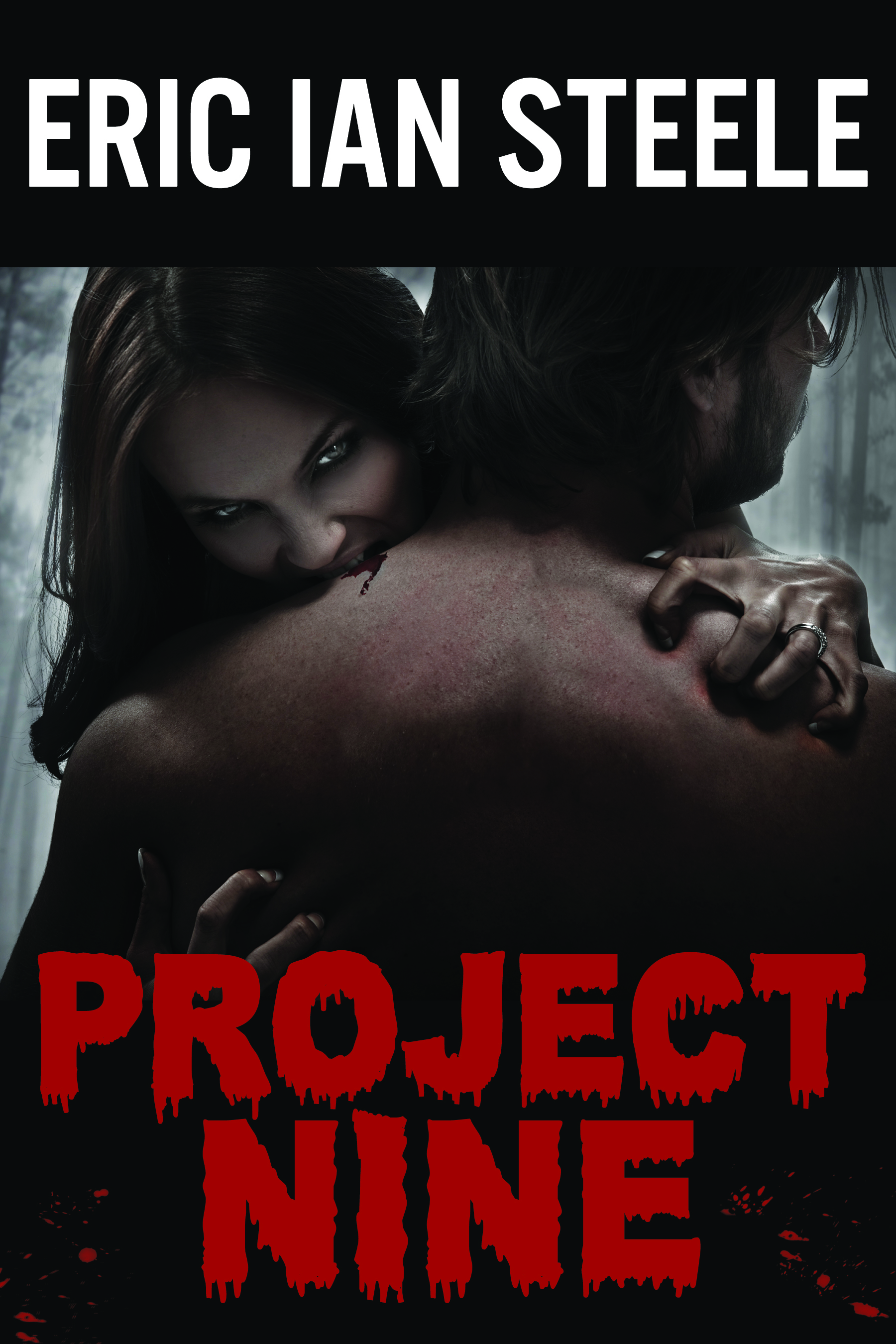
Sneak preview of new horror novel “Project Nine”!

Today, I wanted to share with you something very special to me.

Here is the first look at the amazing cover for my new horror novel, “Project Nine”. The folks over at MyInkBooks have done a fantastic job putting this together. Suffice to say, a picture can say a thousand words!

But don’t be misled into thinking this is a straight-up horror yarn. I would never let you readers off the hook so easily! No, “Project Nine” is instead a horror/sci-fi/love story! Add a realistic police investigation and the evil machinations of a  ruthless politician… and you have a modern horror story with a distinctly classic feel.

The precise plot is under wraps for the moment, but I can say that if you like horror, this is the book for you! Even if the luscious young lady on the front cover doesn’t tempt you, how about this gushing review: “the narrative prose expounds a candor much in tune with all the greats in Literature”.

And as for how the novel got to be published, well that’s a story in itself!

But in case it sounds like I’m trying to sell you something… take a look below and see what you think.

FrontCover2


“Project Nine” is due to be published later this year.  I’ll be releasing more news as it arrives. Watch out for it!


Monday blog tour!

My thanks this morning to fellow Mancunian speculative fiction writer and novelist Graeme Shimmin who nominated me to be the next person on the Monday Blog Tour. A pass-the-baton exercise bringing you blogs from different writers to start your week off on the right track!

What are you working on?

Between writing screenplays, I like to keep myself occupied by writing lengthy horror novels and short stories.

At the moment, I’m just waiting for my sci-fi/horror novel “Project Nine” to be published by myinkbooks.com. The good folks over there picked up my novel last year, and have been busily trying to convert my rather “eccentric” punctuation and spelling into something the public can actually make sense of.

What is it about?

Ah. The magic question.

“Project Nine” is about a young man who longs for immortality. He finds it in a beautiful woman who has escaped from a secret government research program that has created vampires through gene therapy.  He joins her and her friends who have also escaped in their endless trek across America’s backwoods, only to find himself hunted by a relentless detective and losing his own humanity in the process.

How does it differ from others in the genre?

If the Naughties have been so far filled with horror movies populated by twenty-something kids with six-packs and hair extensions, “Project Nine” is about as far from that kind of thing as you can possibly get.

It’s gritty, realistic, and psychologically believable. But it also has the large scale and operatic quality of classic horror stories. I aimed to balance the grim realism of modern fiction with the more emotionally-resonant horror of the 1970s and 1980s.

The vampires in this story are not cape-wearing cliches, nor are they gorgeously, seductive creatures. They are real people put in an extraordinary situation. They make good and bad choices. And they are capable of acts of kindness or unspeakable wickedness.

Why do you write what you write?

Why indeed. Who knows what evil lurks in the mind of Man? Not me, certainly. In my defence, I blame watching a steady diet of old Universal and Hammer horror movies when I was a kid. Rod Serling’s “Twilight Zone” stands out for me as being the best SF/Horror TV series ever made.

However, the first movie that really made my hair stand up on end was actually not a movie at all, but the truly frightening Made-For-TV, 2-part adaptation of Stephen King’s “‘Salems Lot” — the one with David Soul and James Mason. Man, that was scary.

Essential, late-night, family-friendly viewing!

Essential, late-night, family-friendly viewing!

I’ve also been an avid fan and collector of comics since I was knee high to an Inhuman. Marvel and 2000AD to be precise. People like Alan Moore have been a huge inspiration, especially “Watchmen”  and his run on DC’s “Swamp Thing”.

As far as “real” literature goes, HP Lovecraft remains for me the greatest master of the craft. I also devoured novels by Stephen King (although I especially like the short stories in his “Night Shift” collection) and the criminally underestimated British king of horror, James Herbert. Other influences include: Peter Straub, Frank Herbert, Terry Brooks, Anne Rice, Phillip K Dick, Harry Harrison and, of course, Ray Bradbury.

There. You asked for it.

Swamp Thing - the thinking man's horror comics.

Swamp Thing – the thinking man’s horror comic.

What is your writing process?

You mean I have a process?

Seriously, it all depends on whether I’m writing screenplays, novels, or short stories.

Screenplays tend to be very structured. I outline to a varying degree of depth before writing a first draft. Then I use a structured rewrite process. I recommend reading as many books as you can on the subject and then employing the rewrite proceess used by Paul Chitlik in his excellent book. Then repeat. Over and over again. And again. And again.

My novels are a different animal. My first novel started life as a comic script (now lost, sadly) and then grew into a full-length book. My second, unpublished work began life purely as a novel. I had a rough idea of what I wanted to say and what the theme would be, then I started writing. Now I’m in the process of getting peer feedback before rewriting and editing.

Short stories usually come out of the blue. I get a first line or an idea as I’m in the shower or walking down the street and then I run with it. The ones that pop into my head seem to be the most successful. The ones I agonize about and outline never see the light of day. Weird, eh?

How much do you write in a day?

Depends. I just wrote an entire screenplay in five days. When I was in what I like to call my James Joyce phase I could write ten pages of single-spaced prose on my typewriter (yes, I had one of those). That comes to about 350 words a page. So 3,500 words a day.  You nosey parker, you.

Previous Writer

I was asked to contribute to this project by Graeme Shimmin  as part of a chain of connections from writer to writer. Each writer answers the questions and then links to the next writer in the chain. Graeme writes mainly alternate history and some excellent short stories. I suggest you check out his intriguing, fact-filled blog.

Next on the Tour

Graeme Cole is a filmmaker extraordinaire and bon vivant who also writes absurdist fiction. He currently resides in Bosnia and runs L’Institute Zoom, which maintains a blog here.

Andrew Bellware is a sci-fi/fantasy/theatre director/writer/actor and all-round swell guy who works out of NYC. He and his producing partner run Pandora Machine Films, which maintains its eponymous blog (Rated “R” for some racy content — you have been warned). I recommend their marvellous movie Clone Hunter, written by some guy from England 😉

Clone Hunter - the greatest science-fiction ever made, apparently!

Clone Hunter – the greatest science-fiction ever made, apparently!

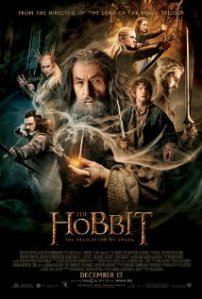
The Hobbit: The Desolation of Smaug reviewed (or “Not more barrels”).

The Hobbit Part 2: or "how many characters can we fit in a barrel?"

The Hobbit Part 2: or “how many characters can we fit in a barrel?”

This week, here’s a review that shows the perils of big-budget filmmaking from a screenwriting perspective.

WARNING: SPOLIERS AHEAD

Now, I really loved “The Hobbit Part 1”. I mean, I really loved it. Others may have thought it lacked action scenes and spent too long with the unfunny dwarves. However, I loved exactly that. Music is a much-ignored part of filmmaking. But when done correctly, it can elevate a film to something fantastic. Consider Superman the Movie (the Christopher Reeve one, not the emo-Superman of recent years), Star Wars, Indiana Jones, and Close Encounters. All had great soundtracks. Coincidentally, all by John Williams. But other composers like John Barry or even Daft Punk have come up with equally good soundtracks. Anyway, I digress. The point is, the Lonely Mountain Song by Neil Finn was my favourite soundtrack piece of 2013.

I also liked the time spent setting up the dwarves. Film is not a video game. These are supposed to be STORIES about CHARACTERS. Not just an endless succession of CGI chase and fight sequences (which become outdated fast. Check out the Matrix Reloaded if you don’t believe me).

So, in short, I loved Part 1. Loved Rhadghast with his rabbit-drawn sled. Loved the goblin king. Great.

Now to “The Hobbit Part 2″…

It began well enough. Through the “magic” of 3D (it wasn’t available in anything else in my cinema), I was transported to, respectively: Bree, Beorn’s cottage (although this lasted slightly less longer than I had hoped), and the caves of Thranduil. Very nice stuff. Even liked Tauriel and Kili (although I’m not sure how a romance between an elf and a dwarf would work in practice).

Then we came to the barrels. And this is, for me, where it all went wrong.

Now, I understand that this is a adventure film. There has to be SOME action, right? So I was along for the ride. Until the laws of physics started to be routinely ignored. Not only that, but it seemed the laws of PLOT LOGIC were ignored as well.

During the barrel riding scene, elves became superhuman. Dwarves also became superhuman. The numbers of barrels magically fluctuated (maybe Gandalf put a spell on them). Dwarves leaped twenty feet out of moving barrels in a fast-flowing river to steal weapons from the hands of Orcs and throw them back with deadly pinpoint accuracy. And having done all this, they arrive at Laketown and complain they haven’t got any weapons… having just slain about two hundred Orcs!

Still, my growing sense of apprehension was only a feeling of dread akin to the knowledge that the Necromancer had returned. So I went along to Laketown, hoping things would improve.

And, for a while, things did. The Necromancer, and his link to the evil eye in LOTR, was a very nice touch. Not in the book, but it made perfect sense within the context of the movies.

Then came Laketown.

Peter Jackson’s LOTR is reknowned for its attention to detail. It is said that there is so much set detail in Rivendell that it can never be captured on camera.

So what went wrong in Laketown? All of a sudden, it felt like I was on a set. Maybe it was the heavy overuse of interiors. But everything looked a little bit fake. The politics of Laketown were also hard to grasp. Stephen Fry’s Mayor seemed to fluctuate between wanting to kill the dwarves and wanting to help them. Nor was it clear what Bard the Bowman’s  status was in Laketown. Anyway, it was here that the Hobbit and I parted company.

Cue, Smaug. Everybody loves a dragon. I am no exception; I’m a sucker for the mythical beasties, ever since seeing Disney’s rather frightening kids’ film “Dragonslayer”.  So when Smaug appeared, I wanted to like him.

Yet, while Bilbo raced for the Arkenstone (which has no magical properties, it appears, so why it was so valuable compared to a mountain of treasure the size of Wales escaped me), we were treated to the least enjoyable action sequence I have yet seen in the whole film series.

Instead of a brisk romp with a dragon, this sequence turned into a half-hour epic. Dwarves managed to survive fifty-foot drops. They leaped across thirty foot-wide gaps. Never again will I doubt dwarven architecture, as a waking dragon can cause an earthquake in Laketown but fail to bring down the roof of a chasm even when all the support beams are shattered.  The dwarves (ingenious creatures worthy of a job at Microsoft) are able to rig up a one-hundred foot molten gold statue in less than a minute.

When said statute suddenly (and inexplicably) explodes in a torrent of molten gold, it had me rolling my eyes and sinking into my seat.

Another example of plot nonsense occurs when Smaug returns to find Bilbo quivering, ready to be eaten and accepting his fate.

“I’ll show you,” says Smaug. “I’ll burn Laketown down, that’ll make you suffer!”

How about eating him? Wouldn’t that make him suffer? But no, Smaug decides to save Bilbo for later (after all, there’s another three hours to go), and burn down Laketown. Which he would do anyway.

Hmm.

Don’t even get me started on how Thorin manages to use a heat-conductive metal shield to float safely on a river of molten gold.

So in conclusion, “The Desolation of Smaug” is definitely a film of two halves. The nice character moments and humour of the first half is undone in the second half by an over-reliance on the same physics-defying and unconvincing CGI we have sene in films like “Indiana Jones 4” (Remember the fridge? That’s worthy of a trope in itself, much like “Jumping the Shark”. Maybe we should have “Riding the fridge”?)

Perhaps it’s the result of so many disciplines being involved in what used to be a proces involving only actors, a director, and a handful of crew. Maybe it’s even due in some way to the input (or lack of input) of Guillermo Del Toro, who apparently departed the production due to delays in filming. It’s anyone’s guess how having such a visionary director leave halfway through affected the outcome. But whatever the cause, it felt like the filmmakers had thrown in their towels after the barrel riding scene.

I don’t know if “The Hobbit” will take its place alongside the “Lord of the Rings” as modern classics. But it seems that in a world where anything can be conjured up using that magical CGI paintbrush, filmmakers need to exercise more restraint. Otherwise they risk suffering the fate of a certain cartoon mouse who also experimented with magic and came undone.

Why was He-Man so crap?

he-man

Today I am tackling an issue that has been playing on my mind for many years. Several attempts were made in the 1970s and 1980s to fuse fantasy with science-fiction in movies. This is not a new trend, and is generally called “Science Fantasy”. For instance, Edgar Rice Burrough’s John Carter novels are science-fantasy. CS Lewis (of Narnia fame) even wrote a religious allegory sci-fi series known as the “Space” trilogy.  In movies we have 1983’s “Krull”, the notorious flop “John Carter”, and the lilttle-known but half-decent movie “Pathfinder”.

But what does these have in common? Well, they are crap.

That’s not to say we can’t love them. “Krull” has a particular place in my heart, not least for the amazing Freddie Jones and the use of actual British character actors. The CS Lewis novels are great flights of fancy (although totally scientifically incorrect).

But for some reason critical success has mostly eluded these works. There is something about the melding of high fantasy (magic, swords and sandals) with science-fiction (high tech, high concept) that creates works of daftness rather than genius.

Take He-Man.

He-Man has his roots firmly in Robert E Howard’s “Conan” stories. With a technological twist. His home planet Eternia contains magic but also machines and flying vehicles, cyborgs and laser-guns. You would think that such a world would provide great images and great storylines. Instead, it always manged to be childish and rather stupid. Like GI Joe on Magic Mushrooms.

Jitsu - one of Skeletor's less memorable henchmen.

Jitsu – one of Skeletor’s less memorable henchmen.

The animated series was designed to promote Mattell’s line of action figures, whish was apparently created to cash in 1982’s “Conan” movie, but which had to be redesigned when said Arnie movie featured so much nudity and gore that it was rated “R”. However this may be apocryphal.

For He-Man newbies, He-Man was in fact Prince Adam of Eternia. A fact that nobody could discern despite being identical and never wearing a mask. He rode a cowardly beast that transformed into a fiercer version whenever Adam became He-Man (nobody bothered to explain why in a planet where everybody could use flying vehicles Adam settled for riding on the back of his pet cat).

Nothing too unusual there. If we can buy Superman, why not Prince Adam? But unlike other cartoon characters, there was something udneniably dorky about He-Man. Possibly it was his very name. The far more successful cartoon TV show “Dungeons and Dragons” had some genuinely unsettling moments. But He-Man’s greatest foe was… Skeletor.

Ah, Skeletor. Far more likeable than He-Man with your silly plotting and villanous laugh. But the unfortunate bad guy only ever managed to surround himself with complete morons who alway fouled up his schemes. He may have had more success working with the Three Stooges than the likes of Beast-Man, Mer-Man and Lockjaw.

Skeletor - the villain everyone loves to hate... almost.

Skeletor – the villain everyone loves to hate… almost.

Which brings us to the 1987 live-action movie.

In fact, it’s not that bad when watched today through the tinted lenses of nostalgia. Meg Foster is eerie as Evil-Lyn, the plot (albeit a bit silly) is so perfectly “Eighties” that it’s watchable. Frank Langella provides a suitably grave Skeletor. However the plot suffers from two things – cliche and a lack of credible worldbuilding. Lines like “It’s too quiet” grate. Gone is the backdrop of Eternia (struck out for budgetary reasons). And the characters are all pretty stock and one-dimensional.

Perhaps part of the problem is the inherent silliness of the science-fantasy genre, a genre that exists only to draw attention to itself. Science-fantasy stories scream out, “Look how clever I am!”. But in fact they only use cliches from both genres, creating storylines with few surprises  but which also strain our credibility.

Consider “John Carter”. Not only are we supposed to believe  in aliens, life on Mars, teleportation, a second set of aliens, and magic… but a third set of competely different aliens as well. Phew!

So there you have it. He-Man’s crapness is inherent. It both endears us to him and repells us, as it does with many other high-bidget flops. On reflection, I think it’s because using two genres (some may say opposing genres) weakens the depth of storytelling. We are so concerned with the language and imagery of the story, that there is no room left for what audiences desire most… plot twists and great characters.

So my advice is.. avoid the science-fantasy genre altogether. Unless you want to produce a very expensive white elephant.

And I bet you thought I would never get any writing tips out of this post! 😉

Horror Without Victims review

Here is a very nice review of “Horror Without Victims”, an anthology which contains my short story “Clouds”. It’s only the second time I’ve been published in a British anthology. The first time was with my story “Charlie” in the British Fantasy Society’s anthology “Terror Tales”, alongside Neil Gaiman and Kim Newman.

http://paintthistownred.wordpress.com/

The reviewer calls it “psycho-geographic horror”, and although I didn’t plan it out that way, I’d have to agree!

If you haven’t got a copy yet, I’d recommend it (because my story is in it, of course – but also because it contains 24 other excellent, frightening, funny and awe-inspiring stories, all on the theme of horror without the gore).

product_thumbnail[1]

Ten books I dare Hollywood to make into movies

Hello, True Believers!

Today I thought I woud share a list of ten books that should be made into movies. Okay, so some of them are actually comic books. But these are the properties I think would reinvigorate the motion picture industry.

Some background first. Hollywood is in dire need of franchise material. Jack Reacher and The Hobbit just won’t cut it. Where are the iconic films for the Y2K generation? Where are the Indiana Joneses, the Dirty Harries and the Star Warses (How do you pluralize “Star Wars” anyway?)

What we need is a new approach, something more daring and edgy than conventional blockbuster fare with its cookie cutter plots and bloated CGI (remember Green Lantern?)

Here are my choices for breathing fresh life into the film industry:

1. THE ELFSTONES OF SHANNARA

Terry Brooks’ finest book. This epic fantasy has enough originality to give the Lord of the Rings a run for its money. But it’s a much more human story, with an unforgettable twist ending.2. BATTLE OF THE PLANETS

Based on the 1970s Japanese cartoon and the father of modern anime. Superpowered teens in a cool ship do battle with giant monsters from outer space. I’m not seeing the downside. Just don’t let Jerry Bruckheimer near it!3. THE WITCHING HOUR

Anne Rice is best known for her Vampire Chorincles, but this multi-generational tale of witchcraft in New Orleans ranks among her best work. Very dark and gothic, with a rich sense of history. This is the “Gone With the Wind” of horror stories. Neil Jordan to direct please!4. STRONTIUM DOG

Mutant bounty-hunters from the future hop across planets to collect bounties from the humans who despise them. If it sounds like X-Men in space, it isn’t. More like some insane Speghetti Western. Created by 200A.D. writer John Wagner (“A History of Violence”) and artist Carlos Ezquerra, mutant “Strontium Dog” Johnny Aplha has a host of cool gadgets and ways to kill you. Backed up by some truly wonderful supporting characters like Norse bounty-hunter Wulf Sternhammer and lumpy-headed Middenface McNulty.5. THE RATS

A Canadian company attempted this once and came badly unstuck. But with modern SFX this horror classic is screaming to be made into a major motion picture. It has two sequels, the third of which takes place after a nuclear holocaust! “The Walking Dead”‘s Andrew Lincoln would be perfect for the lead!6. THE CALL OF CTHULHU

This is the project Guillermo Del Toror should have tackled after Hellboy. HP Lovecraft’s cosmic tale of a conspiracy to revive an immortal extradimensional demon from his ages-old slumber in a buried city under the Pacific Ocean. Comes with its own built-in fanboy audience!7. MIKE HAMMER

Mickey Spillance wrote numerous Mike Hammer books, many of which have been filmed, with the most memorable being “Kiss Me Deadly” with Ralph Meeker. Hammer is the uber-detective. A World War II veteran transplanted into post-1940s America, he is politically incorrect (he promises to murder his friends murderer), mysoginistic (he pimps out his secretary to solve a case), but with a sense of purpose that is at times terrifying, Hammer is Dirty Harry on steroids. The only problem could be getting someone who is gritty and believable enough to play him. Imagine Kirk Douglas fused with Clint Eastwood and you’re about halfway there.8. EON

Intelligent and epic sci-fi novel from Greg Bear. A team of astronauts investigate a hollow asteroid orbiting Earth and find… well, you’ll have to read the book. But it has a vision of the future of humanity that’s slowly coming true. Could be the next Stargate. One for director Alex Proyas, perhaps, who filmed the excellent “Dark City”.9. NORSTRILIA

A bewilderingly exotic sci-fi, so rich and strange that it outrivals even Frank Herbert’s “Dune”. Cordwainer Smith’s stories of the far, far future include the anti-ageing drug “Stroon”, uplifted animals that carry out slave labour, a humanity so interwoven with technology that it has forgotten happiness, and the weirdest planetary defence system known to man. Together with his short stories, Smith’s sci-fi is almost poetic in beauty and would present moviegoers with images never before seen on film. But who could direct such divine madness? Kubrick perhaps, were he still alive, or maybe David Lynch. But nowadays my money would be on “Tron Legacy” director Joseph Kosinski.10. ALAN MOORE’S SWAMP THING.

Comics legend Moore managed to revive this flagging minor  DC book and turn it into one the greatest works of comic art in the 1980s. Swamp Thing is a kind of existential Everyman. Rather than perform the usual superheroics, the eonymous hero explores the nature of good and evil, travels from Heaven to Hell, and meets a young John Constantine.  In a fantastic series of stories titled “American Gothic”, Moore reinvents horror staples such as vampires, werewolves, ghosts and zombies,  giving them fresh social relevance and deaing with issues such as racism, gun laws, family ties, veganism, and feminism! Never one to offer us easy answers, Moore leaves many of these debates open-ended. This resulted in some fierce debates with readers and fans at the time. Forget Green Lantern, give us Swamp Thing!