Tag Archives: film

The top 10 scariest horror movies ever made…

A spot of indulgence today as I list my personal top 10 scariest horror movies of all time.

Horror is a misunderstood and much-maligned genre. At its worst, it’s nothing more than sickening exploitation. However at its best, it can be a place for experimentation, satire, and the exploration of the darker side of human nature.

This is not meant to be a definitive list. Add your own. But here are some movies that made me turn the light back on… and some that made not turn it off at all.

10. Nosferatu

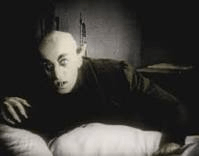
F W Murnau’s unofficial film version of Dracula led to him being famously sued by Bram Stoker’s widow. But the frightening make-up of Max Shrek as the titular vampire Count Orlock remains one of the scariest images ever committed to film. The moving shadowplay on the wall would be used again time after time. Remade stylishly by Werner Herzon with Klaus Kinski as the vampire.

http://www.youtube.com/watch?v=N-DrKgjit4I

Max Shrek. His name means "fear" in German!

Max Shrek. His name means “fear” in German!

9. Threads

A made-for-TV drama about what would actually happen in the event of a nuclear strike on Britain. Produced in the early 80s when nuclear war was still a grim possibility,  this terrifying program shocked a generation. Once seen, never forgotten…

8. The Thing

John Carpenter’s homage to the 50s B-movie, this guts’n’gore horrorshow pushed the boundaries of what was possible with make-up effects. A box-office flop, it has since become one of the greatest horror films of all time. Compare the atmosphere of the freezing scientists in this pic to the lukewarm remake.

7. Poltergeist

Tobe Hooper and Steven Spielberg collabroated to produce the grandaddy of all haunted house movies. A combination of SFX rollercoaster and shocking horror movie, it made a generation of kids afraid of trees and TV sets.

http://www.youtube.com/watch?v=5ytjaMfoF2M

6. Halloween

John Carpenter’s first big hit and the first true slasher pic. Indestructible madman Michael Myers stalks teenagers in a small town. But it’s the film’s creepy insinuation that horror could be lurking anywhere, even in the dark spaces of your own home, that truly lingers.

Just a normal street. But look again.

Just a normal street. But look again.

5. Alien

Alien is on some levels a very stupid movie. Butch warrant officer Sigourney Weaver displays more common sense than the rest of the entire crew of the ill-fated spaceship Nostromo, but still ends up trying to save a cat in her underwear. Even so, jaw-dropping production design and the most memorable alien in movie history combine to produce nerve-jangling scares from start to finish.

4. The Texas Chainsaw Massacre

Time has dulled the edge of this “based on true events” movie. But from the film’s opening shots we know we’re not in Kansas anymore. The casual violence remains shocking, but it was the film’s “endurance horror” that would go on to influence filmmakers such as Sam Raimi with his “Evil Dead” movies. Forget the countless remakes and sequels.

3. Jaws

Yes, that shark terrified audiences in the 70s and beyond. It may look rubber now, but the film’s great ensemble cast and stirring theme music still manage to make bathtime a little scarier.

2. Dawn of the Dead

George A Romero followed up his genre-busting “Night of the Living Dead” with this satirical masterpiece. you get a real sense of claustrophobia watching this for the first time as zombies are everywhere. Copied over and over again from low-budget schlock to the more stylish “Walking Dead” TV series, Romero was the only one to do something actually new with the zombie as an archetype of horror. Remade quite well but with less ideas in 2004.

http://www.youtube.com/watch?v=Pt-EipwlWQ0

1. Salems Lot

This two-part TV movie must have sent network executives into a spin. A creepy Stephen King story about Dracula transplanted into the modern US becomes something quite different in the hands of horror maestro Tobe Hooper and veteran scriptwriter Paul Monash. The horror continues to rise as citizens of a small town are transformed into the most frightening bloodsuckers you have ever seen.  1970s TV heart-throb David Soul grows understandably more and more hysterical when faced with sneering James Mason and his army of undead. But it’s the surreal, frightening scenes where a vampire kid comes calling on his classmates that have stayed in my imagination. Watch the unedited version for the shocking twist ending.

http://www.youtube.com/watch?v=aIbJ2rQ59ZE

The Importance of Being Persistent

You wouldn't want to be this guy. Unless you were a writer.

You wouldn’t want to be this guy. Unless you were a writer.

As you go through this journey to reach your writing goals, there is one thing I cannot stress enough.

You must persist.

Of all the people I know who have become writers, they all share one thing in common. They did not give up. And out of all the people I know who did not become writers, they too had one thing in common. At some point, they did.

It’s easy to give in to the voice inside your head that tells you you’re not good enough, that you never will be good enough, that you’re wasting your life, that becoming a professional writer is just an impossible dream…

But are you wasting your life following a dream?

I would argue that those who go through life without dreams are truly the ones wasting theirs.

It may be that you have financial pressures urging you to get a steady job. It may be you have a family, or one on the way. It may be you are surrounded with unsupportive people who laugh and sneer whenever you mention your latest project.

Eddie Murphy has said on the Actors’ Studio that he only surrounds himself with positive people, because negative people wear you down.

You will encounter a lot of jealousy in your quest to be a writer. People will laugh at your dreams. Some will give you harsh, unconstructive feedback. Others will simply ignore you.

You must learn to overcome this. Because this is a form of rejection, and rejection is the writer’s shadow. It follows him wherever he or she goes, threatening to obscure him or her from view.

One way to beat rejection is to reframe the statistics. If you only get one script request out of a hundred submissions, well then surely that means that every submission will get you closer to reaching one hundred and getting that script request!

Being positive is sometimes the hardest part of writing. But if you can master it, you will eventually succeed. Even if it happens in a way you never expected…

Confessions of a British Screenwriter – Recycled

Today, I thought I would share a link to an embarassingly old and badly written article I did for Moviebytes.com when I had my first screenplay sale. So without further ado…

http://moviebytes.com/NewsStory.cfm?StoryID=3899

Guns, girls, and robots. What's not to like?

Guns, girls, and robots. What’s not to like?

My Name is ‘Err’: A Screenwriters Journey

By Eric Steele

It was a blisteringly hot day in Hollywood. My writing partner and I had been worn down by a punishing heatwave that pushed temperatures up to a hideous 120 degrees. As we both came from Manchester, England – a city renowned for precipitation in a country where summer just means that the rain gets warmer – for us this was the equivalent to walking on the planet Mercury. If Mercury had been filled with dangerous-looking winos and suicidal motorists.

We’d decided to visit an eatery in televisionland known as Roscoe’s Chicken and Waffles. The guide book assured us it was a good place to spot the stars. Taking our place in line, we sizzled on the sidewalk like a couple of English poached eggs. After an eternity of this torture, the Emcee asked us what our names were. “Err,” I began. But before I could use my best Hugh Grant impression, he disappeared back inside the tempting darkness of the doorway.

“Table for Mister Errrr…” he intoned.

Of course, I couldn’t correct him without opening up a whole new can of worms. I might as well have been speaking Portugese for all the good it did. Obviously a case of “You say tomayto, I say tomahto”.

We seated ourselves in a booth and soon learned why it was called “chicken and waffles.” As I dug into my plate of fried chicken at ten o’clock in the morning, I chose to reflect upon how much this reminded me of our whole screenwriting experience so far.

It seemed a far cry from how I had started out – tinkering away in my bedroom in Manchester, reading as many free articles as I could on a then-fledgling Internet, buying whatever books the local stores had in stock (not many), in my impossible quest to somehow get involved in this magical form of storytelling.

The trip to LA proved eye-opening in more ways than one. As we attended meetings without success, we both sank into a kind of delirious despair. Getting lost on foot in Downtown LA or being rear-ended by the daughter of a movie-star on Sunset Boulevard one Saturday night only added to the sense of unreality. Maybe we were just depressed from days spent foot-slogging through graveyards, staring at epitaphs of our long-departed screen idols.

Two years later, we had still to sell a script. Sure, there had been options, near misses. One producer kept us hanging on for over a year until we got an e-mail saying he had decided to work with Paris Hilton instead.

During this time my writing partner and I went our separate ways. He had a young family, and in the end, I guess he decided that “real life” was more important. I soldiered on, until one day I decided to throw caution to the winds, forget about the market, and write the kind of story I would like to see onscreen. The result was my first option with a big production company in LA.

Still nothing happened. I had listed the script with InkTip.com, and they helped me out with a press release. After a few months, I received a phone call from my soon-to-be agent, who had read several scripts and was sufficiently impressed to sign me up.

She told me she wanted to see more family-friendly stuff. I immediately scoured through what passed for my filing system until I found something that would fit the bill…

Among my various screenplays, I’d written a sci-fi television pilot called “Clonehunter”. On a whim, I’d entered it into Scriptapalooza. Although the script didn’t place, they were kind enough to provide me feedback. I scanned the feedback, read the script. Hmm, not exactly Orson Welles, but it was salvageable enough.

Over the next few months I rewrote the script, developing themes and characters, until I had an honest-to-goodness movie script. However, experience had taught me that what seems like Shakespeare to you can seem like Dr. Seuss to someone else, so I workshopped the script at zoetrope.com, where other writers could sling mud at it with impunity. Some of those reviews were gut-wrenching in their honesty, but the script came out a lot better for it. More importantly, it was free.

Some of the scenes I’d written would give James Cameron a headache. Pursuits on hoverbikes, floating casinos, talking gorillas – no sane individual would even think of tackling such a project without a studio budget. But it was just crazy enough to succeed. Besides, I loved the character – David Cain, an intergalactic bounty-hunter who would put Harrison Ford to shame. Not only was Cain’s work questionable, but the more we heard about him, the more we suspected that he might not be a very nice guy either. This was someone who had a history so long he kept secrets from everyone – including his attractive young cyborg partner. And he had an intelligent cat.

I wasn’t expecting anything, so I was truly surprised when I received an e-mail from director Andrew Bellware. He had seen my script on InkTip and wanted to shoot it, using his production company in New York. I was aghast – did he really think he could do it? Well, it might need a little tweaking. I would never see my floating casino (sob). However it would be an outright sale.

My agent hammered out the agreement and Drew then began the looooong process of filmmaking.

Drew kept me informed at every stage of the process. I was flattered that anyone would even care what I thought. Each week he would send me another video of the shoot. Nothing could have prepared me for the sensation of watching the script come alive onscreen. Sometimes I was surprised, sometimes I laughed out loud as an actor said a line in a way I had not expected and turned a boring piece of exposition into something dramatic or even comedic. Most of all, I was amazed that this was actually being pulled off. Even the hoverbike sequence was there! Eat your heart out, Lucas!

The whole experience reminded me that moviemaking is a team sport. Everybody has an input, no matter how small. I felt privileged to have given my contribution. Suddenly, all those years of slaving away over a hot keyboard in a cramped office seemed worthwhile, all those moments of self-doubt as I wondered whether I should be doing this at all dissipated.

Yet, afterwards, here I am again, sat in the same office typing away (admittedly I bought myself a new computer), churning out page after page and knowing that whatever I write will in no way by anything near as good as the movie unfolding in my head – the one nobody will ever see. In a way it’s like starting out all over again. And if it ever does get made, it will take a whole bunch of people to make it happen, not just the director and actors, but set decorators, editors, and everyone else down to whoever buys in the sandwiches.

So is it worth it? Of course. Because that’s the magic of motion pictures – that someone in a tiny suburb of Manchester, a couple of thousand miles away from New York and even further away from Los Angeles, could one day contribute to a movie. If I’ve learned one thing on my ragtag journey, it’s that you should try everything – every angle, every means at your disposal – to market your script. The Internet has revolutionized the world of media. Contests, feedback sites, listing sites – all of these are equally valid ways to get your script produced.

Who knows, we might be able to meet up one day for chicken and waffles!

The dreaded telephone conversation

Why do I fall victim to this most horrific of plot devices every time I write a script?

Most screenwriting gurus say the same thing. For the sake of all that’s holy, DON’T include telephone conversations in your screenplay. Not only is the formatting a bitch, but it’s inherently undramatic to show two people talking in different places. For some reason, there’s something jarring about seeing onscreen what we all do on a daily basis.

But then, there are other things we do on a daily basis that I also wouldn’t want to see onscreen…

However if you’re like me and unable to write a single Act without that most unwelcome of characters making an appearance,  here are some formatting tips:

Voice-Over (V.O.) or Off-Screen (O.S.)?

I would say, if you must, V.O.

O.S. implies a character is in the same place but talking out of shot of the camera.

V.O. is when we hear the words spoken over the action.

Intercutting Scenes

The easiest way to avoid the above dilemma is to use “INTERCUT” in your sluglines.

For example:

INT. BOB’S HOUSE – DAY

Bob picks up the phone.

BOB

Hello?

INT. DAVE’S HOUSE – DAY

Dave on the other end of the phone.

DAVE

Hi, Bob. I hear you’re wrting a scene with a phone call.

INTERCUT. BOB’S HOUSE/DAVE’S HOUSE

Bob sighs.

BOB

Yeah, those things are a sonofa bitch.

DAVE

I hear ya.

Get the idea?

Remember to set your two locations up with a brief scene before you use “INTERCUT” as I have in the above example.

Another way of writing the last slugline would be:

“INTERCUT BETWEN BOB’S HOUSE AND DAVE’S HOUSE AS REQUIRED”

Don’t get hung up on this. Remember, correct format serves to convey meaning. Not the other way around.

However you should always include an action line immediately after EVERY slugline. The slugline is not a replacement for action but serves to inform us what location we are in.

AND

I’ll let you into a little secret. I find that if you have one character doing something that’s important, but which is hidden from the other character, this distracts the reader from the fact that you’ve ever used a phone call. For instance:

 INT. BOB’S HOUSE – DAY

Bob picks up the phone.

BOB

Dave? I hear you’re going to that High School reunion later.

INT. DAVE’S HOUSE – DAY

Dave on the other end of the phone.

DAVE

That’s right.

INTERCUT. BOB’S HOUSE/DAVE’S HOUSE

Bob laughs at a memory.

BOB

You remember that kid Brian who bullied you all year?

Dave loads a magazine into a gleaming 9mm Glock handgun.

DAVE

Oh, yeah.

Not Shakespeare. But you get the general idea.

So there you have it. You need never have nightmares about writing telephone conversations in a screenplay again.  Unless, like me, you can’t avoid writing them in the first place.

To trend or not to trend… writing in the “hot” genre

What is “hot” in Hollywood? What kind of screenplay does Hollywood want?

Surely, the cynical starving writer thinks, if I find out what genre is hot and I write in that genre, Hollywood will want my screenplays? The simply law of supply and demand will do my marketing job for me. If “found footage” scripts are hot, simply write one and riches will await.

But hang on, says the artist (who doesn’t mind if he or she starves or not), isn’t that betraying your art? Isn’t it selling… out?

Well, I have no problem with someone writing for a living. Even Leonardo da Vinci had to eat. And although I could do without yet another “disaster mash-up” movie (SyFy channel, I’m looking at you), I remember one of my earliest instincts was to find out what Hollywood wants in a screenplay. After all, they are the buyers and I am the seller.

But there are several problems with trying to write in the “hot genre”. First of all, Hollywood is a long way away. Not just in space, but in time. Studios frequently undertake test screenings to gauge the popularity of a film before it is finished. People in Hollywood know what the outcome of these screening are. Hence in your newsletter you might get an inexplicable slew of requests for stories about “dogs verses aliens” from producers anxious to copy the newest surefire hit.

And therein lies the problem. Because by the time you write said screenplay, the trend will be over, and “Buster Saves the World” will be yesterday’s movie news. Writing for the latest hot trend is like trying to hit a constantly moving target. By the time you’ve nocked your arrow and written your screenplay, the movie world has moved on to the next “hot” project.

Having said that…

Certain types of script always stand more of a chance of getting made. They are generally as follows…

– Female driven

– Limited location

– Low budget

– Horror/thriller

– No SFX

These are the calls for screenplays you will encounter most frequently in newsletters and advertisements.

BUT.. and this is a big BUT!

I personally have found that I have less success trying to write in low budget genres. For some reason I naturally (and unfortunately) gravitate toward big action set pieces, usually sci-fi or horror. And yet I have more success selling these type of stories than when I write my one-location character-driven drama.

So if anything can be drawn from my limited experience, it’s this… write in the style and genre you love AND which you are best at. Whatever the budget. Whatever the genre. And THEN worry about rewriting it so it can get made. Maybe you can reduce the budget without losing that great scene with the giant ape climbing the Empire State Building.

This is a strange business. As Dan Ackroyd once said: “I write ’em big, and they keep making ’em.”

Here’s hoping you can write big too!

Do you need to pay for classes?

The short answer? No.

There are plenty of free resources out there which will tell you as much, if not more, than paying hundreds of £££ to sit in an audience and watch Robert McKee or his contemporaries.

Now I’ll qualify that. I have never paid hundreds of ££££ to watch these people. But when so much stuff is available for nothing, why would I?

One thing I would be wary of is any class that promises to get you a sale. There are many, many, many reasons (to quote Police Academy) why films get made. Many great directors, writers and producers have failed to get surefire successes off the ground for no reason other than poor luck. As for the bad movies that do get made, well… consider “Battleship” and “Glitter”.

"I wish we'd spent more money on script development"

“We should have spent more money on script development”

So without further ado, here are just a few ways to imporve your writing for free:

i) Free online classes

There are many of these. Check out www.screenwritingU.com for some examples. Check first, but for many you pay nothing except your landline fees. If you are in the UK and you have a budget package on your phone line it may cost you even less, as most calls in LA are schedule around noon PCT, which translates to after 8pm GMT.

ii) Books

Yes, actual books. Those paper things people used to read before computers. Take a look at the star ratings on amazon.com to sort out the wheat from the chaff.

iii) Screenplays

Incredible as it may seem, reading professional screenplays can help you writing your own amateur screenplays. You can buy them from online retailers like Amazon or eBay. Or you could read some for free from various websites, provided you do this legally of course.

iv) Interviews with sceenwriters

Why listen or read to people who never had a screenplay published about how to write and sell screenplays? Wouldn’t you be better actually hearing from folks who made a living doing what you want to do? I recommend  “Tales from the Script” and the fantastic, irreverent “Devil’s Guide to Screenwriting” by the incomparable Joe Eszterhas if you want to laugh at the madness of Hollywood.

v) Writing

One of the best ways to improve your writing? Actually writing. Studying the careers of many A-list screenwriters and authors has taught me that they write. A hell of a lot. More than you would believe.

Now this is difficult if you already have a job. Believe me, I know about this. However if you set aside some time for witing EVERY DAY, you will reap the rewards.

vi) Feedback (added)

As has been pointed out to me below, this is another invaluable way of improving your writing. Feedback can be gleaned from many sources. So many, that I will make it the subject of another post. But some examples may be: online communities such as American Zoetrope, Triggerstreet and Talentville; other writers, by joining a writer’s group (check the ‘net for one in your area); personal contacts (but not your grandma — unless she also happens to  write screenplays). These sources are not always reliable nor appropriate for your screenplay, however. Somebody who loves historical romances may not appreciate your zombie/sci-fi mashup script, so use with caution.

So there you have it. My top tips for improving your writing for free.

Hope this helps!


Pouring some salt on Sluglines

So. Sluglines.

Okay, we all know what sluglines are (and if not, Google the term and find out!), but are we comfortable with using them? If you’re like me, probably not. But here are some things I’ve noticed.

In a lot of amateur scripts, sluglines are annoying things that you have to write to get to the good stuff (the action!). But sluglines can also be your friend.

Sluglines can be used to save time and energy describing things. For instance:

“INT. OFFICE – DAY

An office. Pens and pencils lie everywhere. Papers litter every surface. Overturned chairs clutter the floor. Smashed coffee cups decorate the desks… did I mention this was an office?”

Or you could just write:

“INT.  A VERY UNTIDY OFFICE – DAY”

Another way to save white space on the page (thereby writing less words and making your script more attractive to time-starved executives and producers) is to omit “DAY/NIGHT” after you’ve introduced an interior for the first time.

For example:

“INT. OFFICE BUILDING – DAY”

And then when you switch to another part of the building:

“INT. OFFICE BUILDING – CUBICLE”

And then for the next part of the same interior:

“BOSS’S OFFICE”

Although sometimes you might want to inform the reader that this is a slugline by inserting “INT.” at the start, depending on the number of sluglines you employ.

Putting all this together:

“INT. OFFICE BUILDING – DAY

A busy accountancy firm in full swing. Staccato chattering of TYPEWRITERS. Harried OFFICE WORKERS constantly trip over mounds of files scattered across the floor.

INT. BOSS’S OFFICE

MARTY, an office junior, quails before his red-faced BOSS. His boss’s tirade over, Marty turns tail and runs out through the

MAIN OFFICE

And into the

BATHROOM.”

Hardly Shakespeare. But you get the idea.

The main thing to remember is that nothing is set in stone. Although you could fill a library with everything that has been written on screenplay format, as long as you adhere to the basic principles concering the main elements (line spacing, indentation, capitals, etc) then I’m sure most experts would agree you’ll be fine. To make it easier, programs like Final Daft format these elements automatically. And if you’re not using screenwriting software by now, you should be. It will increase your productivity tenfold. The most important thing is that you do not present the reader with something they (a) struggle to read, and (b) are not familiar with in terms of style.

Hope this helps. As always, feel free to disagree!

Ten books I dare Hollywood to make into movies

Hello, True Believers!

Today I thought I woud share a list of ten books that should be made into movies. Okay, so some of them are actually comic books. But these are the properties I think would reinvigorate the motion picture industry.

Some background first. Hollywood is in dire need of franchise material. Jack Reacher and The Hobbit just won’t cut it. Where are the iconic films for the Y2K generation? Where are the Indiana Joneses, the Dirty Harries and the Star Warses (How do you pluralize “Star Wars” anyway?)

What we need is a new approach, something more daring and edgy than conventional blockbuster fare with its cookie cutter plots and bloated CGI (remember Green Lantern?)

Here are my choices for breathing fresh life into the film industry:

1. THE ELFSTONES OF SHANNARA

Terry Brooks’ finest book. This epic fantasy has enough originality to give the Lord of the Rings a run for its money. But it’s a much more human story, with an unforgettable twist ending.2. BATTLE OF THE PLANETS

Based on the 1970s Japanese cartoon and the father of modern anime. Superpowered teens in a cool ship do battle with giant monsters from outer space. I’m not seeing the downside. Just don’t let Jerry Bruckheimer near it!3. THE WITCHING HOUR

Anne Rice is best known for her Vampire Chorincles, but this multi-generational tale of witchcraft in New Orleans ranks among her best work. Very dark and gothic, with a rich sense of history. This is the “Gone With the Wind” of horror stories. Neil Jordan to direct please!4. STRONTIUM DOG

Mutant bounty-hunters from the future hop across planets to collect bounties from the humans who despise them. If it sounds like X-Men in space, it isn’t. More like some insane Speghetti Western. Created by 200A.D. writer John Wagner (“A History of Violence”) and artist Carlos Ezquerra, mutant “Strontium Dog” Johnny Aplha has a host of cool gadgets and ways to kill you. Backed up by some truly wonderful supporting characters like Norse bounty-hunter Wulf Sternhammer and lumpy-headed Middenface McNulty.5. THE RATS

A Canadian company attempted this once and came badly unstuck. But with modern SFX this horror classic is screaming to be made into a major motion picture. It has two sequels, the third of which takes place after a nuclear holocaust! “The Walking Dead”‘s Andrew Lincoln would be perfect for the lead!6. THE CALL OF CTHULHU

This is the project Guillermo Del Toror should have tackled after Hellboy. HP Lovecraft’s cosmic tale of a conspiracy to revive an immortal extradimensional demon from his ages-old slumber in a buried city under the Pacific Ocean. Comes with its own built-in fanboy audience!7. MIKE HAMMER

Mickey Spillance wrote numerous Mike Hammer books, many of which have been filmed, with the most memorable being “Kiss Me Deadly” with Ralph Meeker. Hammer is the uber-detective. A World War II veteran transplanted into post-1940s America, he is politically incorrect (he promises to murder his friends murderer), mysoginistic (he pimps out his secretary to solve a case), but with a sense of purpose that is at times terrifying, Hammer is Dirty Harry on steroids. The only problem could be getting someone who is gritty and believable enough to play him. Imagine Kirk Douglas fused with Clint Eastwood and you’re about halfway there.8. EON

Intelligent and epic sci-fi novel from Greg Bear. A team of astronauts investigate a hollow asteroid orbiting Earth and find… well, you’ll have to read the book. But it has a vision of the future of humanity that’s slowly coming true. Could be the next Stargate. One for director Alex Proyas, perhaps, who filmed the excellent “Dark City”.9. NORSTRILIA

A bewilderingly exotic sci-fi, so rich and strange that it outrivals even Frank Herbert’s “Dune”. Cordwainer Smith’s stories of the far, far future include the anti-ageing drug “Stroon”, uplifted animals that carry out slave labour, a humanity so interwoven with technology that it has forgotten happiness, and the weirdest planetary defence system known to man. Together with his short stories, Smith’s sci-fi is almost poetic in beauty and would present moviegoers with images never before seen on film. But who could direct such divine madness? Kubrick perhaps, were he still alive, or maybe David Lynch. But nowadays my money would be on “Tron Legacy” director Joseph Kosinski.10. ALAN MOORE’S SWAMP THING.

Comics legend Moore managed to revive this flagging minor  DC book and turn it into one the greatest works of comic art in the 1980s. Swamp Thing is a kind of existential Everyman. Rather than perform the usual superheroics, the eonymous hero explores the nature of good and evil, travels from Heaven to Hell, and meets a young John Constantine.  In a fantastic series of stories titled “American Gothic”, Moore reinvents horror staples such as vampires, werewolves, ghosts and zombies,  giving them fresh social relevance and deaing with issues such as racism, gun laws, family ties, veganism, and feminism! Never one to offer us easy answers, Moore leaves many of these debates open-ended. This resulted in some fierce debates with readers and fans at the time. Forget Green Lantern, give us Swamp Thing!