
Tag Archives: adaptation

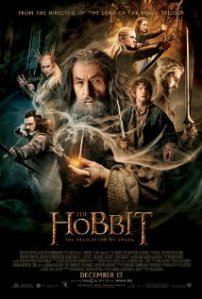
The Hobbit: The Desolation of Smaug reviewed (or “Not more barrels”).

The Hobbit Part 2: or "how many characters can we fit in a barrel?"

The Hobbit Part 2: or “how many characters can we fit in a barrel?”

This week, here’s a review that shows the perils of big-budget filmmaking from a screenwriting perspective.

WARNING: SPOLIERS AHEAD

Now, I really loved “The Hobbit Part 1”. I mean, I really loved it. Others may have thought it lacked action scenes and spent too long with the unfunny dwarves. However, I loved exactly that. Music is a much-ignored part of filmmaking. But when done correctly, it can elevate a film to something fantastic. Consider Superman the Movie (the Christopher Reeve one, not the emo-Superman of recent years), Star Wars, Indiana Jones, and Close Encounters. All had great soundtracks. Coincidentally, all by John Williams. But other composers like John Barry or even Daft Punk have come up with equally good soundtracks. Anyway, I digress. The point is, the Lonely Mountain Song by Neil Finn was my favourite soundtrack piece of 2013.

I also liked the time spent setting up the dwarves. Film is not a video game. These are supposed to be STORIES about CHARACTERS. Not just an endless succession of CGI chase and fight sequences (which become outdated fast. Check out the Matrix Reloaded if you don’t believe me).

So, in short, I loved Part 1. Loved Rhadghast with his rabbit-drawn sled. Loved the goblin king. Great.

Now to “The Hobbit Part 2″…

It began well enough. Through the “magic” of 3D (it wasn’t available in anything else in my cinema), I was transported to, respectively: Bree, Beorn’s cottage (although this lasted slightly less longer than I had hoped), and the caves of Thranduil. Very nice stuff. Even liked Tauriel and Kili (although I’m not sure how a romance between an elf and a dwarf would work in practice).

Then we came to the barrels. And this is, for me, where it all went wrong.

Now, I understand that this is a adventure film. There has to be SOME action, right? So I was along for the ride. Until the laws of physics started to be routinely ignored. Not only that, but it seemed the laws of PLOT LOGIC were ignored as well.

During the barrel riding scene, elves became superhuman. Dwarves also became superhuman. The numbers of barrels magically fluctuated (maybe Gandalf put a spell on them). Dwarves leaped twenty feet out of moving barrels in a fast-flowing river to steal weapons from the hands of Orcs and throw them back with deadly pinpoint accuracy. And having done all this, they arrive at Laketown and complain they haven’t got any weapons… having just slain about two hundred Orcs!

Still, my growing sense of apprehension was only a feeling of dread akin to the knowledge that the Necromancer had returned. So I went along to Laketown, hoping things would improve.

And, for a while, things did. The Necromancer, and his link to the evil eye in LOTR, was a very nice touch. Not in the book, but it made perfect sense within the context of the movies.

Then came Laketown.

Peter Jackson’s LOTR is reknowned for its attention to detail. It is said that there is so much set detail in Rivendell that it can never be captured on camera.

So what went wrong in Laketown? All of a sudden, it felt like I was on a set. Maybe it was the heavy overuse of interiors. But everything looked a little bit fake. The politics of Laketown were also hard to grasp. Stephen Fry’s Mayor seemed to fluctuate between wanting to kill the dwarves and wanting to help them. Nor was it clear what Bard the Bowman’s  status was in Laketown. Anyway, it was here that the Hobbit and I parted company.

Cue, Smaug. Everybody loves a dragon. I am no exception; I’m a sucker for the mythical beasties, ever since seeing Disney’s rather frightening kids’ film “Dragonslayer”.  So when Smaug appeared, I wanted to like him.

Yet, while Bilbo raced for the Arkenstone (which has no magical properties, it appears, so why it was so valuable compared to a mountain of treasure the size of Wales escaped me), we were treated to the least enjoyable action sequence I have yet seen in the whole film series.

Instead of a brisk romp with a dragon, this sequence turned into a half-hour epic. Dwarves managed to survive fifty-foot drops. They leaped across thirty foot-wide gaps. Never again will I doubt dwarven architecture, as a waking dragon can cause an earthquake in Laketown but fail to bring down the roof of a chasm even when all the support beams are shattered.  The dwarves (ingenious creatures worthy of a job at Microsoft) are able to rig up a one-hundred foot molten gold statue in less than a minute.

When said statute suddenly (and inexplicably) explodes in a torrent of molten gold, it had me rolling my eyes and sinking into my seat.

Another example of plot nonsense occurs when Smaug returns to find Bilbo quivering, ready to be eaten and accepting his fate.

“I’ll show you,” says Smaug. “I’ll burn Laketown down, that’ll make you suffer!”

How about eating him? Wouldn’t that make him suffer? But no, Smaug decides to save Bilbo for later (after all, there’s another three hours to go), and burn down Laketown. Which he would do anyway.

Hmm.

Don’t even get me started on how Thorin manages to use a heat-conductive metal shield to float safely on a river of molten gold.

So in conclusion, “The Desolation of Smaug” is definitely a film of two halves. The nice character moments and humour of the first half is undone in the second half by an over-reliance on the same physics-defying and unconvincing CGI we have sene in films like “Indiana Jones 4” (Remember the fridge? That’s worthy of a trope in itself, much like “Jumping the Shark”. Maybe we should have “Riding the fridge”?)

Perhaps it’s the result of so many disciplines being involved in what used to be a proces involving only actors, a director, and a handful of crew. Maybe it’s even due in some way to the input (or lack of input) of Guillermo Del Toro, who apparently departed the production due to delays in filming. It’s anyone’s guess how having such a visionary director leave halfway through affected the outcome. But whatever the cause, it felt like the filmmakers had thrown in their towels after the barrel riding scene.

I don’t know if “The Hobbit” will take its place alongside the “Lord of the Rings” as modern classics. But it seems that in a world where anything can be conjured up using that magical CGI paintbrush, filmmakers need to exercise more restraint. Otherwise they risk suffering the fate of a certain cartoon mouse who also experimented with magic and came undone.

10 comic book superheroes who deserve their own movie…

Ahem…

(In ominous voice)

In this blog, dear reader, I tempt vilification by geekdom. Should I leave out a beloved favourite, I will no doubt suffer the wrath of comic book fanatics everywhere. And yet it would be remiss of me indeed not to at least attempt a short compendium of comic books which should have their own movie.

Some of the creations listed below may have already had their own movies, but these were either so bad they have been entirely forgotten, or so low budget as to demand a proper blockbuster version. You decide…

Marvel enters the 1970s with Heroes for Hire.

Marvel enters the 1970s with Heroes for Hire.

10. HEROES FOR HIRE

Created at the height of the Kung-Fu/Blaxploitation movie genre craze in the 1970s, the Heroes for Hire became major fixtures in the Marvel Universe. Comprising Iron Fist — a Westerner trained in mystical kung-fu arts by interdimensional monks — and Luke Cage aka Power Man — a street fighter given a second chance by an experiment that made him virtually indestructible, the Heroes for Hire were just that. Motivated by dollar bills rather than altruism, they usually managed to stay on the side of good. Actor Nicholas Cage was so taken with Power Man that he adopted the character’s second name as his own. Surely worth a movie?

9. POWER PACK

Invented by Marvel in the 1980s, this is the story of four ordinary children who receive super-powers from a dying alien, Power Pack faced the menace of the alien Snarks, who were hell bent on Earth’s destruction. Tasked with rescuing their inventor father from the Snark mothership, these kids behaved like real kids — squabbling, crying, and discovering their inner heroes. This one has Disney stamped all over it. A terrible TV pilot made in the 1990s is best forgotten.

8. HOURMAN

An unfairly maligned character, Hourman was a Golden Age superhero who appeared in All Star comics before being revamped in DC comics by supergenius comic book creator Gardner Fox (Flash, Green Lantern etc etc). Chemist Rex Tyler discovers a miracle pill (Miraclo) that gives him superpowers… but only for one hour.  The twist was that Miraclo was addictive, which gave this character a greater psychological realism than others of his era.

7. THE MAN CALLED NOVA

Richard Ryder was Marvel’s 1970s version of Peter Parker  — a weedy loser who was given incredible powers and became “the human rocket” when he was zapped by a spaceship and given the powers of a Centurian Nova Prime, guardian of the planet Xandar.  Ryder had a popular comic book, teaming up with other heroes such as Spider-Man, before finally relinquishing his powers. An awesome-looking new version of the superhero was launched for the Annihilation: Conquest storyline in the 2010s, proving that Nova can still attract the fans.

185px-Nova_1_(1976)[1]

Nova rockets into the 1970s!

6. SLAINE

Pat Mills’ extraordinary Celtic barbarian warrior first graced the pages of 2000AD at the turn of the 1980s. Since then his popularity has endured. A rather “earthy” hero, Slaine is accompanied on his journeys across time by the disgusting dwarf Ukko, and has faced off against both aliens and dinosaurs. But Slaine’s most unique feature is his “warping” power, in which he channels the energy of ley-lines to became a monstrous, Hulk-like behemoth!

5.DR. STRANGE

Created by Stan Lee in the 1960s, Stephen Strange was a gifted surgeon with a drink problem. After crashing his car, he was found by the Ancient One and schooled in the mystic arts to become Earth’s sorceror supreme. A classic, old-school superhero, Dr. Strange’s adventures took him to all manner of fantastic and bizarre dimensions thanks to legendary comics artist Steve Ditko. A TV movie was made in the early 1980s with John Mills that actually wasn’t all that bad. Time for another try, methinks.

4. THE SUB-MARINER

Originally a villainous foe of The Fantastic Four, Prince Namor of Atlantis grew to become much more than that. Namor’s supreme pride and arrogance makes him the perfect anti-hero. He’s had his own comic book on and off since the 1960s. But a movie? Well, it would be better than “Aquaman”. If only they could get rid of those nutty wings…

Prince Namor, cousin of Colonel Sanders.

Prince Namor, cousin of Colonel Sanders!

3. THE BALLAD OF HALO JONES

Before Watchmen, Alan Moore created a host of genius characters, many for British comic 2000AD. Halo Jones is an Everyman, or rather, an “Everygirl”. Born into an overpopulated Earth in the far future, she seeks escape and adventure beyond the stars, only to find abject misery, cruelty, and exploitation at every turn as both a scantily-dressed hostess and a battle-hardened warrior in a horrific future war. Gloriously pessimistic.

2. WONDER WOMAN

The archetypal female superhero — so why has she never had her own movie? Played by Linda Carter on TV in the 1970s in a series that was far too campy for its own good,and invented by psychologist William Moulton Marston, Wonder Woman exemplified the fighting spirit of America in WWII. This is a superhero with a  history as long as Batman and Superman. An attempt was made to revitalize the character recently but proved a misfire. But who could step into Wonder Woman’s boots and lasso?

1. SWAMP THING

When Alan Moore was lured to America by DC comics in the 1980s, he reimagined this floundering comic book property. From his humdrum origins as yet another product of a scientific experiment gone wrong, Swamp Thing was transformed into one of the finest comic books ever written. Moore’s magnificent “American Gothic” cycle sees Swamp Thing encounter all manner of staple horror monsters, all wonderfully reinvented to reflect modern America…. menstrual werewolves, water-dwelling vampires, radioactive zombies, haunted houses filled with the victims of gun crime. Swamp Thing journeys across the multiverse, from Heaven to a Hell that is the most completely imagined vision of the afterlife in the history of comics. During this we are also introduced to a British psychic called John Constantine. Swamp Thing was made into two attrociously bad movies in the 1980s as well as a TV series. None of them have (thankfully) anything to do with Moore’s work. This is a comic book that is ripe for the big screen (pun intended). Forget the other big green guy. Swamp Thing is where it’s at!

Ten books I dare Hollywood to make into movies

Hello, True Believers!

Today I thought I woud share a list of ten books that should be made into movies. Okay, so some of them are actually comic books. But these are the properties I think would reinvigorate the motion picture industry.

Some background first. Hollywood is in dire need of franchise material. Jack Reacher and The Hobbit just won’t cut it. Where are the iconic films for the Y2K generation? Where are the Indiana Joneses, the Dirty Harries and the Star Warses (How do you pluralize “Star Wars” anyway?)

What we need is a new approach, something more daring and edgy than conventional blockbuster fare with its cookie cutter plots and bloated CGI (remember Green Lantern?)

Here are my choices for breathing fresh life into the film industry:

1. THE ELFSTONES OF SHANNARA

Terry Brooks’ finest book. This epic fantasy has enough originality to give the Lord of the Rings a run for its money. But it’s a much more human story, with an unforgettable twist ending.2. BATTLE OF THE PLANETS

Based on the 1970s Japanese cartoon and the father of modern anime. Superpowered teens in a cool ship do battle with giant monsters from outer space. I’m not seeing the downside. Just don’t let Jerry Bruckheimer near it!3. THE WITCHING HOUR

Anne Rice is best known for her Vampire Chorincles, but this multi-generational tale of witchcraft in New Orleans ranks among her best work. Very dark and gothic, with a rich sense of history. This is the “Gone With the Wind” of horror stories. Neil Jordan to direct please!4. STRONTIUM DOG

Mutant bounty-hunters from the future hop across planets to collect bounties from the humans who despise them. If it sounds like X-Men in space, it isn’t. More like some insane Speghetti Western. Created by 200A.D. writer John Wagner (“A History of Violence”) and artist Carlos Ezquerra, mutant “Strontium Dog” Johnny Aplha has a host of cool gadgets and ways to kill you. Backed up by some truly wonderful supporting characters like Norse bounty-hunter Wulf Sternhammer and lumpy-headed Middenface McNulty.5. THE RATS

A Canadian company attempted this once and came badly unstuck. But with modern SFX this horror classic is screaming to be made into a major motion picture. It has two sequels, the third of which takes place after a nuclear holocaust! “The Walking Dead”‘s Andrew Lincoln would be perfect for the lead!6. THE CALL OF CTHULHU

This is the project Guillermo Del Toror should have tackled after Hellboy. HP Lovecraft’s cosmic tale of a conspiracy to revive an immortal extradimensional demon from his ages-old slumber in a buried city under the Pacific Ocean. Comes with its own built-in fanboy audience!7. MIKE HAMMER

Mickey Spillance wrote numerous Mike Hammer books, many of which have been filmed, with the most memorable being “Kiss Me Deadly” with Ralph Meeker. Hammer is the uber-detective. A World War II veteran transplanted into post-1940s America, he is politically incorrect (he promises to murder his friends murderer), mysoginistic (he pimps out his secretary to solve a case), but with a sense of purpose that is at times terrifying, Hammer is Dirty Harry on steroids. The only problem could be getting someone who is gritty and believable enough to play him. Imagine Kirk Douglas fused with Clint Eastwood and you’re about halfway there.8. EON

Intelligent and epic sci-fi novel from Greg Bear. A team of astronauts investigate a hollow asteroid orbiting Earth and find… well, you’ll have to read the book. But it has a vision of the future of humanity that’s slowly coming true. Could be the next Stargate. One for director Alex Proyas, perhaps, who filmed the excellent “Dark City”.9. NORSTRILIA

A bewilderingly exotic sci-fi, so rich and strange that it outrivals even Frank Herbert’s “Dune”. Cordwainer Smith’s stories of the far, far future include the anti-ageing drug “Stroon”, uplifted animals that carry out slave labour, a humanity so interwoven with technology that it has forgotten happiness, and the weirdest planetary defence system known to man. Together with his short stories, Smith’s sci-fi is almost poetic in beauty and would present moviegoers with images never before seen on film. But who could direct such divine madness? Kubrick perhaps, were he still alive, or maybe David Lynch. But nowadays my money would be on “Tron Legacy” director Joseph Kosinski.10. ALAN MOORE’S SWAMP THING.

Comics legend Moore managed to revive this flagging minor  DC book and turn it into one the greatest works of comic art in the 1980s. Swamp Thing is a kind of existential Everyman. Rather than perform the usual superheroics, the eonymous hero explores the nature of good and evil, travels from Heaven to Hell, and meets a young John Constantine.  In a fantastic series of stories titled “American Gothic”, Moore reinvents horror staples such as vampires, werewolves, ghosts and zombies,  giving them fresh social relevance and deaing with issues such as racism, gun laws, family ties, veganism, and feminism! Never one to offer us easy answers, Moore leaves many of these debates open-ended. This resulted in some fierce debates with readers and fans at the time. Forget Green Lantern, give us Swamp Thing!