Author Archives: Eric Ian Steele

Unknown's avatar

About Eric Ian Steele

Screenwriter, author, comic book and film aficionado, and zombie poet.

Do you need to pay for classes?

The short answer? No.

There are plenty of free resources out there which will tell you as much, if not more, than paying hundreds of £££ to sit in an audience and watch Robert McKee or his contemporaries.

Now I’ll qualify that. I have never paid hundreds of ££££ to watch these people. But when so much stuff is available for nothing, why would I?

One thing I would be wary of is any class that promises to get you a sale. There are many, many, many reasons (to quote Police Academy) why films get made. Many great directors, writers and producers have failed to get surefire successes off the ground for no reason other than poor luck. As for the bad movies that do get made, well… consider “Battleship” and “Glitter”.

"I wish we'd spent more money on script development"

“We should have spent more money on script development”

So without further ado, here are just a few ways to imporve your writing for free:

i) Free online classes

There are many of these. Check out www.screenwritingU.com for some examples. Check first, but for many you pay nothing except your landline fees. If you are in the UK and you have a budget package on your phone line it may cost you even less, as most calls in LA are schedule around noon PCT, which translates to after 8pm GMT.

ii) Books

Yes, actual books. Those paper things people used to read before computers. Take a look at the star ratings on amazon.com to sort out the wheat from the chaff.

iii) Screenplays

Incredible as it may seem, reading professional screenplays can help you writing your own amateur screenplays. You can buy them from online retailers like Amazon or eBay. Or you could read some for free from various websites, provided you do this legally of course.

iv) Interviews with sceenwriters

Why listen or read to people who never had a screenplay published about how to write and sell screenplays? Wouldn’t you be better actually hearing from folks who made a living doing what you want to do? I recommend  “Tales from the Script” and the fantastic, irreverent “Devil’s Guide to Screenwriting” by the incomparable Joe Eszterhas if you want to laugh at the madness of Hollywood.

v) Writing

One of the best ways to improve your writing? Actually writing. Studying the careers of many A-list screenwriters and authors has taught me that they write. A hell of a lot. More than you would believe.

Now this is difficult if you already have a job. Believe me, I know about this. However if you set aside some time for witing EVERY DAY, you will reap the rewards.

vi) Feedback (added)

As has been pointed out to me below, this is another invaluable way of improving your writing. Feedback can be gleaned from many sources. So many, that I will make it the subject of another post. But some examples may be: online communities such as American Zoetrope, Triggerstreet and Talentville; other writers, by joining a writer’s group (check the ‘net for one in your area); personal contacts (but not your grandma — unless she also happens to  write screenplays). These sources are not always reliable nor appropriate for your screenplay, however. Somebody who loves historical romances may not appreciate your zombie/sci-fi mashup script, so use with caution.

So there you have it. My top tips for improving your writing for free.

Hope this helps!
 

Thirteen Great Horror Directors

Okay, list time folks.

I thought I would share with you my ruminations on the greatest horror directors of all time. No small claim to fame this, as the genre has been a fertile breeding ground for talent. Steven Spielberg, Michael Mann, David Lynch — all started out in horror. Spielberg cut his teeth on Rod Serling’s TV series “Night Gallery” before his debut with “Duel” and the smash hit “Jaws”. Michael Mann crafted the underrated and beautiful wartime horror story “The Keep”, while David Lynch’s earliest work was the surreal nightmare “Eraserhead”.

But such luminaries aside, let us without further ado “get down to it”….

13. Guillermo del Toro

Fans of del Toro may rail against his low position. But I would argue that he is not primarily a horror director. His early work “The Devil’s Backbone” and “Cronos” are definitely horror. The wonderful “Pan’s Labyrinthe” is a beguiling horror/fantasy. But his breakthrough film “Blade 2” and the “Hellboy” movies have been more action movies than terror movies.

12. Tobe Hooper

Hooper achieved phenomenal success with the no-budget “Texas Chainsaw Massacre”, a film so groundbreaking it’s hard to imagine nowadays. But apart from the masterful scare machine “Poltergeist” he failed to follow up on it with such lacklustre gems as “Eaten Alive”. Hence his position at a respectful number 12.

11. George A RomeroThe king of zombies, Romero actually produced a couple of extremely good movies in other genres, such as the disturbing and atmospheric vampire picture “Martin”, and the wonderfully bonkers “Knightriders”. Still his “Dead” trilogy dominates popular culture today, and single-handedly recreated the zombie genre.

10. Terence Fisher

Prolific English director of Hammer horror films, Fisher brought us movies such as “The Horror of Dracula” (Christopher Lee), “The Curse of Frankenstein” (Peter Cushing) and “Curse of the Werewolf” (Oliver Reed). Okay, so not all of those are masterpieces. But he reinvigorated horror in the 1950s and 1960s, daring to show the Count’s fangs and lashings of blood in all its technicolour glory.

9. Roman PolanskiThe thinking man’s horror director, Polanski’s “Repulsion” is a scary journey into madness, while “Rosemary’s Baby” is a true Hollywood horror blockbuster. Polanski’s sensitive direction and the use of fine actors auch as John Cassavetes achieved devastating effect in the story of Mia Farrow’s pregnant woman beset by modern-day occultists. But my personal favourite is “Dance of the Vampires”  (aka “The Fearlesss Vampire Killers”), a pic that manages to be both delightfully funny and very very scary.

8. Mario Bava

The godfather of gore. Bava’s Italian horror remains obscure to some, but once seen his moves are never forgotten. “Bay of Blood” virtually created the slasher genre long before “Friday the 13th” or “Halloween”. While in “Black Sabbath”, an aged Boris Karloff shines in a trilogy of terrifying stories told with extreme relish. Bava evokes both the old Hollywood of the 1930s and the technicolour brashness of Hammer horror. An underrated master of the genre.

7. Dario Argento

Prolific and sometimes uneven, Argento’s work includes some of the greatest horror ever made. “Deep Red” is a Euro-thriller that becomes elevated to fever pitch by outrageous set-pieces and very flashy direction, as well as the first use of music by electronica band Goblin, who would famously perform the score for “Dawn of the Dead”. Argento’s “Tenebrae” is another masterpiece of “Giallo” cinema, where we stalk with the madman, seeing thorugh his eyes, only to arrive at a truly incredible ending. Not for the squeamish, but worth seeking out.

6. Roger Corman

The grand-inquisitor of American Horror in the 1950s and 1960s, Corman’s low-bidget ethic squeezed some of the best ever performances out of horror actor Vincent Price, to create such classics as “The Fall of the House of Usher”, “The Pit and the Pendulum” and “The Masque of the Red Death”. Corman also had an eye for talent, working with such future directors as Francis Ford Coppola and a young man called James Cameron.

5. David CronenbergShocking, disturbing, disgusting. All words that could apply to David Cronenberg’s work. From early films that are hard to watch such as “Rabid” and “Shivers” (the latter about a turd-shaped parasite that induces sexual craving in its host), to left-of-centre sci-fi “Scanners”, to the pinnacle of his horror career — the genuinely affecting remake of “The Fly”, Cronenberg refuses to pull away from the realities of our more fleshy parts. Achieved mainstream success with excellent dramas “Eatsern Promises”, “A History of Violence” and “A Dangerous Method”.

4. Jacques Tourneur

The old master of horror, Tourneur’s wonderful use of dark and shadow gave us truly memorable movie masterpieces such as “Night of the Demon” and “I Walked with a Zombie”. Although old, these movies are still creepy, thanks to their fantastic atmosphere, and their influence is often still felt today.

3. John CarpenterThe wonderkind of 70s horror, for a long time Carpenter had the distinction of directing the most successful independent movie ever , “Halloween”. He followed this up with movies that failed to impress critics and audiences at the time but which have since become horror classics. Movies such as “The Thing”, “The Fog”, “Prince of Darkness”, “Escape from New York” and “Big Trouble in Little China” are among the great films of horror cinema. Far ahead of his time, Carpenter added a sense of wicked humour to his movies that makes them as enjoyable today as they were when they first came out.

2. James Whale

A giant of horror cinema. Whale was a Brit who went on to acheve success in the fledgeling world of motion pictures in America. He established his reputation with classics like “Frankenstein”, “The Invisible Man” and “The Bride of Frankenstein”. Part of the expressionist school of filmmaking, Whale’s movies are operatic in tone, like a fever dream that transcend time and space to become truly mythical. His influence is felt in virtually every horror movie produced since, while his interpretation of Frankstein became imprinted into the modern consciousness.

1. Alfred Hitchcock

Known primarily as a thriller director, Hitchcock managed to traverse both genres and made some of the greatest horror movies ever. “Psycho” totally rewrote the horror genre, focusing on a monster who was human rather than imagined, with a frighteningy believable psychology. Difficult for us modern audiences to understand how much of a departure this was. But every psycho-thriller you see these days is modelled after him. Hitchcock went even further with the more disturbing “Frenzy”, again a frighteningly believable tale of a serial killer on the loose. In “The Birds”, Hitchcock does it again, this time with an apolcapytic thriller. Never explained, the birds attack mankind, and there can only be one winner. Directed with stunning flare, Hitchcock’s movie is still as potent today in its power to unnerve. Many of Hitchcock’s other films straddle the border of horror and thriller, such as “The Lodger”, a silent film about Jack the Ripper, “Blackmail”, or the surreal “Spellbound”. Meaning that he fully deserves his place as number one.

Adapting your screenplay into a novel

Should you do it?

A lot of A-list screenwriters began as novelists: William Goldman, Joe Eszterhas, Ron Bass, Richard Price…

But then a lot of screenwriters didn’t. Take Billy Bob Thornton, for example, who came up with the idea for Sling Blade by concocting a monologue for himself as an actor. Or Frank Darabont, who started out as a set decorator.

For me, the question is one of access. Are you in America? If so, why aren’t you in Hollywood networking your ass off. I know I would be in a heartbeat.

So if you’re in the UK, Europe, or even as far away as Russia or Australia, maybe novelizing some of your work is a good way to get noticed.

But…

Make sure it’s a story that can be told on the printed page alone. I’ve seen some terrible novels adapted from screenplays. The two things are not the same. Novels focus on psychology, getting us into the heads of the characters. That’s exactly the opposite of a screenplay, which focuses on revealing ideas and psychology through action.

Which explains why there are some terrible adaptations of novels, and why the old adage that a bad novel makes a good movie may have some truth in it.

So I wouldn’t novelize a story just for the sake of it. It has to be something that will withstand the adaptation process.

And then the real fun begins. Because selling a novel is hard. In my experience, it’s actually harder to sell a novel than to sell a screenplay. But maybe that depends on where your preferences lie.

Also, the advent of self-publishing may have just changed the entire face of the publishing industry. Now anyone can publish without the need for a massive corporation. Obviously, that raises issues of quality control. It also makes it harder to stand out in a crowd so your e-book may get lost amid the clamor. I’d be interested to know what people think about that.

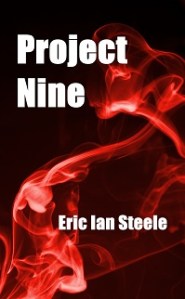
Next post, I’ll share a few of my experiences while publishing my e-book “Project Nine”.


Characters in your screenplay – good in a room?

Boy, I wish I could write great characters. Then I would feel qualified to write an article on them. But in all honesty, I can’t lay caim to that (what? you cry. Humble? Moi?). So instead this is just about a few techniques I use to write characters that might work for you.

William Goldman said famously that screenplays are structure.

But if you’re like me, you’ll want to know how to populate your story with great characters. They can make the difference between selling a screenplay and it ending up in the slush pile.

More importantly, they can also make your story into something that will hopefully last longer than the popcorn you bought going into the theatre.

How many times have you seen a (usually big budget action) movie, and been carried along by the stunts, explosions, etc. only to never watch that movie again?

In contrast, how many times have you watched certain movies over and over again?

Why do you do it?

What do The Terminator, Casablanca, The Producers, and Frankenstein all have in common?

Great characters.

What would The Terminator be without shrinking violet waitress-turned-badass Sarah Connor? (Answer: Terminator 3)

What would Casablanca be without the outwardly cynical but morally sound Rick?

What would Annie Hall be without the neurotic Alvy Singer?

How about Dirty Harry without Harry Callaghan? Or Rocky without Rocky Balboa? It’s no coincidence that many successful movies have character names as their titles, or even the occupations of the characters (Ghostbusters or The Goonies).

Okay. We get it. Characters are important. They keep us interested in the movie long after the special effects aren’t so special anymore. And SFX go out of date really quickly.  Have you seen The Matrix Reloaded recently?

But I digress…

So here are a few tips I use when designing characetrs.

1) Real Life

Yes, sad but true. Real life actually inspires a lot of art. You remember real life? The stuff that goes on when you’re away from your computer? Sometimes it can be smelly and unpleasant?

Take a walk down any street or through any mall (if you’re an American) and make a mental note of the different people you see. Try to imagine their backstory. How did they become that person? The weirder (or rather “more interesting”) the people, the more extreme the characters.

2) Contrasts

If your protagonist is a quiet guy or gal, a little shy maybe, then try having a nemesis who is exactly the opposite: brash, loud, confident.

If your protag is a straight-forward, no-nonsense, action type, try having a nemesis who is sneaky and never gets his or her hands dirty.

For a good example of this, see Bruce Willis and Alan Rickman in Die Hard.

3) Admiration

One of the ways to make a protagonist interesting is to make them the best at what they do. James Bond, for instance, is the best spy. Wolverine out of the X-men is an unstoppable fighting machine. The ultimate example of this is Superman –  he flies, is invulnerable, always saves the day, and he never lies. He is perfect in every way. yet that’s his curse. Which brings us to…

4) Flawed

Heroes have to have a flaw to be likeable. We all root for underdogs. Arnie in End of Days is faced with insurmountable odds. It makes him human (-ish). Rick in Casablanca is bitter and cynical due to the loss of his love. But we understand why; Ingrid Bergman is quite a catch. Wolverine in X-Men is prickly (literally) because he was mistreated by the military.

Heroes must have a flaw or they become boring. Like Tomb Raider.

5) Consistency

Would Bruce Willis in Die Hard talk to himself in a neurotic way about his situation the way Woody Allen does in Annie Hall?

Would Rocky Balboa set up a complicated sting operation the way Luke Skywalker does in Return of the Jedi in Jabba the Hut’s palace?

That’s consistency. Characters must act according to their personalities throughout the entire screenplay. This is a tough one.

For an example of where this rule is broken, see also Die Hard. John McClane (hero) bumps into an unarmed Hans Gruber (baddie). Gruber pretends to be an American hostage. He does it so well that McClane hands him a gun. Gruber uses the gun on McClane. But guess what? McClane knew Gruber was Gruber the whole time, and the gun is unloaded! But then Gruber’s allies burst onto the scene, removing McClane’s advantage anyway.

Now this may be a good example of misleads and reversals (have to make that the subject of a later post), but it’s bad characterization. Why? Because McClane is a blue-collar cop while Gruber is a criminal mastermind. How could McClane possibly KNOW that Gruber is a terrorist? What gives him this blistering insight? Throughout the script we se that McClane is an underdog, a likeable Joe who just happens to be a cop in extraordinary circumstances. McClane exhibits almost superhuman perceptiveness in figuring Gruber’s identity.

So why did Die Hard make a ton of money? Well, it’s full of surprises, which audiences like. And don’t forget the superhero factor. We want McClane to beat the incredible odds. So we forgive and forget this unsupported character reaction. But it’s still there. It’s a minor “jumping-the-shark moment”, which is one of my favourite movie sayings. But more of that another time…

So I hope this has been remotely useful. Great characters have been filling up our screens ever since Ebeneezer Scrooge (and a good deal before that). So have fun with them.

Chances are, if you come up with characters based on real life, you won’t fall into the trap of writing yet more cookie-cutter one-dimensional video-game characters.

I, for one, am tired of seeing girls with swords kicking-ass, girls with guns kicking-ass, or girls in PVC catsuits kicking-ass (never thought I’d say that).

Now I’m off to try to put this into practice with my own script…

New sci-fi horror novel now on amazon.co.uk!

Yes, it does exactly what it says on the tin. My sci-fi/horror novel “PROJECT NINE”, many years in the making, is now available on amazon.co.uk. as well as on amazon.com. Heck, it’s even on amazon.ca and amazon.ja! So whether you’re on the Orient or the Yukon, you can enjoy this thrilling, dark ride from the comfort of your own Kindle.

Now available at www.amazon.com!

Now available at http://www.amazon.com!

http://www.amazon.co.uk/PROJECT-NINE-ebook/dp/B00B4ZL6D0/ref=sr_1_1?s=books&ie=UTF8&qid=1359453264&sr=1-1

And for those of you who like your sci-fi and horror fiction with a visual twist, check out the book trailer below (Don’t say I never treat you!):

http://www.youtube.com/watch?v=Q00wJX36BAo

Structure, character, and story… why your screenplay needs them.

Okay, so this is the big one. It’s the big one because on it’s own it really doesn’t mean anything. I could give you a “golden ticket” for structure. but it would be useless without linking it to story and character. Because I believe that a screenplay needs all three of these things.

Let’s examine what we mean:

Structure – the architecture of your screenplay. At certain moments, certain things happen. The catalyst at page 12, for instance.

Story – the plot. Event that happen to the characters, or which they instigate.

Character – a nebulous concept, rarely defined. Not just personality or behaviour, but a mixture of the two. A character is defined by the action they take. Whether we would call these actions heroic, cowardly, villainous, vain etc. Even worse, character is supposed to change. Take Sarah Connor in the Terminator (put-upon waitress to kick-ass robot killer).

Whe I first began writing, I knew that certain things were supposed to happen at certain points (structure) creating the story. but what I didn’t know what that structure is really about character, and character is where the story comes from. Confused?

Let’s take an example,one of my all-time favourite comedies, “Groundhog Day”:

TV weatherman Phil Connors ( Bill Murray), manages to alienate his cameraman and beautiful producer by being cynical and self-centred.

(Notice the “setup” phase of the story is actually laying down Phil’s character by showing how he reacts to events)

On assignment to cover Groundhog Day, Phil gets stranded in Punxsutawney due to a blizzard. Phil wakes up to find that he is reliving that same day over again.

(Phil is annoyed, to say the least, at having to stay. But he is about to face an event that will force his personalilty to change. These are the “catalyst”, and “turning point” phases).

At first he is confused. Then when it happens again, he takes advantage of the situation without any fear of long-term consequences. He uses his “inside knowledge” to seduce women, steal money, and act recklessly.

(Now we get to the “fun and games” section, where the story literally plays around with the concept: “What would you do if you were foced to relive one day over and over again?”)

However, his attempts to get closer to Rita repeatedly fail.

(The “midpoint”. This is where Phil tries his tricks on Rita and fails. He knows he must change but is unwilling to do so)

Unable to end the time loop, a frustrated Phil becomes depressed, offensive, kindaps Punxsutawney Phil and even tries to end his own life. But despite all his actions, nothing breaks the time loop.

(Phil avoids change and in doing so falls into despair. This is the “low point” of the movie)

Phil finally tells Rita what is happening and proves it to her. She suggests that he should take advantage of it to improve himself.

(The second “turning point”. Notice how the romance subplot provides the inspiration for the protagonist’s final victory?)

Inspired, Phil decides to use his knowledge of what the day will bring to help as many people around town as possible, even saving lives. He learns to play piano and make ice sculptures. He becomes so popular and admired that Rita is impressed.

(Phil embraces change. His personality undergoes a radical transformation. But we believe it because it’s been set up earlier on. Phil knew he had to change; now he goes for it. And the results are impressive. He is on his way to the final victory).

After the end of this last, most momentous day, Rita stays the night with Phil, and he awakes, not to the same day, but to a new day with Rita. The time loop is broken.

(The “final victory” and”resolution”. Phil shows he has changed. He doesn’t try to seduce Rita. His love for her is genuine. As a result of accepting this change his life is transfomed, the curse is broken, and the story reaches its climax.)

So there you go. This is why I believe that character, story,and structure are all intimately interconnected. I tied myself in knots for a long while trying to shoe-horn my plots into a structural paradigm, not knowing that I was really writing about characters and change.

Hope this helps you!

The British are coming! My top 20 British classic films of all time.

Sadly, the British aren’t coming to the movies much any more. But in case you ever doubted that British cinema used to be a major player in the world of movies, here are my Top 20 favourite ones. Notice that last word: “favourite”.

Putting together this list, it became apparent that the British made three types of film really well. War films (not surprising, seeing as we’ve pretty much always been at war with somebody), comedy films (probably because we needed a laugh with all that war going on), and horror films (decide for yourself what this means!).

I’m not going to provide links here. In true British fashion, you can copy and paste these titles yourself if you want to learn more about them. I do hope you find something you may not have seen before. There are many more classic British films out there. So get scratching the surface…

Without futher ado, here is my definitely-non-definitive list.

20) 28 Days Later (2002)

Chilling zombie invasion movie transplanted to London.

19) The Lady Vanishes (1938)

Alfred Hitchcock outdoes himself in this flawless spy thriller that has been copied many times, for instance in recent hit movie Flightplan.

18) The Wicker Man (1973)

A bizarre horror musical that sees zealous policeman Edwad Woodward surrounded by some very creepy locals in the Scottish islands.

17) Saturday Night and Sunday Morning (1960)

Albert Finney’s star-making performance as a working class hero in 1960s Nottingham.

16) Dead of Night (1945)

One of the best horror movies ever made. It starts out like a stuffy play and gradually becomes more and more frightening, like a dream that’s closing in…

15) Kes (1969)

Ken Loach’s superb documentary-style kitchen sink drama with a famous football match.

14) Get Carter (1971)

The one where a naked Michael Caine dispatches thugs with a shotgun. Brilliant hardboiled revenge story.

13) In Which We Serve (1942)

Gripping and very affecting wartime drama. The scenes of the blitz are unforgettable. Stiff upper lips are everywhere.

12) The Loneliness of the Long-Distance Runner (1962)

Very understated, realistic story of how one boy winds up in one of Britain’s notious “borstals” — correction centres for young offenders. Biting social commentary.

11) Kind Hearts and Coronets (1949)

Alec Guinness shows off his acting versatilty by playing all the members of an ill-fated aristocratic family who fall victim to a murderous plotter in this charming and sly black comedy.

10) Great Expectations (1946)

David Lean does Dickens. John Mills puts in a sympathetic performance in this highly atmospheric version that has never been surpassed.

9) Henry V (1944)

Lawrence Olivier’s definitive version of Shakespeare’s play is replete with pageantry and stirring speeches.

8) Billy Liar (1963)

Another kitchen sink drama, but this time it’s a comedy. In fact, it’s one of the best comedies ever made. Tom Courtenay plays the eponymous hero who can’t help but fantasize when faced with his grim, Northern life.

7) The Bridge on the River Kwai (1957)

David Lean directs and Alec Guiness stars in this fantastic prisoner of war movie. Possibly the most famous whistling ever in the movies!

6) A Matter of Life and Death (1946)

Spellbinding movie which sees RAF pilot David Niven killed before his time and forced to argue before a Heavenly court why he should be allowed to return to Earth. Sound familiar?

5) Monty Python’s Life of Brian (1979)

So many Python films belong here, just because they are so very well made and… well, silly. But this is surely one of the silliest.

4) Lawrence of Arabia (1962)

The daddy of modern war films. Peter O’Toole plays the larger-than-life British military figure in this sweeping and epic production.

3) Dracula (1958)

aka The Horror of Dracula. This set the gold standard for vampire films for so many years to come, we’re still feeling its effects. Christopher Lee runs rampant as the aristocratic Count. The first of his many pairings with horror icon Peter Cushing.

2) Zulu (1964)

Fantastic action film about the actual events at Rourke’s Drift. The “300” of its day, a tiny outpost of British soldiers in Africa hold back the Zulu nation. Boys Own adventure material stuff with great stars and memorable theme music by John Barry.

1) Oliver! (1968)

This movie has it all. Unforgettable songs, amazing dance numbers, fantastic performances from the likes of Oliver Reed and Ron Moody, a story by Charles Dickens and a host of great characters. Who can forget murderer Bill Sykes being betrayed by his own dog? Or Fagin and the Artful Dodger dancing off into the sunset? Humour, social commentary, pathos, tragedy and triumph. Possibly the finest musical ever made.

Well that’s all, folks (to coin a phrase). Proof indeed that British cinema produced some of the most amazing films ever. And proof that it still has the potential to rise again like a pheonix from its own art-house ashes.

It is also noticeable that a lot of these movies come from the 1940s and 1960s, which were periods of great social change in Britain (as in most other places). Proof that great art comes from conflict of one kind or another.

As for the future? Well surely all those millionaires in the UK could follow George Harrison’s example and create a legacy for generations to come by investing in film? I can’t say that the demise of the UK film council has affected me, but maybe something will come along to replace it. Only time will tell. In today’s economy, nothing is certain. Let’s just hope we don’t face a future of middle-class romantic comedies. And there are only so many James Bond sequels you can make…


Screenwriting books? Who needs ’em? Umm.. possibly you.

Having said in previous posts that some of the best writers do not plan, I thought I should qualify that by saying that if you are starting out as a screenwriter, you definitely need to learn not only about screenwriting, but about the business of screenwriting.

When I first started out, I wrote without reading these books and wasted many hours. Now I refer back to them on a regular basis, while developing my own style based on a synthesis of what I’ve found to work.

So without further ado, here are some of the most notable books on the market, in no particular order:

Save The Cat (Blake Snyder)

http://www.amazon.co.uk/Save-Cat-Only-Screenwriting-Youll/dp/1932907009

No list would be complete without Blake Snyder’s seminal work that boils down screenwriting to an easy-to-understand structure. But beware, this assumes you have mastered the basics of storytelling.

Story (Robert McKee)

http://www.amazon.co.uk/Substance-Structure-Principles-Screenwriting-Jul-16-1999/dp/B0092I07BI/ref=sr_1_2?s=books&ie=UTF8&qid=1358591036&sr=1-2

McKee’s book is considered the definitive tome on screenwriting. BUT in fact much of this work is critcism. Many of the points raised are valid, but are more of an analysis of what has worked in the past in other movies. However it inspired me quite a bit, and gives you a good working knowledge of many dramatic terms and weapons to add to your screenwriting arsenal.

Screenplay (Syd Field)

http://www.amazon.co.uk/Screenplay-Foundations-Screenwriting-Step-Step/dp/0385339038/ref=pd_sim_sbs_b_7

This book contains a lot of good basic stuff on structure. But I found his work on character to be more confusing and distracting. Maybe that’s because Mr Field was an actor before he turned screenriting guru.

Making a Good Script Great (Linda Seger)

http://www.amazon.co.uk/Making-Good-Script-Great-Consultant/dp/1935247018/ref=pd_sim_b_7

A more advanced book that assumes you have a working knowledge of the basics and are now having problems with your script. I have used this to varying effect when I got stuck on something. Very in-depth and practical.

Writing Screenplays that Sell (Michael Hague)

http://www.amazon.co.uk/Writing-Screenplays-That-Sell-Television/dp/0061791431/ref=pd_sim_b_17#_

A great book for the beginner that teaches you the basics, even going so far as to show you the correct layout of a script on the page in cms and inches! Essential reading.

Raindance Writers’ Lab: Write and Sell the Hot Screenplay (Elliot Grove)

http://www.amazon.co.uk/Raindance-Writers-Lab-Write-Screenplay/dp/0240520793/ref=pd_sim_b_70

A real gem, this one. Not only does it have a nice “formula” for outlining your script and developing your idea but it has many anecdotes about selling and marketing and breaking down that all-important Hollywood door. Intermediate level.

Tales from the Script (P Hansen & PR Herman) 

http://www.amazon.co.uk/Tales-Script-Peter-Hanson/dp/0061855928/ref=sr_1_1?s=books&ie=UTF8&qid=1358591968&sr=1-1

Why struggle blindly in the dark when you can find out for yourself how the pros made it? Full of invaluable interviews with leading and indie screenwriters.  Gives you an insight into the way they work. Recommended for advanced screenwriters.

So there it is. I’ve just dipped my toe into the ocean of screenwriting books. Of course there are many more. Where is Chris Vogler’s “The Writer’s Journey” you scream? Believe me, this is only a scratch on the tip of the iceberg. But hopefully it’s a starting point that should save you a lot of that most precious of commodities, time.

The demise of low budget horror…

Strolling through the virtual aisles of my online video rental site (the real video store in my neighborhood was torn down years ago), I happened to notice something strange.

When I first started renting movies, in my teens, there were lots of videos that would never have seen the light of day but for the limited collection of obscure treats in the back of my local dodgy grocery store.

I’m talking about such cult releases as “The Stuff” (a black comedy about killer yoghurt), “Society” (a bizarre tale where a boy discovers his rich relations are all shape-shifting monsters), and “Re-Animator” (a hysterical horror comedy very loosely based on HP Lovecrafts serial). Sure, these films were cheap and cheerful. But they were also GOOD movies. Heck, some of them are now hailed as classics.

The Stuff  - killer yoghurt on the rampage!

The Stuff – killer yoghurt on the rampage!

But looking at the new horror releases, I was depressed to see that so many look like the hybrid offspring of some poorly-conceived and executed SyFy channel monster /disaster mash-up. There are , for instance, innumerable takes on “Shark Night” (“Shark Week”), the woefully bad “Sharktopus” series (“Pirhanaconda”, anyone?) The poster to “Back From Hell” looks suspiciously similar to the “Cabin in the Woods”, while there are too many “Dawn of the Dead” and “Saw” rip-offs even to list.

Zombies - a lot more common nowadays.

Zombies – a lot more common nowadays.

I understand that sometimes distributors put pressure on small studios to come up with something that they can actually sell. But does the world really need another Shark/creature combination? What’s next,”Sharkgerbil 2″, “Sharkplatypus” (and if that gets made I want my share of the royalties)?

I know at least one microstudio that continues to put out highly original films as well as satisfying the distributors. So it can be done. Come on indie producers, give us the next generation of “Evil Dead” movies, give us our Jack Deths.

You can be that filmmaker who has adoring fans thirty years or more down the line. But to get there, you have to dare to be original.

Herbert West is about to get ahead in his medical studies.

Herbert West is about to get ahead in his medical studies.

A New Hope…

When I was sixteen years old, I wrote my first “serious” short story.

I had written a lot before then, of course, but I had never tried to structure anything or to create real, believable characters. The story I wrote was called “The Musical Box”. It was about a women with psychiatric problems and her husband who move to the coastal town of Whitby, England to rebuild their lives. But  as the woman’s psychosis deepens, she becomes fixated with a porcelain dancer atop a musical box. In the end, she literally becomes the dancer, frozen forever like a beautiful image.

The story sat forgotten in my drawer for many years. A few years back I got it out and polished it. The story was published.

About ten years ago, I wrote a television pilot episode for a show I would like to see. It was about a bounty hunter in the future who pertended to do the dirty work of  various intergalactic tyrants, hunting down wayward clones who’d escaped before their creators could use their bodies to achieve everlastic life. But our hero is really a force for good, playing the bad guys off against each other to achieve a fair result.

I gave up on it for years, thinking it was just an experiment that would never get made because it was too big budget. Until I dug it out and started work on it again.

That script eventually became the movie “Clonehunter”:

Clonehunter - sci-fi film noir.

Clonehunter – sci-fi film noir.

My point is, many British would-be screenwriters will be thinking, “How the hell can I ever get anything made into a movie?”. I believe this only because it’s what I think on a daily basis.

The answer?

Tenacity.

Oer the years I’ve come to believe that this is the main thing that the high achievers possess (not that I would put myself into that category, but from reading many interviews with screenwriters and their peers). So for what’s it’s worth, here are my top ten rules for surviving as a screenwriter:

1. Learn to love rejection. Treat each rejection as a step forward.

2. Don’t discuss your goals with anyone except the people you want to help you succeed.

3. Work on improving your craft as much as possible.

4. Be open to criticism, both positive and negative.

5. Know when to ignore said criticism.

6. Listen to your instincts.

7. Don’t be crazy. Be professional.

8. Ignore trends. Instead focus on creating something you love. Chances are, opther people will love it too.

9. Really really love rejection.

10. Don’t despair. Never despair. Desperation is unattractive. It stinks. It’s like blood in the water. And big fish can smell that blood from miles off. Desperation will force you to write stupid e-mails, it will make you say dumb things, it will make you harass people to get your script read. It will destroy any chance you have at coming across like a normal, intelligent person.

If I had to add another tip to this list, it would be a quote from Winston Churchill that goes something like: “Never never never never never give up.”

I have seen people give up. Those people do not sell screenplays. If you carry on, you just might.