
Author Archives: Eric Ian Steele

Unknown's avatar

About Eric Ian Steele

Screenwriter, author, comic book and film aficionado, and zombie poet.

The worst movies ever made?

Today I was inspred by Studio System News’ list of the top 10 worst book to film adaptations (http://blogs.publishersweekly.com/blogs/PWxyz/2013/05/16/10-biggest-book-adaptation-flops/) to share this list of what some people consider are the worst movies ever made. I must stress that these are only movies I have personally watched. I can also stress that if the filmmakers read this, I want those hours of my life back.

But I’m not just being snarky, honest. What can we learn from this list of crimes against the imagination? That’s it darned hard to make a movie. Making a good movie is an acheivement on the scale of building the pyramids. And making a great one? Well, that’s almost always a happy accident.

In chronological order:

ROBOT MONSTER (1953)
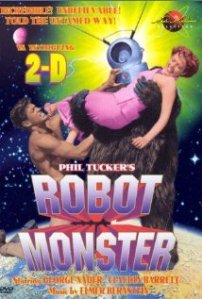
In glorious 2-D!

In glorious 2-D!

Arguably the worst film dialogue of all time!

Consider:

“PROFESSOR: He’s dead, and there’s nothing we can do!”

or

“RO-MAN: I cannot – yet I must. How do you calculate that? At what point on the graph do “must” and “cannot” meet? Yet I must – but I cannot!”

PLAN 9 FROM OUTER SPACE (1959)

As if it wasn’t bad enough watching a morphene-addicted Bela Lugosi struggle to do a bad Dracula impersonation, the quality control of this production is so bad I’ve seen children create more convincing plane cockpits out of furniture. Forget this “classic” turd and watch the Johnny Depp biopic instead. It’s way more entertaining.

THE INCREDIBLY STRANGE CREATURES WHO STOPPED LIVING AND BECAME MIXED-UP ZOMBIES!? (1964)

This drive-in “cult classic” definitely does what it says on the tin. And that’s it. If you like shots of people pretending to eat chopped liver interspersed with forgettable song and dance numbers, this is your kind of movie.

JAWS 4: THE REVENGE

The original “Jaws” is one of the greatest horror movies of all time. This is not.

Featuring a rubber shark. An ending that copies Jaws 2. A whole film that is basically clips of the original. A shark that appears to have a personal dislike for the Brody family (maybe they have a shark grapevine). And my favourite, the roaring shark.

TROLL 2 (1990)

“Troll” was a daft but surprisingly entertaining film about a four foot troll that causes magical havoc by turning the inhabitants of a block of flats into monster-generating plants. The sequel bears little if no relvance to the original, is downright mean-spirited, contains some of the hammiest acting ever seen and dialogue that clunks louder than the chain-rattling ghost of its predecessor which can still be heard in the background.

BATTLEFIELD EARTH (2000)

Prepare for.. Travolta in dreadlocks?

Prepare for.. Travolta in dreadlocks?

This one is a humdinger, and one of the few terrible films that it’s worth watching just to see Travolta in “that” costume. A misfire on all levels. It has everything a bad movie needs: unintentionally funny scenes, awful dialogue, ridiculous plot twists (a caveman flying an F-16; aliens ignore the gold stored on Earth for centuries and resort to mining for it), bad SFX (said F-16s attacking in all their primitive CGI glory), and incomprehensible pseudo-alien babble like:

“CHIRK: I am going to make you as happy as a baby Psychlo on a straight diet of kerbango.”

THE 2000s!

Ah, the new milennium. So ripe with possibilities thanks to the wonderful filmmaker’s tool that is CGI. So many bad movies have been made using [insert CGI giant animal/weather effect here] that it is impossible to list them. May I suggest tuning into the SyFy channel any week night? This decade is noteworthy for filmmakers who just don’t give a damn about the end product.

Some noteworthy big budget disasers include…

CATWOMAN (2004)

Turned into part-cat (and all woman!) for some no good reason, Halle Berry wanders around in a bra and leather pants, ocassionally purring and eyeing up fish, while her CGI counterpart climbs tall buildings in stilettos. The script is such a mish-mash of rewrites that Berry’s cat changes from a “she” to a “he” during the movie. Berry later said, on collecting her Razzie award, “First of all, I want to thank Warner Brothers. Thank you for putting me in a piece of shit, god-awful movie… It was just what my career needed.”

ANY SYFY CHANNEL CREATURE/DISASTER MOVIE (2000s)

Dire programing at its best (and worst). These monster/weather mash-ups are like a child’s attempt to imitate a remotely successful picture. Featuring CGI! Models-turned-actors. Dull dialogue. Boring plot twists. A nonsensical catalyst that sets the ludicrious “hi-concept” premise rolling. Stereotypical characters with no depth. And one out-of-work formerly decent actor who fails to keep the whole thing from descending into the gutter.

Examples abound. but take for instance… DINOCROC! SHARKTOPUS! BOA vs PYTHON! MEGA PIRANHA!  DINOCROC vs SUPERGATOR! MEGA SHARK v GIANT OCTOPUS! MEGA SHARK vs CROCOSAURUS! MEGA PYTHON vs GATOROID! MEGAFAULT! GHOSTQUAKE! SNAKES ON A TRAIN! DINOSHARK! MAGMA: VOLCANIC DISASTER! VOLCANO IN NEW YORK!  QUANTUM APOLCALYPSE! POLAR STORM!

It's a croc, all right.

It’s a croc, all right.

The list goes on…

There are plenty more terrible movies out there. Movies that have cynicism ingrained in their pores. Movies that exist to make a quick buck and for no other reason. Movies that only a 13 year-old boy who has never seen movies and only plays the most retarded video games will enjoy. Movies like… ALONE IN THE DARK. SUPERBABIES 2. JACK AND JILL. EPIC MOVIE. DISASTER MOVIE. MEET THE SPARTANS.

There are also others that are not “bad” per se, just incompetent or botched or just down on their luck. Many of these movies go straight to DVD if we are lucky.

But what can we learn from the plethora of terrible CGI-driven creature/weather features?

1) A “hi-concept” is not always a good thing.

“It’s Jaws in Venice” might sound like a good movie. But it isn’t. Trust me.

2) Parodies and spoofs must go beyond simply reproducing scenes from original movies.

Unfortunately it appears that satire was killed off in the 19990s and has yet to make a return.

3) No amount of star power can save a turkey.

Consider “Movie 43”.

No go and rent some good movies!


What I learned from watching “Prometheus”.

When writing sci-fi or fantasy, you have to make the world even more believable than when writing straight fiction. This is because there are often fewer familiar points of reference for the viewer or reader. If you establish a rule in your universe, be careful not to break it, or you risk frustrating the reader, who is reminded that this is “just a movie”.

When watching the $130 million dollar blockbuster “Prometheus” recently, I was reminded about this. The writers noticeably worked on “Lost”, a TV series which existed by reversing the expectations of the viewer constantly, with little regard for plot logic or research. Now I love director Ridley Scott, but not as a writer. And in this movie, several daft plot devices revealed that logic was being sacrificed throughout the movie.

SPOILERS AHEAD!

For instance:

1. The Sumerians and the Babylons were never connected.

Despite the fact that the Babylonians were descended from the Sumerians, the “scientists” in the movie state that they had no contact with each other.

2. Aliens will destroy mankind for no apparent reason.

The aliens turn out not to be nice E.T.s but instead are intent on exterminating life on earth… which they created. Why? Who knows. They changed their minds. Maybe they watched Jerry Springer.

3.  Alien viruses will infect only the exact person you choose to infect, and will only cause female characters to have alien babies.

When the indiscriminate weapon of mass destruction is unleashed on the crew, it has a very specific effect. Despite having sex with someone infected, the heroine only manages to have a squid baby of her own.

 4. Aliens weapons of mass destruction are very very messy

So the alien ship is in fact a weapon. And the best way to exterminate another planet is… to breed a whole host of genetically unstable mutant monsters which can infect your DNA. If the Engineers were so advanced, surely they would have  a cleaner way to destroy planets. Like a really big laser?

5. Our ancestors were much bigger and blue

Maybe the writers had just watched Avatar.

6. Androids are confused

David the homicidal android (sounds like Hitchhikers Guide to the Galaxy) decides to punish Daddy for being a disappointment. How does he do this? By following his orders implicitly. Hmm.

7. You can achieve immortality by killing mankind

Peter Weyland’s big plan for living forever? Infect the crew with the DNA altering disease. But how does this help his plans, you ask? What if they return to Earth and infect the planet? What indeed…

8. Caesarian surgery isn’t too bad after all

A few minutes (no seconds actually) after having  caesarian surgery (performed by a machine designed only for male patients, no less) our heroine is up and about, running around and trapping her squid baby. Hours later, the pain of surgery will come back to cripple her at inopportune moments when running from bad guys.

9. Iceland must be a nice place to visit

The big opening shots of Icelandic volcanos, ice fields etc. which segue to the Engineer in Iceland swallowing poison serve…no purpose whatsoever. Unless it’s to hammer home the fact that alien poison is a VERY BAD THING. Cut to pointless shots of DNA.

Sadly, the opening shot of the alien also serves to rob the first hour of the film of any tension. What could have been an interesting journey to discover our origins turns out to be a moot point. We already know there are aliens. So when we find them, it’s not much of a surprise.

10. Dead characters can come back and attack you for no reason

When one of the characters died horribly (his face melted off no less), imagine my surprise when he appeared a half hour later, very much alive and with his face! Said character then attacks crew for no reason, looking like a very frazzled extra from the Matrix.

11. Scientists are stupid

When the crew reach the alien mound, they can’t wait to take off their helmets and expose themslevs to any virulent alien disease that might be there, even though they know the aliens died unexpectedly from… something.

12. Don’t stroke the wildlife

An extension of the above. When you see a large and threatening alien snake (that even hisses at you!) do not be tempted to pat it on the head and tell it how beautiful it is. Chances are it won’t appreciate the gesture.

13. Steven Stills played accordion

According to the ship’s captain, who has the legendary 1960s guitarist’s very own squeezebox. WHY does he have this squeezebox, you might ask? You might ask. But you will never find out. It’s one of those “character tics” lecturers in film school tell you to give every minor character.

14. Androids have very weak necks

These supreme advacements in robotics are notorious for their very weak neck joints. So if one attacks you, you can always rip its head right off.

15. Human+Squid = Xenomorph

It’s true. Although the alien might not “look” like a combination of human and giant squid, it actually is. Oh, and it can reproduce asexually. And you thought it needed a queen to lay all those eggs… tsk.

16. Aliens have ego issues.

The most promoted image of Prometheus was the big giant head in the spaceship. Which serves no purpose whatsoever. One scientist muses that they might have a god. That’s it.

17. When running from an enormous spaceship, go in the wrong direction.

This one was a doozy. Two women run from an enorous crashing hoop-shaped spaceship. Which way do they run? Not to the side, of course, but underneath it. Oh, and when one of them does have the sense to dive to the side at the last minute, the ship comes crashing down on her, only to be stopped from crushing her by a bit of rock. Seriously, this is a million ton spaceship. Wouldn’t there be a crater or something?

I’ll stop there, because just like the writers, I can’t be bothered any more. “Prometheus” does have its moments. But the horror is more the squirmy, icky kind than the suspenseful kind, which made the first Alien movie so effective. What’s more infruriating is that the characters are so forgettably stupid and inconsistent. When Shaw says “I’m still looking” at the end of the movie, we wonder… for what?

I’m sure the writers don’t care about this column. But if you want to write a really great script, make sure your plot makes sense and doesn’t rely on stroytelling gimmicks. Then maybe your movie will last longer than its opening weekend.

Confessions of a British Screenwriter – Recycled

Today, I thought I would share a link to an embarassingly old and badly written article I did for Moviebytes.com when I had my first screenplay sale. So without further ado…

http://moviebytes.com/NewsStory.cfm?StoryID=3899

Guns, girls, and robots. What's not to like?

Guns, girls, and robots. What’s not to like?

My Name is ‘Err’: A Screenwriters Journey

By Eric Steele

It was a blisteringly hot day in Hollywood. My writing partner and I had been worn down by a punishing heatwave that pushed temperatures up to a hideous 120 degrees. As we both came from Manchester, England – a city renowned for precipitation in a country where summer just means that the rain gets warmer – for us this was the equivalent to walking on the planet Mercury. If Mercury had been filled with dangerous-looking winos and suicidal motorists.

We’d decided to visit an eatery in televisionland known as Roscoe’s Chicken and Waffles. The guide book assured us it was a good place to spot the stars. Taking our place in line, we sizzled on the sidewalk like a couple of English poached eggs. After an eternity of this torture, the Emcee asked us what our names were. “Err,” I began. But before I could use my best Hugh Grant impression, he disappeared back inside the tempting darkness of the doorway.

“Table for Mister Errrr…” he intoned.

Of course, I couldn’t correct him without opening up a whole new can of worms. I might as well have been speaking Portugese for all the good it did. Obviously a case of “You say tomayto, I say tomahto”.

We seated ourselves in a booth and soon learned why it was called “chicken and waffles.” As I dug into my plate of fried chicken at ten o’clock in the morning, I chose to reflect upon how much this reminded me of our whole screenwriting experience so far.

It seemed a far cry from how I had started out – tinkering away in my bedroom in Manchester, reading as many free articles as I could on a then-fledgling Internet, buying whatever books the local stores had in stock (not many), in my impossible quest to somehow get involved in this magical form of storytelling.

The trip to LA proved eye-opening in more ways than one. As we attended meetings without success, we both sank into a kind of delirious despair. Getting lost on foot in Downtown LA or being rear-ended by the daughter of a movie-star on Sunset Boulevard one Saturday night only added to the sense of unreality. Maybe we were just depressed from days spent foot-slogging through graveyards, staring at epitaphs of our long-departed screen idols.

Two years later, we had still to sell a script. Sure, there had been options, near misses. One producer kept us hanging on for over a year until we got an e-mail saying he had decided to work with Paris Hilton instead.

During this time my writing partner and I went our separate ways. He had a young family, and in the end, I guess he decided that “real life” was more important. I soldiered on, until one day I decided to throw caution to the winds, forget about the market, and write the kind of story I would like to see onscreen. The result was my first option with a big production company in LA.

Still nothing happened. I had listed the script with InkTip.com, and they helped me out with a press release. After a few months, I received a phone call from my soon-to-be agent, who had read several scripts and was sufficiently impressed to sign me up.

She told me she wanted to see more family-friendly stuff. I immediately scoured through what passed for my filing system until I found something that would fit the bill…

Among my various screenplays, I’d written a sci-fi television pilot called “Clonehunter”. On a whim, I’d entered it into Scriptapalooza. Although the script didn’t place, they were kind enough to provide me feedback. I scanned the feedback, read the script. Hmm, not exactly Orson Welles, but it was salvageable enough.

Over the next few months I rewrote the script, developing themes and characters, until I had an honest-to-goodness movie script. However, experience had taught me that what seems like Shakespeare to you can seem like Dr. Seuss to someone else, so I workshopped the script at zoetrope.com, where other writers could sling mud at it with impunity. Some of those reviews were gut-wrenching in their honesty, but the script came out a lot better for it. More importantly, it was free.

Some of the scenes I’d written would give James Cameron a headache. Pursuits on hoverbikes, floating casinos, talking gorillas – no sane individual would even think of tackling such a project without a studio budget. But it was just crazy enough to succeed. Besides, I loved the character – David Cain, an intergalactic bounty-hunter who would put Harrison Ford to shame. Not only was Cain’s work questionable, but the more we heard about him, the more we suspected that he might not be a very nice guy either. This was someone who had a history so long he kept secrets from everyone – including his attractive young cyborg partner. And he had an intelligent cat.

I wasn’t expecting anything, so I was truly surprised when I received an e-mail from director Andrew Bellware. He had seen my script on InkTip and wanted to shoot it, using his production company in New York. I was aghast – did he really think he could do it? Well, it might need a little tweaking. I would never see my floating casino (sob). However it would be an outright sale.

My agent hammered out the agreement and Drew then began the looooong process of filmmaking.

Drew kept me informed at every stage of the process. I was flattered that anyone would even care what I thought. Each week he would send me another video of the shoot. Nothing could have prepared me for the sensation of watching the script come alive onscreen. Sometimes I was surprised, sometimes I laughed out loud as an actor said a line in a way I had not expected and turned a boring piece of exposition into something dramatic or even comedic. Most of all, I was amazed that this was actually being pulled off. Even the hoverbike sequence was there! Eat your heart out, Lucas!

The whole experience reminded me that moviemaking is a team sport. Everybody has an input, no matter how small. I felt privileged to have given my contribution. Suddenly, all those years of slaving away over a hot keyboard in a cramped office seemed worthwhile, all those moments of self-doubt as I wondered whether I should be doing this at all dissipated.

Yet, afterwards, here I am again, sat in the same office typing away (admittedly I bought myself a new computer), churning out page after page and knowing that whatever I write will in no way by anything near as good as the movie unfolding in my head – the one nobody will ever see. In a way it’s like starting out all over again. And if it ever does get made, it will take a whole bunch of people to make it happen, not just the director and actors, but set decorators, editors, and everyone else down to whoever buys in the sandwiches.

So is it worth it? Of course. Because that’s the magic of motion pictures – that someone in a tiny suburb of Manchester, a couple of thousand miles away from New York and even further away from Los Angeles, could one day contribute to a movie. If I’ve learned one thing on my ragtag journey, it’s that you should try everything – every angle, every means at your disposal – to market your script. The Internet has revolutionized the world of media. Contests, feedback sites, listing sites – all of these are equally valid ways to get your script produced.

Who knows, we might be able to meet up one day for chicken and waffles!

How to write Hollywood-style action lines…

Most people’s attention span is

See what I did there?

Yep, people hate doing… pretty much anything actually. And if they do positively have to do something, they do it with the minimum of effort. Just the natural law of conservation of energy.

Sometimes that means forgetting to read right up to the

See what I did again?

Just checking you’re still with me.

For some writers, that natural laziness takes another form. Spewing forth a torrent of textual diarrhoea without editing it.

Failing to edit action lines is my number one pet hate. When you’re trying to read scripts, several in a day, the last thing you want is to be faced with impenetrable blocks of 10-line textual description of how someone pulls up in their car, gets out of their car, closes the door, locks the door, walks up to a building, searches for his keys, finds his keys, puts them in the lock, opens the door, and goes inside, shutting the door behind him.

Especially when you could just say: “He pulls up in his car, gets out, and enters the house”.

In fact, why do we need to see his car? He could just enter the house.

Yes, you will see huge amounts of text in some celebrated produced screenplays. But when you’ve got that Oscar, then you can afford to be lazy too. Maybe.

In the meantime, your path to success may be much imporved by some judicious editing. Read produced screenplays. When I was starting out I loved Eric Red’s screenplays. I tried to copy their style to get the feel of Hollywood scriptwriting.

Hollywood action lines are…

Punchy.

Confident.

Terse.

Use non-literal verbs to whammy you into a reaction!

Are short.

The emphasis is on the last one. NO MORE THAN 3 LINES IN A PARAGRAPH. There, I said, it. And if you’re realy good, fewer will suffice. For example, here’s the opening scene of “Blade” written by David S Goyer:

INT. HOSPITAL, INNER-CITY TRAUMA WARD – NIGHT

It’s 1967, the Summer of Love and —

BOOM! Entry doors swing open as PARAMEDICS wheel in a FEMALE BLEEDER, VANESSA (20s, black, nine months pregnant). She’s deathly pale, spewing founts of blood from a savagely slashed throat —

A SHOCK-TRAUMA TEAM swarms over her, inserting a vacutainer into an
artery to draw blood, wrapping a blood pressure cuff around her
arm —

NURSE #1
(with stethoscope)
She’s not breathing!

SENIOR RESIDENT
Intubate her!

Goyer is very clever here. He uses very few words to set up a complex, exciting scene. It’s helped by his use of precise medical terms which are nevertheless clear enough so a layman knows what he means. The blood “spews” from her throat. The team of medics “swarm” over her. The non-standard verbs are powerful, descriptive.

So… hone your word count down. Never use two words when one will do. Get rid of redundant words like “down” in “he sits down”. Where else would he sit?

Screenwriting action lines is like crafting scrimshaw. You score away at it until what is left is hopefully beautiful.

Less is definitely more.

The dreaded telephone conversation

Why do I fall victim to this most horrific of plot devices every time I write a script?

Most screenwriting gurus say the same thing. For the sake of all that’s holy, DON’T include telephone conversations in your screenplay. Not only is the formatting a bitch, but it’s inherently undramatic to show two people talking in different places. For some reason, there’s something jarring about seeing onscreen what we all do on a daily basis.

But then, there are other things we do on a daily basis that I also wouldn’t want to see onscreen…

However if you’re like me and unable to write a single Act without that most unwelcome of characters making an appearance,  here are some formatting tips:

Voice-Over (V.O.) or Off-Screen (O.S.)?

I would say, if you must, V.O.

O.S. implies a character is in the same place but talking out of shot of the camera.

V.O. is when we hear the words spoken over the action.

Intercutting Scenes

The easiest way to avoid the above dilemma is to use “INTERCUT” in your sluglines.

For example:

INT. BOB’S HOUSE – DAY

Bob picks up the phone.

BOB

Hello?

INT. DAVE’S HOUSE – DAY

Dave on the other end of the phone.

DAVE

Hi, Bob. I hear you’re wrting a scene with a phone call.

INTERCUT. BOB’S HOUSE/DAVE’S HOUSE

Bob sighs.

BOB

Yeah, those things are a sonofa bitch.

DAVE

I hear ya.

Get the idea?

Remember to set your two locations up with a brief scene before you use “INTERCUT” as I have in the above example.

Another way of writing the last slugline would be:

“INTERCUT BETWEN BOB’S HOUSE AND DAVE’S HOUSE AS REQUIRED”

Don’t get hung up on this. Remember, correct format serves to convey meaning. Not the other way around.

However you should always include an action line immediately after EVERY slugline. The slugline is not a replacement for action but serves to inform us what location we are in.

AND

I’ll let you into a little secret. I find that if you have one character doing something that’s important, but which is hidden from the other character, this distracts the reader from the fact that you’ve ever used a phone call. For instance:

 INT. BOB’S HOUSE – DAY

Bob picks up the phone.

BOB

Dave? I hear you’re going to that High School reunion later.

INT. DAVE’S HOUSE – DAY

Dave on the other end of the phone.

DAVE

That’s right.

INTERCUT. BOB’S HOUSE/DAVE’S HOUSE

Bob laughs at a memory.

BOB

You remember that kid Brian who bullied you all year?

Dave loads a magazine into a gleaming 9mm Glock handgun.

DAVE

Oh, yeah.

Not Shakespeare. But you get the general idea.

So there you have it. You need never have nightmares about writing telephone conversations in a screenplay again.  Unless, like me, you can’t avoid writing them in the first place.

The Death of Cinema?

At Cinemacon recently, studio heads tried to wrap their minds around why theater ticket sales are declining. Various factors were blamed, from DVD sales to online channels and ticket prices. The answer? A new “delivery method”. A way to get movies streamed instantly into peole’s homes, via the Internet.

After all, the Internet will solve everything.

In my opinion, this view fails to understand the fundamental reason why ticket sales are declining. I can only speak for myself and the people I know. But when asked why they don’t go to the movies, they invariably say “because there’s nothing worth watching”.

I would submit that this is the fundamental issue. It’s a simple cost/reward ratio. People don’t want to shell out a hefty £8 or $8 to sit in a  theater and be bored for 2 hours by a mediocre movie.

The real culprit, folks, is “Tentpole fever”. This can be traced back to the 1970s and the rise of the summer blockbuster. Spielberg’s “Jaws”, “Close Encounters” and Lucas’s “Star Wars” were both phenomenal successes. Together the pair created another franchise: the Indiana Jones films. And Hollywood has been chasing that golden ticket ever since.

It’s no surprise that Disney studios (Remember when they used to make charming family animation films?) has announced they plan to release a new “Star Wars” movie every year.

“Star Wars” was released in 1977. Yes, it was a global cultural phenomenon. But that was then. Thirty-six years ago. Since then we’ve had two sequels and three pretty poor (and universally panned) prequels. Do we really need more?

Recently some huge tentpole movies have bombed.  “John Carter” and “Jack the Giant Slayer” for instance. Why?

Let’s contrast these movies to the far more successful, “Tron Legacy”.

“Tron Legacy” does a good job of updating the original which was Disney’s way of tapping into the home computer revolution of the early 1980s. The light cyces are cooler, the world bigger, the SFX more polished. The acting is solid in most places. And it has a great atmospheric score by Daft Punk. But it also has something else… soul. At its heart, this is a father/son story about estranged parent/offspring reuniting, bonding, and letting go.

However while “John Carter” may be a love story, there is no real sense of the romance between the two leads, and any sense of reality is blown away by the ever-escalating and frankly ridiculous plot devices (wait, it’s aliens, Martians, more aliens, different Martians AND magic?) which destroy our sense of disbelief early on.

The point to all this ?

These are STORY issues.

Yes, Hollwyood is still capable of making great movies. 2012’s “Avengers Assemble” and “The Hobbit” to name a few.

But by focusing on STORY and less on SFX, Hollywood could reach more people, deliver more satsfying stories, spend less cash per picture, and make more money.

Nowadays, studios make only about a dozen films a year tops themselves. Each one is stuffed with SFX. It’s an all-your-eggs-in-one-basket strategy. And if a film flops, the results can be disastrous. Disney lost $160 million on “John Carter” alone. But in the golden age of Hollywood, studios churned out hundreds of movies.

You do the math.

My take? The Internet will not solve the problem of why fewer people are watching films. I would argue that the demand is still there. People will always want an evening of magic, living vicariously through 40 foot high technicolor  images on a silver screen. The real question is one of supply.

Wait, zombies and… poetry?

Yes, it’s true.

“Vicious Verses and Reanimated Rhymes” from Coscom Entertainment has been out a while now and it’s sold pretty well. So well, in fact, that there’s only one copy left on www.amazon.co.uk.  Well, what are you waiting for? That copy could be yours!

It's not like any garden of verses you've been in before!

It’s not like any garden of verses you’ve been in before!

I’m pretty happy with the way this one turned out. And I get to brush literary shoulders with the likes of Steve Rasnic Tem. I may have to write some more poetry soon…

You can find it here http://www.amazon.co.uk/Vicious-Verses-Reanimated-Rhymes-Zombie/dp/1897217951/ref=sr_1_4?s=books&ie=UTF8&qid=1366048742&sr=1-4&keywords=eric+ian+steele

To trend or not to trend… writing in the “hot” genre

What is “hot” in Hollywood? What kind of screenplay does Hollywood want?

Surely, the cynical starving writer thinks, if I find out what genre is hot and I write in that genre, Hollywood will want my screenplays? The simply law of supply and demand will do my marketing job for me. If “found footage” scripts are hot, simply write one and riches will await.

But hang on, says the artist (who doesn’t mind if he or she starves or not), isn’t that betraying your art? Isn’t it selling… out?

Well, I have no problem with someone writing for a living. Even Leonardo da Vinci had to eat. And although I could do without yet another “disaster mash-up” movie (SyFy channel, I’m looking at you), I remember one of my earliest instincts was to find out what Hollywood wants in a screenplay. After all, they are the buyers and I am the seller.

But there are several problems with trying to write in the “hot genre”. First of all, Hollywood is a long way away. Not just in space, but in time. Studios frequently undertake test screenings to gauge the popularity of a film before it is finished. People in Hollywood know what the outcome of these screening are. Hence in your newsletter you might get an inexplicable slew of requests for stories about “dogs verses aliens” from producers anxious to copy the newest surefire hit.

And therein lies the problem. Because by the time you write said screenplay, the trend will be over, and “Buster Saves the World” will be yesterday’s movie news. Writing for the latest hot trend is like trying to hit a constantly moving target. By the time you’ve nocked your arrow and written your screenplay, the movie world has moved on to the next “hot” project.

Having said that…

Certain types of script always stand more of a chance of getting made. They are generally as follows…

– Female driven

– Limited location

– Low budget

– Horror/thriller

– No SFX

These are the calls for screenplays you will encounter most frequently in newsletters and advertisements.

BUT.. and this is a big BUT!

I personally have found that I have less success trying to write in low budget genres. For some reason I naturally (and unfortunately) gravitate toward big action set pieces, usually sci-fi or horror. And yet I have more success selling these type of stories than when I write my one-location character-driven drama.

So if anything can be drawn from my limited experience, it’s this… write in the style and genre you love AND which you are best at. Whatever the budget. Whatever the genre. And THEN worry about rewriting it so it can get made. Maybe you can reduce the budget without losing that great scene with the giant ape climbing the Empire State Building.

This is a strange business. As Dan Ackroyd once said: “I write ’em big, and they keep making ’em.”

Here’s hoping you can write big too!

Organising your troops

Been a while since my last post, so here is something I hope is truly useful.

HOW TO SELL TO HOLLYWOOD

Hollywood is a long way from Britain. A very long way. Yet, thanks to the Internet and telephone, it isn’t!

Over the years I’ve devised a number of plans to get my scripts into the hands of people in LA. I’m not saying this is THE way to sell a script. If I was, I would be so rich and successful I wouldn’t NEED a blog. But these are steps that have worked for me in the past .

So in no particular order, here are my steps for selling to Hollywood.

Just don’t forget to thank me when you write that blockbuster.

1. Write a really, really great script.

Possibly the hardest step.

2. Feedback

They say insanity and genius are separated by a hair’s breadth. But how to tell if you’re one or the other?

Ask people.

BEWARE. There are many “gurus” who will take even more money to give you generic, unhelpful, even destructive “feedback”. Even well-meaning folks can send you on a wild goose chase. More on this in another post. But at some stage you will need to navigate this potentially expensive minefield to find out if you have chicken breast or chicken shit  (as my dad says).

3. Go to Oxbridge or Eton, come from a long line of film or theatrical producers, be born into the aristocracy, or join RADA at the age of six.

Sound discouraging? Good.

Because these are the TOP ways that people in the UK become Hollywood screenwriters. There, I said it. Your suspicions were justified. Nepotism is rife. Pod people really are everywhere. Don’t believe me? Go check out their bios.

Yes, it’s disheartening to know that the odds are stacked aginst you. In fact, this is the number one reason everyone I know who quits screenwriting uses to justify their decision. As William Goldman says in his excellent “Adventures in the Screen Trade”, in Britain, if your father is a blacksmith, you better like shoeing horses.

Of course, if you’re still reading this, then you have the burning ambition and drive to succeed against the odds. You are Han Solo piloting your rusty, war-torn script through the asteroid field of Hollywood gatekeepers, pursued by the Imperial Star Destroyers of poverty and family pressure.

Good for you. Now read on…

4. Get familiar with Word and Excel

For us mere ordinary folks, we need more than just a pedigree worthy of Shergar.

You need to keep a record of everyone you’ve sent your script to. This will avoid the embarassing mistake of sending it out twice to  the same agent/manager/producer.

5. List your own industry contacts

I always try these first. Be selective. Don’t bug them too often. Treat them like the customer who comes into your literary restaurant and always spends well.

6. List companies and individuals who accept unsolicited submissions

This is the equivalent of Will Smith going head to head with all those alien fighters in Independence Day but sometimes, just sometimes, it can pay off. Think of it as a numbers game. After all, you resulted from the same process…

7. Get help from other companies

This requires some discretion on your part. There are many companies who will gladly take your money (lots of it) and promise nothing in return. It’s up to you which companies you choose. But experience has taught me that producers do not respond with rapt enthusiasm to yet another unsolicited, mass-produced email landing in their private inbox. Logically, you are more likely to have success with targeted submissions, or submissions to people actually looking for new material.

Listing sites offer the best value for money. Some of them are even free. Producers scouring the net for scripts sign up for these sites and can then search under specific criteria. So you are less  likely to get a producer who specializes in family-friendly pet movies soliciting your R-rated slasher script (Now there’s an idea).

8. Use online tools

Again, there are many of these. I haven’t used it yet myself, but IMDB pro looks like a very useful tool to find out who is making your kind of movies. Whether they will accept your submissions, however, is another story.

9. The dreaded query letter

Remember when people used to write letters, using real paper?

Some gurus say the query letter is dead. But remember, this is an industry where nobody knows anything.

Just don’t do anything CRAZY… like sending your script out in a radioactive container with a guy in a HAZMAT suit (been done, honest). That is not the way to win friends and influence people.

Also, don’t do what someone else did recently and take our a full page ad in Varierty telling Harrison ford you’ve got the perfect script for him. Something tells me Harrison won’t be calling any time soon.

10. The even more dreaded actual telephone call

Amazingly, you can actually speak to an agent in LA by picking up the phone. Turns out these people have offices. Sure, you might get the bum’s rush by the receptionist who can’t understand your thick Geordie accent, or the gatekeeper who gives you a stern “no unsolicited submissions” then hangs up. But so what? Just don’t lie to get through to the agent. Yes, I did that once.  Well, it wasn’t technically lying… and actually they agreed to read my script, which sucked (See step 1).

11. One step beyond

Don’t, repeat… DO NOT…. pitch in social situations. Not unless you’re asked. Do not follow execs into toilets and pitch them at the urinal (yup, been done… not by me, I hasten to add). Do not give your business card to your studio tour guide while on vacation.

A tip if you ever go to LA (and you should)… EVERYBODY wants to be in the movies. From your barrista to your taxi driver.

Separate yourself from the herd by being professional. For the sake of sanity.

I’m about to embark on some major selling sprees, so I’ll keep you updated as to the progress of these steps.

Meanwhile, keep writing!


Cancelled too soon! 10 TV series that should have lasted longer.

Sometimes they left us hanging on the edge of our seats, never knowing what was going to happen to the characters we had watched  for an entire season. Sometimes the shows were too hard to catch due to bizarre scheduling. And sometimes they were just plain unlucky. But for whatever reason, here are 10 shows that I think were cancelled too soon…

10. Flashforward

What the heck was going on? Just when we thought we were getting a handle on the whole situation – a blackout in which most of an American city’s population got a glimpse of their future – the show was axed. A great concept was admittedly dragged out way too long. But the constant surprises kept me coming back for more despite the uneven acting. Who was behind the strange device uncovered that may have caused the blackout? We’ll never know.

9. Automan

Although it may be risible now, “Automan” was groundbreaking stuff in its day. Yet it barely saw out a single series. The titular character is in fact a rather conceited hologram which his creator uses to fight crime. Automan had a variety of Tron-like gadgets he could summon out of thin air, including a car and a helicopter. Not bad for the 1980s!

Special effects, 80s-style, from “Automan”.

8. Earth 2

A surprisingly good sci-fi show from the 1990s that went against the grain by having the first female sci-fi commander, this understated series boasted some darned good actors – Richard Bradford (Man in a Suitcase), Madchen Amick (Twin Peaks) and Tim Curry (everything). But it proved too low-key for its own good, and failed to grab ratings. A shame.

7. Max Headroom

Is it a drama? Is it a music video show? Is it a chat show? Nobody knows, not even the producers it seems. Actually this was a British TV show featuring the world’s first 3D computer generated chat show host. Mr. Headroom was brought to life by Matt Frewer. Loooking back, it’s hard to see how Max did not stay with us for years. But a confusing premise and heavy competition from Miami Vice means that max is now obsolete, along with the Commodore 64 and the Sinclair Spectrum.

MaxheadroomMpegMan

Is it a hologram? Is it a chat show host? No, it’s… Max Headroom!

6. American Gothic

Produced by Saim Raimi (Spider-Man, Evil Dead) this understated supernatural mystery series featured great child actor Lucas Black (who starred opposite Billy BobThornton in Sling Blade) as the kid who knows too much for his own good about mysterious, menacing Sheriff Lucas Buck (Midnight Caller‘s Gary Cole), a small-town cop with powerful supernatural, possibly demonic abilities. A slightly murky plot and a lack of the supernatural may have contributed to its demise. But it was a good idea with some nice acting.

5. Blade

Based on the movie trilogy with rapper Sticky Fingers standing in for Wesley Snipes, this was an amazingly good show, with great plot twists, great supporting characters, and a very stylish production. Blade joins forces with recently-turned vampire Jill Wagner to destroy the vampiric House of Cthon from the inside. Ended on a huge cliffhanger. Blade exhibits the true hallmark of a series that was cancelled too soon — its own box set for fans which continues to sell despite its cancellation.

4. Firefly

Joss Whedon’s sci-fi foray that owes a heavy debt to Star Wars as well as old-fashioned Westerns, Nathan Fillion shines as captain of a motley team of reprobates. Excellent production qualities and solid acting meant that this remains a cult favourite among Whedon’s salivating fans who long to get their teeth into something after Buffy.

3. Streethawk

A cop on a really fast motorcycle hardly seems like a great concept, yet this was a highly entertaining series, mainly due to the polar opposite characters of its leads, the suitably macho-named Jessie Mach (he likes to go fast, you see), and his controller Norman Tuttle (yep, he stays in his shell). With a fantastic score by German techno gods Tangerine Dream and some awesome stunt work, it’s not surprising the show was cancelled as it must have taken a fortune to produce each episode. But you can now relive all 13 of them thanks to DVD.

2. Twin Peaks

Hard to believe that this show is on the list, especially as it lasted for two seasons. But the sudden, shocking twist ending is one of the all-time cliffhangers. Fans will definitely agree the series ended too soon. Will there ever be a resolution? Doubtful.

1. Star Trek

The top series cancelled too soon? Yes, the original sci-fi series. Although it seems like it ran a lifetime, it was cancelled after only three seasons. Its cancellation was in the main due to budget cuts by the network and the move to a different time slot – incredibly so as not to conflict with Rowan and Martin’s Laugh-In. Since then, Star Trek has become firmly entrenched as not just a cult classic but part of the popular culture. It remains a perennial favourite of TV programmers. It’s very rare that an episode of this show isn’t been played on some channel somewhere. That’s why Star Trek is the ultimate series that was cancelled too soon!