Author Archives: Eric Ian Steele

Unknown's avatar

About Eric Ian Steele

Screenwriter, author, comic book and film aficionado, and zombie poet.

Horror Without Victims review

Here is a very nice review of “Horror Without Victims”, an anthology which contains my short story “Clouds”. It’s only the second time I’ve been published in a British anthology. The first time was with my story “Charlie” in the British Fantasy Society’s anthology “Terror Tales”, alongside Neil Gaiman and Kim Newman.

http://paintthistownred.wordpress.com/

The reviewer calls it “psycho-geographic horror”, and although I didn’t plan it out that way, I’d have to agree!

If you haven’t got a copy yet, I’d recommend it (because my story is in it, of course – but also because it contains 24 other excellent, frightening, funny and awe-inspiring stories, all on the theme of horror without the gore).

product_thumbnail[1]

Quickie movie review – Manhunter

Another dip into my DVD collection this week. While researching the thriller genre I struggled to find a list of the top thrillers of all time. Maybe I’ll do that in another post. Hmm. Meanwhile, here is my review of the much-overlooked prequel to “Silence of the Lambs”.

“Manhunter” was not a commercial success on release. But in fact it is better than its bigger and somewhat dumber sequel, although Anthony Hopkins certainly portrayed Hannibal Lektor with much aplomb. So without further ado I present to you…

MANHUNTER, 1986

Brian Cox is a different kind of monster in "Manhunter", 1986.

Brian Cox is a different kind of monster in “Manhunter”, 1986.

Will Graham is a former FBI Agent with a difference. He is able to put himself in the mind of a serial killer. His talent has almost cost him his sanity. But when the “Tooth Fairy” starts wiping out whole families, Graham is called out of retirement to help catch the murdering monster. His first task, however, is to re-establish his serial killer mindset. And to do that, he needs the help of  one Hannibal Lektor…

Manhunter is a gorgeous film. Michael Mann, fresh from the TV series Miami Vice, used every trick in the book to make the film reminiscent of 1940s Noirs. There are some beautiful shots, such as Graham’s house overlooking the ocean – shot entirely in blue. Mann, whose earlier film effort “The Keep” also had some excellent photography, provides us with more memorable images here: tigers, the Tooth Fairy’s stocking mask, and of course the death of one rather unpleasant reporter who becomes one of the killer’s victims.

The acting is also pretty nifty. William Peterson plays Will Graham with heart – although he is sometimes a little too downbeat for his own good. But he carries the “leading man” part off nicely. A shame his talents would never be utlilized to such a degree again. Character actor stalwart Brian Cox steps into the biter-mask of Hannibal Lektor this time. Cox is chilling, especially in a bravura scene where he manages to use a telephone from inside a high security cell. The slicked-back hair is something that would remain part of the character in “Silence of the Lambs”.  The late Dennis Farina plays Graham’s FBI buddy to good effect, while Tom Noonan (who appeared recently in “The House of the Devil”) is scary and believable as the damaged, murdering monser. In fact, Noonan’s portayal is much more sympathetic than Ralph Fiennes’ would be in the by-the-numbers remake, “Red Dragon” (2002).

Indeed, by comparing “Manhunter” with “Red Dragon”, we can see how superior “Manhunter” is. There is poetry to this movie. It takes place in a kind of hyper-realism. The strange lighting, the memorable music, all serve to make this a masterpiece of thriller cinema. “Manhunter” is also more generous with its emotions. We see with both unease and pity the heartbreaking attempts of the Tooth Fairy to connect with another human being. But it is an act doomed to failure. Although the filmmakers bring us within a hair’s breadth of sympathy for the killer, it seems that some sins cannot be expurgated.

The action builds from unease to a tense climax that has plenty of surprises. “Manhunter” is psychologically realistic, without the overblown theatrics of “Silence of the Lambs” or “Hannibal”. More than any other film based on the Thomas Harris books, “Manhunter” takes us deep into the world of the serial killer, and shows us that it is a twisted, frightening place. And it does it with style.

Quickie movie review time…

Today, I thought I would share a review of a film you may not have seen. There aren’t many people making great movies. But one man who’s made more than his fare share (and had more than his fair share of commercial failures) is David Lynch.

So without further ado here is my review of LOST HIGHWAY.

LOST HIGHWAY (1997)

A jazz saxophonist is (wrongly?) convicted of murdering his wife. He is imprisoned. He wakes up in the morning as a different person, a young mechanic. The authorities are baffled and release him. He becomes involved in an affair with another woman, the wife of a gangster who looks just like the first man’s wife…

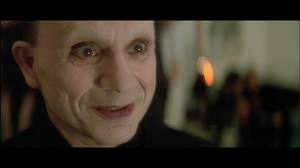
"We've met before, haven't we?" Robert Blake as the Mystery Man.

“We’ve met before, haven’t we?” Robert Blake as the Mystery Man.

What does it mean? Don’t look for straightforward answers. Although it looks like a Hollywood movie, ‘Lost Highway’ is anything but. This is cinema deconstructed. What is a story? What is art? Surface meanings are stripped away and what we are left with is…

Director David Lynch and his co-writer Barry Gifford again create a frustrating, mesmerizing, entertaining, visceral, daring Chinese puzzle of a movie. But the twist here is that the puzzle has no solution. More introverted than epic, it had critics and audiences confused upon its release. Searches for story will disappoint. This is a movie that knows it is a movie and toys with the viewer like a cat with a mouse.

“Lost Highway” also plays with genre, most notably the kind of noir 40s movies that eventaully spawned Hitchcock’s masterpiece “Vertigo”. But “Lost Highway” goes beyond them. The writers are not afraid to let go of plot, drawing attention to the artificiality of a narrative that both illuminates and conceals. This is a movie that pushes the boundaries of cinematic storytelling. Is it intended or not? Does it matter? Like the rest of the film, this only raises questions without answers.

Bill Pullman and Balthazar Getty are the two faces of the same man (or is he?). Patricia Arquette is dazzling as Renee/Alice. But arguably Robert Loggia steals the show with impeccable comic timing as a ridiculously vicious gangster. While Robert Blake gives his last performance as the memorably creepy mystery man with no eyebrows – a typically Lynchian obscure archetype.

I’m not usually a fan of postmodernism, but when it’s done this well I can’t help but like it. With sublime music and excellent performances, this is surely one of Lynch’s most provocative films to date. Well worth seeing.

Streamlining your story

Movies are not books. Maybe you noticed this already.

In books, you have around 300 pages (or more, if your editor likes working long hours) to tell your story.

In a screenplay, you have 100 pages. That’s it. Not 120 pages, not even 116 pages. The average movie script is between 90-110 pages long. If it’s a low-budget script, I’m told you should aim for closer to 90. But no less. Less than 90 pages screams amateur.

Funny old world, isn’t it?

I personally have found that the best ideas to turn into screenplays are therefore the simplest ones. The ones you can riff off and create scenes from without much effort.

Imagine the story is like a single plant shoot. Your scenes are like the leaves coming off of this shoot. But if your shoot becomes twisty and crooked, your plant won’t grow straight. It might turn into an ugly plant. Of course it might also get eaten by bugs. But that’s another story…

So. The simplest stories work best.

For example:

“Liar Liar”. An attorney is forced to tell the truth for 24 hours.

“Jurassic Park”. What if we could clone dinosaurs?

That’s not to say you can’t have endless variations in scenes and subplots based on and expanding your story. “Annie Hall” is a great example of a very complex and varied script full of exquisite scenes that are based around quite a simple premise.

But when I overcomplicate my story spine, that’s when I get into trouble. And it can be frustrating trying to rewrite draft after draft until you iron out the kinks. If you ever do.

So when thinking about your screenplay idea, it pays to keep it simple.


Horror Without Victims

Hey all,

Horror editor extraordinaire DF Lewis has published the anthology “Horror Without Victims”.  It’s an intriguing take on the horror genre because it is… without victims!

There’s an even better reason why you should instantly click to Amazon and buy this. It’s because it features a story by yours truly. Yes, my story “Clouds” is proudly published in these pristine pages for your perusal! (And if that’s not enough “p’s” in one sentence, I’ll give you your money back!)

So check it out today at amazon.com.

product_thumbnail[1]


Greatest 20 movie songs of all time?

Today’s blog post is just for fun. But the soundtrack can add a whole new dimension to the experience of watching movies. It’s not surprising that some of the best (and most successful) movies ever made all have cracking soundtracks. Sadly it’s something modern filmmakers tend to overlook, probably due to studios’ preoccupation with CGI money shots. But a strong score can elevate a movie, create iconic moments, and stir the emotions.

First off, however, I decided to introduce some parameters to make this task more manageable.

First rule: no classical music. That’s easy. So no “2001” then…

Second rule: Only incidental songs. No musicals. So no Disney films and no Judy Garland.

Other than that, anything goes. Obviously these are my choices, yours may differ. But here are my top 20 most iconic songs in films.

20. “Song for the Siren”, from Lost Highway, 1987.

The Cocteau Twins’ sublime, exotic lament comes at a pivotal moment in David Lynch’s surreal mystery. Don’t expect any plot logic in this story of a man in prison who wakes up one morning as a completely different person. The film unfolds like a dream or nightmare, and this song is the perfect soundtrack.

19. “Tequila”, from Pee Wee’s Big Adventure, 1985

Just when you thought it couldn’t get any stranger… who could forget this scene in which Pee Wee Herman (the guy in 1950s clothes who likes sticking Sellotape on his face) dances on a bar in enormous heels in front of an appreciative group of Hell’s Angels? Hollywood moments don’t come any finer than this…

18. “People Are Strange”, from The Lost Boys, 1987

The Twilight precursor that made vampires stylish. Here the opening titles roll over scenes of California life in the small town of Santa Cruz that also happens to be the murder capital of the USA, and The Doors song becomes the perfect introduction to a movie where things are about get very strange indeed…

Too cool for school. Modern vampires in "The Lost Boys"

Too cool for school. Modern vampires in “The Lost Boys”

17. “Hip to be Square”, from American Psycho, 2000

Huey Lewis’s iconic 80s pop masterpiece becomes the soundtrack to Christian Bayle’s gleeful stockbroker/serial killer, as Patrick Bateman explains what the song truly means while smashing someone’s head in with an axe.

16. “In Dreams”, from Blue Velvet 1986

More surrealist madness from David Lynch. This time, Dean Stockwell’s weird, face-painted nightclub owner croons his way through Roy Orbison’s haunting ballad. What does it mean, you ask? What indeed…

15. “Old Time Rock’n’Roll”, from Risky Business, 1983

Tom Cruise in underpants and socks miming to Bob Seger? Check. Transsexual prostitute? Check. Rebecca de Mornay? Check. This coming of age story has it all. Famously lampooned in “Alf” (Track it down if you don’t believe me).

14. “Bohemian Rhapsody”, from Wayne’s World, 1992

To this day, carloads of drunken students bob their heads to Queen’s seminal pop opera. Mike Myers entertains his friends with some 70’s glam rock.

When Karaoke goes bad - a human exorcism in "Beetlejuice", 1989!

When Karaoke goes bad – a human exorcism in “Beetlejuice”, 1989!

13. “Day-O (The Banana Boat Song)”, from Beetlejuice, 1988

Tim Burton’s blockbuster supernatural comedy features this brilliantly daft scene. “Human exorcist” Beetlejuice (Michael Keaton at his most unpleasant) possesses some dinner guests with the spirit of Harry Belafonte. Cue marracas and conga-lines!

12. “Twist and Shout”, from Ferris Bueller’s Day Off

The ultimate 80s feelgood comedy by John Hughes. Mr Bueller’s titular vacation comes to a resounding crescendo when he gatecrashes a parade and delivers this upbeat performance of the Beatles classic.

11. “The Times They Are a Changin'”, from Watchmen, 2009

Strangely underappreciated movie based on the graphic novel to end all graphic novels by Alan Moore. Another title sequence. This time a whole alternate history unfolds before our eyes from 1940 onwards in a world where superheroes are real folk. Mr. Dylan’s famous song takes on new meaning as lesbian superheroines clinch and an American superman wins the Vietnam war. Astonishing.

10. “Goonies R Good Enough”, from The Goonies, 1985

A whole generation of kids were raised on the post-punk howling of Cyndi Lauper. This song captures the zeitgeist of the mid-80s, before things got so serious, and is the perfect accompaniment to this fun family adventure.

9. “The End”, from Apocalypse Now, 1979

Another Doors song. This time used to unforgettable effect in Francis Ford Coppola’s mindbending and enigmatic portrayal of America’s involvement in Vietnam. Jim Morrison’s doomed, hypnotic vocals echo the madness of war.

"I never knew pot-throwing could be so much fun". Clay-making in "Ghost", 1990.

“I never knew pot-throwing could be so much fun”. Clay-making in “Ghost”, 1990.

8. “Unchained Melody”, from Ghost 1990

Although some people prefer the Leslie Nielson version, this scene of pottery making between Demi Moore and Patrick Swayze set feminine hearts a-thumping back in the 90s. As iconic a moment as there ever was in romantic dramas…. with ghosts.

7. “Who Wants to Live Forever”, from Highlander, 1986

Queen’s blend of pop and opera compliments this daft but enjoyable tale of immortals in New York. Just don’t ask why. Christopher Lambert’s eponymous Scots warrior (no, seriously) watches his young bride age over the course of decades while he remains youthful. If you aren’t moved by this, well then you are truly dead inside my friend.

7. Nessun Dorma, The Killing Fields, 1984.

All right, so it’s not pop. But strictly speaking it’s still a song. Sam Waterston’s Western journalist sits in his apartment watching scenes of horrific violence in wartorn Cambodia while Puccini’s aria warbles over his speakers. It’s a devastating moment that delivers the theme of the movie in images and sound.  A movie song used to its ultimate effect.

6. “Raindrops Keep Fallin’ On My Head”, from Butch Cassidy and the Sundance Kid, 1969.

Outlaws Pal Newman and Robert Redford lark about with Katharine Ross on one of them new-fangled bicycle contraptions. Burt Bacharach’s seminal easy listening ’60s tune conveys the carefree days  of the eponymous Old West heroes. Days which are sadly numbered in this Oscar-winning revisionist Western.

Butch Cassidy's replacement horse was not quite the same thing.

Butch Cassidy’s replacement horse was not quite the same thing.

5. “Everybody’s Talkin'”, from Midnight Cowboy, 1969.

John Schlesinger’s sixties masterpiece about an innocent cowboy who goes to New York and gets well and truly chewed up and spat out was the first X-rated picture to win an Oscar. The movie opens with wide-eyed Jon Voight on a bus headed for his promised land to the strains of Harry Nilssen. Sublime, squalid, and thought-provoking all at the same time.

4. “Tubular Bells”, from The Exorcist 1973.

Not technically a “song”, I know. But it was a popular music release and it’s not part of the soundtrack. Apparently director William Friedkin wanted something that evoked ” a cold clammy hand on the back of the neck”. What he found was Mike Oldfield’s instrumental musical odyssey. Although it only appears very briefly, and only uses the first  opening bars,”Tubular Bells” is indelibly linked to horror movies as a result.

3. “Born to Be Wild”, from Easy Rider 1969.

The ultimate counterculture anthem. Peter Fonda, Dennis Hopper, and Jack Nicholson go for a motorcycle ride across Sixties America and come into conflict with conservative values. Adopted by bikers and hippies in equal measure. But what song can possibly top its influence in movie culture, you ask?

2. “Ghostbusters”, from Ghostbusters 1984

The ultimate supernatural family comedy that was a real blockbuster of its day. How many times do you go to the cinema  these days and have the whole audience sing along to the opening titles? The only thing keeping this tune from the number one spot on my list was that it is a little bit dated these days. Which leads us to number one…
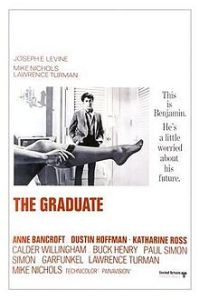
Mrs. Robinson shakes a leg.

Mrs. Robinson shakes a leg.

1. “The Sound of Silence”, from The Graduate, 1967.

This very funny and very dark tale of a young man adrift in a society made by the older generation is still a moving experience today. It made Dustin Hoffman a star, and the famous wedding scene has been lampooned in everything from The Naked Gun to the Simpsons. But it’s the opening scene of a young Hoffman retreating behind dark glasses in a swimming pool that leaves the most lingering impression. A reminder of when Hollywood made movies for grown-ups, this is my number one incidental movie song of all time.
The lost art of the television movie?

Today I thought I would focus on the much-maligned made-for-TV-movie. For years dominated by WomJeps (that’s women-in-jeopardy movies to you and me) the TV movie is a misunderstood animal. At its worst it’s characterised by melodramatic stories, below-par acting and shoddy production values.  But TV movies have also given us some classics. Here are some examples chosen to show you a broad cross-section and history of this overlooked art form.

No SFX required. Just great characters.

No SFX required. Just great characters.

REQUIEM FOR A HEAVEYWEIGHT (1962)

Jack Palance chews up the scenery as only he could in this Rod Serling teleplay about a washed-up boxer. Yes, he of the Twilight Zone. Before he became forever associated with breaking the fourth wall in creepy tales, Serling was a heavywight himself in the world of playwrights. This is arguably one of his greatest efforts.

THE NIGHT STALKER (1972)

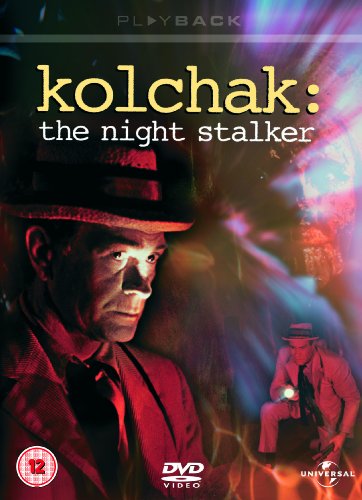
Darren McGaven shines as abrasive but likeable reporter Carl Kolchak in the first of the character’s outings. The second most popular telefilm of all time (the honour of being the first goes to The Love Boat), McGavin and his long-suffering editor track down a vampire in Las Vegas. Screenwriter Richard Matheson, one of the greatest fantasists of the 20th century, sets up many of the reworkings of the modern vampire story that have become staples of the genre today. The film was so successful it spawned a (pretty good) sequel, “The Night Strangler” and a television series that has special effects so poor it is best reserved for fans of McGavin . Features a particularly creepy ending.

kolchak

DUEL (1972)

Yes, it’s directed by THAT Stephen Spielberg. From a script by Richard Matheson (again) and featuring popular TV actor Dennis Weaver, this is 70s TV personified. A nameless truck driver hunts a hapless motorists along the desert for no good reason. SPOLIER ALERT! Features Spielberg’s characteristic” roaring shark” sound when the trucker gets his comeuppance at the end.

SOMETHING EVIL (1972)

Spielberg was on a roll in 1972. This curiosity features Darren McGaven again as a man whose family is targeted by an unholy presence when they purchase a farm with “something evil” in the barn. Genuinely creepy, especially the two glowing eyes. Has that great blend of realism and the supernatural that characterizes 1970s horror.

DON’T BE AFRAID OF THE DARK (1973)

One of the great things about TV movies was that nobody really cared too much about getting things right. Lacking the immense budgets of today’s productions, they were enticements to audiences to stay home rather than go to the movies. The results were some genuine oddities, such as this little horror gem.Recently remade by Guillermo Del Torro, who is obviously one of the movie’s legions of fans. A tip, don’t watch it in the house alone.

THE HORROR AT 37,000 FEET (1973)

A post-Star Trek Shatner stars alongside a cavalcade of 1970s TV royalty that includes Chuck Connors, Buddy Ebsen  and Paul Winfield. A spooky tale of a ghost on an airplane. ’70s television had such a strong lineup of character actors that they could fill out an entire movie. In this made-for-TV shocker, the actors sell the not-so-special effects.

KILLDOZER (1974)

From the strange to the downright crazy. A bulldozer (yes, you heard right) is taken over by an alien lifeform. Construction workers wisely wait for it to run out of gas. But wait, they’re on an island and there’s no cover! Wickedly entertaining hokum from a story by sci-fi legend Theodore Sturgeon.

SNOWBEAST (1977)

When Spielberg and Lucas created the summer blockbuster, TV producers were quick to emulate them. This TV horror movie, for instance, is actually Jaws with Bigfoot. And for that, it works incredibly well.  Just as we found out in Lucas’s reissue of The Empire Strikes Back “Special Edition”, seeing more is not always a good thing. It pays to hide your Bigfoot. During this fright-fest we barely glimpse more than a hairy arm or a snorting nostril, but the result is a growing atmospere of suspense and dread that’s hard to beat.

See the trailer here: http://www.youtube.com/watch?v=sxgPgQT155Y

BATTLESTAR GALACTICA (1978)

TV’s answer to Star Wars was also to create something similar. So here we have the Book of Mormon… in space! Managing to be both campy and portentous at the same time, this capitalized on the groundbreaking SFX that had made George Lucas an overnight success. Coupled with iconic costumes, ships, and sets, and some suitable gravitas from Lorne Greene, the movie paved the way for a TV series that has stood the test of time.

SIBYL (1976)

TV movies could also tread more psychological turf than movies, which were becoming increasingly gimmicky and SFX driven in the late 1970s. Here Sally Fields excells as a woman with multiple-personality disorder. The piece is not just a character study, it’s a study of many characters, and Fields shows off her acting chops in a varierty of personalities.

hulk

THE INCREDIBLE HULK (1978)

Another function of the TV movie was to test the waters for upcoming series. Shows such as Hawaii Five-O and the Six Million Dollar Man all had movie-length pilots. But few are so successful they go on to have a theatrical release. In 1978, the top TV show in the world was the Incredible Hulk. Bruce Banner was played with sensitivity and emotion by actor Bill Bixy, while his alter ego was played by bodybuilder Lou Ferrigno in green slippers.

THE DAY AFTER (1983)

Although not as gut-wrenchingly scary as the British 1984 TV movie “Threads” (see other post), this portrayal of nuclear armageddon is a contendor for one of the most watched TV movies ever. Told with realism, this grim tale gets ever grimmer as the true scale of a nuclear war is realized. People are either vaporized or survive to face all the horrors of radiation sickness and survival in the ruins of the old world. A good example of the kind of epic storytelling on a budget that TV can achieve.

The end of the world as we know it. But will you be feeling fine?

The end of the world as we know it. But will you be feeling fine?

THE HAUNTED (1991)

The TV movie fell out of vogue in the 1980s. TV itself lapsed into sitcoms, rather than try to compete with the ever-balooning budgets of blockbuster movies. But every so often a low-budget gem emerged. One of these is The Haunted, a very scary tale about a family who buy a haunted duplex. Like every sensible family, they move out at the first sign of ghostly phenomenon. But in a clever twist, the ghost follows them. Based on a true story, for added creepiness.

The 2000s

That would have been the end of our tale. An increasing number of TV channels did not equate to an increase in quality. In the 90s and 2000s, TV instead chose to churn out poorly-made, poorly-scripted and poorly-acted creature features using the ultimate tool for the lazy filmmaker, CGI. Soon our screens were filled with unconvincing CGI mammoths, sabretooths and giant crocodiles. Meanwhile the dramatic TV movie became the womjep we know and revile today.

Sabretooths and crocodils and sharks.. oh, dear!

Sabretooths and crocodiles and sharks.. oh, dear!

However in recent years TV has taken an upswing. Maybe it’s the lack of movies as studios adopt an all-or-nothing mentality to blockbuster films. Maybe it’s that older actors (who tend to be better) head into TV land in their golden years. Or maybe it’s that TV has replaced the movies, which are increasingly losing their connction with audiences due to massive ticket prices, lackluster SFX-driven spectacles and grosss-out comedies. Because the TV movie is making a comeback…

BEHIND THE CANDELABRA (2013)

Who would have though that in in this day and age a movie made by HBO would become a popular and critical success at the box office? Espeically when you consider the source material. But this Liberace biopic is doing just that. So maybe the TV movie isn’t dead. We’ve had the Renaissance of TV drama. Perhaps now it’s time to resurrect this forgotten art form as well.

The top 10 scariest horror movies ever made…

A spot of indulgence today as I list my personal top 10 scariest horror movies of all time.

Horror is a misunderstood and much-maligned genre. At its worst, it’s nothing more than sickening exploitation. However at its best, it can be a place for experimentation, satire, and the exploration of the darker side of human nature.

This is not meant to be a definitive list. Add your own. But here are some movies that made me turn the light back on… and some that made not turn it off at all.

10. Nosferatu

F W Murnau’s unofficial film version of Dracula led to him being famously sued by Bram Stoker’s widow. But the frightening make-up of Max Shrek as the titular vampire Count Orlock remains one of the scariest images ever committed to film. The moving shadowplay on the wall would be used again time after time. Remade stylishly by Werner Herzon with Klaus Kinski as the vampire.

http://www.youtube.com/watch?v=N-DrKgjit4I

Max Shrek. His name means "fear" in German!

Max Shrek. His name means “fear” in German!

9. Threads

A made-for-TV drama about what would actually happen in the event of a nuclear strike on Britain. Produced in the early 80s when nuclear war was still a grim possibility,  this terrifying program shocked a generation. Once seen, never forgotten…

8. The Thing

John Carpenter’s homage to the 50s B-movie, this guts’n’gore horrorshow pushed the boundaries of what was possible with make-up effects. A box-office flop, it has since become one of the greatest horror films of all time. Compare the atmosphere of the freezing scientists in this pic to the lukewarm remake.

7. Poltergeist

Tobe Hooper and Steven Spielberg collabroated to produce the grandaddy of all haunted house movies. A combination of SFX rollercoaster and shocking horror movie, it made a generation of kids afraid of trees and TV sets.

http://www.youtube.com/watch?v=5ytjaMfoF2M

6. Halloween

John Carpenter’s first big hit and the first true slasher pic. Indestructible madman Michael Myers stalks teenagers in a small town. But it’s the film’s creepy insinuation that horror could be lurking anywhere, even in the dark spaces of your own home, that truly lingers.

Just a normal street. But look again.

Just a normal street. But look again.

5. Alien

Alien is on some levels a very stupid movie. Butch warrant officer Sigourney Weaver displays more common sense than the rest of the entire crew of the ill-fated spaceship Nostromo, but still ends up trying to save a cat in her underwear. Even so, jaw-dropping production design and the most memorable alien in movie history combine to produce nerve-jangling scares from start to finish.

4. The Texas Chainsaw Massacre

Time has dulled the edge of this “based on true events” movie. But from the film’s opening shots we know we’re not in Kansas anymore. The casual violence remains shocking, but it was the film’s “endurance horror” that would go on to influence filmmakers such as Sam Raimi with his “Evil Dead” movies. Forget the countless remakes and sequels.

3. Jaws

Yes, that shark terrified audiences in the 70s and beyond. It may look rubber now, but the film’s great ensemble cast and stirring theme music still manage to make bathtime a little scarier.

2. Dawn of the Dead

George A Romero followed up his genre-busting “Night of the Living Dead” with this satirical masterpiece. you get a real sense of claustrophobia watching this for the first time as zombies are everywhere. Copied over and over again from low-budget schlock to the more stylish “Walking Dead” TV series, Romero was the only one to do something actually new with the zombie as an archetype of horror. Remade quite well but with less ideas in 2004.

http://www.youtube.com/watch?v=Pt-EipwlWQ0

1. Salems Lot

This two-part TV movie must have sent network executives into a spin. A creepy Stephen King story about Dracula transplanted into the modern US becomes something quite different in the hands of horror maestro Tobe Hooper and veteran scriptwriter Paul Monash. The horror continues to rise as citizens of a small town are transformed into the most frightening bloodsuckers you have ever seen.  1970s TV heart-throb David Soul grows understandably more and more hysterical when faced with sneering James Mason and his army of undead. But it’s the surreal, frightening scenes where a vampire kid comes calling on his classmates that have stayed in my imagination. Watch the unedited version for the shocking twist ending.

http://www.youtube.com/watch?v=aIbJ2rQ59ZE

The Importance of Being Persistent

You wouldn't want to be this guy. Unless you were a writer.

You wouldn’t want to be this guy. Unless you were a writer.

As you go through this journey to reach your writing goals, there is one thing I cannot stress enough.

You must persist.

Of all the people I know who have become writers, they all share one thing in common. They did not give up. And out of all the people I know who did not become writers, they too had one thing in common. At some point, they did.

It’s easy to give in to the voice inside your head that tells you you’re not good enough, that you never will be good enough, that you’re wasting your life, that becoming a professional writer is just an impossible dream…

But are you wasting your life following a dream?

I would argue that those who go through life without dreams are truly the ones wasting theirs.

It may be that you have financial pressures urging you to get a steady job. It may be you have a family, or one on the way. It may be you are surrounded with unsupportive people who laugh and sneer whenever you mention your latest project.

Eddie Murphy has said on the Actors’ Studio that he only surrounds himself with positive people, because negative people wear you down.

You will encounter a lot of jealousy in your quest to be a writer. People will laugh at your dreams. Some will give you harsh, unconstructive feedback. Others will simply ignore you.

You must learn to overcome this. Because this is a form of rejection, and rejection is the writer’s shadow. It follows him wherever he or she goes, threatening to obscure him or her from view.

One way to beat rejection is to reframe the statistics. If you only get one script request out of a hundred submissions, well then surely that means that every submission will get you closer to reaching one hundred and getting that script request!

Being positive is sometimes the hardest part of writing. But if you can master it, you will eventually succeed. Even if it happens in a way you never expected…