Tag Archives: Hollywood

12 days of the greatest, not-so-obvious Christmas movies

Seeing as it’s the season to be jolly, I thought I would give you a rather offbeat holiday treat. Here are 12 movies, one for each day of the season, that may not be as closely associated with Christmas as others, but which deserve a look. So if you’re bored with endless reruns of “It’s a Wonderful Life”, check out these gems…

12. The Bishop’s Wife

Cary Grant and David Niven star in this entertanining fantasy comedy about an angel helping out us mortals that plays fast and loose with religion.

11. Rare Exports

Has to be seen to be believed. Finnish production where Santa is in fact a demonic being who punishes children. What’s more bizarre is that it’s a really good movie!

10. One Magic Christmas

Mary Steenbergen has a terrible, terrible Christmas, loses her faith, and is helped out by guardian angel Harry Dean Stanton. Undoubtedly features the coolest angel in the movies, ever.

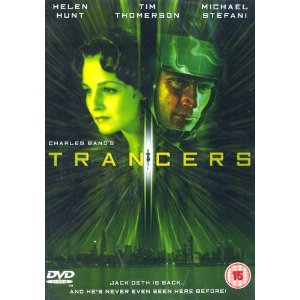
9. Trancers

Tongue-in-cheek sci-fi actioner that is most definitely set at Christmas in L.A. Tim Thomerson plays Jack Deth, a cop from the future intent on hunting down the murderous zombie slaves of his time-travelling opponent!

8. Lethal Weapon

The daddy of modern action films still packs a punch. Slick and fast-paced with enough laughs and thrills to keep anyone entertained at Christmas.

7. Black Christmas

Margo Kidder stars in this excellent and genuinely unsettling 70s slasher movie set in a girl’s sorority house. Somebody is making crank calls. The twist is that the calls are coming from inside the house!

6. An Affair to Remember

Cary Grant and Deborah Kerr are the star-crossed lovers who wait a little too long. Famously became the central plot idea in “Sleepless in Seattle”. Guaranteed to bring a tear to even the grumpiest grandparent’s eye.

5. Batman Returns

Tim Burton does Christmas in Gotham with Christopher Walken, evil clowns, and Michelle Pfeiffer in latex. What’s not to like?

gremlins

4. Gremlins

This was stupidly given a “15” rating in the UK, so a generation of kids never got to experience “Gremlin Mega-Madness” until it came out on VHS. The final shot of a snow-covered town is just gorgeous.

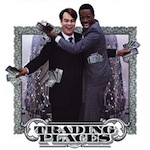
3. Trading Places

Superb comic caper starring Eddie Murphy and Dan Ackroyd at the peak of their talents. Co-starring Jamie Lee Curtis, in a rather memorable scene involving a curly wig and little else. How can you not like a movie that has not one, but two gorillas?

places

2. National Lampoon’s Christmas Vacation

I had to include this all-time funniest Christmas movie. Worth watching time after time just for the “squirrel attack” scene.

1. Stalag 17

Only Billy Wilder could pull off a comedy set in a German POW camp in WWII. William Holden is fantastic in a movie that never sacrifices realism for laughs, but still manages to be funny.

So there you have it, a few non-traditional Christmas movies to spend the season with. Happy Holidays!

Monsters in the House

Today I’m going to share some secrets with you about how to write in the movie genre called “Monster in the House”.

The late, great Blake Snyder can be credited with bringing this term into popular phraseology amongst screenwriters. Basically it is the kind of movie where there is a Monster… in a House. Geddit? Many horror movies use this genre, but so do many other kinds of film. For example, Blake says in his excellent books “Save the Cat” and “Save the Cat Goes to the Movies”  that the good ol’ Monster in the House includes such films as “Jaws”, “Independence Day”, “Scream”, “Single White Female”, and even “Fatal Attraction”.

So how does this go? Well, put simply, Blake says you must have a Monster, a House, and a Sin committed by one the chartacters that invites the Monster into the House. For example, in “Jaws” it is the Mayor’s refusal to close the beaches, out of fear that it will damage tourism on the island, that invites the great white shark to keep munching on the locals.


Birds Film

Alfred Hitchcock’s The Birds starring Tippi Hedren. Can you spot the “Monster” and the “House” in this movie? Extra marks if you can remember what the “Sin is, too!


Blake’s books include a whole host of other great observations about this genre and others and I encourage you to read them all. However I thought I would apply this to my own latest screenplay while I was working on it. The result was that I may have come up with a definitive “blueprint” for the Monster in the House genre.

This may or may may not make sense without reading Blake’s books. However, you can find some illuminating examples by visiting his wesbite http://www.blakesnyder.com/ and using the free dowloads there.

Anyway, here goes…


MONSTER IN THE HOUSE STRUCTURE BLUEPRINT

1. Setup

The House is introduced and described. The Hero’s weakness is also introduced. Don’t forget to Save the Cat!

2. Catalyst

The Sin is committed, ultimately (but not necessarily there and then) inviting the Monster into the House.

3. Debate

Resistance of whatever is the catalyst by the Hero.

4. Break into Act Two/Turning Point # 1

The main conflict with the Monster begins.

5. B Story

The Hero and another character interact.

6. Fun & Games

Hide and Seek with the Monster in the House.

7. Midpoint

Stakes are raised. The Fun is now over. A and B stories cross. Kiss at 60?

8. Bad Guys Close In

Turn, Turn, Turn as one by one the Monster kills off the Hero’s allies and generally makes things harder for them.

9. Rock Bottom

The Sin is finally exposed. The Whiff of Death occurs.

10. Dark Night of the Soul

Despair. Monster appears victorious.

11.Break Into Act Three

The solution!

12. Final Challenge

The Hero combines his weakness with what he has learned during the story to  defeat the Bad Guy (and optionally Save the Cat if not done before).

13. Resolution

Survival, basically.  Optionally you may show how the Hero has overcome his weakness.


So there it is. I’d be interested in knowing what anyone else thinks about this. But it seems general enough to apply to pretty much any Monster in the House script.  Next time I may even break down a popular movie into these component parts to see if it does work all the way through. Until then, keep writing!


10 comic book superheroes who deserve their own movie…

Ahem…

(In ominous voice)

In this blog, dear reader, I tempt vilification by geekdom. Should I leave out a beloved favourite, I will no doubt suffer the wrath of comic book fanatics everywhere. And yet it would be remiss of me indeed not to at least attempt a short compendium of comic books which should have their own movie.

Some of the creations listed below may have already had their own movies, but these were either so bad they have been entirely forgotten, or so low budget as to demand a proper blockbuster version. You decide…

Marvel enters the 1970s with Heroes for Hire.

Marvel enters the 1970s with Heroes for Hire.

10. HEROES FOR HIRE

Created at the height of the Kung-Fu/Blaxploitation movie genre craze in the 1970s, the Heroes for Hire became major fixtures in the Marvel Universe. Comprising Iron Fist — a Westerner trained in mystical kung-fu arts by interdimensional monks — and Luke Cage aka Power Man — a street fighter given a second chance by an experiment that made him virtually indestructible, the Heroes for Hire were just that. Motivated by dollar bills rather than altruism, they usually managed to stay on the side of good. Actor Nicholas Cage was so taken with Power Man that he adopted the character’s second name as his own. Surely worth a movie?

9. POWER PACK

Invented by Marvel in the 1980s, this is the story of four ordinary children who receive super-powers from a dying alien, Power Pack faced the menace of the alien Snarks, who were hell bent on Earth’s destruction. Tasked with rescuing their inventor father from the Snark mothership, these kids behaved like real kids — squabbling, crying, and discovering their inner heroes. This one has Disney stamped all over it. A terrible TV pilot made in the 1990s is best forgotten.

8. HOURMAN

An unfairly maligned character, Hourman was a Golden Age superhero who appeared in All Star comics before being revamped in DC comics by supergenius comic book creator Gardner Fox (Flash, Green Lantern etc etc). Chemist Rex Tyler discovers a miracle pill (Miraclo) that gives him superpowers… but only for one hour.  The twist was that Miraclo was addictive, which gave this character a greater psychological realism than others of his era.

7. THE MAN CALLED NOVA

Richard Ryder was Marvel’s 1970s version of Peter Parker  — a weedy loser who was given incredible powers and became “the human rocket” when he was zapped by a spaceship and given the powers of a Centurian Nova Prime, guardian of the planet Xandar.  Ryder had a popular comic book, teaming up with other heroes such as Spider-Man, before finally relinquishing his powers. An awesome-looking new version of the superhero was launched for the Annihilation: Conquest storyline in the 2010s, proving that Nova can still attract the fans.

185px-Nova_1_(1976)[1]

Nova rockets into the 1970s!

6. SLAINE

Pat Mills’ extraordinary Celtic barbarian warrior first graced the pages of 2000AD at the turn of the 1980s. Since then his popularity has endured. A rather “earthy” hero, Slaine is accompanied on his journeys across time by the disgusting dwarf Ukko, and has faced off against both aliens and dinosaurs. But Slaine’s most unique feature is his “warping” power, in which he channels the energy of ley-lines to became a monstrous, Hulk-like behemoth!

5.DR. STRANGE

Created by Stan Lee in the 1960s, Stephen Strange was a gifted surgeon with a drink problem. After crashing his car, he was found by the Ancient One and schooled in the mystic arts to become Earth’s sorceror supreme. A classic, old-school superhero, Dr. Strange’s adventures took him to all manner of fantastic and bizarre dimensions thanks to legendary comics artist Steve Ditko. A TV movie was made in the early 1980s with John Mills that actually wasn’t all that bad. Time for another try, methinks.

4. THE SUB-MARINER

Originally a villainous foe of The Fantastic Four, Prince Namor of Atlantis grew to become much more than that. Namor’s supreme pride and arrogance makes him the perfect anti-hero. He’s had his own comic book on and off since the 1960s. But a movie? Well, it would be better than “Aquaman”. If only they could get rid of those nutty wings…

Prince Namor, cousin of Colonel Sanders.

Prince Namor, cousin of Colonel Sanders!

3. THE BALLAD OF HALO JONES

Before Watchmen, Alan Moore created a host of genius characters, many for British comic 2000AD. Halo Jones is an Everyman, or rather, an “Everygirl”. Born into an overpopulated Earth in the far future, she seeks escape and adventure beyond the stars, only to find abject misery, cruelty, and exploitation at every turn as both a scantily-dressed hostess and a battle-hardened warrior in a horrific future war. Gloriously pessimistic.

2. WONDER WOMAN

The archetypal female superhero — so why has she never had her own movie? Played by Linda Carter on TV in the 1970s in a series that was far too campy for its own good,and invented by psychologist William Moulton Marston, Wonder Woman exemplified the fighting spirit of America in WWII. This is a superhero with a  history as long as Batman and Superman. An attempt was made to revitalize the character recently but proved a misfire. But who could step into Wonder Woman’s boots and lasso?

1. SWAMP THING

When Alan Moore was lured to America by DC comics in the 1980s, he reimagined this floundering comic book property. From his humdrum origins as yet another product of a scientific experiment gone wrong, Swamp Thing was transformed into one of the finest comic books ever written. Moore’s magnificent “American Gothic” cycle sees Swamp Thing encounter all manner of staple horror monsters, all wonderfully reinvented to reflect modern America…. menstrual werewolves, water-dwelling vampires, radioactive zombies, haunted houses filled with the victims of gun crime. Swamp Thing journeys across the multiverse, from Heaven to a Hell that is the most completely imagined vision of the afterlife in the history of comics. During this we are also introduced to a British psychic called John Constantine. Swamp Thing was made into two attrociously bad movies in the 1980s as well as a TV series. None of them have (thankfully) anything to do with Moore’s work. This is a comic book that is ripe for the big screen (pun intended). Forget the other big green guy. Swamp Thing is where it’s at!

Music is Your Friend…

Do you listen to music while you write?

Sounds like a banal question. But many writers are heavily influenced by music, while others say it helps them to concentrate and focus.

Alan Grant, comics writer of “Batman”, “Judge Dredd”, and many more, says he listens to music for an hour or so each morning before he starts to write. Evidently it gets his creative juices flowing.

Personally, I prefer something instrumental. I won’t bore you with a list of my favourites. Suffice to say, it includes plenty of heavy 1970s electronica and Baroque classical. Anything I can get my hands on that provides ambient background music. Hypnotic white noise helps me to zone in on the page.

Other writers have used music to do more than focus, however. Take Alan Moore. Almost every chapter of “Watchmen” has a musical lyric as its title – a conceit used to brilliant effect in the movie soundtrack. In fact, several of Moore’s stories seem to have been directly inspired by lyrics.

Music can capture your mood. Or it can provide you with tangible inspiration from its lyrics. Just don’t play that Eminem record at full volume on your iPod in the library, or I may have to hit you. Hard. With a book.

So find your muse, find your mood music, and write away…

What can we learn from “The Conjuring”?

THE CONJURING (2013)

Director James Wan, Writers Chad and Carey Hayes

Stars Patrick Wilson, Vera Farmiga, Lily Taylor


NOTE: I’VE TRIED NOT TO INCLUDE ANY SPOILERS, BUT READ ON AT YOUR OWN RISK IF YOU’VE NOT SEEN THE MOVIE.

The biggest hit of 2013 so far must be “The Conjuring”. Delivered on a budget of just $20 million, it has raked in over $120 million so far and is still in theatres.  It charts ahead of much bigger movies such as “Olympus Has Fallen”, “The Hangover Part 2”, “The Wolverine” and of course the infamous “Lone Ranger” movie. So why is it such a smash hit?

I went to see it, expecting it to be over-hyped, and was very pleasantly surprised. Not only is “The Conjuring” a well-made and well-acted movie, it is extremeley scary. This is no exaggeration. “The Conjuring” is definitely the best movie of 2013 so far.

The movie comes on the heels of Director James Wan’s 2010 opus “Insidious”, although you could be forgiven for thinking that 2012’s lookalike “Sinister” was related.

Looking back at “Insidious”, we had another strong performance from character actor/lead man Patrick Wilson (Nite Owl in “Watchmen”). But what was interesting about “Insidious” was the way the movie tried to push the envelope with the horror genre. There were a couple of standout eerie moments. However the picture lapsed into an action/fantasy movie toward the third act, which lessened the effect of the scares.

The plot is simple enough: two psychic detectives (Wilson and Farmiga) take on a haunting in an old house where Taylor and her family (her working joe husband and five young daughters) have just moved in and are experiencing some frightening ghostly goings-on. The uncover a sinister force driving the hauntings, which continue to grow in violence and, what’s worse, seem to react to the couple’s presence in the house.

To an extent, “The Conjuring” is a refinement of Wan’s previous movie. However  this movie opens with a bang (literally) instead of a slow burn. In fact, the movie delivers almost everything up front. From the creepy titles (an oft-ignored aspect of filmmaking) we are plunged into terror. The opening sequence which features a demonic doll is one of the scariest I’ve ever seen. Who knew that dolls could become creepy again after the debacle of “Child’s Play”?

As if that wasn’t enough, Wan and his creative team go on to deliver an expertly crafted series of scares. Each one just as terrifying as the last. The roller-coaster ride (or should that be ghost train?)  is helped by excellent performances, not just from Wilson, but from horror veteran Lilly Taylor, who really outdoes herself in this movie, as well as the ever-off-kilter Vera Farmiga as the other half of the ghostbusting duo.

But what really impresses about “The Conjuring” is the quality of the scares. Each one goes shows us something that has never been seen before. Yes, the ideas themselves have been copied from other stories (the evil doll, the ghostly bangings, demonic possession). There are also notable nods of the head to older classics, such as when Taylor’s husband wakes up to find the TV showing only static, an obvious reference to “Poltergeist”.

But “The Conjuring” goes further. this is not just an evil doll. This is a mightily pissed-off evil doll that sounds like a 300lb giant hammering on the door. The “ghost”, when it does appear, is exceptional. Especially in two memorable scenes, one involving a sleepwalker and a wardrobe, the other involving something as mundane as hanging up washing on a clothesline.

To say that “The Conjuring” copies other movies is like saying “Forbidden Planet” is ajust a copy of “The Tempest”. This is a bravura piece of horror filmmaking that is sure to establish Wan for years to come as a horror great.

The lesson? Go farther.

A good example of another ghost story which pushes the envelope is 2001’s Japanese movie “Pulse” (forget the remake) which goes from eerie hauntings involving the Internet to an apocalyptic third act.

It is true that the movie runs out of steam to an extent in the third act, where it changes pace and tone becoming more of an action movie spliced in with a demonic possession movie. As a result, the scares diminish. The character development is pretty sketchy also, but is just enough to add some depth to a very plot-driven movie. “The Conjuring” is definitely at its best for the other two thirds. But what a two thirds they are!

Audiences love to be surprised, and I was. The scares are not your everyday jump-out-and-scream variety. nor is there the reprehensible “torture-porn” of recent “hits”. Instead, “The Conjuring” is a creepy and frightening horror movie.

Go see it!

Horror Without Victims review

Here is a very nice review of “Horror Without Victims”, an anthology which contains my short story “Clouds”. It’s only the second time I’ve been published in a British anthology. The first time was with my story “Charlie” in the British Fantasy Society’s anthology “Terror Tales”, alongside Neil Gaiman and Kim Newman.

http://paintthistownred.wordpress.com/

The reviewer calls it “psycho-geographic horror”, and although I didn’t plan it out that way, I’d have to agree!

If you haven’t got a copy yet, I’d recommend it (because my story is in it, of course – but also because it contains 24 other excellent, frightening, funny and awe-inspiring stories, all on the theme of horror without the gore).

product_thumbnail[1]

Quickie movie review – Manhunter

Another dip into my DVD collection this week. While researching the thriller genre I struggled to find a list of the top thrillers of all time. Maybe I’ll do that in another post. Hmm. Meanwhile, here is my review of the much-overlooked prequel to “Silence of the Lambs”.

“Manhunter” was not a commercial success on release. But in fact it is better than its bigger and somewhat dumber sequel, although Anthony Hopkins certainly portrayed Hannibal Lektor with much aplomb. So without further ado I present to you…

MANHUNTER, 1986

Brian Cox is a different kind of monster in "Manhunter", 1986.

Brian Cox is a different kind of monster in “Manhunter”, 1986.

Will Graham is a former FBI Agent with a difference. He is able to put himself in the mind of a serial killer. His talent has almost cost him his sanity. But when the “Tooth Fairy” starts wiping out whole families, Graham is called out of retirement to help catch the murdering monster. His first task, however, is to re-establish his serial killer mindset. And to do that, he needs the help of  one Hannibal Lektor…

Manhunter is a gorgeous film. Michael Mann, fresh from the TV series Miami Vice, used every trick in the book to make the film reminiscent of 1940s Noirs. There are some beautiful shots, such as Graham’s house overlooking the ocean – shot entirely in blue. Mann, whose earlier film effort “The Keep” also had some excellent photography, provides us with more memorable images here: tigers, the Tooth Fairy’s stocking mask, and of course the death of one rather unpleasant reporter who becomes one of the killer’s victims.

The acting is also pretty nifty. William Peterson plays Will Graham with heart – although he is sometimes a little too downbeat for his own good. But he carries the “leading man” part off nicely. A shame his talents would never be utlilized to such a degree again. Character actor stalwart Brian Cox steps into the biter-mask of Hannibal Lektor this time. Cox is chilling, especially in a bravura scene where he manages to use a telephone from inside a high security cell. The slicked-back hair is something that would remain part of the character in “Silence of the Lambs”.  The late Dennis Farina plays Graham’s FBI buddy to good effect, while Tom Noonan (who appeared recently in “The House of the Devil”) is scary and believable as the damaged, murdering monser. In fact, Noonan’s portayal is much more sympathetic than Ralph Fiennes’ would be in the by-the-numbers remake, “Red Dragon” (2002).

Indeed, by comparing “Manhunter” with “Red Dragon”, we can see how superior “Manhunter” is. There is poetry to this movie. It takes place in a kind of hyper-realism. The strange lighting, the memorable music, all serve to make this a masterpiece of thriller cinema. “Manhunter” is also more generous with its emotions. We see with both unease and pity the heartbreaking attempts of the Tooth Fairy to connect with another human being. But it is an act doomed to failure. Although the filmmakers bring us within a hair’s breadth of sympathy for the killer, it seems that some sins cannot be expurgated.

The action builds from unease to a tense climax that has plenty of surprises. “Manhunter” is psychologically realistic, without the overblown theatrics of “Silence of the Lambs” or “Hannibal”. More than any other film based on the Thomas Harris books, “Manhunter” takes us deep into the world of the serial killer, and shows us that it is a twisted, frightening place. And it does it with style.

Quickie movie review time…

Today, I thought I would share a review of a film you may not have seen. There aren’t many people making great movies. But one man who’s made more than his fare share (and had more than his fair share of commercial failures) is David Lynch.

So without further ado here is my review of LOST HIGHWAY.

LOST HIGHWAY (1997)

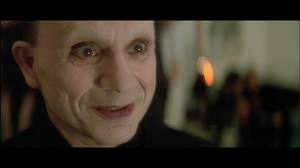
A jazz saxophonist is (wrongly?) convicted of murdering his wife. He is imprisoned. He wakes up in the morning as a different person, a young mechanic. The authorities are baffled and release him. He becomes involved in an affair with another woman, the wife of a gangster who looks just like the first man’s wife…

"We've met before, haven't we?" Robert Blake as the Mystery Man.

“We’ve met before, haven’t we?” Robert Blake as the Mystery Man.

What does it mean? Don’t look for straightforward answers. Although it looks like a Hollywood movie, ‘Lost Highway’ is anything but. This is cinema deconstructed. What is a story? What is art? Surface meanings are stripped away and what we are left with is…

Director David Lynch and his co-writer Barry Gifford again create a frustrating, mesmerizing, entertaining, visceral, daring Chinese puzzle of a movie. But the twist here is that the puzzle has no solution. More introverted than epic, it had critics and audiences confused upon its release. Searches for story will disappoint. This is a movie that knows it is a movie and toys with the viewer like a cat with a mouse.

“Lost Highway” also plays with genre, most notably the kind of noir 40s movies that eventaully spawned Hitchcock’s masterpiece “Vertigo”. But “Lost Highway” goes beyond them. The writers are not afraid to let go of plot, drawing attention to the artificiality of a narrative that both illuminates and conceals. This is a movie that pushes the boundaries of cinematic storytelling. Is it intended or not? Does it matter? Like the rest of the film, this only raises questions without answers.

Bill Pullman and Balthazar Getty are the two faces of the same man (or is he?). Patricia Arquette is dazzling as Renee/Alice. But arguably Robert Loggia steals the show with impeccable comic timing as a ridiculously vicious gangster. While Robert Blake gives his last performance as the memorably creepy mystery man with no eyebrows – a typically Lynchian obscure archetype.

I’m not usually a fan of postmodernism, but when it’s done this well I can’t help but like it. With sublime music and excellent performances, this is surely one of Lynch’s most provocative films to date. Well worth seeing.

The lost art of the television movie?

Today I thought I would focus on the much-maligned made-for-TV-movie. For years dominated by WomJeps (that’s women-in-jeopardy movies to you and me) the TV movie is a misunderstood animal. At its worst it’s characterised by melodramatic stories, below-par acting and shoddy production values.  But TV movies have also given us some classics. Here are some examples chosen to show you a broad cross-section and history of this overlooked art form.

No SFX required. Just great characters.

No SFX required. Just great characters.

REQUIEM FOR A HEAVEYWEIGHT (1962)

Jack Palance chews up the scenery as only he could in this Rod Serling teleplay about a washed-up boxer. Yes, he of the Twilight Zone. Before he became forever associated with breaking the fourth wall in creepy tales, Serling was a heavywight himself in the world of playwrights. This is arguably one of his greatest efforts.

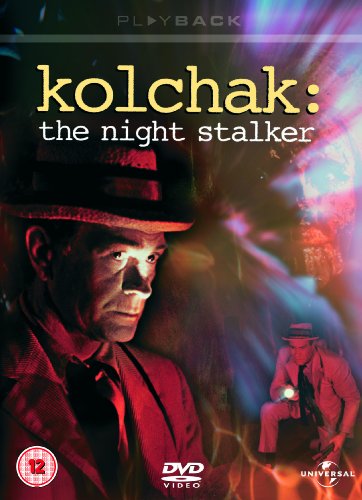
THE NIGHT STALKER (1972)

Darren McGaven shines as abrasive but likeable reporter Carl Kolchak in the first of the character’s outings. The second most popular telefilm of all time (the honour of being the first goes to The Love Boat), McGavin and his long-suffering editor track down a vampire in Las Vegas. Screenwriter Richard Matheson, one of the greatest fantasists of the 20th century, sets up many of the reworkings of the modern vampire story that have become staples of the genre today. The film was so successful it spawned a (pretty good) sequel, “The Night Strangler” and a television series that has special effects so poor it is best reserved for fans of McGavin . Features a particularly creepy ending.

kolchak

DUEL (1972)

Yes, it’s directed by THAT Stephen Spielberg. From a script by Richard Matheson (again) and featuring popular TV actor Dennis Weaver, this is 70s TV personified. A nameless truck driver hunts a hapless motorists along the desert for no good reason. SPOLIER ALERT! Features Spielberg’s characteristic” roaring shark” sound when the trucker gets his comeuppance at the end.

SOMETHING EVIL (1972)

Spielberg was on a roll in 1972. This curiosity features Darren McGaven again as a man whose family is targeted by an unholy presence when they purchase a farm with “something evil” in the barn. Genuinely creepy, especially the two glowing eyes. Has that great blend of realism and the supernatural that characterizes 1970s horror.

DON’T BE AFRAID OF THE DARK (1973)

One of the great things about TV movies was that nobody really cared too much about getting things right. Lacking the immense budgets of today’s productions, they were enticements to audiences to stay home rather than go to the movies. The results were some genuine oddities, such as this little horror gem.Recently remade by Guillermo Del Torro, who is obviously one of the movie’s legions of fans. A tip, don’t watch it in the house alone.

THE HORROR AT 37,000 FEET (1973)

A post-Star Trek Shatner stars alongside a cavalcade of 1970s TV royalty that includes Chuck Connors, Buddy Ebsen  and Paul Winfield. A spooky tale of a ghost on an airplane. ’70s television had such a strong lineup of character actors that they could fill out an entire movie. In this made-for-TV shocker, the actors sell the not-so-special effects.

KILLDOZER (1974)

From the strange to the downright crazy. A bulldozer (yes, you heard right) is taken over by an alien lifeform. Construction workers wisely wait for it to run out of gas. But wait, they’re on an island and there’s no cover! Wickedly entertaining hokum from a story by sci-fi legend Theodore Sturgeon.

SNOWBEAST (1977)

When Spielberg and Lucas created the summer blockbuster, TV producers were quick to emulate them. This TV horror movie, for instance, is actually Jaws with Bigfoot. And for that, it works incredibly well.  Just as we found out in Lucas’s reissue of The Empire Strikes Back “Special Edition”, seeing more is not always a good thing. It pays to hide your Bigfoot. During this fright-fest we barely glimpse more than a hairy arm or a snorting nostril, but the result is a growing atmospere of suspense and dread that’s hard to beat.

See the trailer here: http://www.youtube.com/watch?v=sxgPgQT155Y

BATTLESTAR GALACTICA (1978)

TV’s answer to Star Wars was also to create something similar. So here we have the Book of Mormon… in space! Managing to be both campy and portentous at the same time, this capitalized on the groundbreaking SFX that had made George Lucas an overnight success. Coupled with iconic costumes, ships, and sets, and some suitable gravitas from Lorne Greene, the movie paved the way for a TV series that has stood the test of time.

SIBYL (1976)

TV movies could also tread more psychological turf than movies, which were becoming increasingly gimmicky and SFX driven in the late 1970s. Here Sally Fields excells as a woman with multiple-personality disorder. The piece is not just a character study, it’s a study of many characters, and Fields shows off her acting chops in a varierty of personalities.

hulk

THE INCREDIBLE HULK (1978)

Another function of the TV movie was to test the waters for upcoming series. Shows such as Hawaii Five-O and the Six Million Dollar Man all had movie-length pilots. But few are so successful they go on to have a theatrical release. In 1978, the top TV show in the world was the Incredible Hulk. Bruce Banner was played with sensitivity and emotion by actor Bill Bixy, while his alter ego was played by bodybuilder Lou Ferrigno in green slippers.

THE DAY AFTER (1983)

Although not as gut-wrenchingly scary as the British 1984 TV movie “Threads” (see other post), this portrayal of nuclear armageddon is a contendor for one of the most watched TV movies ever. Told with realism, this grim tale gets ever grimmer as the true scale of a nuclear war is realized. People are either vaporized or survive to face all the horrors of radiation sickness and survival in the ruins of the old world. A good example of the kind of epic storytelling on a budget that TV can achieve.

The end of the world as we know it. But will you be feeling fine?

The end of the world as we know it. But will you be feeling fine?

THE HAUNTED (1991)

The TV movie fell out of vogue in the 1980s. TV itself lapsed into sitcoms, rather than try to compete with the ever-balooning budgets of blockbuster movies. But every so often a low-budget gem emerged. One of these is The Haunted, a very scary tale about a family who buy a haunted duplex. Like every sensible family, they move out at the first sign of ghostly phenomenon. But in a clever twist, the ghost follows them. Based on a true story, for added creepiness.

The 2000s

That would have been the end of our tale. An increasing number of TV channels did not equate to an increase in quality. In the 90s and 2000s, TV instead chose to churn out poorly-made, poorly-scripted and poorly-acted creature features using the ultimate tool for the lazy filmmaker, CGI. Soon our screens were filled with unconvincing CGI mammoths, sabretooths and giant crocodiles. Meanwhile the dramatic TV movie became the womjep we know and revile today.

Sabretooths and crocodils and sharks.. oh, dear!

Sabretooths and crocodiles and sharks.. oh, dear!

However in recent years TV has taken an upswing. Maybe it’s the lack of movies as studios adopt an all-or-nothing mentality to blockbuster films. Maybe it’s that older actors (who tend to be better) head into TV land in their golden years. Or maybe it’s that TV has replaced the movies, which are increasingly losing their connction with audiences due to massive ticket prices, lackluster SFX-driven spectacles and grosss-out comedies. Because the TV movie is making a comeback…

BEHIND THE CANDELABRA (2013)

Who would have though that in in this day and age a movie made by HBO would become a popular and critical success at the box office? Espeically when you consider the source material. But this Liberace biopic is doing just that. So maybe the TV movie isn’t dead. We’ve had the Renaissance of TV drama. Perhaps now it’s time to resurrect this forgotten art form as well.
The top 10 scariest horror movies ever made…

A spot of indulgence today as I list my personal top 10 scariest horror movies of all time.

Horror is a misunderstood and much-maligned genre. At its worst, it’s nothing more than sickening exploitation. However at its best, it can be a place for experimentation, satire, and the exploration of the darker side of human nature.

This is not meant to be a definitive list. Add your own. But here are some movies that made me turn the light back on… and some that made not turn it off at all.

10. Nosferatu

F W Murnau’s unofficial film version of Dracula led to him being famously sued by Bram Stoker’s widow. But the frightening make-up of Max Shrek as the titular vampire Count Orlock remains one of the scariest images ever committed to film. The moving shadowplay on the wall would be used again time after time. Remade stylishly by Werner Herzon with Klaus Kinski as the vampire.

http://www.youtube.com/watch?v=N-DrKgjit4I

Max Shrek. His name means "fear" in German!

Max Shrek. His name means “fear” in German!

9. Threads

A made-for-TV drama about what would actually happen in the event of a nuclear strike on Britain. Produced in the early 80s when nuclear war was still a grim possibility,  this terrifying program shocked a generation. Once seen, never forgotten…

8. The Thing

John Carpenter’s homage to the 50s B-movie, this guts’n’gore horrorshow pushed the boundaries of what was possible with make-up effects. A box-office flop, it has since become one of the greatest horror films of all time. Compare the atmosphere of the freezing scientists in this pic to the lukewarm remake.

7. Poltergeist

Tobe Hooper and Steven Spielberg collabroated to produce the grandaddy of all haunted house movies. A combination of SFX rollercoaster and shocking horror movie, it made a generation of kids afraid of trees and TV sets.

http://www.youtube.com/watch?v=5ytjaMfoF2M

6. Halloween

John Carpenter’s first big hit and the first true slasher pic. Indestructible madman Michael Myers stalks teenagers in a small town. But it’s the film’s creepy insinuation that horror could be lurking anywhere, even in the dark spaces of your own home, that truly lingers.

Just a normal street. But look again.

Just a normal street. But look again.

5. Alien

Alien is on some levels a very stupid movie. Butch warrant officer Sigourney Weaver displays more common sense than the rest of the entire crew of the ill-fated spaceship Nostromo, but still ends up trying to save a cat in her underwear. Even so, jaw-dropping production design and the most memorable alien in movie history combine to produce nerve-jangling scares from start to finish.

4. The Texas Chainsaw Massacre

Time has dulled the edge of this “based on true events” movie. But from the film’s opening shots we know we’re not in Kansas anymore. The casual violence remains shocking, but it was the film’s “endurance horror” that would go on to influence filmmakers such as Sam Raimi with his “Evil Dead” movies. Forget the countless remakes and sequels.

3. Jaws

Yes, that shark terrified audiences in the 70s and beyond. It may look rubber now, but the film’s great ensemble cast and stirring theme music still manage to make bathtime a little scarier.

2. Dawn of the Dead

George A Romero followed up his genre-busting “Night of the Living Dead” with this satirical masterpiece. you get a real sense of claustrophobia watching this for the first time as zombies are everywhere. Copied over and over again from low-budget schlock to the more stylish “Walking Dead” TV series, Romero was the only one to do something actually new with the zombie as an archetype of horror. Remade quite well but with less ideas in 2004.

http://www.youtube.com/watch?v=Pt-EipwlWQ0

1. Salems Lot

This two-part TV movie must have sent network executives into a spin. A creepy Stephen King story about Dracula transplanted into the modern US becomes something quite different in the hands of horror maestro Tobe Hooper and veteran scriptwriter Paul Monash. The horror continues to rise as citizens of a small town are transformed into the most frightening bloodsuckers you have ever seen.  1970s TV heart-throb David Soul grows understandably more and more hysterical when faced with sneering James Mason and his army of undead. But it’s the surreal, frightening scenes where a vampire kid comes calling on his classmates that have stayed in my imagination. Watch the unedited version for the shocking twist ending.

http://www.youtube.com/watch?v=aIbJ2rQ59ZE